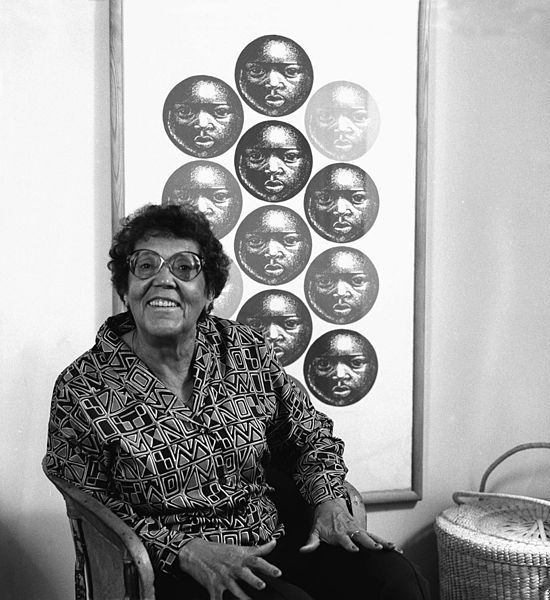
Elizabeth Catlett was a groundbreaking sculptor, printmaker, and educator whose work transformed the visual expression of Black identity and womanhood. Known for her bold linocuts and modernist sculptures, she used art as a powerful tool for justice, empowerment, and social change. This biography explores her early life, artistic journey, and lasting legacy across the United States and Mexico—from iconic works like Sharecropper to her influence on contemporary artists.
Biography
| Full Name | Alice Elizabeth Catlett (later Elizabeth Catlett Mora) |
| Date of Birth (Age as of 2025) | April 15, 1915 (would be 110 years old in 2025) |
| Nationality | American-born; Mexican citizen (1962–2002); regained U.S. citizenship in 2002 |
| Profession | Sculptor, Printmaker, Educator |
| Known For | Modernist sculptures, linocuts like Sharecropper, The Negro Woman series, socially engaged art |
| Marital Status | Married twice: Charles White (1941–1946), Francisco Mora (1947–2002) |
| Net Worth | Estimated between $1–3 million at the time of her passing (artworks now worth significantly more) |
Early Life and Education
Elizabeth Catlett was born on April 15, 1915, in Washington, D.C., into a family deeply rooted in education and Black cultural resilience. Both of her parents were the children of formerly enslaved people, and the stories passed down through her family profoundly shaped her understanding of race, struggle, and liberation. Her father, a math teacher, died before her birth, leaving her mother to raise three children while working multiple jobs to support the household.
Catlett developed an interest in art from a young age, influenced by a wood carving created by her father. During high school, she studied art under Haley Douglass, a descendant of Frederick Douglass—an early reinforcement of the relationship between art, culture, and Black history.
After high school, Catlett hoped to attend the Carnegie Institute of Technology. Despite being accepted academically, she was denied entry due to her race. This pivotal discriminatory moment pushed her toward Howard University, where she encountered the great Black artistic and intellectual minds of the time. She studied under figures such as:
- Lois Mailou Jones – painter and influential educator
- James Herring – founder of Howard’s art department
- Alain Locke – philosopher and “Father of the Harlem Renaissance”
She graduated cum laude in 1937, but even with her growing artistic talent, a career as a professional Black woman artist seemed nearly impossible in that era. With practicality in mind, she pursued teaching positions while continuing to refine her craft.
Catlett then entered the Master of Fine Arts program at the University of Iowa, where she studied under renowned regionalist artist Grant Wood. Wood famously encouraged her to “paint what she knew best,” prompting Catlett to turn her artistic gaze toward the experiences of African American women and families. Her MFA thesis sculpture, Mother and Child, won first prize at the 1940 American Negro Exposition. She became one of the first three MFA graduates from Iowa, and the first Black woman to earn the degree.
Career
Catlett’s career unfolded across multiple cities and countries, shaped by political movements, cultural exchanges, and personal convictions.
Early Teaching and Artistic Exploration
After receiving her MFA, Catlett taught at Dillard University in New Orleans. While teaching, she continued to develop her artistic voice, taking summer classes in ceramics and printmaking in Chicago. These opportunities helped her master new mediums and connect with artists pushing the boundaries of Black American art.
In Chicago and New York during the 1940s, Catlett immersed herself in progressive artistic circles, studying at the South Side Community Art Center and the Art Students League. She met cultural icons like Langston Hughes, Aaron Douglas, Ralph Ellison, and Jacob Lawrence—many of whom shared her belief in art as a tool for social transformation.
Move to Mexico and the Taller de Gráfica Popular
Catlett’s career reached a transformative turning point in 1946 when she received a Rosenwald Fellowship to study in Mexico. Once there, she joined the Taller de Gráfica Popular (TGP), an artist collective dedicated to creating accessible, socially conscious prints that addressed issues like poverty, literacy, and workers’ rights.
At the TGP, Catlett became a master of linocut printmaking, creating some of her most famous series, including:
- The Negro Woman (15-part linocut series)
- Sharecropper – one of her most iconic and widely reproduced works
- Prints of historical figures like Harriet Tubman, Malcolm X, and Phillis Wheatley
Her work combined bold lines, emotional intensity, and everyday heroism, highlighting the strength and dignity of Black women and working-class communities.
Shift to Sculpture
By the 1950s, Catlett increasingly turned her focus toward sculpture, experimenting with materials such as:
- Cedar
- Mahogany
- Marble
- Limestone
- Bronze
- Mexican cantera stone
Catlett’s sculptural works often featured rounded, abstracted forms inspired by African masks, Mexican Indigenous art, and modernist styles. She excelled in balancing abstraction with emotional depth, creating works that were at once stylized and deeply human.
Teaching in Mexico and International Recognition
Catlett began teaching at the National Autonomous University of Mexico (UNAM) in 1958. She became the first woman to head the sculpture department despite initial resistance. Her dedication to teaching influenced new generations of Mexican artists and helped expand the reach of her artistic philosophy.
Throughout the 1960s–1980s, Catlett gained widespread recognition in the U.S. and Mexico. Her art was featured in museums, universities, and cultural institutions. She became a key figure associated with:
- The Civil Rights Movement
- The Black Arts Movement
- Feminist and labor movements
Her work continues to be exhibited globally, with major retrospectives at the Brooklyn Museum, the National Gallery of Art, and the Art Institute of Chicago.
Personal Life and Relationships
Catlett’s personal life played a significant role in shaping her artistic perspectives. She married her first husband, artist Charles White, in 1941. Their marriage ended shortly after moving to Mexico in 1946, but both remained respected figures in African American art.
In 1947, Catlett married Francisco Mora, a Mexican printmaker and muralist. Their partnership strengthened her connection to Mexican artistic and political communities. The couple had three sons—Francisco, Juan, and David—each of whom pursued careers in the arts.
Catlett lived much of her adult life in Mexico, where she became a citizen in 1962. Despite being labeled an “undesirable alien” by the United States during the McCarthy era and barred from returning, she eventually regained U.S. citizenship in 2002.
Explore More: Alex Hall: From Interior Designer to Selling the OC Star
Net Worth
At the time of her death in 2012, Elizabeth Catlett’s estimated net worth ranged from $1 to $3 million, primarily from sales of sculptures, prints, and other artworks. Since her passing, the value of her pieces has increased dramatically. Some of her sculptures and rare prints now sell for tens of thousands to hundreds of thousands of dollars, reflecting her rising legacy in global art markets.
Interesting Facts About Elizabeth Catlett
- She was the first Black woman to earn an MFA from the University of Iowa.
- One of her roommates during graduate school was writer Margaret Walker, author of For My People.
- Catlett was arrested in Mexico in 1949 for supporting the rights of railroad workers.
- Her iconic linocut Sharecropper exists in multiple color variations and is widely collected.
- Catlett openly described herself as an artist whose mission was to “serve my people.”
- She worked well into her 90s, creating new art until shortly before her passing.
- A residence hall at the University of Iowa—Catlett Hall—is named in her honor.
Read Also: Who is Duilia Setacci? The Untold Story of Justice Smith’s Mother
Current Status and Future Plans
Although Elizabeth Catlett passed away in 2012, her legacy continues to grow, influencing new generations of artists, historians, and cultural activists. Her works are still exhibited worldwide, and major museums continue organizing retrospectives of her art.
Future plans related to her legacy include:
- Digitization of her print archives
- Continued exhibitions across Europe and the United States
- Educational programs and scholarships in her name
- Increasing inclusion of her works in university syllabi
Her artistic voice remains as relevant today as ever.
Social Media Presence
Though Elizabeth Catlett lived before the rise of modern social media, her influence is highly visible online today. Museums, scholars, and art communities frequently share her work on platforms such as:
Her prints and sculptures are popular in online Black art communities, activist spaces, and modern art discussions.
Read more: Who is Kelly Piquet? Biography, Net Worth, and Life with Max Verstappen
Conclusion
Elizabeth Catlett’s life is a testament to creativity, perseverance, and activism. Through her linocuts and sculptures, she championed the lives of Black women, workers, and historically marginalized communities. Her influence continues to shape modern art, civil rights conversations, and feminist thought. Catlett remains one of the most important artists of the 20th century, and her legacy endures across continents and generations.
FAQs
Q1: Who was Elizabeth Catlett?
A: Afr-Am + Mex sculptor/printmaker; focused on Black life, women, justice.
Q2: What is she most famous for?
A: Linocuts (Sharecropper), The Negro Woman series, modernist sculptures.
Q3: Why did she move to Mexico?
A: 1946 Rosenwald Fellowship; joined TGP for social-political printmaking.
Q4: What themes appear in her art?
A: Race, gender, labor, motherhood, identity, civil rights.
Q5: What materials did she use?
A: Wood, stone, bronze; linocut + woodcut prints.
Q6: What awards did she receive?
A: ISC Lifetime Award, NAACP Image Award, honorary doctorates.
Q7: What is her legacy?
A: Pioneer Black woman artist; global influence in modern art.
Q8: Where is her art displayed?
A: MoMA, NGA, Studio Museum, Philly Museum, UNAM, public monuments.
Q9: Did she face political challenges?
A: Yes—labeled “undesirable alien” by U.S. gov; gained Mexican citizenship.
Q10: Her most iconic artwork?
A: Sharecropper linocut.