There are two kinds of blonde: the one who says purple shampoo does nothing, and the one who came out of the shower with lilac ends. Both are using the same product, and the difference between them is almost never the brand. It is timing, porosity and frequency — three variables that no bottle label explains properly.

What Purple Shampoo Actually Does
It is colour theory in a bottle. Violet sits opposite yellow on the colour wheel, so depositing a small amount of violet pigment on yellow-toned hair cancels the yellow out and the eye reads the result as cooler and cleaner.
Three things follow from that, and they matter:
- It does not lighten your hair. It cannot make blonde blonder; it only changes tone.
- It does not stop your colour fading. Toning is not protection — for that you need UV filters, chelators and fewer washes, all covered in our guide to hair colour care.
- It is not for brunettes. Brown hair goes brassy orange, not yellow, and orange is cancelled by blue. A blue shampoo will do in one wash what purple will never do.
Why It Goes Wrong: Porosity

Here is the fact that explains almost every bad purple shampoo experience. Lightened hair is porous — bleach lifts the cuticle and leaves gaps — and porous hair absorbs pigment fast and holds onto it.
- Bleached, high-porosity hair can over-tone in as little as one to three minutes, especially at the ends, which are the most porous part.
- Low-porosity or virgin blonde hair may need five to seven minutes to shift anything at all.
- Fine hair takes pigment faster than coarse hair, whatever its porosity.
Two people using the same bottle for the same three minutes can therefore end up with opposite results. Time it for your hair, not for the instructions.
How Long to Leave It On
| Your hair | Start with |
|---|---|
| Platinum or silver | 1–3 minutes |
| Natural or virgin blonde | 2–5 minutes |
| Colour-treated blonde | 4–7 minutes |
| High porosity (bleached, damaged, ends especially) | 1–3 minutes, whatever the shade |
| Low porosity (resists water, slow to dry) | 5–7 minutes |
| Very brassy, coarse hair | Up to 10–15 minutes, but build up to it |
Always set a timer, and on your first go, check a section in the mirror every minute. Guessing is how lilac happens.
How Often to Use It
| Situation | Frequency |
|---|---|
| Correcting obvious brassiness | 2–3 times a week until the tone settles |
| Maintaining a cool blonde | Once or twice a week |
| Grey or silver hair | Every 5–7 days |
| Bleached or damaged hair | Once a week, maximum |
| Highlighted brunette | Every 2–3 weeks, sparingly |
Pigment is cumulative. Nothing dramatic happens on day one of overuse; it creeps up over a fortnight until your blonde looks flat, grey and slightly dirty. If that has happened, stop for two weeks and clarify — it fades.
How to Apply It Properly

- Gloves on. Violet pigment stains hands and nails within seconds. A smear of petroleum jelly along the hairline, ears and neck stops it marking your skin, and put an old towel over your shoulders.
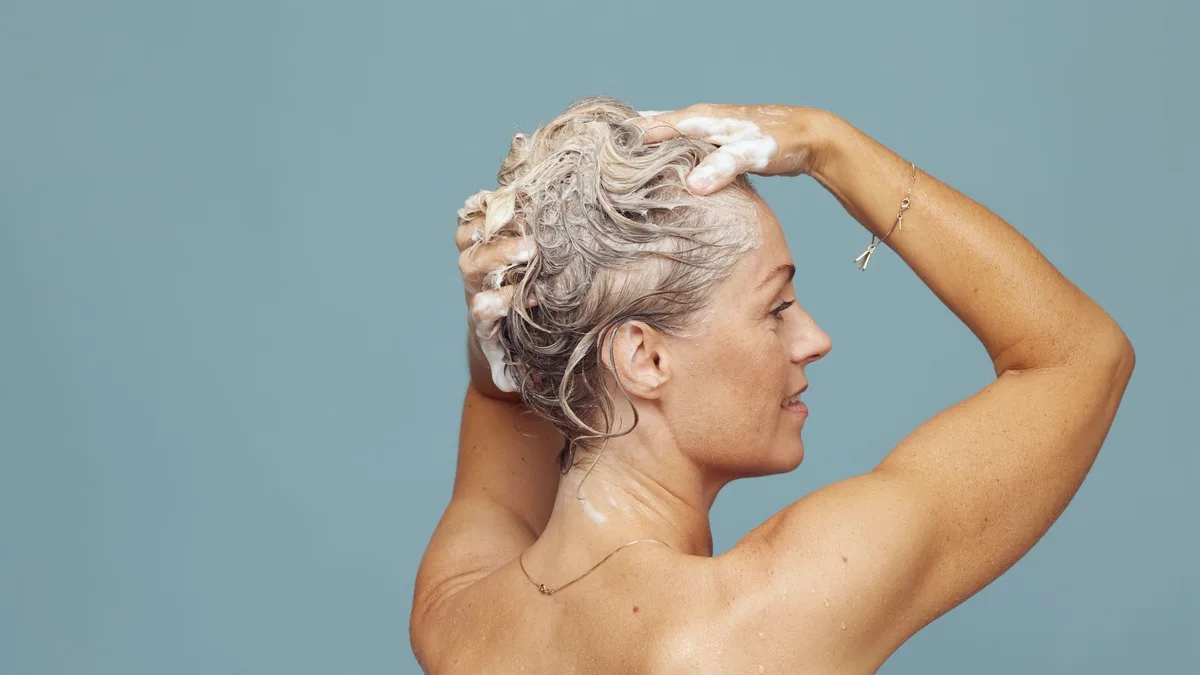
- Wet the hair thoroughly with lukewarm water and blot it so it is damp, not dripping — pigment slides off soaking hair and does not spread on dry hair.
- Pre-cleanse if there is buildup. Product residue and hard-water minerals block the pigment; a normal wash first makes the tone far more even.
- Apply where the brass is, not everywhere. On most heads that means mid-lengths and ends. A tint brush and 1–2cm sections give the most even result; hands are fine for maintenance.
- Time it from the table above.
- Rinse with cool water until it runs completely clear. Residual pigment left in the hair is what dulls it.
- Condition afterwards, every time. Toning shampoos are drying by design; follow with a conditioner or a hair mask.
The Colourist’s Alternative

Plenty of professional colourists quietly dislike purple shampoo — not because the chemistry is wrong, but because a rinse-off product has to be heavily pigmented to work in the two minutes it is on your head, and heavily pigmented products on porous hair are exactly how people end up grey.
The alternatives worth knowing:
- A purple-tinted leave-in. Because it stays in the hair, it needs far less pigment to achieve the same neutralising effect — gentler, more controllable, and no purple bathroom.
- A purple conditioner or mask instead of shampoo: it tones while it conditions, which suits dry or bleached hair much better.
- A colour depositing conditioner in a beige or pearl tone, which corrects warmth without the harshness of a violet shampoo.
- A salon gloss every eight weeks, which does more for tone than any home product and adds shine.
Choosing One in the UK
- £6–£10, Boots and supermarkets: L’Oréal EverPure Purple, John Frieda Sheer Blonde, Provoke Touch of Silver. Milder pigment, which is genuinely an advantage for beginners and for anyone with fine hair.
- £14–£25, the mid tier: Amika (keratin and avocado oil, hydrating as well as toning), Fudge, Bleach London — stronger pigment, better conditioning.
- £26–£32, premium: Davines Heart of Glass (violet pigment from jagua fruit), Olaplex No.4P, Kérastase Blond Absolu. Bond-building or heavily conditioning as well as toning.
- Match pigment strength to your shade: low-to-medium for dark blonde and highlighted brunette, medium for beige and light blonde, medium-to-high for platinum, silver and grey.
- Sulphate-free if your hair is chemically treated, which — if you are buying purple shampoo — it almost certainly is.
Where Brassiness Actually Comes From

Toning treats the symptom. If you are toning constantly, deal with the causes instead:
- Hard water minerals — iron and copper deposit on porous blonde hair and read as orange or green. A chelating shampoo every one to two weeks does more than any amount of purple.
- UV — sunlight photobleaches pigment and exposes the warm underlying tone. A UV leave-in or a hat in summer.
- Heat styling — oxidation from repeated high heat brings warmth through. Keep tools under 180°C.
- Chlorine — the copper it liberates is what turns blonde hair green. Wet and condition your hair before swimming.
- Product residue — buildup dulls and yellows. Clarify regularly.
Troubleshooting
| Problem | Cause | Fix |
|---|---|---|
| Hair has gone lilac or grey | Left on too long, or used too often on porous hair | Clarifying shampoo, then a fortnight off; it fades |
| Nothing has changed | Rinsed too soon, buildup blocking pigment, or the brass is orange not yellow | Longer contact time, clarify first — or switch to blue |
| Patchy tone | Applied unevenly, or porosity varies along the hair | Tint brush and sections; concentrate on the brassiest areas only |
| Hair feels dry and straw-like | Toning shampoos are drying; overuse compounds it | Condition every time; alternate with a purple mask instead |
| Chalky, ashy residue | Pigment plus hard-water minerals | Clarify every one to two weeks |
| Stained hands and bathroom | No gloves | Gloves, jelly barrier, old towel; wipe tiles immediately |
Frequently Asked Questions

Can I use purple shampoo every day?
Only if it is a mild everyday formula and your hair is healthy. Most people should use it once or twice a week and use a normal colour-safe shampoo in between. Daily use of a strongly pigmented formula is the fastest route to a flat, greyish blonde.
Will it work on brown hair?
Barely. Brown hair goes orange rather than yellow, so blue shampoo is the correct tool. Purple only helps on highlighted or balayaged brunettes, and even then only on the lightest pieces.
Does purple shampoo damage hair?
The pigment does not, but many formulas are more drying than a standard shampoo, and the people using them usually have bleached hair to begin with. Always condition afterwards, and choose sulphate-free.
How do I fix over-toned hair?
Wash with a clarifying shampoo — it lifts the surface pigment — then use a moisturising mask and leave the purple alone for a couple of weeks. It always fades; it just takes a few washes.
Is it any use on grey hair?
Very. Grey and white hair yellows from pollution, product and smoke, and violet pigment brightens it beautifully. Use it every five to seven days, and be conservative on the timing — white hair is highly porous and takes tone fast.
The Bottom Line
Purple shampoo is a tone corrector, not a treatment and not colour insurance. Match the pigment strength to your shade, time it by your porosity rather than by the bottle, use it once or twice a week, rinse until the water runs clear and always condition afterwards.
And if you find yourself toning every other day, the problem is not tone — it is hard water, UV or heat, and our hair colour care guide is where to fix it. Between salon visits, a root touch-up spray handles the regrowth that toning cannot.