

Women are routinely told their blood tests came back normal, handed a bottle of something, and sent away. The trouble is that hair loss treatment for women only works when it matches the cause — and the most common cause in women is not the one most articles write about.
Here is what the causes actually are, the one blood result to ask for by name, and what the clinical evidence says about the treatments — including a trial where the best result came from something that is not a drug at all.

Five Different Problems, Five Different Answers
| Type | What it looks like | What it needs |
|---|---|---|
| Female pattern hair loss | Widening parting, diffuse thinning at the crown, hairline usually preserved | Licensed topical treatment, started early; specialist options if that is not enough |
| Telogen effluvium | Sudden heavy shedding all over, 2–3 months after illness, surgery, childbirth, crash dieting or major stress | Treat the trigger; usually self-resolving in 6–9 months |
| Iron deficiency | Diffuse shedding, often with fatigue, breathlessness, brittle nails | Ferritin testing and correction — see below |
| Thyroid | Diffuse thinning with weight, energy or temperature changes | Thyroid panel and medical treatment |
| Traction or scarring alopecia | Loss at the hairline or temples from tight styles; or patches with smooth, shiny scalp | Urgent assessment — scarring loss is permanent once established |
Two of these resolve on their own, two need a doctor, and one needs a long-term product. Which is why the first step is never a purchase.
Ask for Your Ferritin, Not Just Your Haemoglobin

This is the single most useful thing in this article. Ferritin measures stored iron, and hair is extremely sensitive to it — far more so than the rest of the body.
- Low ferritin causes shedding even without anaemia. A normal full blood count does not rule it out, and a standard “your bloods are fine” often means haemoglobin was checked and ferritin was not.
- Ferritin below 30 ng/mL is strongly associated with telogen effluvium. Many clinicians working with hair want to see 70–100 ng/mL for follicles to behave properly — well above the level at which a lab flags a result as low.
- Higher-risk groups: anyone with heavy periods, postpartum women, vegetarians and vegans, endurance athletes, and people with absorption problems such as coeliac disease.
- Iron and thyroid are linked — iron is required for the enzyme that makes thyroid hormone, so a significant deficiency can drag thyroid function down with it.
When you see your GP, ask specifically for ferritin, a full blood count, and a thyroid panel, and ask what your ferritin number actually was rather than accepting “normal”. Do not start iron supplements on your own — too much iron is genuinely harmful, and the dose and duration should follow the result.
The UK Treatment Ladder for Pattern Loss

- Topical minoxidil — the recognised first-line option and available over the counter in a women’s formulation. Applied daily; results take three to six months; it works for as long as you use it. Ask the pharmacist which strength is appropriate for you.
- Oral minoxidil, low dose — prescriber-led, generally for women who cannot tolerate the topical version.
- Spironolactone — an androgen-receptor blocker used off-label in the UK, and not licensed for hair loss. Prescribing is normally done by, or in consultation with, a consultant dermatologist or endocrinologist, and it requires baseline and follow-up blood tests for kidney function and potassium.
Safety points that are not optional: spironolactone is contraindicated in pregnancy and requires reliable contraception and a pregnancy test before starting, and finasteride is not licensed for women of childbearing age. Anyone taking ACE inhibitors, potassium-sparing diuretics, potassium supplements or regular high-dose anti-inflammatories needs those interactions reviewed before an androgen blocker is considered.
The Trial Worth Knowing About
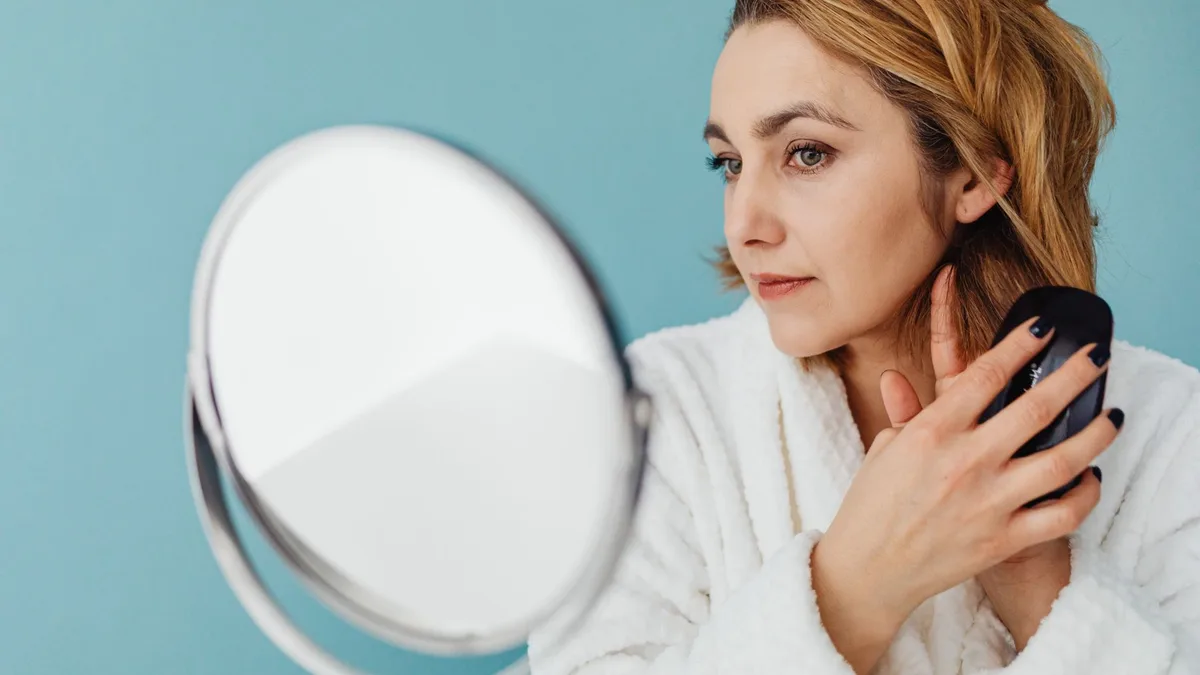
A randomised trial followed 120 women with mild-to-moderate female pattern hair loss for 24 weeks, comparing three approaches: topical minoxidil alone, minoxidil plus oral spironolactone, and minoxidil plus fortnightly microneedling.
| Group | Hair density gain at 24 weeks | Showed clinical improvement |
|---|---|---|
| Minoxidil alone | +9.95 hairs/cm² | 55.3% |
| Minoxidil + oral spironolactone | +16.76 hairs/cm² | 86.5% |
| Minoxidil + microneedling | +30.33 hairs/cm² | 95.0% |
The combination that performed best was not the one with the extra drug. Microneedling every two weeks alongside minoxidil roughly tripled the density gain of minoxidil alone — and the spironolactone group reported by far the most side effects, including menstrual disturbance and one case of raised potassium.
Two honest caveats: it was a single-centre trial of 120 women over 24 weeks, and it excluded severe cases. But it is the kind of result worth raising with a dermatologist — particularly since clinic microneedling has fewer systemic risks than an off-label prescription.
Life Stages: Postpartum, Perimenopause, PCOS

- Postpartum. Shedding two to four months after birth is normal and usually resolves. It gets worse and lasts longer if iron stores were depleted in pregnancy — iron requirements roughly double — and ferritin can take months to rebuild even with supplements. If your shedding runs past nine months, get ferritin checked rather than waiting it out.
- Perimenopause. A double hit: falling oestrogen changes the hair cycle, while heavier, irregular periods drop iron stores at the same time. Both are worth investigating together rather than assuming it is “just menopause”.
- PCOS. Higher androgen activity drives follicle miniaturisation, so pattern loss can start younger. This is the group for whom androgen-blocking approaches are most often considered — via a specialist.
- Crash dieting and GLP-1 weight loss. Rapid weight loss is a classic telogen effluvium trigger. Slower loss, adequate protein and monitored iron make a genuine difference.
While You Wait: Cosmetic Support
Any treatment takes three to six months to show anything. In the meantime, camouflage is legitimate and effective:
- Keratin building fibres bond electrostatically to existing hair and cover a visible parting instantly — the most effective cosmetic option there is, covered in our guide to hair thickening products.
- Root concealer sprays and powders reduce the contrast between scalp and hair.
- Volume at the root — lightweight mousse, drying upside down, and a blunter cut — all make thinning less visible.
- Look after the scalp: inflammation and buildup make everything harder. Our scalp care routine guide covers the basics, and a scalp serum with peptides and caffeine is a reasonable supportive addition.
- Stop the traction. Tight ponytails, buns, braids and extensions cause a genuinely preventable form of loss at the hairline.
Frequently Asked Questions

How much shedding is normal?
Fifty to a hundred hairs a day. What matters more than the count is whether your parting is widening, your ponytail feels thinner, or you can see more scalp than you used to — those are the signs worth acting on.
Can I use the men’s version of minoxidil?
The strengths and application instructions differ between the men’s and women’s licensed products, and using the wrong one can cause unwanted facial hair growth and irritation. Ask a pharmacist rather than assuming — it is a two-minute conversation over the counter.
Will my hair grow back after postpartum shedding?
In most cases yes, over six to twelve months, with the short regrowth around the hairline being the visible sign it is happening. If it has not settled by around nine months, ask for ferritin and thyroid tests.
Do hair supplements help?
Only if you are deficient in what they contain. Correcting low iron or vitamin D genuinely helps; taking a general hair vitamin when your levels are fine does not, and excess vitamin A or selenium can cause shedding in its own right. Test, then treat.
When should I see a doctor rather than trying products?
Straight away if the loss is patchy, sudden and heavy, accompanied by scalp pain, redness or scaling, or if you can see smooth shiny skin where hair used to be. Also if it is affecting your mood — that is a legitimate reason to be seen, and support exists.
The Bottom Line
Start with a diagnosis and a blood test, and ask for your ferritin number specifically. If it is pattern loss, topical minoxidil is the first-line option and works only while used; anything stronger is a specialist conversation with monitoring attached, and the pregnancy warnings are absolute.
Ask about clinic microneedling alongside it — in trial conditions it tripled the density gain of minoxidil alone. And in the six months before any of it shows, use the cosmetic options without guilt: they work today, and the treatment works later.