Lip liner is the step most people skip and professionals never do — and the difference shows. That crisp, defined, long-lasting lip you admire on someone else almost always starts with a liner most onlookers never notice. It defines the shape, stops colour from bleeding and feathering, helps lipstick last for hours, and can even subtly reshape or balance the lips. Learning to use it well is one of the highest-impact lip skills there is, from a natural finish to a fuller, overlined look. It is the quiet hero that closes our guide to lip care and lip makeup.
What Lip Liner Actually Does
Lip liner does far more than draw a line. It creates a defined edge so your lipstick has a crisp border rather than a fuzzy one; it acts as a barrier that stops colour bleeding and feathering into the fine lines around the lips; and, applied all over as a base, it grips the colour and dramatically increases how long your lipstick lasts. It can also correct and balance — evening out an asymmetrical lip, or subtly reshaping the natural line. In short, liner is the structure that makes lip colour behave.
Shaping and Overlining
The most talked-about use of liner is overlining — drawing just outside your natural lip line to create the illusion of fuller lips. Done subtly, staying very close to the natural edge and focusing on the centre of the top and bottom lip, it looks natural and flattering. Done heavily, straying far from the natural line, it looks obvious and unbalanced. The trick is a gentle, believable enhancement rather than a dramatic redraw. You can also underline slightly or focus definition where your lips need it, tailoring the shape to flatter your face.
Getting the Shade Right
- Match your lipstick for a seamless, invisible definition under bold colour.
- Match your natural lip colour with a “your lips but better” nude liner for everyday, versatile use under many shades.
- Avoid a liner much darker than your lipstick, which creates the dated, harsh outlined look — unless that is deliberately the style.
- A clear or nude liner works purely to stop bleeding without adding visible colour.
How to Apply It Well
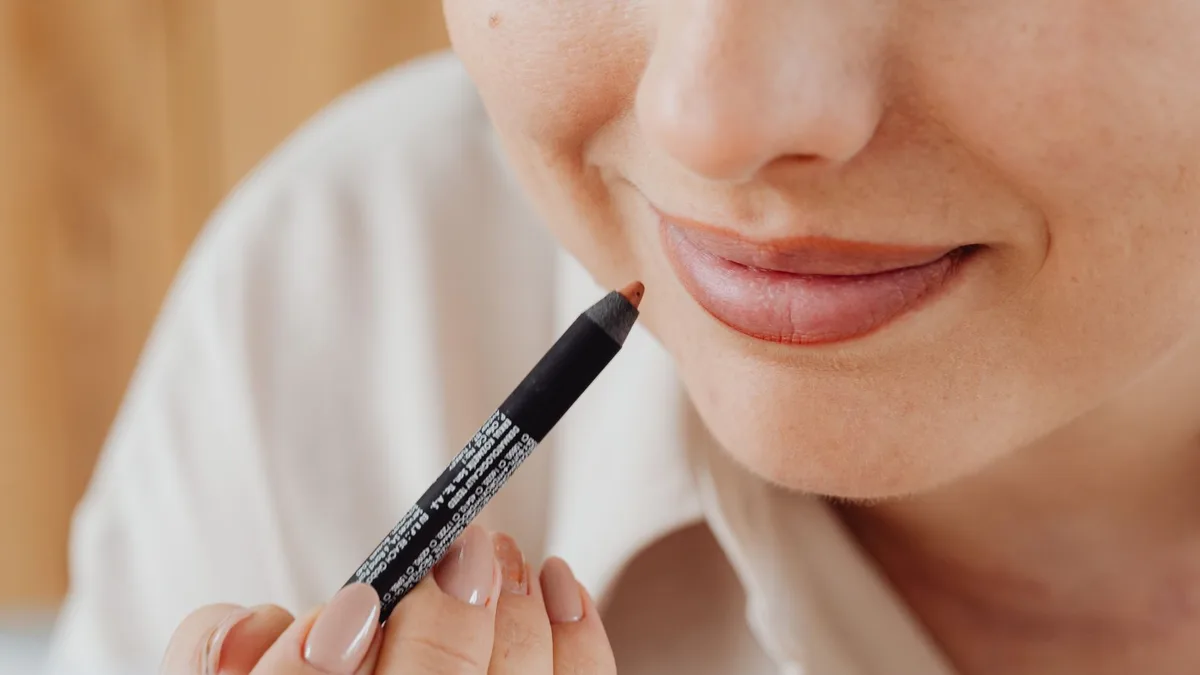
Start with a sharpened liner on smooth, balm-prepped lips. Outline the natural lip line with light, small strokes, starting from the cupid’s bow and corners for control, then — the pro step — fill in the entire lip with the liner as a base before your lipstick. This grips the colour, intensifies it and makes it last far longer. Blend the inner edge so there is no visible line between liner and lipstick, then apply your colour on top.
Liner With the Rest of the Lip
Liner is the foundation the rest of your lip look is built on. It is what keeps a liquid lipstick from feathering, and it defines the shape that a plumping product or gloss then fills. Even with a simple glossy lip, a touch of nude liner tidies the edges. Master liner and every other lip product looks sharper, lasts longer and sits exactly where you want it.
The Takeaway
Lip liner is the quiet secret behind crisp, long-lasting, perfectly shaped lips — defining the edge, stopping bleeding, gripping colour, and letting you subtly reshape or overline. Match the shade thoughtfully, fill in the whole lip as a base, and keep any overlining natural. Stop skipping this one small step and your lip colour instantly looks more polished and lasts far longer.