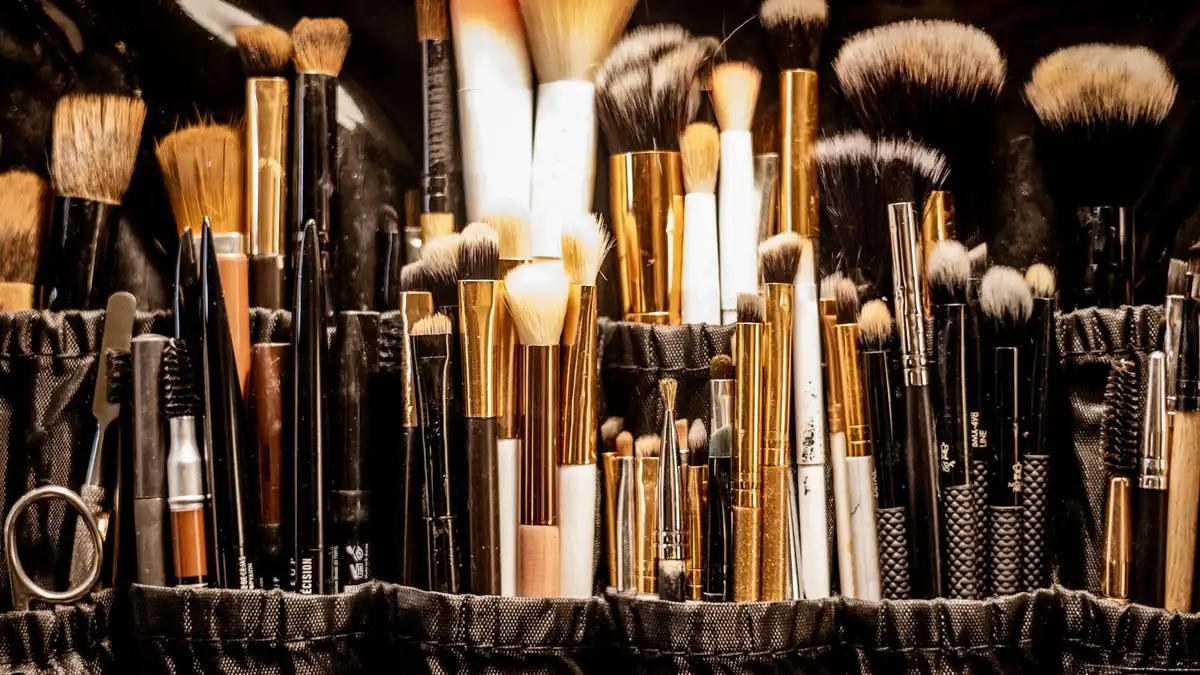
Walk into any beauty store and the brush wall is genuinely intimidating: dozens of shapes, sizes and mysterious names, many of which look almost identical. The industry would love you to believe you need all of them, but the truth is refreshingly simple — a handful of well-chosen brushes covers everything most people will ever do. Knowing which shapes actually earn their place, and which are just clever duplicates, saves you money, drawer space and confusion. This practical breakdown is the heart of our guide to makeup brushes and tools.
The Face Brushes You Need
- Foundation brush: a dense flat or buffing brush for smooth, buildable base coverage — or skip it in favour of a sponge.
- Powder brush: large and fluffy, for dusting on setting powder and bronzer without heaviness.
- Angled or contour brush: shaped to fit the hollows of the cheeks for precise contour, or a fluffier one for blush.
- Small concealer brush: optional but handy for precise concealer placement.
The Eye Brushes You Need
Eye makeup needs only a couple of brushes to start. A flat shader brush packs colour firmly onto the lid, while a fluffy blending brush softens and diffuses shadow in the crease so there are no harsh edges — these two do most eye looks. Add a small, angled brush for precise liner and defining the brows, and a smaller detail brush for the lower lash line or inner corner, and you can create almost any eye look. Beyond these, most eye brushes are variations on the same few shapes.
Which Ones You Can Skip
Here is where you save money. Many specialist brushes are lovely but not essential — you rarely need a dozen near-identical blending brushes, a specific brush for every single product, or novelty shapes that duplicate what you already own. A good blending brush works across multiple eye looks; a fluffy powder brush handles several jobs. Start with the essentials, and only add a specialist brush when you find a genuine gap in what you can do, rather than buying a whole set you will never fully use.
Natural vs Synthetic Bristles
One more useful distinction: bristle type. Synthetic brushes are best for liquid and cream products like foundation and concealer, because the smooth fibres do not absorb the product. Natural or natural-feel bristles suit powder products, picking up and diffusing powder beautifully. Most modern brushes are high-quality synthetic, which is also the vegan and often more hygienic choice. Matching bristle to product type helps each brush perform at its best.
Quality Over Quantity
A few good brushes beat a big cheap set every time. Well-made brushes apply more smoothly, do not shed bristles into your makeup, and last for years with care. You do not need to spend a fortune, but the very cheapest sets are often a false economy. And whichever you buy, they only stay good if you clean them — a job covered in our guide to brush cleaners. For a dewy base, a makeup sponge complements your brushes nicely.
The Takeaway
You need far fewer makeup brushes than the beauty aisle suggests — a foundation tool, a fluffy powder brush, an angled cheek brush, and a couple of eye brushes cover almost everything. Match synthetic bristles to creams and natural to powders, choose quality over a big cheap set, and skip the duplicates. Build a small, versatile kit and you will actually use every brush you own.