A van can be far more than a mode of transport. For many people, it becomes a source of income, a flexible business platform, or even the foundation for a location-independent lifestyle. As demand for local services, delivery, and remote work continues to grow, learning how to make money with a van has become increasingly relevant.
This guide explains how vans are used to generate income, what types of van-based work exist, how much people typically earn, and what factors determine success. The goal is to provide a clear, informational overview rather than quick promises or sales claims.
Why Vans Are Commonly Used to Generate Income
Vans are uniquely suited for income-generating work because they combine mobility with cargo capacity. Unlike cars, vans can transport equipment, tools, furniture, or inventory while remaining relatively easy to drive and maintain.
Common reasons vans are used for business include:
- Ability to operate locally without fixed premises
- Lower startup costs compared to storefront businesses
- Flexibility to work part-time or full-time
- Compatibility with both physical and remote work
- Scalability from solo work to small fleets
Because of these advantages, vans are widely used in logistics, trades, personal services, and mobile businesses.
If you run a van-based business, proper cover is essential, which is why many local operators choose AXA Insurance Omagh for their commercial insurance.
How Much Money Can You Make With a Van?
Income from a van depends on how it is used, the local market, and how consistently the work is performed. Some van owners use their vehicle occasionally for extra income, while others operate full-time businesses.
Typical income ranges include:
- Local moving or transport services: moderate to high per job
- Delivery and courier work: steady daily income
- Mobile services: higher hourly rates with fewer jobs
- Online or remote work (van life): scalable but skill-dependent
Many people combine more than one income method, which reduces risk and increases stability.
Categories of Van-Based Income
Van income generally falls into three broad categories:
- Local service-based work
- Specialized or niche mobile businesses
- Remote and van-life-friendly income
Each category serves a different lifestyle and risk tolerance.
Local Service-Based Ways to Make Money With a Van
Local services are often the fastest way to begin earning because demand already exists in most towns and cities.
Man and Van or Small Moving Services
Small-scale moving services help individuals relocate items between homes, flats, or storage units. These jobs are usually local and short-distance, which keeps costs predictable.
This type of work relies heavily on:
- Reliability and punctuality
- Careful handling of belongings
- Clear communication
Many customers prefer smaller operators over large moving companies for simple moves.
Hauling and Item Removal
Hauling services focus on transporting unwanted items such as furniture, appliances, or renovation waste. The work often overlaps with moving services but includes disposal or recycling responsibilities.
Success depends on:
- Understanding local disposal rules
- Managing physical workload
- Pricing jobs to account for dump fees
Some operators increase profitability by reselling usable items.
Furniture and Marketplace Deliveries
Online marketplaces have created demand for independent delivery services. Sellers and buyers often need help transporting bulky items.
This service usually requires:
- Flexible availability
- Careful loading and unloading
- Clear pricing based on distance and size
It is commonly used as part-time or weekend work.
Delivery and Courier Services
Vans are widely used for last-mile deliveries, especially for larger or bulkier items. This includes business-to-customer and business-to-business deliveries.
Delivery work appeals to people who prefer:
- Predictable routes
- Repetitive tasks
- Lower physical strain compared to moving
Consistency and vehicle reliability are key factors.
Mobile Car Detailing
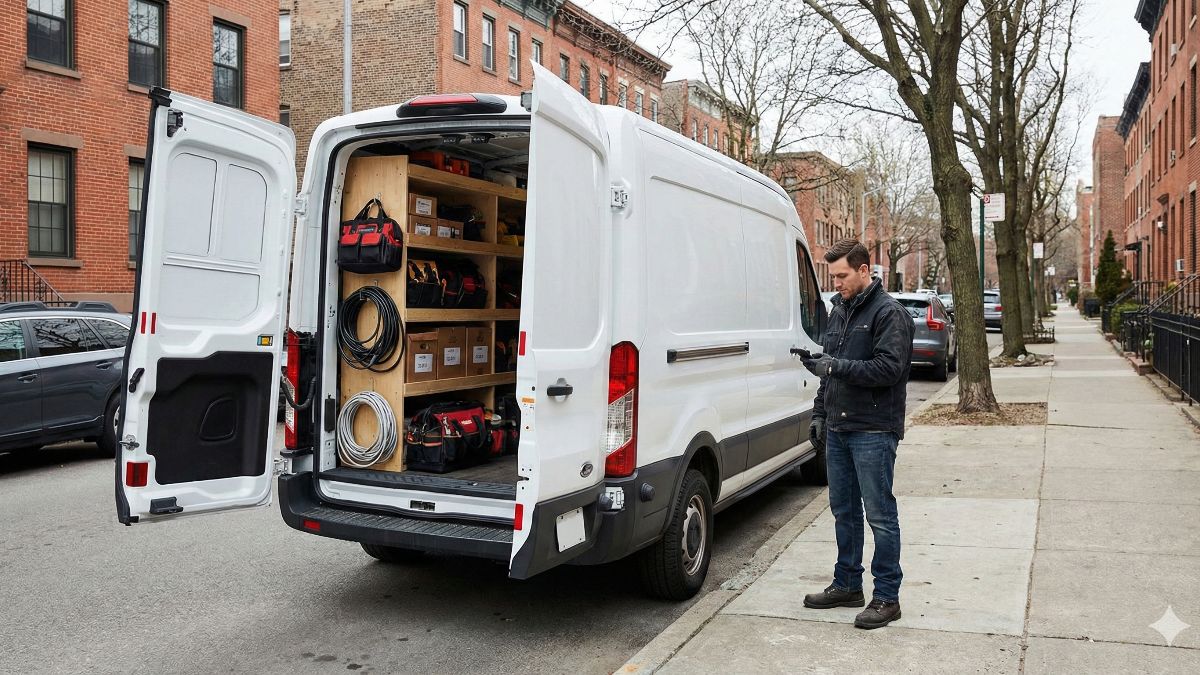
Mobile detailing services bring cleaning and vehicle care directly to customers. The van functions as a mobile storage unit for equipment and supplies.
This type of work benefits from:
- Attention to detail
- Strong customer reviews
- Repeat clients
Weather conditions and seasonal demand often influence scheduling.
Handyman and Home Services
A van can serve as a mobile workshop for basic home maintenance and repair services. This work is skill-dependent and often local.
Trust, professionalism, and insurance are particularly important because services take place inside customers’ homes.
For those interested in online selling, understanding How to Start an E-Commerce Business can be a practical next step alongside van-based income.
Specialized Van Businesses With Higher Entry Requirements
Some van-based businesses require more setup, training, or regulation but can generate higher income over time.
Mobile Food and Beverage Services
Food-related vans operate under stricter regulations and higher startup costs. While potentially lucrative, they require careful planning, permits, and compliance with health standards.
These businesses are most successful when:
- Demand is proven in advance
- Operating locations are consistent
- Costs are carefully controlled
Mobile Pet and Personal Care Services
Services such as pet grooming or mobile hairdressing bring personal care directly to clients. These businesses rely heavily on skill, hygiene, and reputation.
Repeat customers and referrals are the primary growth drivers.
Van Advertising and Rentals
Some van owners earn income by renting their vehicle or using it for advertising. These options typically provide lower but more passive income compared to active services.
Insurance coverage and vehicle condition are critical considerations.
Making Money With a Van While Living Van Life
For people living in a van full-time, income often comes from work that does not depend on location.
Freelancing and Remote Work
Many van lifers earn income through freelance or remote roles that only require a laptop and internet connection.
Common areas include:
- Writing and content creation
- Design and media editing
- Digital marketing and SEO
- Administrative and support roles
This approach emphasizes skills rather than physical assets.
Teaching and Tutoring Online
Online teaching allows van lifers to work across time zones and maintain consistent schedules. Reliable connectivity and quiet working conditions are essential.
Content Creation and Digital Products
Some van lifers monetize their experience by creating content, guides, or digital products. This approach usually takes time to grow but can scale without physical limits.
Choosing the Right Van for Income Purposes
The best van depends on how it will be used rather than brand preference.
General considerations include:
- Cargo capacity versus fuel efficiency
- Maintenance costs
- Local driving conditions
- Insurance requirements
Medium and long-wheelbase vans suit most service-based work, while campervans are better suited to remote or lifestyle-based income.
Legal, Insurance, and Practical Considerations
Before earning income with a van, it is important to understand basic requirements.
These may include:
- Commercial vehicle insurance
- Liability coverage
- Goods-in-transit insurance
- Local permits or registrations
Regulations vary by country and service type, so research is essential.
How People Find Work With a Van
Most van-based income is generated locally.
Common methods include:
- Search engine visibility
- Online listings and directories
- Social media and community groups
- Word-of-mouth referrals
Customer reviews play a major role in long-term success.
Vehicle-based businesses take many forms, and for those curious about passenger services, How Do I Start a Taxi Business offers a helpful overview of that model.
Conclusion
A van offers more than mobility — it provides access to flexible income opportunities. Whether used for local services, specialized mobile work, or remote employment, a van can support a wide range of earning strategies. Success depends on choosing the right use case, understanding costs, and remaining consistent. With careful planning and realistic expectations, a van can become a practical and sustainable way to earn money in 2026.
Frequently Asked Questions
Q: Can you make money with your own van?
A: Yes, many people use their own van to earn income through local services, deliveries, or mobile businesses. Earnings vary widely based on how often and how professionally the van is used.
Q: What business can I start with a van?
A: Common options include moving services, hauling, deliveries, mobile detailing, handyman work, or remote work if living in the van. The right choice depends on skills and local demand.
Q: How much money can you make with a cargo van?
A: Income can range from modest side earnings to full-time income depending on usage. Delivery and service-based work often provides the most consistent returns.
Q: Is owning a van profitable?
A: A van can be profitable when expenses are controlled and demand is consistent. Profitability improves when the van supports more than one income stream.
Q: Can I make money with a van part-time?
A: Yes, many people use vans for part-time or weekend work. Even limited availability can produce supplemental income.
Q: Do I need a special license to make money with a van?
A: In most regions, standard licenses cover vans up to a certain weight. Additional licenses or permits may be required for larger vehicles or specific services.