
There has been a market trading somewhere near the southern end of London Bridge for roughly a thousand years, which means people have been haggling over food on that exact spot since before England had a king named Henry. London’s markets and shopping streets are not a modern convenience layered onto the city; in many cases they are older than the buildings around them, and their stories run through plague, fire, war and gentrification without ever quite stopping trading. This guide walks through where the city’s most famous markets, arcades and shopping streets actually came from.
London Markets at a Glance
| Borough Market | Trading in some form for around 1,000 years |
| Portobello Road | Market since around 1870; antiques trade grew from the 1940s |
| Camden Market | Opened 30 March 1974 with just 16 traders |
| Columbia Road Flower Market | Founded 1869 by philanthropist Angela Burdett-Coutts |
| Burlington Arcade | Opened 1819, one of the world’s first shopping arcades |
| Harrods | Founded 1834 as a small grocer’s shop |
| Selfridges | Founded 1909, drew a million visitors in its first week |
| Savile Row | Tailoring tradition dating back to the 1840s and earlier |
A Thousand Years of Trading in One Spot
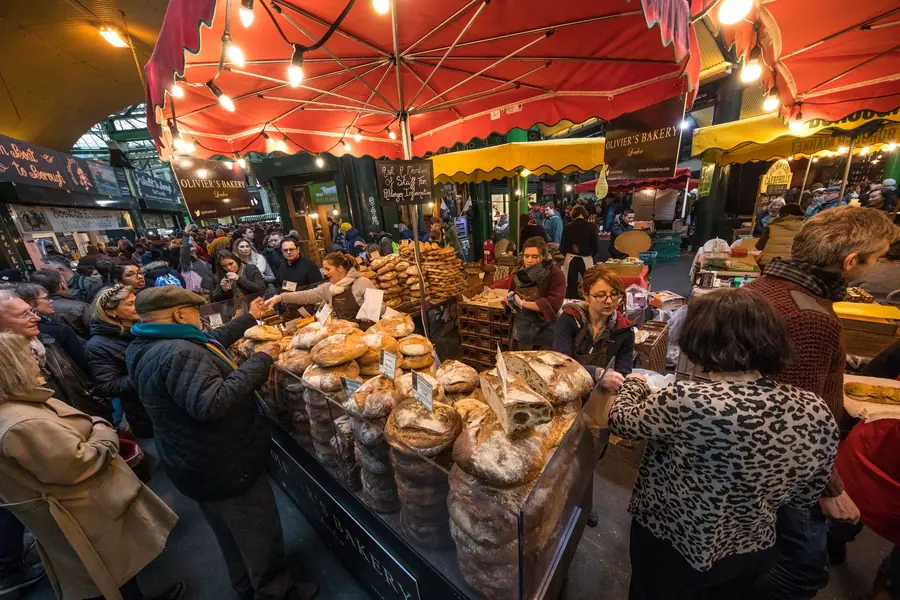
Trading has continued on this spot near London Bridge for around 1,000 years.
Image source: licensed stock photo
Borough Market’s claim to be London’s oldest is not marketing exaggeration; traders have worked this patch of ground near the southern approach to London Bridge for roughly a thousand years, making it older than most of the buildings, streets and even bridges around it. For centuries it functioned primarily as a wholesale market, supplying fruit and vegetables to greengrocers and traders across the city rather than selling directly to the public. The elegant glass and iron market buildings still standing today were added in 1851, designed by the architect Henry Rose, replacing whatever more makeshift structures had served the market for the centuries before. It was only from the 1990s onward that Borough Market reinvented itself as the food-lovers’ destination it is today, selling directly to shoppers rather than exclusively to the trade — a genuinely modern transformation layered on top of a genuinely ancient site.
Portobello Road: From Vegetables to Vintage
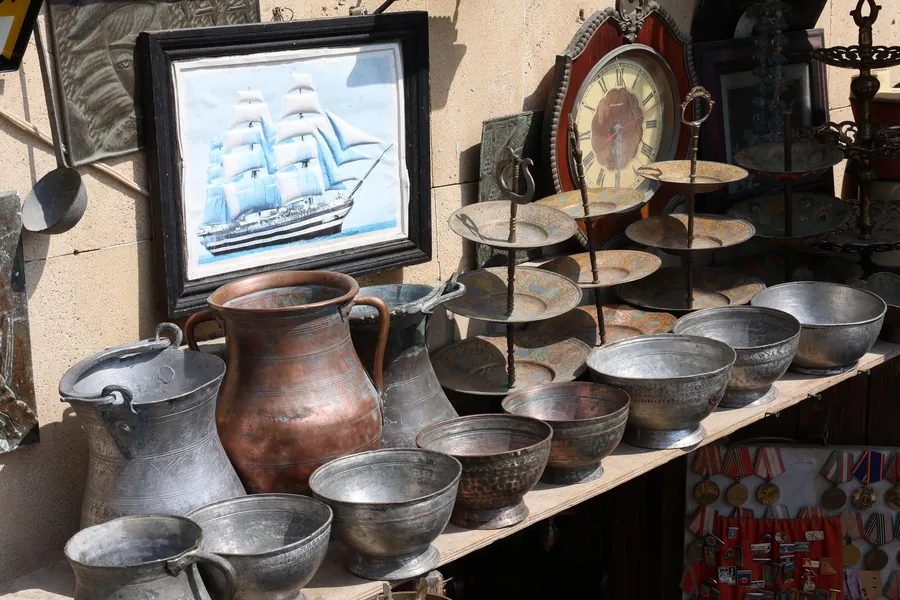
Portobello Road’s antiques trade grew after the Caledonian Market closed.
Image source: licensed stock photo
Portobello Road has been a market since around 1870, though its early trade bore little resemblance to what fills it today, dealing mainly in fresh food and everyday household goods for the surrounding neighbourhood. Its transformation into one of the largest antiques markets in the world happened almost by accident after the Second World War, when the closure of Islington’s Caledonian Market pushed a wave of antiques and bric-a-brac dealers to relocate their pitches to Portobello instead. What followed was decades of organic growth rather than any deliberate plan, turning a fifteen-hundred-metre stretch of road into a globally recognised destination for vintage clothing, antique furniture, old vinyl and every conceivable category of secondhand treasure, still trading alongside the fruit and veg stalls that were there first.
The Market a Motorway Accidentally Created
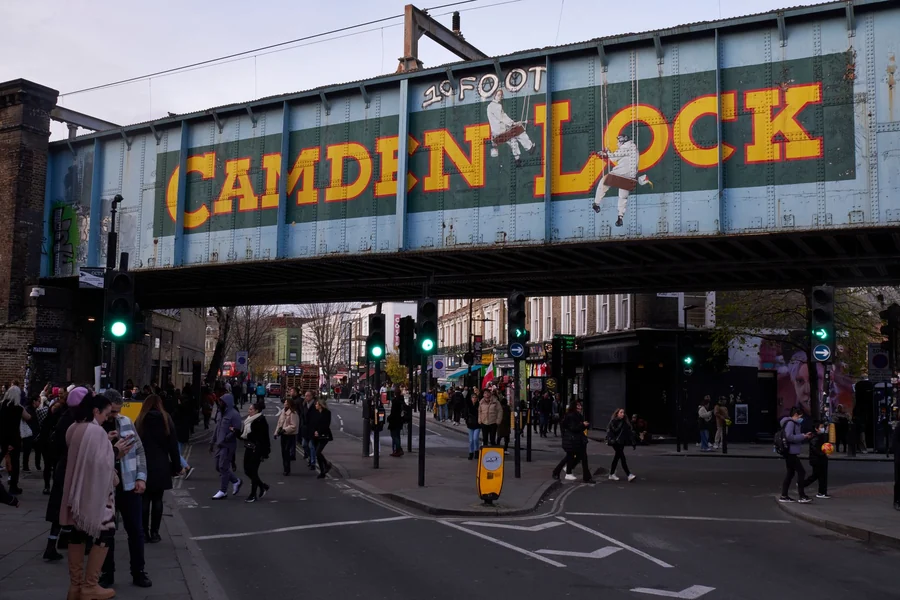
Camden Market began with just 16 traders on 30 March 1974.
Image source: licensed stock photo
Camden Market exists, in a roundabout way, because a road scheme fell through. A new market opened at Camden Lock on 30 March 1974 with just sixteen traders selling antiques, jewellery and crafts, intended only as a temporary use of the site while a planned urban motorway made permanent redevelopment impossible. By 1976 the motorway scheme had been abandoned entirely, but by then the market had already become a genuine fixture of Camden life, and rather than disappearing along with the road plan that had created the opportunity for it, it simply kept growing. What began as sixteen stalls filling in time before a road that was never built is now one of London’s most visited attractions, drawing crowds from across the world every single weekend.
A Philanthropist’s Flower Market
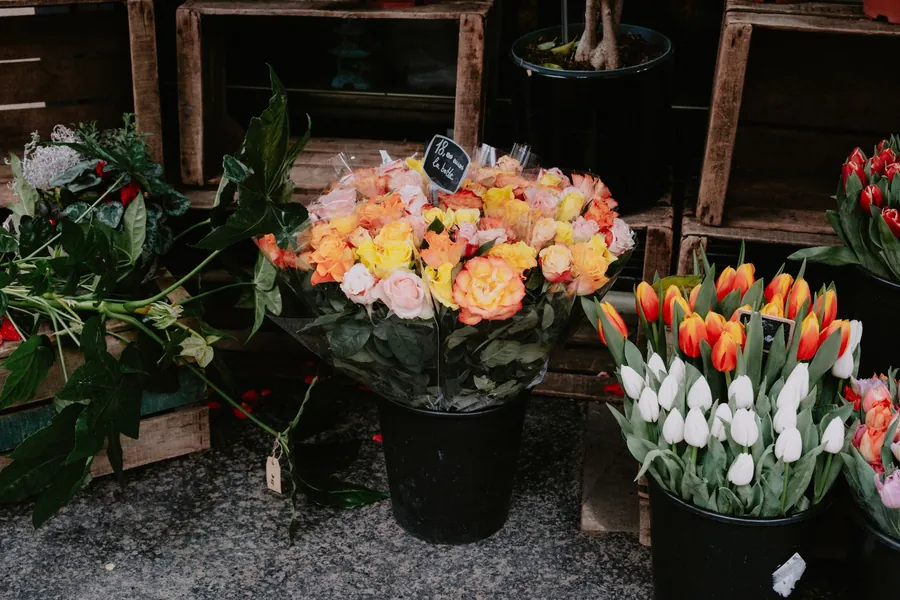
Columbia Road moved to Sunday trading so Jewish traders kept their Sabbath.
Image source: licensed stock photo
Columbia Road’s famous Sunday flower market grew out of an act of Victorian philanthropy that did not go entirely to plan. Angela Burdett-Coutts, one of the wealthiest women in Victorian Britain, funded a covered food market on the site in 1869, intending to improve conditions for London’s poor. The covered market itself never really succeeded as originally conceived, but the street market that survived around its edges did, eventually specialising in cut flowers and plants after traders from Covent Garden and Spitalfields began bringing their weekly surplus stock to sell there. Trading shifted to Sundays specifically so that Jewish traders, whose Sabbath fell on Saturday, could still take part, and that Sunday flower market, framed by genuinely Victorian shopfronts, has continued in more or less that form for well over a century.
The Arcade With Its Own Police Force
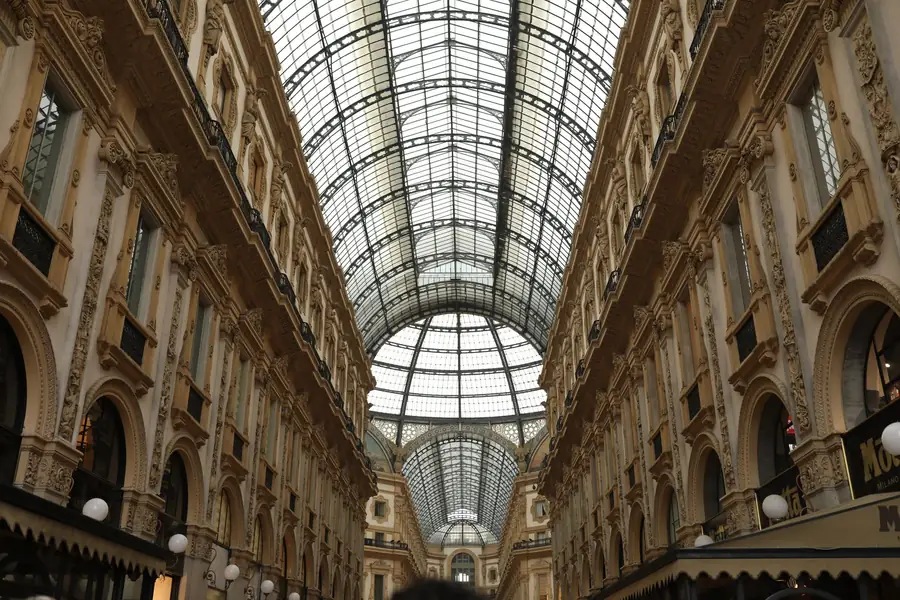
Burlington Arcade, opened in 1819, still enforces its own code of conduct.
Image source: licensed stock photo
Burlington Arcade opened in 1819 as one of the earliest covered shopping arcades anywhere in the world, a deliberately elegant, glass-roofed passage of small luxury shops designed to keep well-heeled Regency shoppers dry and away from the noise and mud of the street outside. From its earliest days it has been patrolled by the Burlington Beadles, uniformed officials in Victorian frock coats and gold-braided top hats who enforce a strict code of conduct dating back to Regency times, historically banning behaviour as varied as whistling, singing, running and carrying large parcels. It sounds faintly absurd today, and it is meant to; the Beadles function now largely as a charming piece of living history and a genuinely useful deterrent to theft, making Burlington Arcade one of the very few shopping streets in the world that still enforces its own private code of manners.
From a Grocer’s Shop to a Palace of Shopping
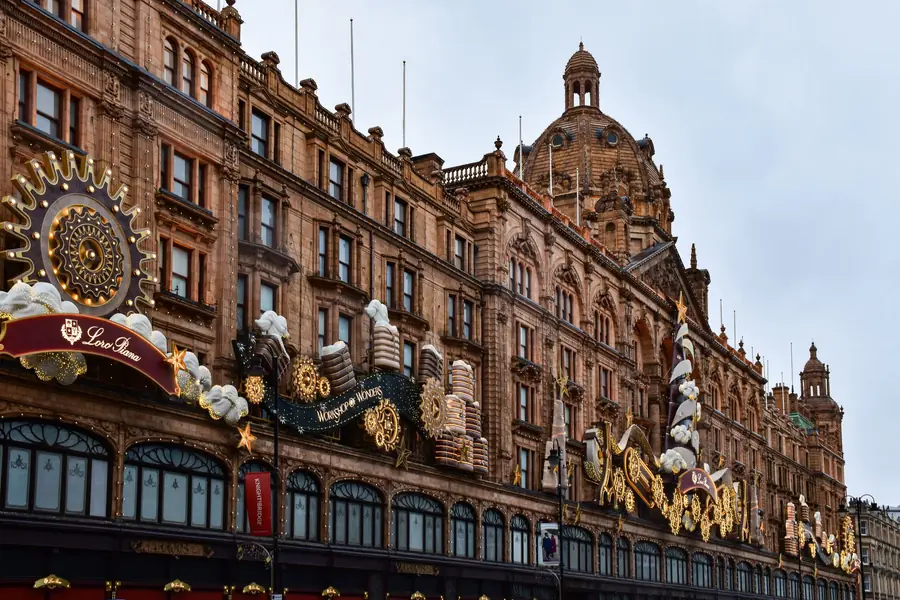
Harrods began as a small East End grocer’s shop in 1834.
Image source: licensed stock photo
Harrods began life in 1834 as a modest grocery shop in London’s East End, opened by Charles Henry Harrod, and only moved to its now-famous Knightsbridge site in 1849. Disaster struck in 1883, when a fire completely destroyed the Brompton Road store; rather than diminish the business, the rebuilding that followed produced an even larger, grander store on the same site, setting a pattern of ambitious expansion the company would repeat for the next century. Selfridges tells an almost opposite story: rather than growing slowly from humble beginnings, it arrived fully formed in 1909, when the American retailer Harry Gordon Selfridge opened a vast Oxford Street department store built explicitly around theatre and spectacle rather than mere convenience. Ninety thousand people visited on its opening day alone, and more than a million came through its doors in the first week — a launch scale almost unheard of for a shop, then or since.
Savile Row and the Invention of “Bespoke”
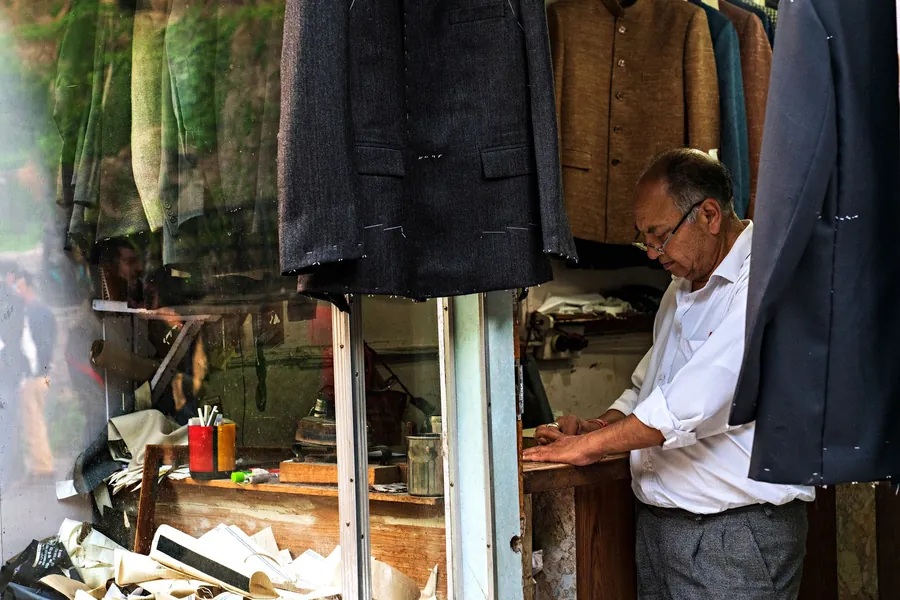
Savile Row tailors trace back to the 1730s, and gave English the word bespoke.
Image source: licensed stock photo
Tailors began setting up along Savile Row as early as the 1730s, well before the street had even acquired its current name, and the trade has never really left. Henry Poole, still widely credited as the founder of modern Savile Row tailoring, opened his premises there in 1846, and further famous houses, including Anderson & Sheppard in 1906, followed over the decades after. The word “bespoke” itself is often traced to this exact trade: a length of cloth chosen by a customer was said to “be spoken for” before it was cut, as opposed to being made up in standard sizes for anyone to buy off a shelf. Whether or not that etymology is entirely precise, the underlying practice — a suit built individually, by hand, around one specific customer’s measurements — genuinely is what has kept this one short street internationally famous for the better part of two centuries.
Oxford Street and the Rise of the Shopping Street
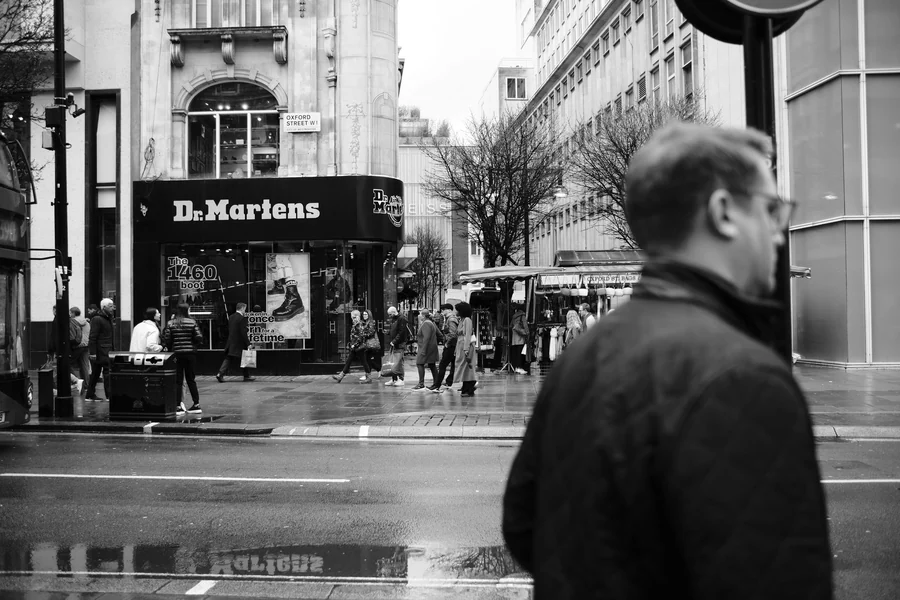
Oxford Street grew along the route of an old Roman road out of the city.
Image source: licensed stock photo
Oxford Street, following the route of an old Roman road out of the city, transformed from a fairly ordinary residential thoroughfare into a dense shopping destination over the nineteenth and early twentieth centuries, as department stores and chain retailers competed for space along its mile and a half. It has held, more or less continuously since, a reasonable claim to being one of the busiest shopping streets in Europe, its character shifting with each economic era from Victorian drapers to twentieth-century department stores to today’s flagship international chains. Streets like Bond Street, running parallel and famous for luxury and high fashion rather than mass retail, developed their own distinct specialisms alongside it, so that London’s shopping geography today still roughly reflects divisions in wealth and taste that were already forming well over a century ago.
Markets as Living Culture, Not Just Commerce
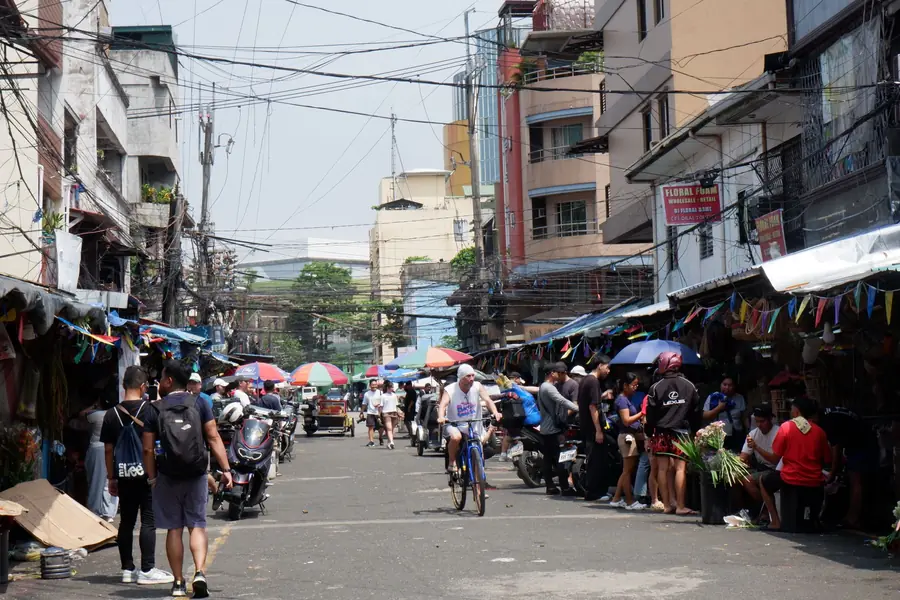
A market is a social institution first, and a shop second.
Image source: licensed stock photo
What ties Borough Market, Portobello Road, Camden and Columbia Road together is not their age or their goods but the fact that all four are still, fundamentally, social institutions rather than pure retail. A market forces a kind of interaction — haggling, chatting, comparing stalls — that a supermarket or a shopping centre was never designed to produce, and that difference is precisely why London’s historic markets have proven so resistant to being replaced by more efficient alternatives over a century or more of retail change. Visiting one properly means treating it as an experience rather than a shopping list: arriving without a fixed plan, talking to traders, and accepting that the point is at least as much the atmosphere as the purchase.
How to Use This Guide
This page anchors a growing series of guides to individual markets, arcades and shopping streets across London. As those detailed guides are published, they will be linked from this page.
Frequently Asked Questions
What is the oldest market in London?
Borough Market has the strongest claim, with trading recorded near London Bridge for roughly a thousand years, on more or less the same site.
When did Portobello Road become an antiques market?
Mainly from the 1940s, after the closure of Islington’s Caledonian Market sent antiques dealers to Portobello, which had traded general goods since around 1870.
Why is Camden Market called Camden Lock?
The original 1974 market opened beside a lock on the Regent’s Canal in Camden, giving the site the “Camden Lock” name still used today.
Why is Columbia Road Flower Market on Sundays?
Trading moved to Sunday so Jewish traders, whose Sabbath fell on Saturday, could still take part, a tradition the market has kept ever since.
What do the Burlington Arcade Beadles do?
They are uniformed officials who have patrolled the arcade since 1819, enforcing a traditional code of conduct and acting as a visible deterrent to theft.
Where does the word “bespoke” come from?
It is widely traced to Savile Row tailoring, where cloth chosen by a customer was said to “be spoken for” before being individually cut and made.
A note on this guide: market days, trading hours and stallholders change over time – always check the specific market’s official information before visiting.