
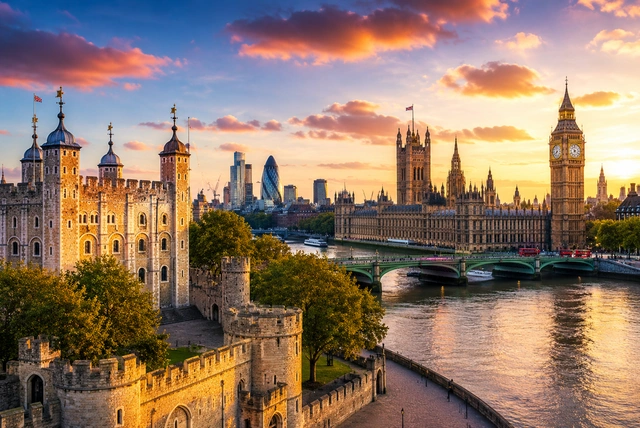
Have you ever stood in a city and felt as though the streets were quietly telling stories from another age? London has that magic. One moment you’re crossing a modern bridge over the Thames, and the next you’re standing where Roman soldiers once walked nearly 2,000 years ago. For history lovers, London is more than a capital city—it is a living museum filled with royal palaces, ancient ruins, and famous landmarks that shaped Britain and the world. Whether you’re visiting for the first time or rediscovering your own city, the historical places in London offer unforgettable experiences. From medieval castles to Victorian marvels, every corner reveals another chapter of history waiting to be explored.
1. Tower of London: The Castle That Saw It All
If there is one place that captures London’s dramatic past, it is the Tower of London. Built by William the Conqueror in 1066, this historic castle has served as a royal palace, prison, treasury, and even a zoo. Walking through its gates feels like stepping into a different century, where kings ruled and prisoners awaited uncertain fates.
The White Tower remains one of the oldest surviving buildings in the city. Visitors flock here to admire the Crown Jewels and hear tales of famous prisoners, including Anne Boleyn. As one of the few UNESCO sites in London, it remains among the best historic places in London for anyone interested in British heritage sites.
According to Historic Royal Palaces, the Tower has played a central role in British history for nearly 1,000 years. After your visit, you can discover more things to do in London to complete your trip.
2. Westminster Abbey and the Palace of Westminster
Standing beside Westminster Abbey, it is hard not to feel the weight of history. For almost a thousand years, monarchs have been crowned here, and royal weddings continue to capture the world’s attention. Inside, beautiful stained glass windows and ancient tombs tell stories of kings, queens, scientists, and poets.
Just nearby stands the Palace of Westminster and the iconic Big Ben. These famous historical landmarks London is known for remain at the heart of British democracy. Visitors often pause along the Thames to admire the Gothic architecture glowing at sunset.
As reported by Westminster Abbey, every coronation since 1066 has taken place here. Together, these sites represent some of the most important cultural landmarks London proudly preserves and are essential stops on any London history tour.
3. Buckingham Palace and Kensington Palace
Few sights feel more British than the Changing of the Guard outside Buckingham Palace. Crowds gather daily to witness this tradition, while the palace itself remains the official residence of the monarch. Walking through nearby St James’s Park, visitors often imagine the generations of royals who shaped the nation.
Not far away lies Kensington Palace, another important royal residence connected to Queen Victoria and modern royal history. These royal palaces in London offer a glimpse into centuries of royal life and tradition.
According to The Royal Collection Trust, Buckingham Palace has served as the monarch’s official residence since 1837. These iconic London monuments continue to attract millions of visitors each year.
4. St Paul’s Cathedral and the Great Fire of London
Imagine London in 1666, with flames sweeping through the city. The Great Fire destroyed much of medieval London, but from the ashes rose St Paul’s Cathedral. Designed by Sir Christopher Wren, its magnificent dome has become one of the city’s defining landmarks.
Climbing to the Whispering Gallery rewards visitors with breathtaking views, but the true beauty lies in the cathedral’s history. Nearby stands The Monument, marking where the Great Fire began in Pudding Lane. Together, they tell a story of resilience and renewal.
According to St Paul’s Cathedral, the rebuilding process lasted more than 35 years. Today, it remains one of the finest historic churches in London and among the city’s most important heritage attractions.
5. Roman London: The London Wall and Mithraeum
Many visitors are surprised to learn that London’s story began long before kings and castles. Under the busy streets lies Roman Londinium, founded nearly 2,000 years ago. Fragments of the London Wall still stand today, reminding us of the city’s ancient origins.
Hidden beneath modern office buildings, the London Mithraeum reveals an ancient Roman temple dedicated to Mithras. Stepping inside feels like entering another world where soldiers and merchants once worshipped.
According to London Mithraeum, the temple was discovered during excavations in the 1950s. These ancient places in London are among the city’s most fascinating hidden historical gems and offer visitors a rare connection to Roman Britain.
6. Hampton Court Palace and Tudor England
There is something unforgettable about walking through Hampton Court Palace. Once home to King Henry VIII, this magnificent palace witnessed royal feasts, political intrigue, and dramatic love stories that shaped English history.
Visitors can explore grand halls, beautiful gardens, and the famous maze while imagining life during the Tudor period. The kitchens alone reveal how lavish royal life once was. For history lovers, this remains one of the top historical attractions London offers.
According to Historic Royal Palaces, the palace has stood for over 500 years. It remains one of the most impressive historic sites in London and a perfect example of Tudor architecture.
7. Shakespeare’s Globe and London’s Cultural History
History is not only about kings and wars—it is also about art and storytelling. Shakespeare’s Globe brings visitors back to Elizabethan England, where audiences gathered to watch plays by William Shakespeare.
Sitting beneath the open sky during a performance feels much like it did centuries ago. The theatre offers a glimpse into daily life, entertainment, and literature during one of England’s most influential periods.
If you enjoy live performances, you may also explore popular theatres in Manchester for more cultural experiences. According to Shakespeare’s Globe, the theatre was carefully reconstructed near its original site.
8. Greenwich and Britain’s Maritime Heritage
Greenwich feels like a world of its own. The riverside setting, historic ships, and grand buildings create an atmosphere unlike anywhere else in London. The Old Royal Naval College stands proudly here, showcasing Britain’s naval heritage.
Visitors often spend hours admiring the Painted Hall, sometimes called Britain’s “Sistine Chapel.” Nearby attractions, including the Prime Meridian, remind us how London helped shape global navigation and trade.
According to Old Royal Naval College, the Painted Hall is one of Europe’s finest interiors. Greenwich remains one of the greatest London heritage attractions and an essential stop for history lovers.
9. Hidden Historical Gems: Highgate Cemetery and Leadenhall Market
Some of London’s most memorable places are not castles or palaces. Highgate Cemetery offers a peaceful glimpse into Victorian society, while Leadenhall Market preserves centuries of commercial history beneath its ornate roof.
Walking through Highgate’s winding paths feels like entering another era. Meanwhile, Leadenhall Market shows how trade helped transform London into a global city. These locations reveal a quieter side of history often missed by tourists.
If you’re visiting during warmer months, checking London weather in June can help you plan outdoor sightseeing. According to Highgate Cemetery, the site remains one of Britain’s finest examples of Victorian burial architecture.
10. Churchill War Rooms and London’s Wartime Spirit
Descending into the Churchill War Rooms is like stepping into the tense days of World War II. Here, leaders planned strategies while bombs fell above the city. The preserved rooms remain almost exactly as they were left in 1945.
The experience reminds visitors of London’s resilience during difficult times. Maps, telephones, and personal belongings help bring history to life in a powerful way.
After a long day of exploring London’s historic attractions, many travelers enjoy discovering unique experiences such as the Bunker Bar in London or sampling the city’s famous food trucks. According to Imperial War Museums, the underground headquarters remained secret for years after the war ended.
Why London’s History Never Stops Inspiring
The beauty of London lies in how history exists alongside everyday life. One moment you’re enjoying coffee near a modern office tower, and the next you’re standing beside Roman ruins or medieval churches. The historical places in London are more than tourist attractions—they are living reminders of the people, events, and ideas that shaped Britain.
Whether you’re exploring UNESCO sites in London, visiting royal palaces, or searching for hidden historical gems London quietly preserves, there is always another story waiting around the corner. If you’re planning a longer stay, guides to cubicle hotels in London can help make your trip easier. The next time you walk through London, slow down and listen carefully. The city has been telling its story for nearly two thousand years—and it isn’t finished yet.
What are the most famous historical places in London?
The Tower of London, Westminster Abbey, Buckingham Palace, St Paul’s Cathedral, and the Palace of Westminster are among the most famous historical landmarks London offers. These sites represent different periods of British history.
Are there UNESCO sites in London?
Yes. The Tower of London, Westminster Palace, and Maritime Greenwich are recognized UNESCO sites in London because of their global historical importance.
What are the best historic places in London for first-time visitors?
First-time visitors should explore the Tower of London, Buckingham Palace, St Paul’s Cathedral, Westminster Abbey, and Greenwich to experience London’s rich heritage.
How many days are needed for a London history tour?
Most visitors need three to five days to enjoy the top historical attractions London offers. History enthusiasts may prefer a full week.
Are there hidden historical gems in London?
Yes. The London Mithraeum, Leadenhall Market, Highgate Cemetery, and medieval alleys within the City of London are fascinating hidden historical gems London visitors often overlook.