Every summer ends with the same little adventure in homes across London. One child proudly tries on a brand-new school jumper, another insists their old backpack is still “perfect,” while parents quietly wonder if they’ve remembered everything for the first day back. It starts with a simple shopping trip but often turns into a last-minute search for missing PE trainers, a scientific calculator, or that one notebook a teacher suddenly requests. If this sounds familiar, you’re certainly not alone.
The good news is that preparing for a new school year doesn’t have to feel overwhelming. A well-planned school supplies checklist London helps parents shop smarter, save money, and make sure children walk through the school gates feeling confident and ready to learn. Whether your child is joining Reception, moving into Year 7, or preparing for GCSE studies, every stage comes with different needs. Some London schools provide exercise books and classroom materials, while others expect students to bring most of their own equipment.
This guide has been created especially for parents and students in London. Instead of encouraging unnecessary spending, it focuses on practical school essentials, UK-specific stationery, uniform advice, and simple money-saving ideas that actually work. You’ll also find complete checklists that are easy to follow before term begins. By the time you’ve finished reading, you’ll know exactly what belongs inside your child’s school bag—and what can stay on the shop shelf.
Why Every London Family Needs a School Supplies Checklist Before Term Starts
Ask almost any parent what the busiest week of the school year feels like, and you’ll probably hear the same answer: organised chaos. One evening you’re checking shoe sizes, the next you’re searching every cupboard for a missing glue stick. Before long, you’re standing in a crowded stationery aisle wondering whether your child really needs another notebook.
This is exactly why a back to school checklist London is so valuable. Rather than buying everything you see, a checklist helps you focus on what your child’s school actually requires. It saves time, reduces unnecessary spending, and makes those busy final days of the holidays far less stressful.
One important thing many parents don’t realise is that school requirements vary across London. A primary school in Richmond may provide most classroom stationery, while a secondary school in Camden or Croydon expects students to arrive with a fully stocked pencil case, scientific calculator, folders and subject notebooks. Independent schools may also have different expectations compared with local authority schools.
That is why your school’s official equipment list should always be your starting point. Think of this guide as your master checklist, then compare it with the information provided by your child’s school before you begin shopping.
Planning ahead also creates valuable learning opportunities. When children help pack their own school bags, tick off supplies and organise their stationery, they begin developing responsibility and organisational skills that stay with them throughout school and beyond.
If you’re already thinking ahead to your child’s future education, you may also enjoy reading our guide to London Business School, which explores one of the city’s most respected institutions for higher education.
According to Clarks’ Ultimate Back-to-School Checklist for UK Parents, checking your school’s official list before buying uniforms and supplies is one of the easiest ways to avoid unnecessary purchases while ensuring children arrive fully prepared for their first day.
Complete Primary School Supplies Checklist London Parents Can Follow
The first day of primary school is often more emotional for parents than children. Young learners usually walk into the classroom excited about making friends and meeting their teacher, while parents quietly hope everything inside the school bag is exactly what is needed.
The good news is that most London primary schools provide many classroom learning materials, including exercise books and worksheets. This means families usually only need to buy everyday essentials that children will use throughout the school day.
Before heading to the shops, check your school’s latest guidance because every school is different. Once you’ve done that, the following checklist covers the items most Reception and primary school pupils are expected to have.
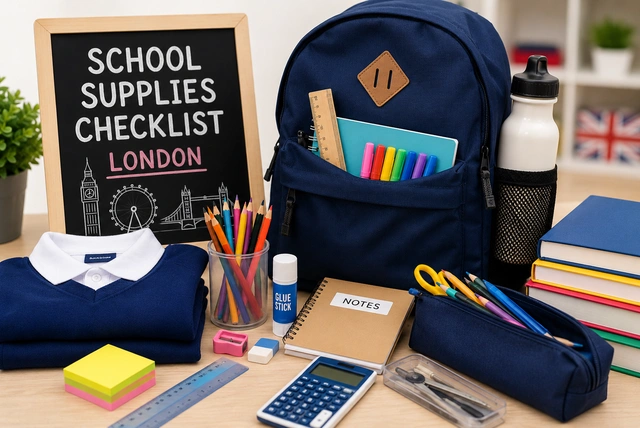
- Comfortable school backpack or book bag
- Pencil case
- HB pencils
- Rubber (eraser)
- Pencil sharpener
- 30 cm ruler (or child-friendly ruler if requested)
- Colouring pencils
- Glue stick
- Child-safe scissors (only if requested)
- Reusable water bottle
- Lunch box for packed lunches
- Reading folder or reading diary
- PE kit
- Waterproof coat
- Name labels for clothing and belongings
Many parents are tempted to buy large stationery sets filled with colourful extras, but younger children often use only a small number of items each day. Buying practical, good-quality supplies usually works much better than filling a backpack with unnecessary equipment.
It also helps to involve your child in the preparation. Let them choose their backpack, decorate their pencil case or place name labels on their belongings. These small moments build excitement and make the transition back to school feel like a positive adventure instead of a stressful routine.
According to Ryman’s Back-to-School Checklist, parents should focus on the essentials first and only purchase additional stationery if it appears on the school’s recommended equipment list.
Complete Secondary School Supplies Checklist UK Students Need Every Day
Starting secondary school is a milestone that feels both exciting and slightly overwhelming. Many Year 7 students walk through the school gates carrying a mix of confidence and nerves. New classrooms, different teachers for every subject and a larger timetable mean students need to be much more organised than they were in primary school. That is why having a complete secondary school supplies UK checklist makes such a difference.
Unlike many primary schools, secondary schools across London usually expect students to bring their own stationery every day. Teachers often assume pupils already have the equipment needed for maths, science, English and other subjects. Forgetting a calculator or ruler might seem like a small mistake, but it can make lessons more difficult and leave students borrowing equipment from classmates.
Before buying supplies, always read the school’s latest equipment list because requirements can differ between academies, grammar schools, comprehensive schools and independent schools. However, most students will benefit from packing the following essentials.
- Strong backpack with multiple compartments
- Large pencil case
- Blue or black pens
- HB pencils
- Red, green or purple editing pen (if required)
- Highlighters
- 30 cm ruler
- Rubber (eraser)
- Pencil sharpener
- Scientific calculator
- Geometry set including compass and protractor
- A4 notebooks or refill pads
- Subject folders or ring binders
- Plastic wallets for worksheets
- Sticky notes or page markers
- Student planner or diary
- USB flash drive if requested
- Reusable water bottle
Older students may also need headphones or a laptop if their school uses digital learning platforms, although many schools provide access to shared devices during lessons. The key is to buy equipment that is durable rather than fashionable. A reliable calculator or sturdy folder will often last several school years if looked after properly.
Good organisation also saves valuable time. Encourage your child to keep different subjects in separate folders and restock their pencil case every weekend. Small habits like these help students focus on learning instead of searching for missing equipment during class.
If your teenager is interested in technology and wants to see where organised study can lead, our guide to student life at London City Institute of Technology explores how good learning habits continue into further education.
According to Explore Learning’s Back-to-School Stationery Guide, secondary school students should arrive with everyday stationery, including calculators, geometry equipment and organised subject folders to support independent learning.
School Uniform Checklist London and School Bag Essentials UK Students Should Never Forget
Every London parent has experienced that frantic morning when one missing tie, PE shirt or pair of black socks suddenly turns the house upside down. The first few weeks of term are much easier when everything has been prepared before the school run begins.
School uniforms are about more than simply following dress codes. Wearing the correct uniform helps children feel part of the school community and ensures they are ready for every lesson, assembly and activity. Because requirements vary between schools, always check the latest uniform policy before buying new clothing.
- School blazer or jumper
- School polo shirt or formal shirt
- Trousers, shorts or skirt approved by the school
- School tie where required
- Socks or tights
- Black school shoes
- PE shirt
- PE shorts or tracksuit bottoms
- PE trainers or plimsolls
- Waterproof coat
- Name labels for all clothing
Just as important as the uniform is the school bag itself. A quality backpack should feel comfortable on both shoulders, include padded straps, have separate compartments for books and stationery, and offer enough space for a lunch box and water bottle. Older students who carry laptops or tablets should choose a bag with a padded laptop compartment for extra protection.
Inside every school bag essentials UK checklist should be a packed pencil case, student planner, water bottle, tissues, hand sanitiser, lunch where needed, reading book and any PE kit required that day. Packing the bag the evening before not only reduces stress but also teaches children responsibility and independence.
Labelling belongings is another simple habit that many families overlook. Hundreds of jumpers, lunch boxes and water bottles end up in school lost property every term. Adding a child’s name to personal items makes it much easier for them to be returned.
If your child is interested in modern learning spaces and how education continues beyond school, you can also explore our article about the facilities and resources at London City Institute of Technology, which highlights the importance of organised study environments.
According to Clarks’ UK back-to-school guide, checking uniform requirements early, buying properly fitted school shoes and clearly labelling personal belongings are among the best ways to help children start the school year with confidence and avoid unnecessary replacements.
Smart Back-to-School Shopping Tips That Save London Families Money
Every parent knows how quickly a simple shopping trip can become expensive. You walk into a stationery shop planning to buy a few pens, and before you know it, the trolley is filled with colourful notebooks, fancy pencil cases and gadgets your child insists they absolutely need. It is easy to spend more than planned, especially during the busy back-to-school season.
The good news is that preparing for school doesn’t have to stretch your budget. The smartest shoppers start by checking what they already have at home. A backpack from last year may still be in excellent condition. A geometry set, ruler or calculator often lasts for several years with proper care. Reusing these items not only saves money but also teaches children the importance of looking after their belongings.
Shopping early is another simple way to avoid stress. London stores become much busier during the final week of the summer holidays, and popular uniform sizes or stationery items can sell out quickly. Buying supplies a few weeks before school starts gives you more choice and often allows you to take advantage of seasonal promotions.
Parents should also compare prices between supermarkets such as Tesco, Asda and Sainsbury’s, high street retailers like WHSmith and Ryman, and trusted online stores. While it may be tempting to buy the cheapest option, investing in durable items like backpacks and school shoes often saves money in the long run because they last much longer.
Another helpful habit is creating a written shopping plan before leaving home. Divide your list into “essential,” “recommended” and “optional” items. Buy the essentials first, then return for optional items only if your child’s school requests them later. This prevents unnecessary spending on products that may never be used.
Older students who are beginning to think about careers in science, engineering or digital technology may also enjoy reading our guide to future tech jobs in London, which shows how good study habits today can open exciting opportunities tomorrow.
According to Education Buying, planning purchases in advance, reusing quality supplies and buying only school-approved equipment are among the most effective ways for families to control back-to-school costs.
Simple Habits That Help Students Stay Organised All Year
The first day of school is exciting, but staying organised throughout the year is what really helps students succeed. Think about two classmates starting the same school together. One spends every morning searching for homework and missing pens, while the other packs their bag the night before and arrives feeling calm. The difference often comes down to a few simple habits rather than expensive supplies.
Encourage children to spend just ten minutes every evening checking their timetable, packing the correct books and replacing any missing stationery. This small routine prevents stressful mornings and teaches valuable organisational skills.
Parents can also create a small homework station at home with frequently used supplies such as spare pens, pencils, paper, sticky notes and chargers for digital devices. Having everything in one place reduces distractions and makes homework much easier to complete.
Another useful tip is to review the school bag every weekend. Remove old worksheets, sharpen pencils, refill the pencil case and wash the water bottle. These small weekly tasks keep supplies organised and ensure students always begin Monday fully prepared.
Children also benefit from learning how to look after their belongings. A labelled jumper, carefully packed lunch box and organised folder are much less likely to end up in the school’s lost property collection. These everyday routines gradually build confidence and independence that extend far beyond the classroom.
According to Save My Exams, preparing school bags the evening before and maintaining an organised study routine helps students focus on learning rather than worrying about forgotten equipment.
Final Thoughts on Your School Supplies Checklist London
A new school year is more than buying stationery or replacing school shoes. It is a fresh beginning filled with new teachers, new friendships and new opportunities to learn. Every carefully packed backpack tells a story of preparation, encouragement and hope for the months ahead. Whether your child is proudly walking into Reception for the first time or confidently starting secondary school, having a complete school supplies checklist London removes unnecessary stress and lets everyone focus on what really matters.
Remember that every London school has slightly different requirements, so always check the latest guidance before shopping. Use this checklist as your starting point, buy quality items that will last, reuse supplies wherever possible and involve your child in the preparation process. Those simple moments spent labelling uniforms, packing pencil cases and ticking off the checklist often become part of the excitement that makes a new school year feel so special. We hope this guide from The London Report helps your family enjoy a confident, organised and successful return to school.
Frequently Asked Questions
What is included in a school supplies checklist London?
A complete school supplies checklist London usually includes a backpack, pencil case, pens, pencils, ruler, eraser, sharpener, notebooks, reusable water bottle, lunch box, PE kit, school uniform, and, for older students, a scientific calculator, geometry set and subject folders. Always compare your purchases with your school’s latest equipment list.
Do London primary schools provide stationery?
Many London primary schools provide exercise books and some classroom resources, but pupils are usually expected to bring personal items such as a backpack, pencil case, water bottle and PE kit. Requirements differ between schools, so parents should always check official guidance before shopping.
What school stationery is compulsory for UK secondary schools?
Most secondary schools expect students to bring blue or black pens, pencils, a ruler, eraser, sharpener, scientific calculator, geometry set, highlighters, notebooks and subject folders. Some schools may also request planners, refill pads or specific exercise books.
How much should parents budget for back-to-school shopping in London?
The total cost depends on your child’s year group, school uniform requirements and whether major items need replacing. Families can reduce costs by reusing backpacks, calculators, rulers and other supplies that remain in good condition while buying only the items listed by the school.
What should always stay inside a student’s school bag?
Every school bag should contain a pencil case, essential stationery, homework or reading books, reusable water bottle, lunch where needed, tissues, planner and any equipment required for that day’s timetable. Packing the bag each evening helps students stay organised throughout the school year.
Why is it important to check each school’s supply list?
Schools across London follow different policies, and some provide classroom materials while others expect students to supply their own equipment. Checking the official school list ensures you buy exactly what is needed, avoid unnecessary spending and help your child arrive fully prepared on the first day.