
When James collected the keys to his first flat in London, he imagined weekends filled with decorating, arranging furniture, and making the place truly feel like home. Reality arrived much sooner than expected. A cupboard handle became loose on the first evening, a curtain pole needed fitting before the bedroom felt private, and several family photos remained stacked in a box because there wasn’t a single nail in the house. Calling a handyman for every little job wasn’t practical, and borrowing tools from neighbours quickly became embarrassing. So, he bought a tape measure, a screwdriver set, and a claw hammer. That small toolkit solved the first problem, then the second, and before long he had the confidence to tackle bigger projects himself. Many homeowners across the capital have a similar story. Building a collection of essential DIY tools London homeowners can rely on isn’t about becoming a professional tradesperson. It’s about being prepared for everyday repairs, saving money, and enjoying the satisfaction that comes from improving your own home.
Why Every Homeowner Should Build a DIY Starter Kit
Owning a home or renting a flat in London often means dealing with small maintenance jobs that appear without warning. A loose door handle, a shelf that needs fixing, or furniture waiting to be assembled can quickly become frustrating if you don’t have the right tools. These jobs may seem minor, but leaving them too long can lead to bigger repairs or unnecessary expenses.
A well-planned homeowner toolkit UK residents can depend on gives you the freedom to solve everyday problems in minutes instead of waiting days for professional help. Something as simple as tightening a hinge or replacing a damaged screw can instantly improve how your home feels. These small successes also build confidence, encouraging you to take on larger DIY projects over time.
London homes present unique challenges too. Many Victorian and Edwardian properties have solid brick walls, which means hanging shelves or mirrors often requires masonry drill bits instead of standard wood bits. Modern apartments may have limited storage, making compact and multi-purpose tools a smarter investment. Choosing practical, high-quality equipment helps you complete jobs safely while avoiding clutter.
The smartest approach is to buy tools as your experience grows. Rather than filling your cupboard with equipment you’ll rarely use, begin with the essentials and expand your collection when new projects demand it. This saves money and ensures every tool earns its place.
Once you’ve completed a few repairs, you’ll also notice how closely DIY and home maintenance work together. For example, after refreshing your kitchen, keeping appliances clean helps protect the results. Our guide on how to clean extractor fan filters explains one simple maintenance task that can improve airflow and keep your kitchen fresher for longer.
The Essential Hand Tools Every Beginner Needs
Every experienced DIY enthusiast remembers the first toolbox they owned. It rarely contained dozens of tools. Instead, it held a handful of reliable essentials that handled almost every everyday repair. The same approach still works today, especially for beginners building a DIY starter kit on a sensible budget.
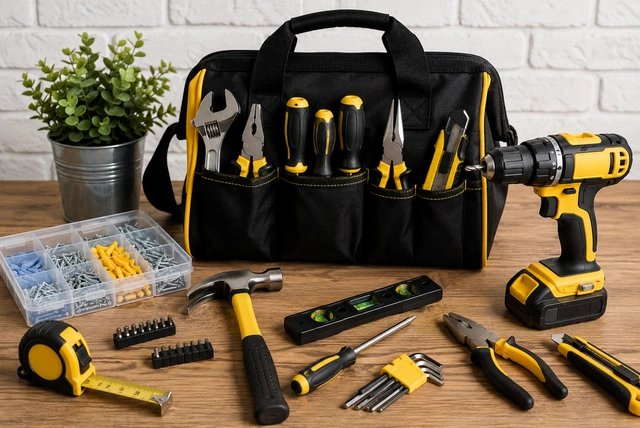
A tape measure should always be your first purchase because nearly every project begins with accurate measurements. Whether you’re checking if a bookcase will fit, marking a wall before drilling, or measuring timber for a small repair, taking accurate measurements prevents expensive mistakes. Pair it with a spirit level so shelves, mirrors, artwork, and television brackets are installed perfectly straight.
A quality screwdriver set is another must-have. Choose one that includes Phillips, flat-head, and precision screwdrivers, or invest in a multi-bit screwdriver that saves space while covering most household jobs. A claw hammer remains invaluable for driving nails, removing old fixings, and completing basic carpentry work around the home.
Don’t overlook the smaller hand tools either. Combination pliers help grip, twist, and cut wire. An adjustable wrench makes tightening plumbing fittings much easier. Allen keys are essential for flat-pack furniture, while a sharp utility knife proves useful for opening boxes, trimming materials, and cutting through packaging safely.
These simple hand tools UK homeowners use every week form the foundation of a dependable toolkit. Buying better-quality versions often costs a little more upfront, but they last longer, feel more comfortable in your hand, and make every repair easier. Over time, you’ll appreciate that quality tools are an investment rather than an expense.
The Power Tools That Make DIY Easier
There comes a moment in every DIY journey when hand tools are no longer enough. For many homeowners, that moment arrives while assembling a wardrobe, mounting shelves, or fixing a curtain pole into a brick wall. Turning dozens of screws by hand soon becomes tiring, and that’s when a cordless drill proves why it is considered the most valuable power tool for beginners.
If you’re buying your first power tool, start with a reliable cordless drill and driver. It can drill holes, drive screws, and complete many everyday jobs around your home. Choose a model with adjustable speed settings and a lithium-ion battery, as these batteries hold their charge well and recharge quickly. If possible, buy into a battery platform where one battery fits several tools. This makes expanding your collection much more affordable in the future.
As your confidence grows, you can gradually add more tools instead of buying everything at once. A jigsaw is ideal for cutting wood when building shelves or simple furniture. An orbital sander makes restoring old furniture quicker and leaves a much smoother finish than sanding by hand. An oscillating multi-tool is another excellent addition because it can cut, scrape, sand, and trim in tight spaces where larger tools struggle.
Many London homes have solid brick or concrete walls, so investing in quality masonry drill bits is just as important as choosing the drill itself. Using the wrong bit often makes a simple job far more difficult and can even damage the tool.
The best power tools UK homeowners own are the ones they regularly use. Buying equipment because it looks impressive often leads to wasted money and clutter. Instead, let your projects guide your purchases. Every new tool should solve a real problem and help you complete future jobs more efficiently.
Don’t Forget Safety and Everyday DIY Supplies
One Saturday morning, a neighbour decided to hang a mirror before guests arrived. The job looked simple enough, so he rushed through it without wearing safety glasses. A tiny piece of brick flew into his eye while drilling, turning a ten-minute task into an unexpected visit to the local clinic. Fortunately, the injury was minor, but it served as an important reminder that even small DIY jobs deserve proper safety precautions.
Protective equipment should always be part of your home repair tools. A pair of safety glasses protects your eyes from dust and flying debris. Strong work gloves improve grip while protecting your hands from sharp edges. If you’re sanding painted wood or cutting MDF, wearing a suitable dust mask helps reduce the amount of fine particles you breathe in. Hearing protection is also worth using whenever you operate louder power tools.
Alongside safety gear, keep a small collection of everyday supplies in your toolbox. Wood screws in different sizes, wall plugs, picture hooks, cable ties, duct tape, electrical tape, super glue, wood glue, spare utility knife blades, sandpaper, and a basic caulking gun will help you complete many repairs without making an emergency trip to the DIY shop.
Storage matters too. A sturdy toolbox or organiser keeps everything together, protects your equipment from moisture, and saves valuable time because you always know where each tool belongs. After every project, wipe tools clean before putting them away. This simple habit prevents rust and helps quality tools last for many years.
Looking after your home doesn’t stop once the repair is finished. If you’re planning a wider refresh, our guide to vinyl flooring ideas offers practical advice on choosing a durable floor that’s easy to maintain in busy households.
Buying Smart: How to Build Your Toolkit Without Wasting Money
Walking into a large DIY store for the first time can feel overwhelming. Shelves are filled with dozens of drills, hundreds of hand tools, and countless accessories that all promise to make life easier. It’s tempting to buy everything at once, but experienced homeowners know that building a toolkit is a gradual process rather than a single shopping trip.
Start by thinking about the jobs you expect to complete during the next year. If you’ve just moved into a new home, your priority may be assembling furniture, hanging artwork, installing curtain rails, and making small repairs. These tasks require reliable hand tools and a cordless drill far more than specialist woodworking equipment.
Quality is another important consideration. A well-made hammer, screwdriver, or tape measure may cost slightly more, but it often lasts for decades with proper care. Cheap tools, on the other hand, are more likely to wear out, become uncomfortable to use, or even fail during important jobs. Spending a little extra on the tools you’ll use most frequently is usually money well spent.
Think about storage before buying larger equipment too. Many London flats have limited cupboard space, so compact toolboxes and multi-purpose tools are often the smartest choice. If you enjoy improving different areas of your home, you might also find inspiration in our guide to creative empty fireplace ideas, which shows how thoughtful planning can transform unused spaces without major building work.
Remember that every experienced DIY enthusiast started with a small collection of essentials. The goal isn’t to own every available tool. It’s to own the right tools that make your home easier to maintain and give you the confidence to tackle new projects whenever they appear.
Simple DIY Habits That Save Time, Money, and Stress
The biggest lesson many homeowners learn is that successful DIY isn’t about taking on huge renovation projects. It’s about dealing with small problems before they become expensive ones. A dripping tap, a loose hinge, or a cracked seal around the bath may not seem urgent today, but left alone, they can lead to larger repairs that cost far more than a few minutes of maintenance.
Creating a simple monthly routine can make a remarkable difference. Walk through your home and check door handles, cupboard hinges, taps, extractor fans, smoke alarms, and visible pipework. Tighten loose screws, replace worn sealant, and clean areas that collect dust or grease. These small jobs protect your home while helping you become more familiar with how everything works.
It’s also worth keeping a notebook or a note on your phone listing future DIY jobs. That way, when you’re visiting a DIY shop, you can buy the right supplies in one trip instead of making repeated journeys. Over time, your toolkit grows naturally alongside your experience.
Many homeowners also discover that DIY projects inspire wider improvements around the home. After installing new shelving, you may decide to update your kitchen or refresh an unused room. If you’re planning your next makeover, our guide to unique tailored décor ideas shares practical inspiration for creating a home that reflects your own style.
Remember, confidence isn’t built overnight. Every successful repair teaches you something new, making the next project feel a little easier than the last.
Final Thoughts
Building a collection of essential DIY tools London homeowners can depend on isn’t about filling shelves with expensive equipment. It’s about being ready for everyday life. A dependable tape measure, screwdriver set, spirit level, claw hammer, utility knife, cordless drill, and a few carefully chosen accessories will help you complete hundreds of common household tasks over the years. As your confidence grows, your toolkit can grow with it, allowing you to take on larger projects while saving money and learning valuable skills along the way. Every shelf you hang, every loose hinge you tighten, and every room you improve adds another chapter to your home’s story. Start with the basics, choose quality over quantity, look after your tools, and enjoy the satisfaction that comes from knowing you can handle the next repair with confidence.
What are the essential DIY tools every London homeowner should own?
A basic DIY starter kit should include a tape measure, claw hammer, screwdriver set, cordless drill, spirit level, adjustable wrench, pliers, utility knife, Allen keys, masonry drill bits, safety glasses, gloves, and a sturdy toolbox. These tools are suitable for most everyday repairs and home maintenance tasks.
How much does a DIY starter kit cost in the UK?
The cost depends on the quality of the tools you choose. A beginner can build a reliable homeowner toolkit by buying the essentials first and adding more specialised equipment over time. Investing in durable tools often provides better value because they last much longer than cheaper alternatives.
Is a cordless drill the best first power tool?
Yes. A cordless drill is the most versatile power tool for beginners. It helps with assembling furniture, drilling into wood or masonry, installing shelves, fixing curtain poles, and completing many other everyday DIY jobs around the home.
Why are masonry drill bits important in many London homes?
Many houses and older flats across London have brick or concrete walls. Masonry drill bits are designed to drill safely and efficiently into these materials, making it much easier to install shelves, mirrors, television brackets, and other wall-mounted fixtures.
How can I make my DIY tools last longer?
Clean your tools after each project, store them in a dry toolbox, replace worn blades when needed, and avoid using tools for jobs they weren’t designed to do. Simple maintenance helps quality hand tools and power tools remain reliable for many years.