
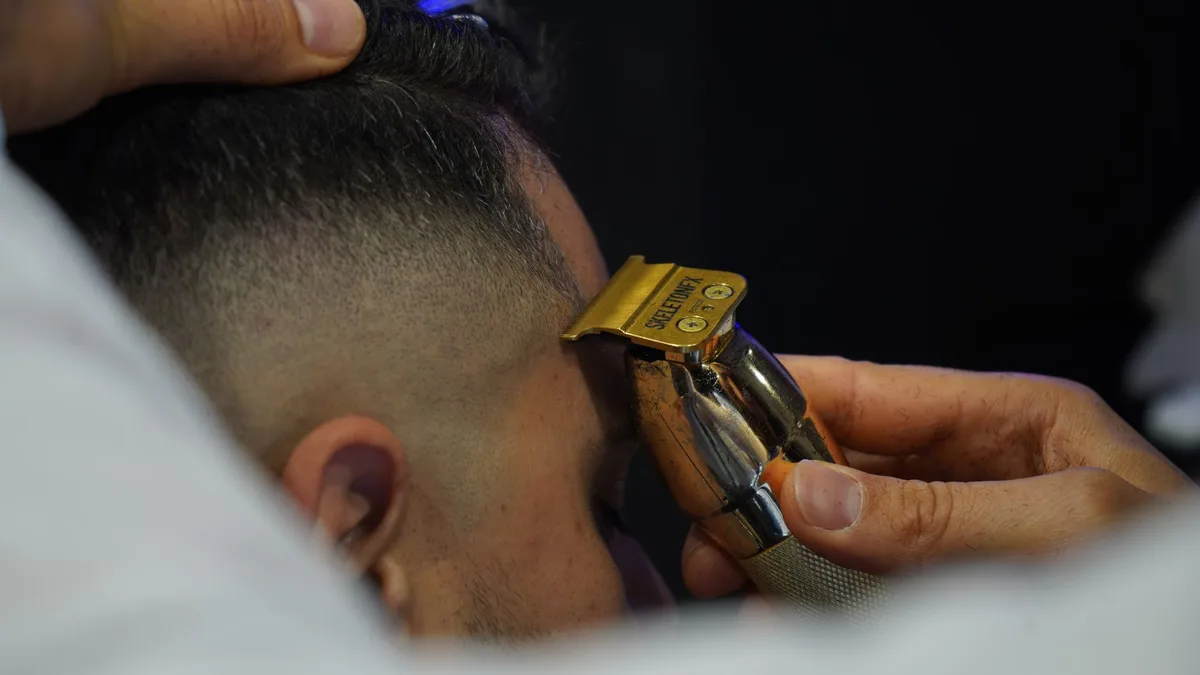
There is a moment every bearded man faces: the beard has grown out, it needs shaping, and standing in front of the mirror with a trimmer feels like a decision that could go badly wrong. But a beard trimmer is one of the best investments in men’s grooming — it pays for itself against barber visits in weeks, and once you understand guard lengths and a few basics, maintaining a sharp, even beard at home becomes a quick, confident routine rather than a gamble. It is a core tool in our men’s grooming guide.
Understanding Guard Lengths
The key to trimming without disaster is the guard — the plastic comb attachment that sets how much hair the trimmer leaves behind. Guards are numbered, and each number corresponds to a length, usually in millimetres or fractions of an inch: a low number leaves very short stubble, a high number leaves a longer beard. The golden rule is to start with a longer guard than you think you need, because you can always go shorter, but you cannot put hair back. Work down gradually until you reach the length you want, and note the guard number that works so you can repeat it.
Trimming an Even Shape
- Start with a clean, dry, combed beard so the hairs stand evenly and you can see the true length.
- Trim the length first with your chosen guard, moving against the grain in smooth passes over the whole beard.
- Define the neckline and cheek line without a guard, keeping the neckline about two fingers above the Adam’s apple, not too high.
- Tidy the moustache and edges, checking both sides in the mirror for symmetry as you go.
Choosing a Trimmer
A good beard trimmer does not need to be the priciest, but a few features matter. Look for a decent range of guard lengths for versatility, cordless and rechargeable convenience, and — ideally — a waterproof body that is easy to rinse clean. Sharp, durable blades give a cleaner cut and pull the hair less. Some come with detail attachments for edges and noses. Match the trimmer to how you actually wear your beard, rather than paying for features you will never use.
Maintaining Your Trimmer
A trimmer only performs if you look after it, and this is where most people fall down. Clean it after every use, brushing out the trapped hair and rinsing the blades if it is waterproof. Oil the blades regularly with the drop of oil provided or a light clipper oil, which keeps them sharp, cutting cleanly and running smoothly — dry, dirty blades pull hair and cause uneven cuts. Charge it properly and replace the blades when they dull. A well-maintained trimmer lasts for years and always gives a clean result.
Trim, Then Condition
Trimming and conditioning go hand in hand. After shaping your beard, work in a beard oil or balm to soften the freshly trimmed hair and soothe the skin. And if part of your routine involves shaving the edges and neck clean, doing it well avoids the irritation covered in our guide to shaving cream and aftershave. Together, a good trim and good conditioning keep a beard sharp and healthy.
The Takeaway
A beard trimmer pays for itself and puts you in control of your beard — as long as you understand guard lengths, start long and go shorter, and define a natural neckline. Choose a trimmer with a good guard range and waterproof body, clean and oil it after every use, and follow with conditioning. Master these basics and a sharp, even beard becomes a quick home routine, not a barbershop dependency.