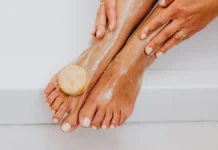
Few beauty treatments are as strangely satisfying — or as alarming to first-timers — as a foot peel. You slip your feet into a pair of gel-filled booties for an hour, wash off, and for the next week or two your feet shed dead skin in sheets, revealing baby-soft skin underneath. It looks dramatic, even a little gross, but it is one of the most effective ways to transform rough, calloused feet at home. Knowing exactly what to expect through the full shedding cycle makes the whole experience far less alarming. It is a standout in our guide to hand and foot care.
How Foot Peels Work
A foot peel is a chemical exfoliation, not a physical one. The booties are filled with a gel containing exfoliating acids, usually fruit acids and glycolic or lactic acid, which soak into the thick, dead layers of skin on your feet. Over the following days, these acids loosen the bonds between dead skin cells, causing the built-up hard skin to peel away gradually and reveal the softer, fresher skin beneath. It is a hands-off treatment — the peel does its work over time, long after the booties come off.
The Shedding Timeline
Here is what actually happens, so nothing takes you by surprise. For the first few days after the treatment, nothing appears to happen at all — this is normal, so do not be tempted to reapply. Around days three to seven, the peeling begins, sometimes dramatically, with skin flaking and shedding, especially after a shower. This continues for up to a week or two, and can look quite alarming. By the end, the old skin has fully shed to reveal soft, smooth new feet. The whole cycle takes one to two weeks from start to finish.
The Rules for a Good Peel
- Never pick or pull the peeling skin — let it shed naturally, or you risk damaging the new skin underneath.
- Soaking speeds it up — warm baths and showers encourage the shedding along.
- Don’t reapply too soon — wait until the full cycle is complete, and only do a peel every month or two.
- Plan the timing — avoid doing one right before a beach holiday or an event where your feet are on show mid-peel.
Who Should Be Cautious
Foot peels suit most people with rough, calloused or hard-skinned feet, but a few should take care. If you have diabetes, poor circulation, sensitive skin, any foot wounds or conditions, or are pregnant, check with a doctor before using one, as the acids and shedding may not be suitable. Always patch test if your skin is sensitive, and follow the instructions on timing carefully — leaving the booties on too long can over-irritate.
After the Peel
Once the shedding is complete, keep the fresh new skin soft by moisturising daily — this is where a good heel balm or foot cream keeps feet smooth for far longer. Regular moisturising and occasional gentle exfoliation stretch out the results, so you need a full peel only every month or two rather than constantly. Soft feet maintained are better than rough feet repeatedly reset.
The Takeaway
A foot peel chemically exfoliates rough, calloused feet, shedding dead skin over one to two weeks to reveal soft new skin — dramatic-looking but genuinely effective. Expect nothing for a few days, then heavy peeling; never pick it, let it shed naturally, and moisturise after. With sensible caution for certain conditions and good aftercare, a foot peel is a satisfying home reset for tired, hard-skinned feet.