Hormonal acne in adults is acne that is driven or made worse by hormone activity. It often shows up as deep, tender spots on the lower face, and it may flare around your period. The British Association of Dermatologists (BAD) says oil glands react to hormones even when your hormone levels are normal, so you do not need a hormone problem to get it. If your spots are painful, leave marks or have not improved with pharmacy products, speak to your GP. This guide explains the causes, the signs and the treatments you can get in the UK.
“Hormonal acne” is an everyday phrase, not a separate diagnosis. The NHS and BAD pages describe acne as a whole, with hormones as one of several drivers. This article is general information, not medical advice. For the day-to-day skincare side, see our everyday acne skincare routine.
Key takeaways
- Hormonal acne is acne where hormones play a big part. The oil glands react to hormones even when your levels are normal (BAD).
- Common clues: deep, tender spots on the lower face, flares around periods and marks that linger. These are clues, not proof.
- Common drivers: periods, pregnancy, menopause, PMOS (the NHS name for what used to be called PCOS), some medicines, stress and family history.
- Most people do not need a hormone blood test. Tests are mainly for signs of PMOS, such as irregular periods or excess hair (NHS).
- Treatment needs patience. NICE first-line courses last 12 weeks before they are reviewed.
- See a GP if acne is painful, scarring, not improving or affecting your mood (NHS).
What hormonal acne in adults actually is
Acne starts when hair follicles block with oil and dead skin cells. Bacteria then cause inflammation (NHS). Hormones called androgens switch oil glands on. BAD says the glands are sensitive to hormones even when hormone levels are normal, and that women with acne often have raised androgen levels or are more sensitive to them (BAD). So “hormonal” does not always mean “hormone imbalance”.
Is it different from ordinary acne?
It is the same condition. What changes is the pattern and the main driver. Acne usually begins in puberty but can carry on, and it can first appear in your late twenties or later (BAD). In a clinic study of 200 patients over 25, the authors suggested that people with persistent or late-onset acne may have underlying changes in how the ovaries, adrenal glands or skin handle androgens (Goulden, Clark and Cunliffe, British Journal of Dermatology, 1997).
How common is adult acne?
More common than most people expect. The chart below comes from a survey of 1,013 adults. Women reported acne more often than men in every age group over 20.
The next chart looks at which women see a specialist. Among 152 women over 25 referred to one dermatology department, 28 (18.4%) had true late-onset acne that began after 25. The rest, 124 women, had acne that carried on from their teens. Of the women in the study, 37% had features of hyperandrogenicity, which means signs of raised male-type hormones.
A UK consultant dermatologist writing for the British Skin Foundation says “at least half of the patients I see with acne are adults”. That is a clinical impression, not a study (British Skin Foundation).
What does hormonal acne look like?
There is no single look. These clues are common, and they are clues only. A GP can tell you what is going on.
| Clue | What it may suggest | Source |
|---|---|---|
| Deep, tender or painful lumps rather than small surface spots | Inflamed acne. Acne can range from a few spots to deep, painful lumps | NHS |
| Spots on the lower face, jawline and chin, and sometimes the chest or back | A commonly described hormonal pattern. The NHS says acne usually affects the face, chest and back | NHS; Dermatica SkinLab (commercial site, citing Bagatin et al., 2019) |
| Flares around your period | Hormone changes, including periods, are a listed cause of acne | NHS |
| Acne that started or got worse in your late twenties or later | Late-onset or persistent adult acne | BAD |
| Irregular periods, excess or thinning hair, oily skin | Possible PMOS. Worth a GP visit | NHS (PMOS page) |
| Dark or red marks after spots heal | Marks left by inflamed acne | Dermatica SkinLab |
What causes hormonal acne in adults?
Natural hormone changes
The NHS lists “changes in hormone levels, such as during puberty, periods, menopause and pregnancy” as a cause of acne (NHS). That is why many adults notice a pattern linked to their cycle or to a life stage.
PMOS (formerly PCOS)
The NHS now uses the name polyendocrine metabolic ovarian syndrome (PMOS) for what used to be called polycystic ovary syndrome (PCOS). Symptoms include irregular periods, excess or thinning hair, weight gain, tiredness, and oily skin with acne (NHS). If you have several of these, mention them to your GP. Hair changes can be linked, so our guide to hair thinning in women may help you prepare for that conversation.
Medicines and contraception
BAD says certain hormonal contraceptives, high-dose steroids and anabolic steroids can trigger acne (BAD). Do not stop a prescribed contraceptive on your own. If you are on acne treatment and want hormonal contraception, NICE says to consider the combined pill in preference to the progestogen-only pill (NICE NG198, recommendation 1.5.9).
Stress, skin products and smoking
BAD lists lifestyle factors such as stress, skincare products and smoking as things that act together to cause most acne (BAD). Poor sleep and stress often go hand in hand, so it is worth reading about sleep, stress and skin.
Family history
In the same clinic study, 50% of patients had a first-degree relative with post-adolescent acne (Goulden et al., 1997). If your mother or sister had adult acne, you may be more likely to have it too.
Diet
NICE says there is not enough evidence to support specific diets for treating acne (NICE NG198, recommendation 1.3.1). BAD agrees and adds that a healthy, balanced diet is advisable (BAD). That means you can skip “hormone-balancing” diets that promise a cure.
Do you need a hormone test?
Often not. BAD explains that in acne the oil glands are particularly sensitive even when hormone levels are normal (BAD). A test is about finding an underlying condition such as PMOS, not about proving your acne is hormonal.
If your GP suspects PMOS, they may arrange blood tests for hormone levels and insulin resistance. An ultrasound scan of the ovaries is only done for people over 18 (NHS). NICE also says to consider referring people with acne and PMOS who have extra signs of high androgens to a specialist, for example a reproductive endocrinologist (NICE NG198, recommendation 1.5.32).
Treatments available in the UK
The main UK guide is NICE guideline NG198 on acne, last updated on 3 August 2026 (NICE). Treatment usually moves in steps. Each step needs time, so judge it at 12 weeks, not 12 days.
Step 1: pharmacy treatments
The NHS says a pharmacist can recommend salicylic acid or benzoyl peroxide, and supplements such as zinc, niacinamide and vitamin A (NHS). BAD says over-the-counter actives such as benzoyl peroxide, azelaic acid and nicotinamide take about 2 to 4 months for full effect (BAD). If you want to try a leave-on exfoliant, read our guide to salicylic acid toner first. Ask the pharmacist before buying supplements.
Step 2: prescriptions from your GP
NICE says to offer a 12-week course of one first-line option, then review. The options include adapalene with benzoyl peroxide, tretinoin with clindamycin, or benzoyl peroxide with clindamycin. For moderate to severe acne, NICE adds an oral antibiotic (lymecycline or doxycycline) to a topical treatment (NICE NG198, recommendation 1.5.1). BAD says oral antibiotics usually run for 3 to 6 months and normally no longer than 6 months because of antibiotic resistance (BAD). Several of these treatments are not for use in pregnancy, so tell your GP if you might become pregnant.
Hormonal options: the combined pill and co-cyprindiol
The NHS says the combined pill can manage the hormones linked to acne (NHS). For people with PMOS and acne, NICE says that if a first-line treatment does not work, a GP can consider adding co-cyprindiol (ethinylestradiol with cyproterone acetate) or another combined pill. People on co-cyprindiol should be reviewed at 6 months (NICE NG198, recommendation 1.5.31).
Co-cyprindiol carries a higher clot risk. The MHRA found a 1.5 to 2 times higher risk of venous thromboembolism than with levonorgestrel-containing pills. It should not be used only as a contraceptive, and not alongside another combined hormonal contraceptive (MHRA Drug Safety Update). BAD says the risk is higher for people who smoke, are overweight or have a family history of clots (BAD). Your prescriber will go through this with you.
Spironolactone
Spironolactone is a tablet that blocks the action of androgens. BAD says it is used “off licence” for acne in women, which means it is not approved for acne in the UK but is widely used. The usual daily dose for skin complaints is 50 to 200 mg, and your doctor sets yours. Most women see improvement after about 3 months.
You may need a blood test to check your potassium before and sometimes during treatment. Side effects can include breast tenderness, irregular periods and dizziness when standing up. It is not for people with Addison disease or significant kidney problems. BAD says you do not need extra contraception, but you should stop it if you become pregnant, so tell your prescriber if you plan to conceive (BAD spironolactone leaflet). It is not a cure.
The UK SAFA trial tested it in 410 women with persistent facial acne. Women took 50 mg a day for six weeks, then 100 mg a day until week 24. More women on spironolactone were rated a success than women on placebo.
One point to know: the NICE acne recommendations do not list spironolactone as an option, while BAD and the SAFA trial support its use. Ask your prescriber how they would approach it.
Step 3: a dermatologist, and isotretinoin
NICE says to consider referral to a dermatologist-led team if mild to moderate acne has not responded to two completed courses of treatment, if moderate to severe acne has not responded to treatment that included an oral antibiotic, if acne is leading to scarring or lasting colour changes, or if it is causing persistent psychological distress (NICE NG198, recommendations 1.4.2 to 1.4.4). Oral isotretinoin is only recommended for severe acne, after adequate courses of standard treatment.
Isotretinoin can harm an unborn baby. BAD says people who can become pregnant must join a pregnancy prevention programme and have a negative pregnancy test first. Contraception is needed for at least 4 weeks before, during, and for at least 4 weeks after treatment. Most courses last about 6 months (BAD).
| Option | What it does | Typical time | Main cautions | Source |
|---|---|---|---|---|
| Pharmacy actives (benzoyl peroxide, salicylic acid, azelaic acid, nicotinamide) | Unblock pores, reduce spots and inflammation | About 2 to 4 months for full effect | Can irritate skin | NHS; BAD |
| Prescription topicals (adapalene, tretinoin, clindamycin, benzoyl peroxide combinations) | First-line NICE courses | 12-week course, then review | Irritation, sun sensitivity. Some not for pregnancy | NICE |
| Oral antibiotics (lymecycline, doxycycline) | Calm inflammation in moderate to severe acne | Usually 3 to 6 months, no more than 6 | Antibiotic resistance. Sun sensitivity | BAD; NICE |
| Combined pill or co-cyprindiol | Manages hormones linked to acne | Review at 6 months for co-cyprindiol | Clot risk (higher with co-cyprindiol). Not for contraception alone | NHS; NICE; MHRA |
| Spironolactone (off licence) | Blocks androgen action | Improvement after about 3 months | Blood tests. Stop if pregnant. Not for Addison disease or serious kidney problems | BAD; SAFA trial |
| Isotretinoin (specialist only) | Reduces oil, inflammation and spots | Courses of about 6 months | Pregnancy prevention programme. Contraception needed | BAD; NICE |

Skincare while you treat it
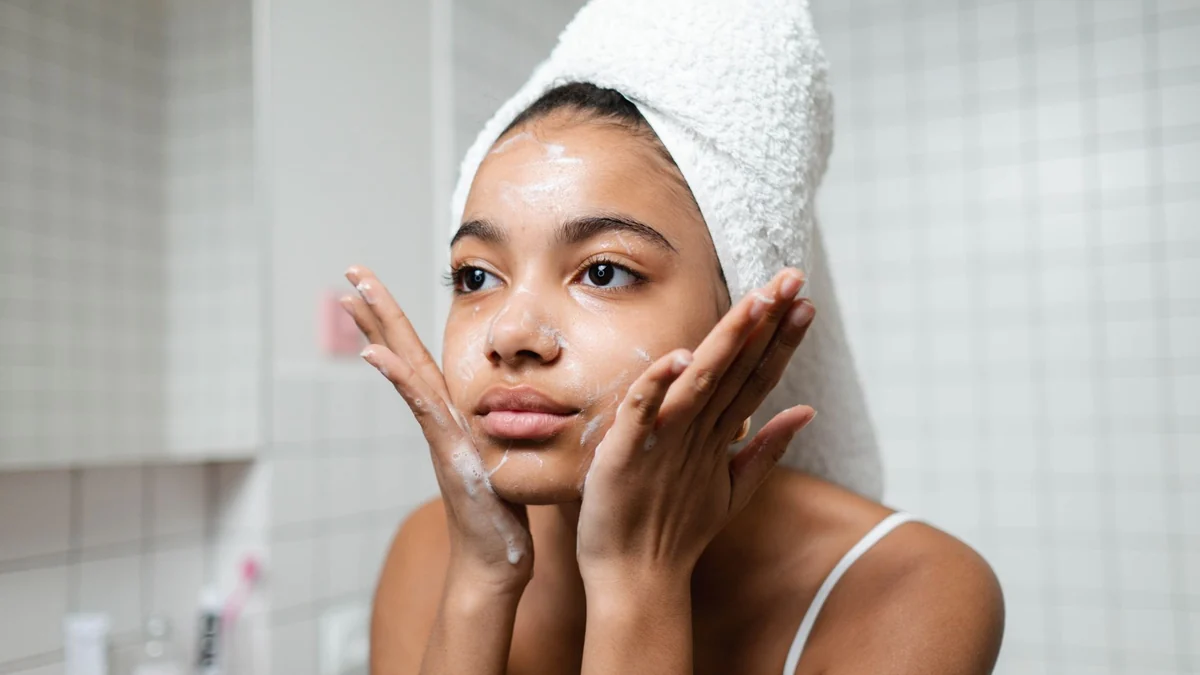
Gentle care helps every treatment work better. The NHS advises washing twice a day with a gentle cleanser, removing make-up at night, choosing non-comedogenic products and not scrubbing or picking (NHS). NICE says to use a non-alkaline, skin pH neutral or slightly acidic cleanser twice daily and to avoid oil-based and comedogenic products (NICE NG198, recommendations 1.2.1 to 1.2.3).
- Build a calm cleansing routine and keep it simple.
- Take make-up off properly each evening. Our guide to removing make-up explains what to use.
- Wear sunscreen. Adapalene and benzoyl peroxide combinations can cause sun sensitivity, so read our guide to daily sun protection.
- If treatment makes your skin sore or tight, look at how to calm an irritated skin barrier.
- For ingredient detail and realistic timelines, see our acne treatment skincare guide.
Marks, scars and your mental health
Do not pick or squeeze spots. The NHS and BAD both say it can cause scars (NHS; BAD). Dark marks often fade slowly, and our guide to dark marks left by acne covers what helps. If scarring is a concern, BAD says laser treatment should not be carried out for at least one year after completing a course of isotretinoin.
Acne can hurt more than your skin. The NHS says it can affect your mental health, causing anxiety, depression and low self-esteem (NHS). BAD says it “can significantly affect an individual’s psychological well-being”. NICE says to consider a referral to a dermatologist-led team, or to mental health services, when acne causes persistent distress (BAD; NICE NG198, recommendations 1.4.4 and 1.4.5). The NHS also lists “it’s affecting your mental health” as a reason to see a GP. Make-up can help with confidence. BAD says to choose products labelled non-comedogenic, and our guide to covering breakouts with concealer can help.
When to see a GP
The NHS says to see a GP if (NHS):
- you have tried treating acne yourself but it is not getting better
- you have lots of spots, deep and painful spots, or scarring
- you show signs of a skin infection
- it is affecting your mental health
Also mention irregular periods, excess hair or hair thinning, because these can point to PMOS (NHS). If treatment has not worked, ask whether a dermatology referral fits the NICE criteria above.
Your 12-week plan and GP appointment checklist
Most people stop a treatment too early. NICE first-line courses run for 12 weeks and are then reviewed, and BAD says to expect to use your treatments for at least 12 weeks before you see much improvement. Here is a simple way to use that time.
- Week 0. Take a clear photo in daylight. Start a gentle routine: cleanser, non-comedogenic moisturiser and sunscreen. Ask a pharmacist about one active.
- Weeks 1 to 4. Change one thing at a time. Some dryness is common with actives, and BAD says retinoids can make acne a little worse for a few weeks before it gets better. Go gently. Note the days of your cycle when spots flare.
- Weeks 5 to 8. Keep going. Take a second photo. Do not add new products every week.
- Week 12. Compare photos and your notes. If there is little change, book a GP visit and take the checklist below.
Take this to your appointment:
- when your acne began and how it has changed
- your cycle notes: which days spots flare
- every treatment you have tried and for how long (referral can depend on completed courses)
- your contraception and any other medicines, including steroids
- family history of adult acne
- other symptoms: irregular periods, excess or thinning hair, tiredness
- how acne affects your mood and daily life
- any plan to get pregnant, because several acne medicines are not safe in pregnancy
Good questions to ask: Could this be PMOS, and do I need tests? Is the combined pill suitable for me? Would spironolactone be an option? When should we review this? What happens if it has not improved in 12 weeks?

Frequently asked questions
How do I know if my acne is hormonal?
Look at the pattern: deep, tender spots on the lower face, flares around your period and acne that began or worsened in adulthood. There is no home test. A GP can ask about periods and hair growth, and may arrange blood tests if PMOS is suspected (NHS).
What does hormonal acne look like?
It often appears as deep, painful lumps rather than small surface spots, commonly on the lower face, but also on the chest and back. The NHS says acne can range from a few spots to deep, painful lumps (NHS). Marks can linger afterwards.
How long does hormonal acne last?
There is no fixed time. Acne can continue from puberty or first appear in your late twenties or later (BAD). Treatment needs time: NICE first-line courses are 12 weeks before review (NICE).
Can hormonal acne go away on its own?
It can ease when a trigger changes, but it does not always. BAD says acne can carry on well past the teens. If it is painful, scarring or not improving, see your GP rather than waiting (NHS).
Can diet cause hormonal acne?
The evidence does not support specific diets for treating acne. NICE says there is not enough evidence, and BAD advises a healthy, balanced diet (NICE; BAD).
Will the contraceptive pill help my acne?
The combined pill can help some people, and the NHS lists it as a treatment that manages hormones linked to acne (NHS). NICE prefers the combined pill to the progestogen-only pill for people on acne treatment (NICE). It is not right for everyone, so ask your GP.
Is spironolactone safe for acne?
In the UK SAFA trial, side effects were more common with spironolactone (64% versus 51% on placebo), headache was the main difference, and no serious related reactions were reported (BMJ 2023). BAD says you may need potassium blood tests and must stop it if you become pregnant (BAD). Your prescriber will check if it suits you.
Can stress cause hormonal acne?
Stress is not the sole cause. BAD lists stress, skincare products and smoking among lifestyle factors that act together to cause most acne (BAD). See our guide to sleep, stress and skin for practical steps.
Can men get hormonal acne?
Yes. Men report acne too: 42.5% of men aged 20 to 29 in the Collier survey (Collier et al., 2008). BAD notes anabolic steroids can trigger acne, and spironolactone is not usually given to men for skin problems (BAD; BAD).
The takeaway
Hormonal acne in adults is common, treatable and not your fault. Hormones are one driver among several, and you do not always need tests. The most useful step is a clear plan: a gentle routine, one change at a time and a review at 12 weeks. If your acne is painful, scarring, not improving or getting you down, book a GP appointment and take the checklist above.
Sources
- NHS: Acne (reviewed 22 September 2026), treatment, PMOS
- NICE guideline NG198: Acne vulgaris, management (updated 3 August 2026)
- British Association of Dermatologists: Acne patient leaflet (July 2024) and Spironolactone leaflet (November 2022)
- MHRA Drug Safety Update: co-cyprindiol
- Santer M et al. Spironolactone for adult female acne (SAFA), BMJ 2023;381:e074349
- Collier CN et al. The prevalence of acne in adults 20 years and older. J Am Acad Dermatol 2008
- Goulden V, Clark SM, Cunliffe WJ. Post-adolescent acne: a review of clinical features. Br J Dermatol 1997
- British Skin Foundation: Acne and its effects on adult sufferers
- Dermatica SkinLab: Hormonal acne (commercial site, used only for the jawline pattern)
This article is general information and not a substitute for medical advice. If you are worried about your skin or your health, speak to a pharmacist, GP or dermatologist. Photos are from Pexels under its free licence.
Last updated: 18 October 2026