
Banking feels modern, but its roots stretch back thousands of years. The story of the 1st bank in world history begins not with coins or currency, but with ancient civilizations creating systems to store goods, record debts, and support trade. From Mesopotamian temples to medieval Italian lenders, banking evolved alongside human progress. Remarkably, the world’s oldest surviving bank is more than 550 years old and still operating today. This article explores the full journey—its origins, timeline, modern developments, and the institutions that shaped global finance.
What Does “1st Bank in World” Mean?
There isn’t a single answer to what the “first bank” is. Historians use three different criteria:
1. The earliest known banking activities
This refers to the first recorded systems of credit, deposits, and lending—found in ancient civilizations.
2. The oldest continuously operating bank
This is the oldest real bank that still exists today.
3. The first modern central bank
This type of bank manages a nation’s currency and monetary policy.
Understanding these distinctions helps paint a complete picture of how banking developed over time.
The Earliest Banking Began in Ancient Mesopotamia
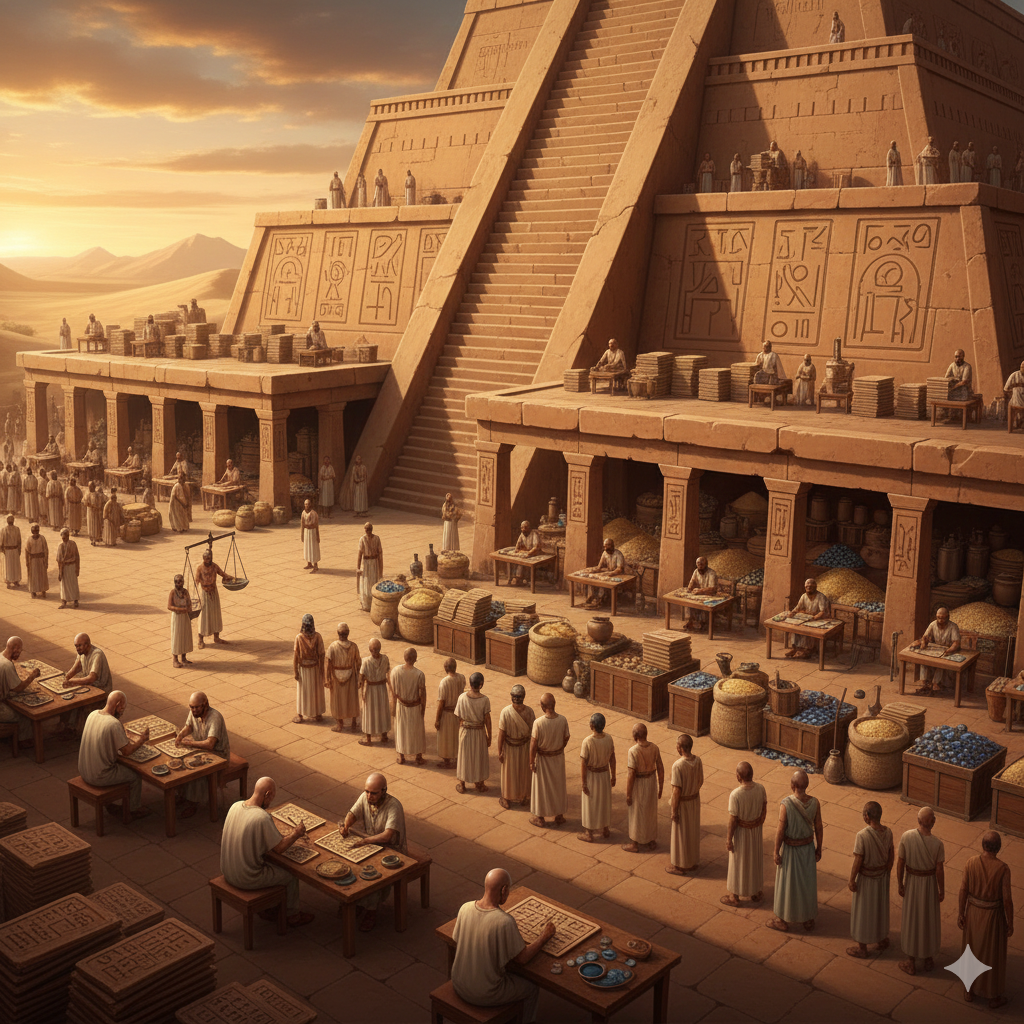
The earliest known examples of banking activities date back to 3000–2000 BCE in ancient Mesopotamia—modern-day Iraq and surrounding regions. These early societies developed organized financial systems long before money existed in the form we know today.
Temples as Financial Centers
Temples and royal palaces served as trusted places for people to store goods such as grain, silver, livestock, and other valuables. Temple officials kept meticulous records on clay tablets using cuneiform writing.
Loans and Interest Rates
Archaeological evidence shows that:
- Farmers borrowed grain for planting
- Merchants borrowed silver for trade
- Contracts were recorded
- Interest rates were applied (commonly around 20%)
These systems closely resemble the basic functions of banking—deposit-taking, lending, interest, and contract enforcement.
Even though no formal “bank buildings” existed, Mesopotamia is recognized as the birthplace of banking practices.
Other Ancient Civilizations With Early Banking Systems
Ancient Egypt
Large state granaries stored grain, which functioned similarly to a banking system. Grain receipts acted as early deposit and withdrawal notes.
Ancient Greece
Private money changers, known as trapezitai, provided credit and currency-exchange services. Temples also safeguarded valuables.
Ancient Rome
Rome developed one of the most advanced early financial systems. Professional bankers, called argentarii, handled:
- Deposits
- Loans
- Legal disputes
- Money transfers
- Trade financing
These contributions laid important foundations for later European banking innovations.
The Oldest Surviving Bank: Banca Monte dei Paschi di Siena (1472)
When people search for the 1st bank in world, they usually mean the oldest bank that still exists today. That bank is:
Banca Monte dei Paschi di Siena (MPS)
Founded in 1472 in Siena, Italy
Status: Oldest continuously operating bank in the world
How It Began
Monte dei Paschi was originally established as a monte di pietà, a charitable institution that provided low-interest loans to help citizens avoid predatory lenders. This early focus on community support helped it become a trusted financial center in Tuscany.
Why It’s Considered the First Real Bank Still Operating
- It has continually operated since the 15th century
- It survived wars, political changes, financial crises, and modernization
- It became a symbol of economic stability in the region
For more than five centuries, Monte dei Paschi has remained a cornerstone of Italy’s banking world.
The First Central Bank: Sveriges Riksbank (1668)
While Monte dei Paschi is the oldest bank still operating, the first central bank—the type of bank that manages a nation’s currency and monetary policy—is:
Sveriges Riksbank, founded in 1668
Country: Sweden
Riksbank was created after the failure of Stockholm Banco and introduced:
- Regulated banknote issuance
- National interest rate controls
- Early forms of modern monetary policy
It became the prototype for central banks worldwide.
Explore more: Aston Villa vs Maccabi Tel Aviv: Protests Erupt Outside Villa Park
The Medici Bank (1397): A Major Banking Pioneer
To fully understand the evolution of banking, we must also acknowledge the Medici Bank, founded in 1397 in Florence.
It introduced:
- Double-entry bookkeeping
- Letters of credit
- Bills of exchange
- International banking branches
Though it no longer exists, its innovations shaped modern banking practices.
Timeline of Major Banking Milestones
This simplified timeline helps illustrate how banking evolved:
3000 BCE — First known loans in Mesopotamia
2000 BCE — Babylonian temples manage deposits and credit
600–300 BCE — Greek money changers develop credit services
100 BCE – 400 CE — Roman bankers manage deposits and transactions
1397 — Medici Bank founded
1472 — Monte dei Paschi di Siena founded
1600s — Public banks emerge across Europe
1668 — Sveriges Riksbank becomes first central bank
1800s — Modern commercial banking systems develop
2000s — Digital banking revolution
2025 — Monte dei Paschi expands through major acquisition
Also Read: World Travel Insurance UK: The Ultimate Guide for 2025
Ancient Banking vs. Modern Banking
| Ancient Banking | Modern Banking |
|---|---|
| Grain, silver, and goods stored in temples | Digital money stored electronically |
| Clay tablets used for records | Online records, databases, and blockchain |
| Localized trade | Global financial systems |
| Loans for farming and basic trade | Loans for business, mortgages, investments, and more |
| Trust in priests and temples | Trust in regulated institutions and digital security |
This comparison shows how far banking has evolved while retaining its core principles.
Recent Modern Updates (2023–2025): The Ongoing Story of the World’s Oldest Bank
Even after 550 years, Monte dei Paschi continues to shape modern banking.
Return to Stability and Growth
In recent years, the bank has undergone significant restructuring and financial recovery:
- Returned to profitability
- Improved investor confidence
- Began reducing government ownership
These moves marked a major turning point after a long period of financial difficulty.
The Landmark 2025 Acquisition of Mediobanca
One of the most important modern developments for MPS was its bold acquisition of Mediobanca in 2025.
This multibillion-euro deal:
- Expanded MPS into investment and corporate banking
- Marked one of the largest banking moves in Italy in years
- Signaled a strategic transformation for the historic bank
Ongoing Investigations (Late 2025)
Following the acquisition:
- Italian regulators began investigating aspects of the deal
- Market reactions caused fluctuations in MPS’s share price
- Investigations remain ongoing
This shows that even historical institutions face modern regulatory challenges.
Read more: What is Ztoog.com? A Complete Guide to Its Features and Benefits
Interesting Facts About the 1st Bank in World History
- The word “bank” comes from the Italian banca, meaning “bench.”
- “Bankrupt” comes from banca rotta, meaning “broken bench.”
- Monte dei Paschi predates the discovery of America.
- Ancient banking records were written on clay tablets.
- The Medici Bank helped fund Renaissance art and architecture.
Conclusion
The story of the 1st bank in world history is more than a timeline of financial institutions—it is a story of human innovation, trust, and adaptation. From ancient temples lending grain to a 550-year-old bank navigating the digital age, the evolution of banking reflects the evolution of society itself. Banca Monte dei Paschi di Siena, the oldest surviving bank, is living proof that institutions can endure for centuries by adapting to changing times. Even today, it continues to evolve through major acquisitions, governance changes, and modernization efforts. Understanding where banking began helps us better understand how financial systems operate today and how they will continue to evolve in the future. The history of banking is not just the story of money—it is the story of civilization.
FAQs
1. What is considered the real 1st bank in world history?
The oldest continuously operating bank is Banca Monte dei Paschi di Siena, founded in 1472.
2. Which civilization practiced the earliest banking?
Ancient Mesopotamia practiced the first recorded banking activities, including loans, deposits, and interest.
3. What is the first modern central bank?
Sveriges Riksbank of Sweden, founded in 1668.
4. Is the oldest bank still operating today?
Yes. Monte dei Paschi remains active and influential, even expanding through acquisitions in 2025.
5. Did banking exist before money?
Yes. Early banking involved storing grain and goods rather than currency.
6. What innovations did the Medici Bank introduce?
Double-entry bookkeeping, letters of credit, and early international finance.