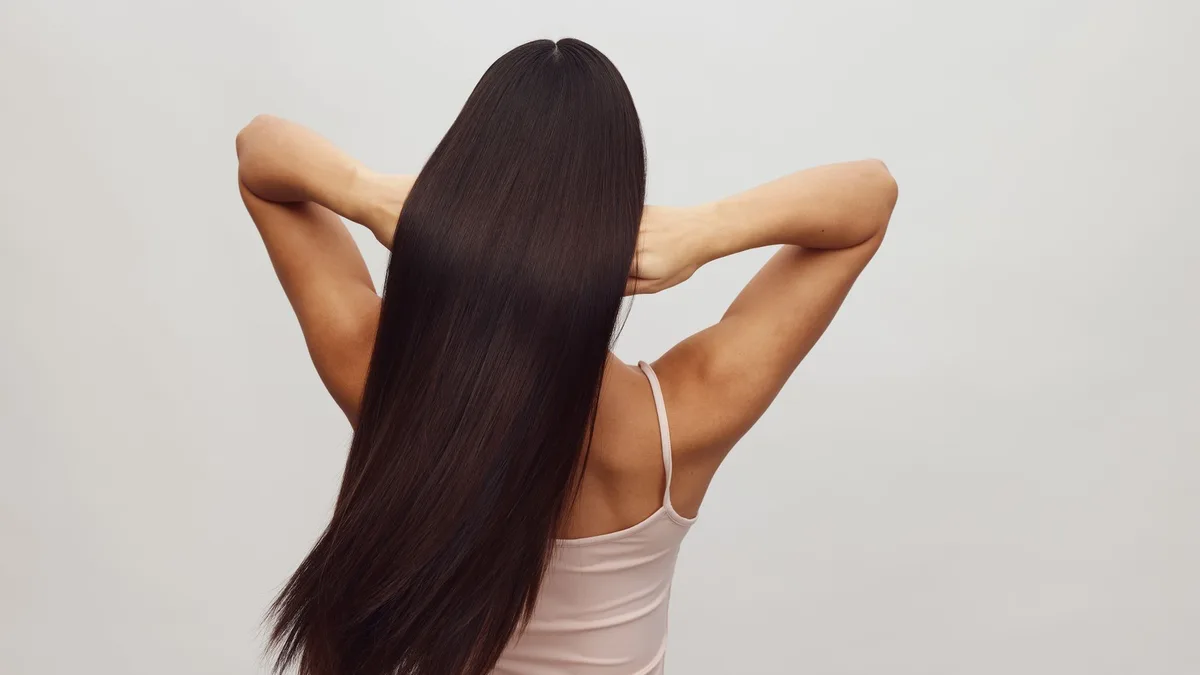
Before you buy any hair thickening products, answer one question: is your hair fine or is it thin? Fine means each strand has a small diameter but you have a normal number of them. Thin means you have fewer strands. The entire category is marketed as though these are the same problem, and they are not — one needs weightless lift, the other needs coverage.
Get that right and this shelf becomes genuinely useful. Get it wrong and you will spend a year buying products that flatten the hair they promised to lift.

Cosmetic, Not Corrective — and That Is Fine
Nothing in this article changes the number of follicles on your head or the diameter your hair grows at. Those are set by genetics, hormones and health. What these products do is change how your hair looks today, which is a perfectly respectable goal and often the fastest route to feeling better about your hair.
The important caveat: if your hair is genuinely thinning rather than simply fine, cosmetics should sit alongside a diagnosis, not instead of one. Our guide to evidence-based hair growth treatment covers that side, and treatments take six months to work — which is exactly why the cosmetic options are worth having in the meantime.
The Categories, and What Each Actually Does
| Product | How it works | Lasts | Fails when |
|---|---|---|---|
| Volumising shampoo | Lightweight cleansing that removes weight and buildup, lifting at the root | Until the next wash | The formula contains heavy thickening polymers that build up and flatten hair |
| Thickening shampoo / serum | Polymers, keratin and panthenol coat and swell each strand | Until the next wash | On very fine hair — there is a ceiling to how much a strand can swell |
| Root-lift spray or mousse | Polymers and salts create structure at the root | A day | Applied down the lengths instead of at the root |
| Texture spray / dry shampoo | Adds grip and grit so strands separate rather than clump | A day | Used daily without clarifying |
| Hair building fibres | Coloured keratin with a static charge that bonds electrostatically to existing hairs | All day, washes out | Wrong shade, or applied to a wet or greasy scalp |
| Root concealer sprays and powders | Pigment that reduces scalp-to-hair contrast | Until washed | Applied too heavily — see our root touch-up spray guide |
Hair Fibres: The Most Effective, Least Understood Option

If your scalp shows through at the parting or crown, nothing on the cosmetic shelf comes close to hair building fibres for instant results.
- How they work: tiny coloured keratin fibres carry a strong static charge, so when you shake them onto dry hair they bond electrostatically to every strand — including the fine, almost colourless vellus hairs that make a scalp look bare. Each strand is effectively thickened many times over.
- What to expect: an instant, natural-looking density increase that survives wind and a normal day, and washes out with shampoo.
- The UK market: Toppik pioneered the technology; Nanogen is a British brand and the UK’s best-selling fibre, sold in Boots with a 30g canister described as a two-month supply. Expect roughly £10–£30 depending on brand and size.
- Application rules: completely dry, clean hair; shake from about 10cm above the thinning area; pat gently to settle; finish with a light hairspray to lock them in. Never apply to damp hair.
- Shade: match or go slightly lighter. Too dark reads as a shadow rather than hair.
The Buildup Trap
Here is the irony at the centre of this category: many products sold as “thickening” contain polymers that accumulate on the scalp and the strand. Week one they plump. Week six the hair is heavy, dull and flatter than it was before you started.
- Signs it is happening: hair feels coated and heavy, roots go flat within hours, and products that used to work have “stopped working”.
- The fix: a clarifying wash — but sparingly, because over-clarifying is hard on fine hair. Every two to four weeks is the balance. Our guide to clarifying shampoo explains when to use one and when you actually need a chelating product instead.
- The prevention: lighter products, applied at the root only, and a weekly scalp scrub to keep residue from settling in.
- Avoid heavy silicones and SLS-based volumising shampoos, which respectively build up and strip.
Technique Beats Product on Fine Hair

- Conditioner on the ends only. Conditioner near the roots is the single biggest cause of flat fine hair, and it costs nothing to change.
- Mousse at the root on damp hair, not through the lengths. A golf-ball is plenty — see our guide to using a mousse properly.
- Dry upside down. Flip your head forward and direct the airflow at the roots for the first 80 per cent of drying. This does more for volume than any bottle.
- Finish with the cool shot, section by section, to set the lift.
- Change your parting. Hair falls in the direction it has been trained; moving the parting a centimetre gives instant lift at the root.
- Crimp underneath. The most underrated trick for fine hair — hidden root crimping on the under-layers, covered in our hair crimper guide, adds structural volume nobody can see.
- Cut matters. Blunt ends look denser than heavily layered ones on fine hair.
Building a Routine That Works
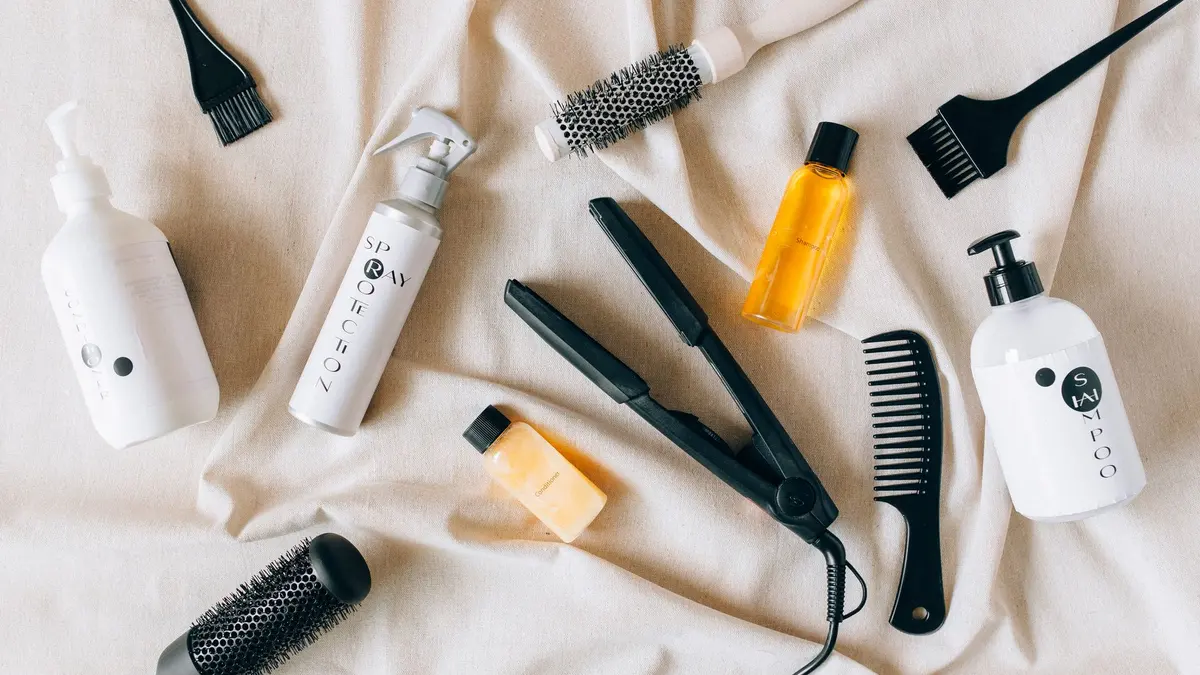
- Wash every one to three days. Fine hair looks best clean; stretching washes flattens it and sebum weighs it down.
- Lightweight shampoo, conditioner on the ends, and a weekly clarify or scalp exfoliation.
- One volumising product at the root — mousse or spray, not both.
- A texture spray for day two rather than another wash.
- Fibres or a root concealer only where the scalp actually shows.
- Treat the scalp: congestion and inflammation flatten roots and hamper growth. The basics are in our scalp care routine guide.
Two products at the root is the ceiling. Beyond that, you are back in buildup territory.
Frequently Asked Questions
Do thickening shampoos actually thicken hair?
They temporarily swell each strand with polymers and proteins, so hair measures and feels slightly thicker until you wash it out. They cannot change your follicles, and on very fine hair the effect is limited by how much a strand can swell.
Are hair fibres obvious?
Not if the shade matches and you apply them to dry hair and set them with hairspray. They are widely used and genuinely undetectable at conversational distance. They will run in heavy rain without a setting spray, so use one.
Can I use fibres if I am also using a treatment?
Yes — they sit on the hair, not the scalp, and wash out. Apply topical treatments to a clean scalp first and let them dry fully before adding fibres, so you are not diluting one with the other.
Why does my hair look thinner than it did a year ago?
It may be buildup, it may be a change in condition, or it may be genuine thinning. The test: does one clarifying wash restore the volume? If yes, it was product. If no, it is worth seeing a GP — iron deficiency, thyroid issues and pattern loss all show up this way.
Does dry shampoo cause hair loss?
Not directly, but heavy daily use without proper cleansing congests the scalp and can cause irritation and flaking, which does no favours to the follicles. Use it for a day, then wash properly.
The Bottom Line
Decide whether you are treating fine hair or thinning hair. For fine hair, go light: volumising shampoo, conditioner on the ends only, one root product, and drying upside down — technique will beat any bottle. For visible scalp, keratin fibres are the most effective cosmetic answer there is.
And keep one eye on buildup, which is how this entire category quietly turns against you. If the volume never comes back after a clarifying wash, that is the point to stop shopping and start with a GP.