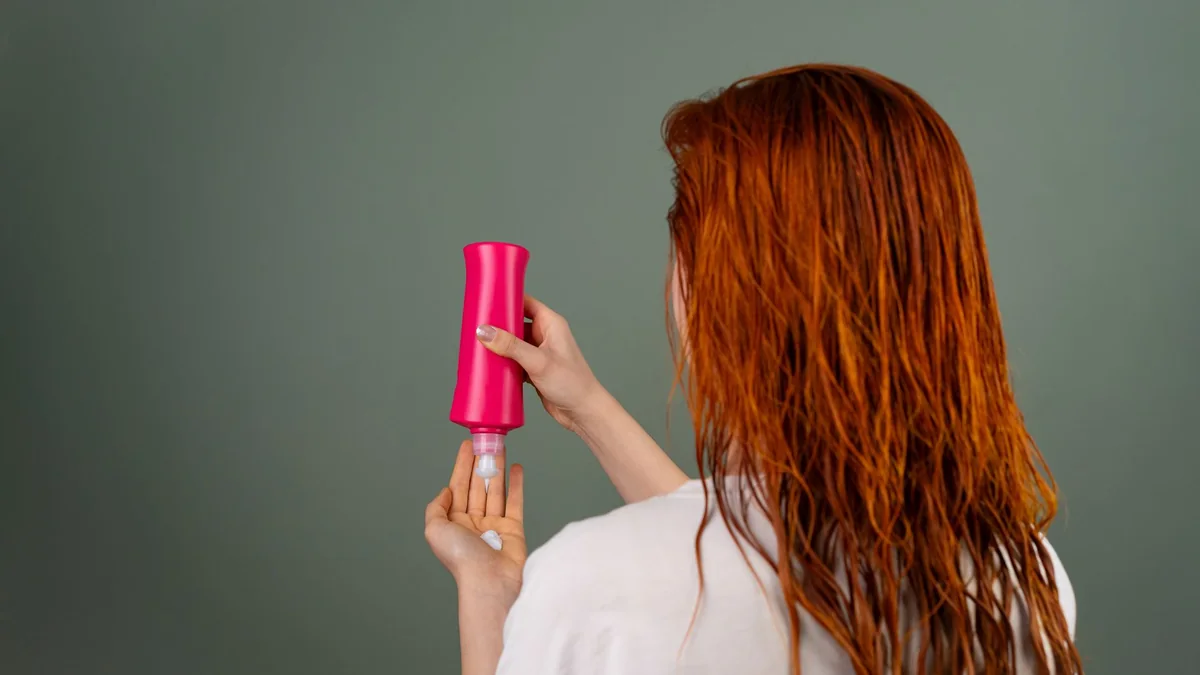
Mousse has an image problem. Say the word and half the country pictures a 1987 perm, a purple can and hair that crackled when you touched it. The modern curl enhancing mousse is a different product entirely — lighter than gel, softer than cream, and the single best thing that has happened to fine and wavy hair in years.
It is also the most misunderstood item on the curly shelf, because the same can produces four completely different results depending on two decisions you make while using it. Get those decisions right and mousse does things gel physically cannot. Get them wrong and you get flat, sticky hair and conclude mousse is not for you.

What Mousse Actually Is
A mousse is a foam: water, a hold polymer (usually something like VP/VA copolymer), conditioning agents, and a propellant that whips it all into air. That air is the point. Because so much of the volume in your palm is gas, you are depositing far less material on the hair than a comparable blob of gel or cream — which is why mousse can hold fine hair without flattening it.
Most mousses also contain some alcohol, which is why they dry faster than gel. That single fact decides a lot:
- Low-porosity hair — the kind that takes six hours to air-dry — often loves mousse, because the fast-evaporating base gets it out of the “damp for the whole morning” trap.
- High-porosity, damaged or very dry hair should use mousse over a cream or leave-in rather than alone, so the moisture layer is already in place before the drying agents arrive.
Broadly, mousses come in three flavours: moisture-led (marshmallow root, castor oil, glycerin), hold-led (higher polymer content, sometimes bond-building), and refresh-led (light, protein-rich, designed for day two). Buying the wrong category is why one mousse leaves you crunchy and the next leaves you shapeless.
The Two Dials That Decide Your Result
Here is the thing almost no guide explains. Every argument online about “the right way” to use mousse is really an argument about two settings — and both are yours to choose.
Dial one: how wet the hair is
- Soaking wet → maximum clumping and definition, less root lift. Water is what glues neighbouring hairs into a curl.
- Damp, towel-scrunched → less definition, noticeably more volume and body, faster drying.
Dial two: how you dry it
- Air-dry → shiny, silky, gel-like definition with a light cast.
- Diffuse → pillowy, bouncy, considerably bigger hair.
| Air-dry | Diffuse | |
|---|---|---|
| Applied soaking wet | Maximum definition, sleekest clumps, longest drying time | Defined and full — the best all-rounder for type 3 |
| Applied damp | Soft natural texture, minimal cast — good for waves | Maximum volume; definition softest of the four |
Decide which box you want before you leave the shower, and mousse stops being unpredictable.
How Much Mousse? The Dose Nobody Agrees On
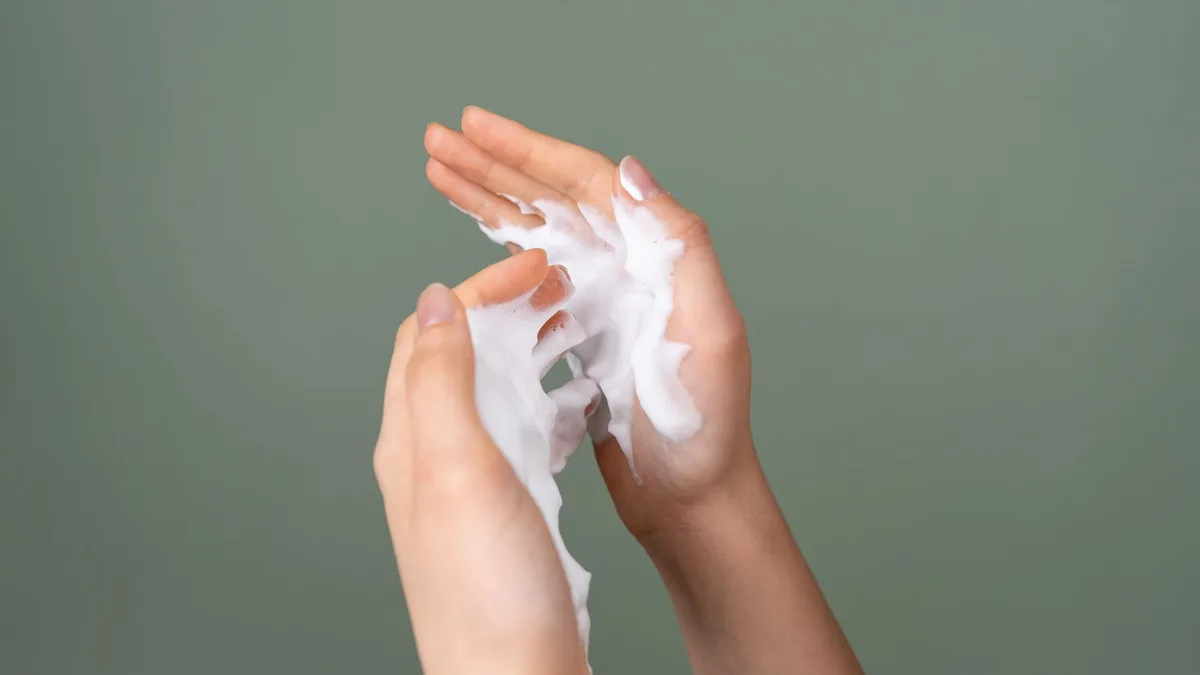
Brands variously recommend a quarter, a golf ball, an egg, a walnut per section and “a handful”. They are all right — for different heads. Reconciled, in objects you can actually picture:
| Hair | Starting amount | Notes |
|---|---|---|
| Fine, straight-ish, wanting body | A golf ball, roots and mid-lengths only | Keep it away from the ends or they go limp |
| Fine to medium waves (2A–2C) | A golf ball for the whole head | Two sections is plenty |
| Curls (3A–3C) | An egg-sized mound, or a walnut per section across 2–4 sections | The most common under-dose |
| Coils (4A–4C) | A generous handful, worked through 4–6 sections | Usually over a cream, not instead of one |
Let the foam expand in your palm for a second or two before you touch your hair — un-expanded mousse distributes badly. And remember the counter-intuitive rule: too much mousse makes hair look flat, not bouncy. If your roots collapse by mid-morning, use less next time, not more.
How to Apply It, Step by Step
- Set your wetness. Straight out of the shower for definition; scrunch with a microfibre towel or cotton T-shirt first if you want volume.
- Dispense and pat. Foam into one palm, let it expand, then press both palms together so each hand is coated.
- Praying hands first. Smooth flat palms down the outside of each section — this is the step that gives shine and stops frizz.
- Rake through with closed fingers to carry product to the mid-lengths and ends, starting at the nape, which is where everybody runs out of product.
- Work the roots deliberately if you want lift: tip your head forward and scrunch a little foam upward into the root area at the crown.
- Scrunch upward — cup the ends, push towards the scalp, hold each squeeze for about three seconds, release.
- Dry. Air-dry, or diffuse on medium heat and low airflow, laying sections into the bowl without pressing, holding at the root a few seconds before moving on.
- Break the cast only when the hair is completely dry — scrunch with clean hands or a drop of oil.
The unbreakable rule is the same as for every curl product: do not touch it while it dries. Every pass of a hand costs you a clump.

Mousse vs Gel: Which Really Gives Better Definition?
The honest answer is that gel gives more definition and mousse gives better hair — and which of those you want depends on your texture and the forecast.
| Curl enhancing mousse | Curl gel | |
|---|---|---|
| Definition | Good, softer edges | Excellent, sharpest clumps |
| Volume | Excellent, especially at the root | Can weigh curls down |
| Humidity resistance | Moderate | Strong — the reason gel exists |
| Cast | Light, breaks easily | Firm, needs proper scrunching out |
| Drying time | Faster | Slower |
| Best on | Fine, wavy, low-porosity, flat-rooted hair | Coarse, dense, frizz-prone, high-porosity hair |
Three practical verdicts:
- Fine or wavy hair: mousse wins outright. Gel is usually too much product for the amount of hair you have.
- Type 3 curls: stop choosing. Leave-in, then a curl defining cream, then mousse for lift, then a light gel if the forecast is humid. That stack outperforms any single product.
- Coils and very dense hair: mousse is a supporting act — use it over cream or butter for volume, not as the main hold.
On a properly muggy British day — the kind where the Tube feels like a greenhouse — gel is still the more reliable frizz barrier, and our guide to anti-frizz products covers what to layer with it.
Where Mousse Goes in Your Routine
The order that works, borrowed from UK curl brands and confirmed by every technique guide worth reading:
- Cleanse → condition → leave-in or cream → mousse → optional gel. No waiting between layers; everything goes on while the hair is wet.
- Fine hair can stop at mousse. Dense or high-porosity hair should finish with gel.
- Do not put mousse under a cream — the cream will collapse the foam and you will have wasted both.
Choosing a Mousse in the UK

- Try-before-you-commit: Boots’ own everyday curly hair mousse, 200ml, and Umberto Giannini’s curl range — high street, single-figure prices, perfectly decent.
- The reliable mid-range: Only Curls Volumising Curl Mousse, £18 for 200ml, made in the UK with rice water, rice protein and pro-vitamin B5, and now stocked in nearly 400 Boots stores. Weightless hold, no silicones or drying alcohols.
- For fine or thinning hair: a thickening foam with arnica and amino acids — the Rizos Curls formula is the reference — for instant root lift.
- For colour-treated curls: a vitamin E styling mousse with medium-strong hold that protects tone while controlling flyaways.
- For day-two refreshing: a light protein foam such as Curlsmith’s Bouncy Strength — soft enough to use on dry-ish hair without stickiness.
- Strong hold and repair: bond-building foams with wheat and soy amino acids; brilliant on bleached curls, slightly tacky if you overdo them.
- Splurge: Oribe and Moroccanoil, £30–£45 — genuinely lovely textures and scents; nothing they do is impossible at a third of the price.
Ingredient notes worth applying in the shop: fine hair should avoid mousses led by castor or coconut oil (they belong in coarse-hair formulas) and look for panthenol, aloe and light argan instead. Anyone with dry or high-porosity hair should check where alcohol sits in the list — near the top means fast drying and a firmer cast, which suits some heads and parches others.
Mousse for Refreshing and for Heatless Sets

Mousse has a second life on day two. Dampen the flat sections lightly, work a golf-ball of foam through with praying hands — a quarter-sized amount for tighter curls — and scrunch. It reactivates volume in a way that a pure curl refreshing spray cannot, because it adds a little fresh hold rather than only water.
It is also the ideal product under a heatless set. Foam on damp hair, then rods, ribbons or foam rollers overnight, gives a set with body that holds for days — our guide to heatless curling methods covers the techniques, and mousse is the styler that makes them last.
Troubleshooting

| Problem | Cause | Fix |
|---|---|---|
| Flat, heavy hair | Too much mousse — the classic error | Halve the amount; keep it off the ends |
| Sticky, tacky strands | Applied to sopping hair with a hold-led formula, or product not emulsified | Towel-scrunch first; let the foam expand in your palm |
| Crunchy after drying | Perfectly normal — that is the cast | Scrunch it out when bone dry |
| Dry, straw-like ends | Alcohol-heavy mousse used with no moisture layer | Cream or leave-in first, mousse second |
| Definition falls out by lunch | Not enough hold for your density or the humidity | Add a light gel over the mousse |
| Volume at the roots but frizzy lengths | Raked with open fingers, or touched while drying | Closed fingers, praying hands, hands off |
Frequently Asked Questions
Is mousse bad for your hair?
No — the 1980s reputation comes from formulas heavy on drying alcohols. Modern curl mousses are largely water and conditioning polymers. If yours leaves hair dry, check whether alcohol is high in the ingredients list and use it over a leave-in rather than alone.
Can I use mousse and gel together?
Yes, and for type 3 curls it is often the best combination there is. Mousse first for volume, gel on top for hold, both on wet hair, no waiting between them.
Does mousse work on straight hair?
It works better on straight hair than most curl products. Applied to damp roots and blow-dried with a round brush, it gives body and movement; applied before heatless rollers, it makes a soft wave hold.
Mousse or cream for wavy hair?
Mousse, nine times out of ten. Creams are heavier than most waves can carry, and the collapse people blame on “my hair not holding a curl” is usually just product weight.
How often can I use it?
Every wash day, and on refresh days if you want. Because mousse deposits so little material, buildup is slower than with creams and gels — but still clarify every three to four weeks, especially in hard-water areas.
The Bottom Line
A curl enhancing mousse is mostly air, and that is its superpower: hold and definition without the weight that flattens fine and wavy hair. Choose your wetness for definition or volume, choose air-drying or diffusing for sleek or pillowy, use less than you think, and leave it alone while it dries.
If gel has always felt like too much and cream like too little, mousse is almost certainly the product you have been missing. For where it sits in the wider routine, see our full guide to curly hair products.