
Walk into any Boots on a Saturday afternoon and you will find someone standing in the haircare aisle holding two bottles, reading the backs of both, and quietly panicking. Curly hair products now take up more shelf space in the UK than they did a decade ago — creams, custards, jellies, mousses, milks, gels, leave-ins, refreshers — and almost none of the packaging tells you the one thing that actually decides whether a product will work on your head. It is not your curl number. It is how thirsty your hair is, how quickly it drinks, and how badly it leaks.
This guide is the version we wish someone had handed us at the start: how to read your own curls, what each category of product genuinely does, the order they go on in, how much to use, and how to build a shelf that works in British weather — damp mornings, humid Tube platforms, hard water and all. By the end you will be able to walk past three-quarters of that aisle without a second glance.
Why Most Curly Hair Routines Fail Before They Begin
The usual story goes like this. You watch a video, you buy the four products the person in the video used, you copy their technique exactly, and your hair comes out limp, greasy at the root and frizzy at the ends. You conclude that your hair is “difficult”. It isn’t. You copied a routine built for someone else’s strand.
Three things vary enormously between two people with visually identical curls: porosity (how easily moisture gets in and out), strand width (fine, medium or coarse) and density (how many strands you have). A fine, low-density type 3A head and a coarse, high-density 3A head need almost opposite product weights. Get those three right and cheap products behave beautifully. Get them wrong and a £25 gel will still let you down.
The second reason routines fail is dosage. Beginners consistently use too little styling product and end up with soft, undefined waves; improvers then over-correct and end up with limp, coated curls that take six hours to dry. Both problems look like “wrong product” and are actually “wrong amount”.

Know Your Curl Type and Porosity First
Curl type tells you how your hair bends. Porosity tells you how your hair drinks. You need both, and if you only have the patience for one, choose porosity.
Curl type, briefly
- Type 2 (wavy): loose S-shapes that start away from the root. Goes flat and greasy quickly, so it wants the lightest possible products — mousse, thin gel, watery leave-ins.
- Type 3 (curly): defined ringlets and corkscrews. Clumps well, wants cream plus gel, frizzes when under-hydrated.
- Type 4 (coily): tight S or Z patterns with serious shrinkage. The driest of the three by design — sebum simply cannot travel down that many bends — so it wants butters, custards and heavier leave-ins.
Most heads are a mixture. It is completely normal to have looser waves at the crown and tighter curls underneath, and you can absolutely use two different products in two different sections.
Porosity: forget the glass of water
You have probably seen the “float test” — drop a shed hair into a glass of water and see whether it sinks. It is charming and it is unreliable; a strand’s behaviour in a glass depends on product residue and surface tension more than on cuticle condition. Trichology-minded stylists have quietly retired it. Use these three observations instead, on your normal wash day:
- The wetting test. Mist your dry hair with water. Are droplets still sitting on the surface two or three minutes later? That is low porosity. Do they vanish almost instantly? That is high porosity.
- The drying clock. Time how long your hair takes to air-dry with no product. Six hours or more suggests low porosity; three to four hours suggests high; four to six is the comfortable middle.
- The absorption test. Put leave-in on damp hair. Does it disappear into the strand, or does it sit on top and pill when you rake it through? Sitting on top means low porosity.
What to do with the answer:
| Porosity | What it does | What it wants |
|---|---|---|
| Low | Resists water, dries slowly, builds up easily, goes stiff with too much protein | Humectants (glycerin, honey, agave, aloe, sodium PCA), lightweight textures — mousses, gels, watery leave-ins. Apply in a warm shower or emulsify in wet palms so it can penetrate |
| Medium | Wets and dries evenly, holds a style, tolerates both protein and moisture | Almost anything. Adjust seasonally rather than obsessively |
| High | Drinks fast, leaks faster, frizzes and tangles, usually the result of colour, heat or years of sun | Rich emollients and butters, film formers (flaxseed, aloe, marshmallow root), and something to seal — cream then gel, applied fast before it dries |
One British footnote: if you live in London, the South East or the Midlands, you are washing in hard water. Calcium and magnesium deposit on the cuticle and mimic the symptoms of low porosity — products stop absorbing, curls go stiff and dull. If your routine used to work and no longer does, a clarifying wash or a chelating shampoo every few weeks is more likely to be the fix than another new cream.
The Core Curl Routine: Cleanse, Condition, Style, Dry
Every credible curl routine — salon, brand or independent — is a version of the same four moves. Learn the skeleton and the products become easy to slot in.
1. Cleanse gently
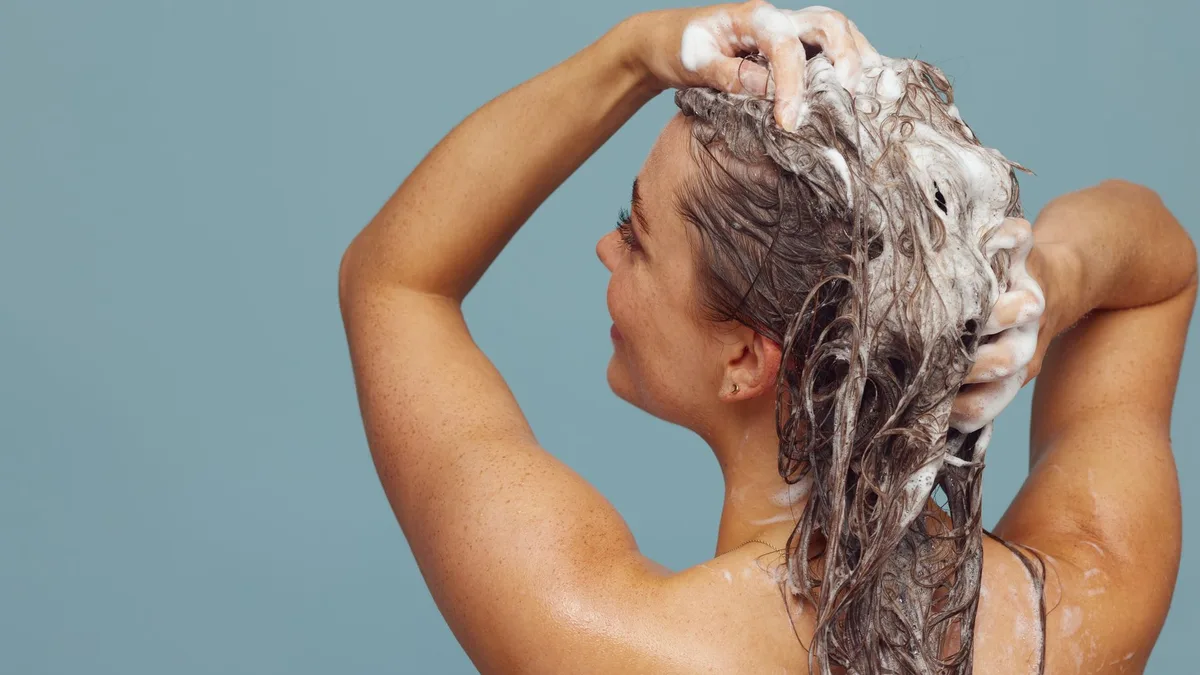
Use a sulphate-free shampoo, work it into the scalp with fingertips (not nails), and let the lather rinse down the lengths on its own. Never scrub shampoo up and down the hair, never wring or twist, and finish with a cooler rinse than feels natural.
How often? Curls tolerate longer gaps than straight hair because sebum struggles to travel round the bends — but skipping washes for weeks to “preserve” a style is a false economy. Build-up flattens curl formation and irritates the scalp. Most people land on every three to five days, with a clarifying shampoo roughly monthly (more often if you use heavy butters, silicones or live with hard water). If your hair is very dry or coily, a co-wash — cleansing with conditioner — can replace one of those washes.
2. Condition and treat
Conditioner belongs on mid-lengths and ends, used sparingly at the roots — conditioning the scalp is why so many people have flat roots and greasy day-twos. Leave it two to five minutes, detangle with fingers first and then a wide-tooth comb while the conditioner is still in, and always work ends to roots.
Once a week, swap in a deep treatment for ten to thirty minutes — with warmth if you can, because a shower cap or a warm towel genuinely improves penetration on low-porosity hair. This is the single highest-value step for anyone whose curls feel like straw, and where our guide to hair masks in London comes in handy.
3. Style on soaking-wet hair
This is the step people get wrong most often. Styling products need water to spread; applied to damp-ish or dry hair they sit in patches, clump nothing, and frizz within the hour. Work in the shower or immediately after, section by section, hair dripping.
The order — with no waiting time between layers — is:
- Leave-in conditioner on soaking hair. Roughly a coin-sized amount for shoulder-length hair.
- Cream (or mousse, for fine hair) while it is still properly wet.
- Gel last, to lock the shape into a cast.
Application methods worth knowing: praying hands (product between flat palms, slide a section through) for maximum smoothness and minimum frizz; raking (fingers through root to tip) for even distribution and looser clumps; finger coiling for definition on stubborn sections; and scrunching upwards at the end to encourage spring. Start with less product than you think and build in thin layers — you can always add, you cannot remove.
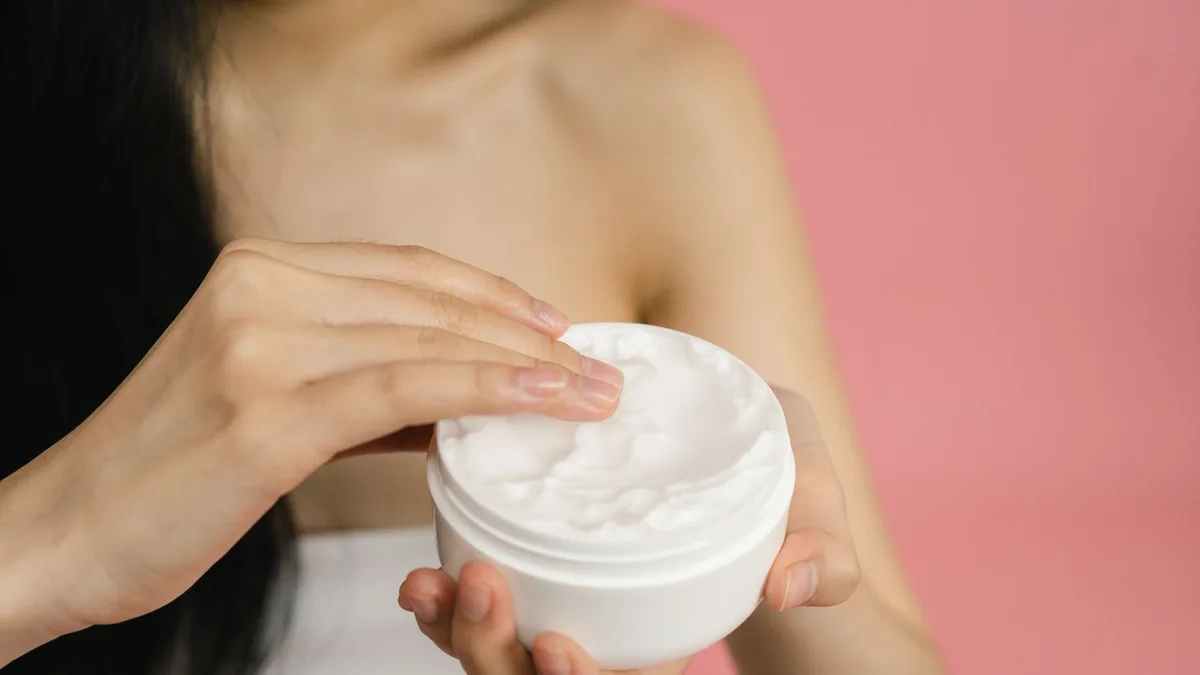
4. Dry without disturbing the curl
Squeeze — never rub — excess water with an old cotton T-shirt or a microfibre towel. Plopping (lay the T-shirt flat, flip your head into the middle, tie the sleeves at the nape) for ten to thirty minutes removes water while the curls sit in their own shape.
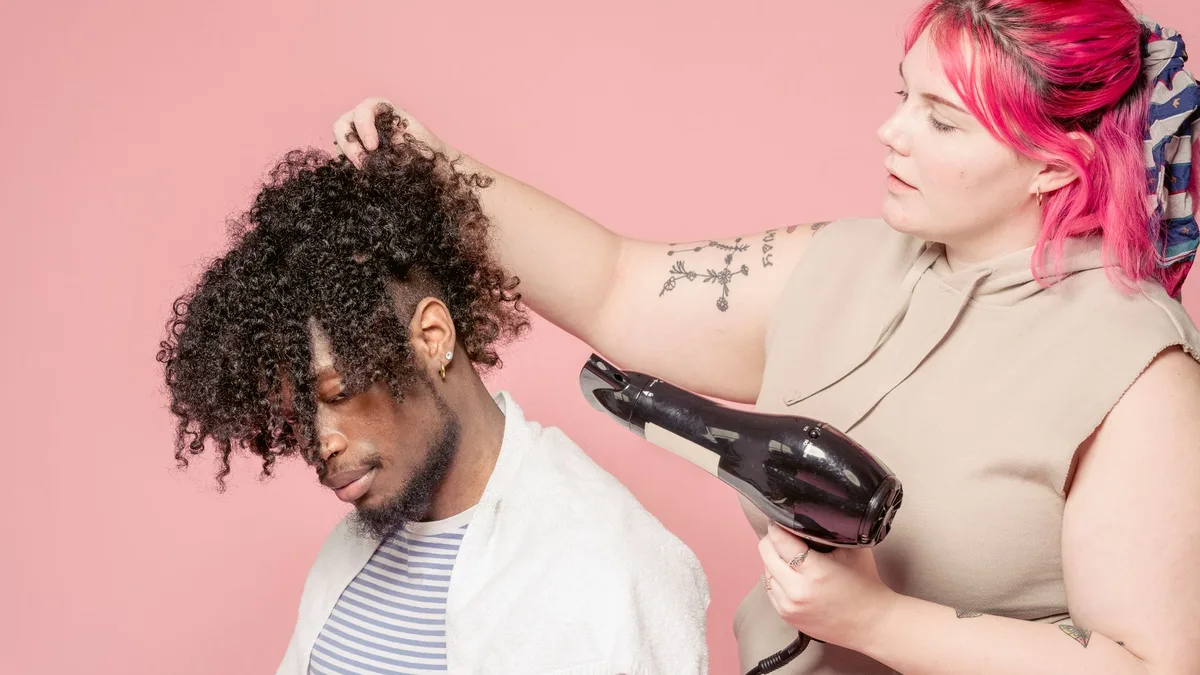
Then air-dry if you have the time, or diffuse on low heat and low speed — high airflow is what blows clumps apart, not heat alone. Cup sections into the bowl, hover at the root for lift, and move slowly. Whatever you do, stop touching it: every finger that goes into drying hair costs you a curl clump. If you are reaching for anything hotter, pair it with a proper heat protectant spray and get to know your hair styling tools properly.
When the hair is completely dry — not almost, completely — scrunch out the crunch with clean hands or a drop of light oil. The cast breaks and leaves soft, defined curls underneath. Scrunch too early and you undo the whole wash day.
Cream, Gel, Mousse or Leave-In? What Each One Actually Does
Four categories, four jobs. Almost every “which is better” argument online is really a mismatch between a product’s job and someone’s hair.
| Product | Job | Hold | Best for |
|---|---|---|---|
| Leave-in | Base hydration, slip, detangling | None | Everyone, every porosity |
| Curl cream | Moisture, smoothing, soft definition | Light to medium | Dry, frizz-prone, medium to coarse curls |
| Mousse | Volume and lift with light definition | Medium, airy | Fine, limp, wavy hair; humid days |
| Gel / jelly | Cast, frizz control, longevity | Strongest | Anyone who wants definition to survive the commute |
A few things that are true and rarely said out loud. Cream on its own gives lovely soft curls that surrender to humidity by lunchtime — in this country, cream nearly always wants a gel on top. Mousse is not a lesser gel; it is a volumiser, and on fine hair it beats every cream on the shelf. And “crunchy” is not a fault: the cast is the point, and it is meant to be broken at the end.
For the deeper dives, we have separate guides to choosing a curl defining cream, getting lift from a curl enhancing mousse, and rescuing day-three hair with a curl refreshing spray.
Ingredients Worth Looking For — and a Few to Avoid
Ignore the marketing on the front and read the first six ingredients on the back. That is where the formula actually lives.
- Humectants — glycerin, honey, agave, aloe vera, sodium PCA, propanediol. They pull water into the hair. Brilliant for low porosity; can go frizzy in extreme humidity or very dry cold, so scale back in a heatwave or a hard frost.
- Emollients and butters — shea, mango, coconut, mafura, jojoba. They smooth and seal. High-porosity hair needs these; fine hair drowns in them.
- Film formers — flaxseed, marshmallow root, aloe gel, PVP-type polymers. These build the cast and the frizz barrier.
- Proteins — hydrolysed wheat, silk, keratin. Useful for damaged, colour-treated or high-porosity hair; used too often on low-porosity hair they cause stiffness and snapping. If your curls suddenly feel like straw despite conditioning, suspect protein overload and take a break.
Worth being wary of: heavy non-water-soluble silicones (they mask damage and then need harsher shampoos to remove), drying alcohols high in the ingredient list (ethanol, isopropyl, benzyl alcohol — fatty alcohols like cetyl and stearyl are fine and actually conditioning), and mineral oil on already-thirsty hair, which seals moisture out as effectively as in.
Building Your Curl Shelf on Any Budget
You do not need eleven products. You need four, chosen for your porosity, and the discipline to use them properly for a month before judging anything.
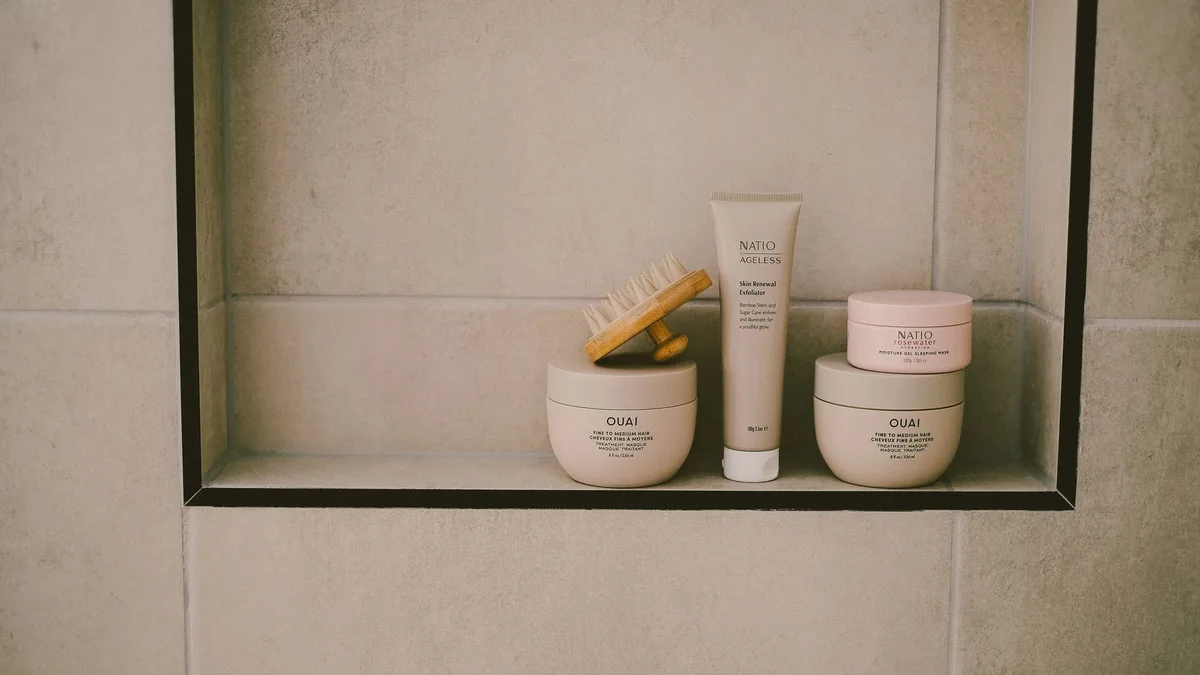
- Under £30 for the lot. A sulphate-free shampoo, a slippy conditioner, a supermarket curl cream and a gel. Cantu’s coconut curling cream and the SheaMoisture curl smoothie both sit comfortably under a tenner in most UK chemists and hold their own against products three times the price.
- The smartest £30 in curly hair. A starter set. Only Curls’ mini kit — cleanser, conditioner, creme, gel and a microfibre towel in travel sizes for around £28 — lets you test an entire matched routine rather than gambling £25 on one full-size bottle that might be wrong for you.
- Worth the money when you have it. A bond-building defining gel such as Olaplex No.10 (around £25 for 200ml) if your curls are colour-damaged; UNITE’s BOING shampoo and conditioner (roughly £21–£23 each) if you want salon slip; a good weekly mask such as OSMO’s Curl Revival at around £14, which is the cheapest way to buy back elasticity.
- The two accessories that punch above their weight. A microfibre towel or old T-shirt, and a silk or satin pillowcase — or a silk scrunchie at about £10 for the overnight “pineapple”. Cotton pillowcases undo good wash days while you sleep.
Stock all of it in Boots, Superdrug, Sally Beauty, Beauty Base or direct from the brands; specialist UK curl retailers tend to offer free delivery over about £20, which beats paying customs on an American haul. If you want a broader sweep of what is selling well here, our round-up of the best beauty products London shoppers loved is a useful cross-check.
Between Wash Days: Nights, Refreshes and Damage Control
Wash day is maybe twenty per cent of curly hair. The other eighty per cent is what happens on the pillow and on day three.
At night: pineapple your hair into a loose high ponytail with a silk scrunchie, or twist it into two loose sections, and sleep on silk or satin. Never go to bed with soaking hair — it stretches, breaks, and gives your scalp a damp environment it does not want.
Day two and three: mist with water — or water plus a squeeze of leave-in in a spray bottle — and scrunch only the sections that have gone flat or frizzy. Do not re-do the whole head. A pea-sized amount of cream emulsified in wet palms is usually enough to bring a whole side back.

When heat is unavoidable: Heatless curls — rods, ribbons, foam rollers, a satin heatless curling set — give you shape overnight with no thermal damage at all. And if your curls are already fried from bleach or straighteners, our guide to curl revival products covers the bond builders and protein-moisture balancing that genuinely help.
Troubleshooting: Read the Symptom, Change One Thing
Change one variable at a time and give it two wash days before you judge. Most “my hair hates everything” stories are three changes made at once.
| Symptom | Most likely cause | Fix |
|---|---|---|
| Limp, undefined, slow to dry | Too much product or too much moisture | Clarify, then rebuild with less cream and more gel |
| Frizzy halo, no clumps | Touched it while drying, or applied product to damp rather than wet hair | Apply soaking wet; hands off until bone dry |
| Still crunchy at the end of the day | Cast never broken | Scrunch out the crunch once fully dry |
| Straw-like despite conditioning | Protein overload, or hard-water mineral build-up | Drop protein for a month; use a chelating shampoo |
| Greasy roots, dry ends | Conditioner on the scalp, no cleansing on the lengths | Shampoo the scalp, condition the ends, keep the two apart |
| Great day one, flat day two | Cotton pillowcase and no night style | Pineapple plus silk or satin |
Persistent frizz that survives all of the above is usually damage rather than technique — that is where the anti-frizz products earn their place, and where a volumizing spray or a good dry shampoo can extend a wash day rather than fix it.
A Realistic First Month
- Week one: clarify once, then run the four-step routine exactly as written. Note only two things — how fast your hair dries and whether product sinks in or sits on top.
- Week two: adjust weight based on that answer. Sitting on top? Go lighter and warmer. Drying in three hours? Go richer and seal.
- Week three: fix dosage. Too limp, halve it; too undefined, increase by half again.
- Week four: only now add or swap a product. Most people find they need one fewer bottle than they own, not one more.
Improvement usually shows within two or three wash days; the full picture — moisture balance, scalp settling, curls remembering what they are — takes about a month. That is the honest timeline nobody puts on the packaging.
Frequently Asked Questions
How often should I wash curly hair?
Most curly heads do well on every three to five days, with looser waves closer to every two or three and coily hair often weekly. Add a clarifying wash roughly monthly. Scalp health beats curl preservation — if your roots itch or your curls stop forming, you are washing too little, not too much.
Why is my hair frizzy instead of curly?
Frizz is usually thirst plus disruption. Either the hair is not holding enough water (porosity mismatch, not enough leave-in), or the clumps were broken while drying by hands, a towel or a high-speed dryer. Apply to soaking-wet hair, add a gel cast, and do not touch it until it is completely dry.
Do I need a separate leave-in, cream and gel — or is that marketing?
Fine wavy hair often needs only a leave-in and a mousse. Coarse, high-porosity or coily hair genuinely benefits from all three, because each does a different job — hydrate, smooth, seal. If your hair is somewhere in the middle, start with two and add the third only if definition drops by mid-afternoon.
Can I build curls if my hair is naturally straight?
You cannot change the follicle, but you can absolutely create shape. Mousse plus heatless rollers, rods or overnight braids will give straight hair a soft wave that lasts a day or two, and a light gel will make it survive the weather. Just do not expect wash-and-go behaviour from hair that has no curl pattern to fall back on.
Does British weather really change what I should use?
More than most guides admit. High humidity pulls water into humectant-heavy products and puffs the cuticle, so on muggy days use a firmer gel and fewer humectants. Cold, dry, centrally-heated winter does the opposite — hair loses water to the air, so you want richer creams and sealing oils. And hard water in much of England quietly sabotages everything, which is why a chelating wash every few weeks is one of the highest-value habits in this whole guide.
The Takeaway
The right curly hair products are not the ones with the best reviews — they are the ones that match how your hair drinks, how thick each strand is, and what the weather outside is doing. Work out your porosity with three simple observations, layer leave-in, cream and gel on soaking-wet hair, dry without touching, break the cast at the end, and protect it all on a silk pillowcase.
Do that consistently for a month with four sensible products and you will get better curls than most people get from a shelf of twenty. Then, and only then, go shopping.