
There is a specific moment that sends people looking for curl revival products: you wash your hair, look in the mirror, and the curls that used to spring back are hanging there like wet string. Usually there has been a bleach, a summer of straighteners, or simply years of quiet wear. And the instinct is to buy something — ideally something expensive with the word “bond” on it.
Some of those products genuinely work. But the order matters: diagnose first, change habits second, buy third. Done that way, most damaged curls improve within two to three months. Done the other way round, people spend £60 on treatments that cannot fix the actual problem.

Start With Two 30-Second Tests
Before you spend anything, find out what you are dealing with. Both of these are done on wet hair, in the shower.
- The elasticity test. Take one wet strand and stretch it gently. Healthy hair stretches a little and springs back. If it stretches and stays stretched — or feels soft and gummy — the internal structure has gone, and that hair will not recover.
- The clumping test. Look at your soaking-wet hair with no product in it. Does it still form curl clumps? Strong clumping means the pattern is intact. Some clumping means moderate damage. No clumping at all, and water absorbing the instant it touches your hair, means severe.
| Stage | What you see | Realistic recovery |
|---|---|---|
| Mild | A bit more frizz, curls still clump when wet, minimal breakage | 2–4 months |
| Moderate | Pattern loosening in places, less clumping, high porosity, some breakage when wet | 6–12 months |
| Severe | Pattern largely gone, no clumping, water absorbed instantly, poor elasticity, snapping | 12 months+, usually with cutting |
The Honest Part: What Can and Cannot Be Repaired
Hair is not living tissue. Nothing you buy heals it in the way skin heals. What products can do is real but bounded:
- Can be improved: dryness, dullness, roughness, tangling, elasticity, breakage rate, frizz, and how well the hair holds a style. Mild and moderate damage genuinely reverses over two to three months of consistent care.
- Cannot be restored: a curl pattern whose internal bonds have been broken. If bleach or repeated heat has straightened a section permanently, no treatment will make it curl again. Bond builders will make it stronger and better behaved — but the pattern comes back with new growth, not from a bottle.
That sounds bleak; it is actually liberating. Once you know which sections are recoverable and which are being grown out, you stop throwing money at the parts that were never coming back.
Heat Damage and Bleach Damage Are Not the Same Problem
- Heat damage works from the inside out. Repeated high temperatures break the protein structure within the strand, which is why curl pattern goes first and the surface can still look acceptable for a while.
- Bleach damage works from the outside in. It strips the natural oils, breaks keratin bonds and forces the cuticle open so it never fully closes again — which is why bleached curls go instantly high-porosity, soak up water, and lose it just as fast.
Curly hair suffers more from both, for a structural reason worth knowing: every bend in a curl is a weak point where the cuticle is naturally slightly raised, and sebum struggles to travel past them. Curls start drier and have more places to break.
Bond Builders: What They Actually Do
“Bond builder” covers three different chemistries, and knowing which you have changes how you use it.
| Type | What it targets | How to use it |
|---|---|---|
| Disulphide relinkers (Olaplex-style) | The sulphur bonds bleach and colour break | Damp, towel-dried hair; 10 minutes minimum; rinse, then shampoo and condition. Once a week |
| Peptide rebuilders (K18-style) | Broken keratin chains in the cortex | Clarify first — build-up blocks it. Damp hair, no conditioner beforehand, comb through, wait 4 minutes, do not rinse. Every wash for 4–6 weeks, then weekly |
| Acidic bonding complexes (citric/maleic acid) | Cuticle sealing and pH correction rather than deep bonds | Everyday conditioners and masks; cheapest, gentlest, good for maintenance |
What UK testing consistently shows: the disulphide route is slower — expect around four treatments before you notice anything — but steady, and it fits into a full system of shampoo, conditioner and styler. The peptide route tends to show results from the first correct use and takes four minutes rather than ten, but costs more per treatment and is unforgiving of technique. Using it after conditioner, or on unclarified hair, is why people report it “doing nothing” or leaving hair matted.
Prices, honestly: the classic disulphide treatment runs around £28 for 100ml (£56 for the large size), while peptide masks start around £30 for 50ml. Per treatment, the peptide is dearer; per bottle, the disulphide one gets used up faster because it needs saturation.
And the caveat nobody selling them mentions: on hair that is only dry rather than structurally damaged, a good deep conditioner does as much for a third of the price. Bond builders are for chemical and heat damage. If your curls are simply thirsty, start with a weekly hair mask.
Protein and Moisture: A Scheduling Problem
Most failed curl recoveries are not a product problem, they are a timing problem. Damaged hair needs both protein (structure) and moisture (flexibility), and too much of either creates a new fault.
- Needs moisture if it feels dry, rough, dull, straw-like and snaps when stretched dry.
- Needs protein if it feels overly soft, limp, stretchy and mushy when wet, and will not hold any shape.
- Protein overload feels stiff, brittle and crunchy after treatments. The fix is a clarifying wash followed by a long moisture-only deep conditioner — at least half an hour.
A four-week recovery calendar
| Week | Wash day | Notes |
|---|---|---|
| 1 | Clarify, then bond builder, then deep condition | Leave 24 hours between a bond builder and any protein treatment |
| 2 | Gentle cleanse + moisture mask (20–30 minutes, with warmth) | Steam or a warm towel genuinely improves penetration |
| 3 | Protein treatment, then a moisture treatment immediately after | Never end a wash day on protein alone |
| 4 | Gentle cleanse + moisture mask | Reassess with the stretch test |
Adjust the intensity to your texture: waves want light protein weekly at most and short conditioning sessions; type 3 curls do well with a medium protein every seven to ten days and a monthly bond builder; coils can take stronger protein and 30–45 minute deep conditioning with heat. Leave five to seven days between protein treatments whatever your type.
The Free Changes That Beat Any Product
If you do nothing else from this article, do these. They cost nothing and they outperform most of the shelf.
- Stop heat for 8 to 12 weeks. Not “reduce” — stop. This single change does more than every treatment combined, and our guide to heatless curling methods covers how to still have a hairstyle while you do it.
- Bin the terry towel. Microfibre or an old cotton T-shirt, squeezing rather than rubbing.
- Detangle only in conditioner, with fingers first and then a wide-tooth comb, working ends to roots.
- Rinse cool. It helps the cuticle lie flatter, which matters enormously on high-porosity hair.
- Sleep on satin or silk, in a loose pineapple. Cotton is friction and moisture loss for eight hours a night.
- Wash once or twice a week, and stop stretching to three weeks — build-up on a damaged cuticle makes everything worse, not better.
- No new chemical processing for at least three months. That includes “just a toner”.
Building the Recovery Shelf
- A sulphate-free cleanser for damaged or colour-treated hair, plus a clarifying or chelating shampoo used monthly — essential in hard-water areas, where mineral build-up mimics damage.
- A proper deep mask with both conditioning agents and some protein — used weekly, 10 to 30 minutes, with warmth.
- A bond builder, if the damage is chemical or thermal. Disulphide type for bleach; peptide type if you want faster results and can follow the protocol exactly.
- A daily leave-in on mid-lengths and ends, every wash without exception.
- A sealing oil — light for fine hair, heavier (castor, avocado) for high-porosity coils — applied to damp hair, never dry.
- A styler that does not fight you: while recovering, a curl defining cream is kinder than a strong-hold gel, which can accentuate brittleness.
Ingredients worth having on the label: hydrolysed rice, wheat or silk protein; keratin and amino acids; shea and mango butter; argan, jojoba and sunflower seed oil; and film-formers such as aloe and flaxseed. Ingredients worth avoiding while you recover: drying alcohols high in the list, heavy non-water-soluble silicones that need harsh shampoos to remove, and anything with “extra strength hold” on the front.
When to Stop Treating and Start Cutting
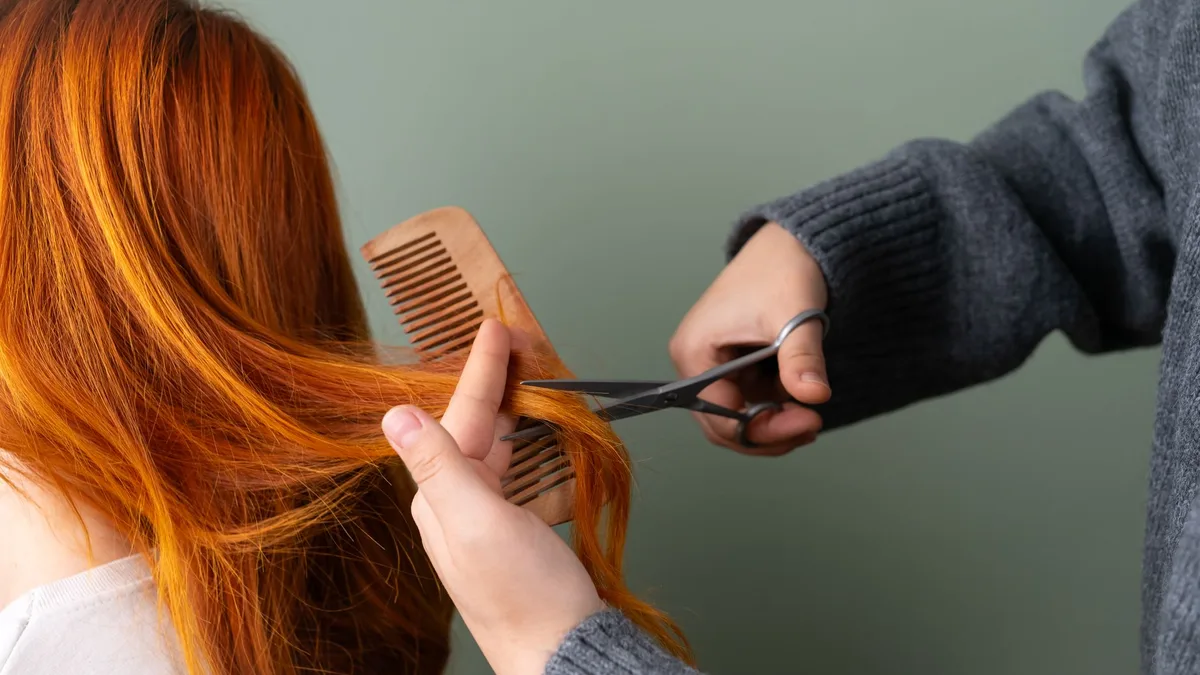
Damaged ends do not heal. They keep splitting upward, and every week you keep them is another few millimetres of good hair lost. Cut if:
- A wet strand stretches and does not return, or feels gummy.
- You are getting breakage at the mid-shaft, not just at the ends.
- There has been no improvement after four to six weeks of a consistent routine.
- The ends tangle within minutes of detangling.
You do not need a big chop. Trims every six to eight weeks during recovery usually keep pace with the damage and preserve most of your length — and because damaged ends are what cause knots and snapping, most people lose less overall length by cutting regularly than by clinging on.
What Recovery Actually Looks Like
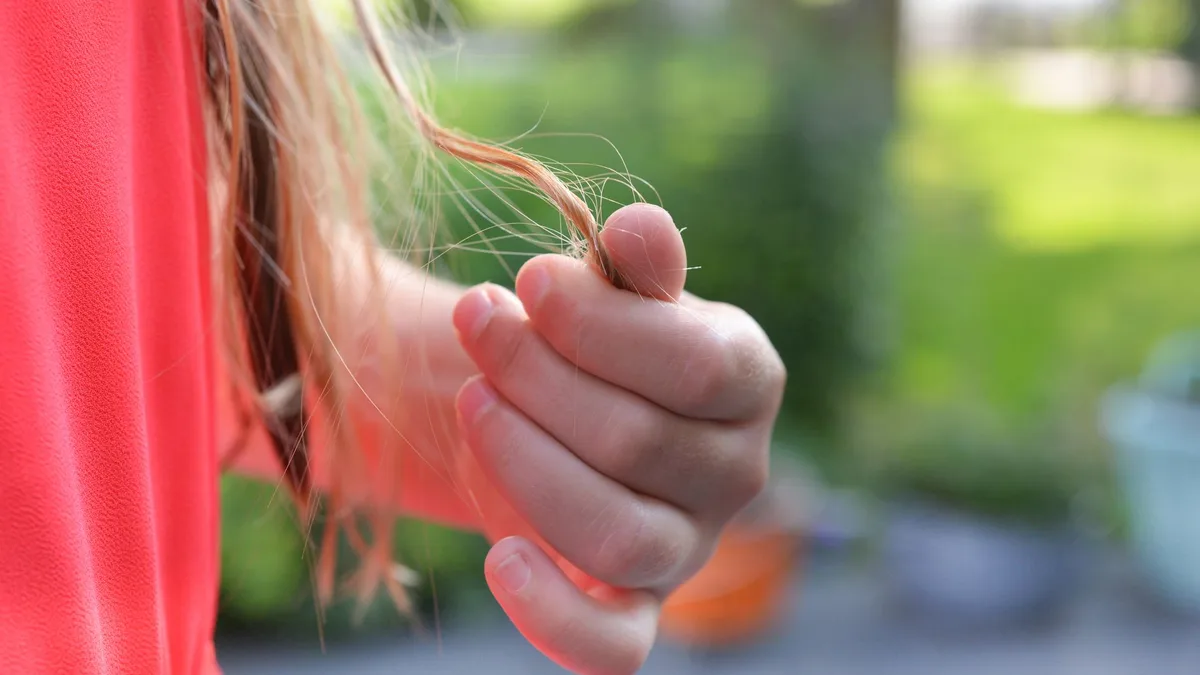
- Weeks 1–2: better slip, easier detangling, less hair in the brush. Curl pattern unchanged — this is normal.
- Weeks 3–6: shine returns, frizz drops, clumps start to reappear in the least damaged sections.
- Months 2–3: mild and moderate damage largely resolved; you can see healthy new growth at the root with its proper pattern.
- Months 6–12: severe cases; length is being replaced rather than repaired, and the trims are doing as much work as the products.
Take a photo of wet, product-free hair at the start. Memory is a terrible judge of gradual improvement, and around week five most people become convinced nothing has changed when the photograph says otherwise.
Frequently Asked Questions
Can damaged curls ever go back to how they were?
Mild and moderate damage, yes — usually within two to three months. Where the bonds that create the curl are broken, that hair is permanently altered, but the new growth comes through with your natural pattern. Most “my curls came back” stories are a combination of genuine repair and grown-out length.
Is Olaplex or K18 better for curly hair?
For bleach damage on coarse or dense curls, the peptide type tends to show faster, more dramatic change. For fine curls, the gentler weekly disulphide treatment is safer — peptide masks used every wash can tip fine hair into protein overload, which feels exactly like more damage. Start weekly, watch for stiffness, and adjust.
How often should I use a bond builder?
Once a week for rinse-out types; every wash for four to six weeks then weekly for leave-in peptide types. More frequently is not faster — the reaction is limited by the damage sites available, not by how much product you apply.
Why does my hair feel worse after a treatment?
Almost always protein overload: stiff, straw-like, snapping. Clarify, then deep condition with a moisture-only mask for at least thirty minutes, and leave protein alone for a month.
Do I have to give up heat forever?
No — but give it up completely for two to three months while you recover, then reintroduce it sparingly, at the lowest workable temperature and never without a heat protectant. Most people find they do not go back to using it weekly.
The Bottom Line
Curl revival is diagnosis, then habits, then products — in that order. Do the stretch test, be honest about which sections are recoverable, stop the heat for a couple of months, balance protein against moisture on a schedule rather than a whim, and let a bond builder do the specific job it is good at.
Give it eight weeks before you judge it, and trim as you go. For the routine to rebuild once your curls are behaving again, start with our guide to curly hair products.