
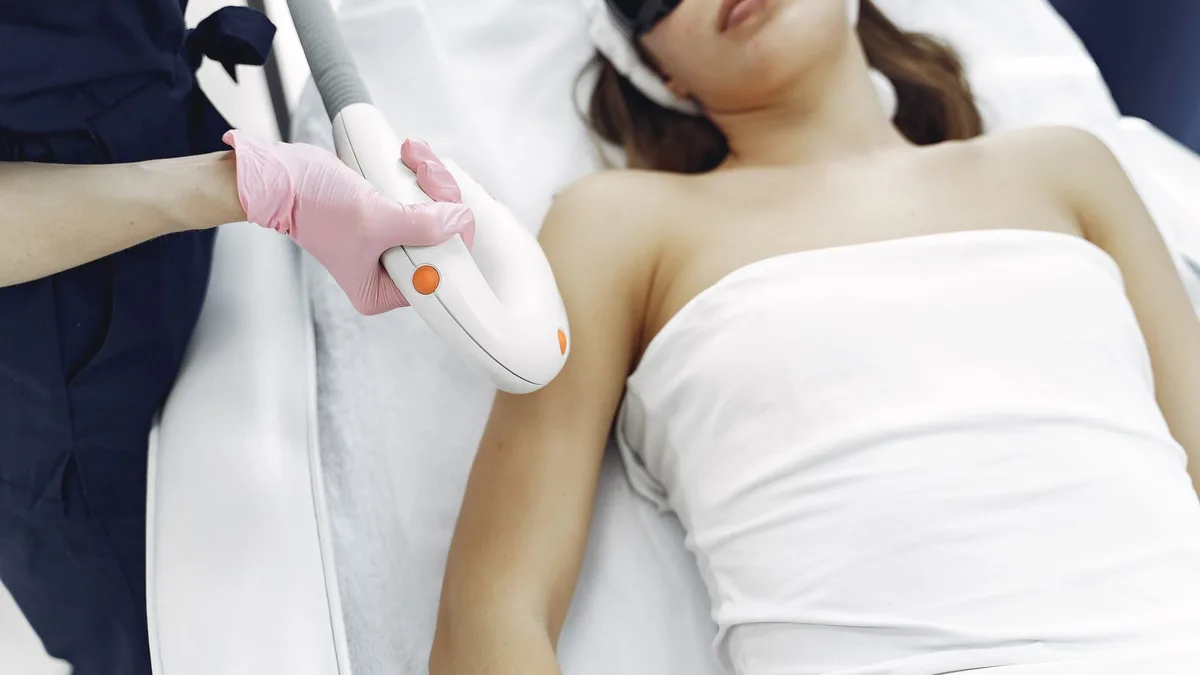
The dream of never shaving, waxing or plucking again has made hair removal one of the biggest areas in aesthetics — and one of the most confusing, thanks to three competing technologies that sound similar but work quite differently. Laser, IPL and electrolysis all promise longer-lasting hair reduction, but they suit different skin tones, hair colours and budgets, and only one is technically permanent. Understanding the differences helps you choose the right route rather than wasting money on the wrong one. This is an informational overview within our cosmetic treatments guide; treatments should be carried out by trained, qualified practitioners.
Laser Hair Removal
Laser hair removal uses a concentrated beam of a single wavelength that targets the pigment (melanin) in the hair follicle, heating and damaging it to reduce future growth. Because it relies on the contrast between dark hair and the surrounding skin, it has traditionally worked best on dark hair, though modern lasers have expanded the range of skin tones that can be treated safely. It requires a course of sessions — typically six or more, spaced weeks apart — because it only works on hairs in their active growth phase, and results are long-lasting reduction rather than a single permanent zap.
IPL: The Broader-Spectrum Cousin
IPL, or intense pulsed light, works on a similar principle — targeting pigment with light — but uses a broad spectrum of wavelengths rather than a single focused one. This makes it generally less powerful and less precise than laser, often needing more sessions for similar results, and it is the technology behind most at-home devices. IPL can be effective for the right hair and skin combination, but for stubborn or extensive hair, professional laser typically outperforms it. It is often the more affordable, gentler, slower option.
Electrolysis: The Only Permanent Method
Electrolysis is the outlier and the only method officially recognised as permanent hair removal. It treats each follicle individually with a fine probe that destroys the hair’s growth centre, which means it works on any hair colour — including grey, red and blonde hair that laser and IPL struggle with — and any skin tone. The trade-offs are that it is slow, treating one hair at a time, requires many sessions, and can be more uncomfortable, which is why it is often chosen for smaller areas or where laser is unsuitable.
Which Is Right for You?
- Dark hair, larger areas: professional laser is usually the most efficient choice.
- Budget or at-home, suitable hair/skin: IPL can work with patience and more sessions.
- Grey, red or very fair hair, or truly permanent results: electrolysis is the option that works.
- Any method: a proper consultation and patch test with a qualified practitioner comes first.
Safety and Realistic Expectations
All three treatments carry some risk of burns, pigmentation changes or scarring if done incorrectly, especially on darker skin tones with the wrong device — which is why a qualified, experienced practitioner and a patch test are essential. Expect a course of sessions, not a single visit, and understand that even “permanent” laser results usually mean long-term reduction with occasional maintenance. Sun avoidance before and after is important, so these treatments are often best started in the cooler months.
The Takeaway
Laser, IPL and electrolysis all reduce unwanted hair, but they are not interchangeable: laser suits dark hair and larger areas, IPL is the gentler, budget cousin, and electrolysis is the only truly permanent method that works on any hair colour. Match the technology to your hair, skin and goals, always via a qualified practitioner with a patch test, and commit to the full course of sessions each one requires.