
A good wig is a real investment, whether it is a luxurious human-hair piece or a beloved synthetic you reach for weekly — and nothing shortens its life faster than treating it like something disposable. The difference between a wig that looks fresh and natural after a year and one that turns dry, tangled and frizzy within weeks is simply care: how you wash it, how you store it, and how gently you handle it. The good news is that proper wig care is straightforward once you know the rules. It is the maintenance that protects everything else in our guide to hair extensions and wigs.
Washing: Less Is More
Wigs need washing far less often than your own hair, since they do not produce oil — every couple of weeks with regular wear, or after around a dozen wears, is plenty, and over-washing only wears them out faster. Use products made for wigs, or very gentle sulphate-free ones, and cool water. Submerge and gently swish rather than scrubbing, never rub or wring, and always detangle before washing, not after. Human hair can take slightly more like real hair; synthetic needs specific wig products and the gentlest handling.
Drying and Styling
How you dry a wig matters. Blot excess water gently with a towel and let it air-dry on a wig stand, never wrung out or dried with high heat. Here the fibre dictates everything: human-hair wigs can be heat-styled with protectant, just like your own hair, while most synthetic wigs must never touch heat, which melts or frizzes the fibre permanently — their style is built in and returns after washing. Always check whether your synthetic is heat-friendly before going anywhere near a hot tool.
Detangling Without Damage
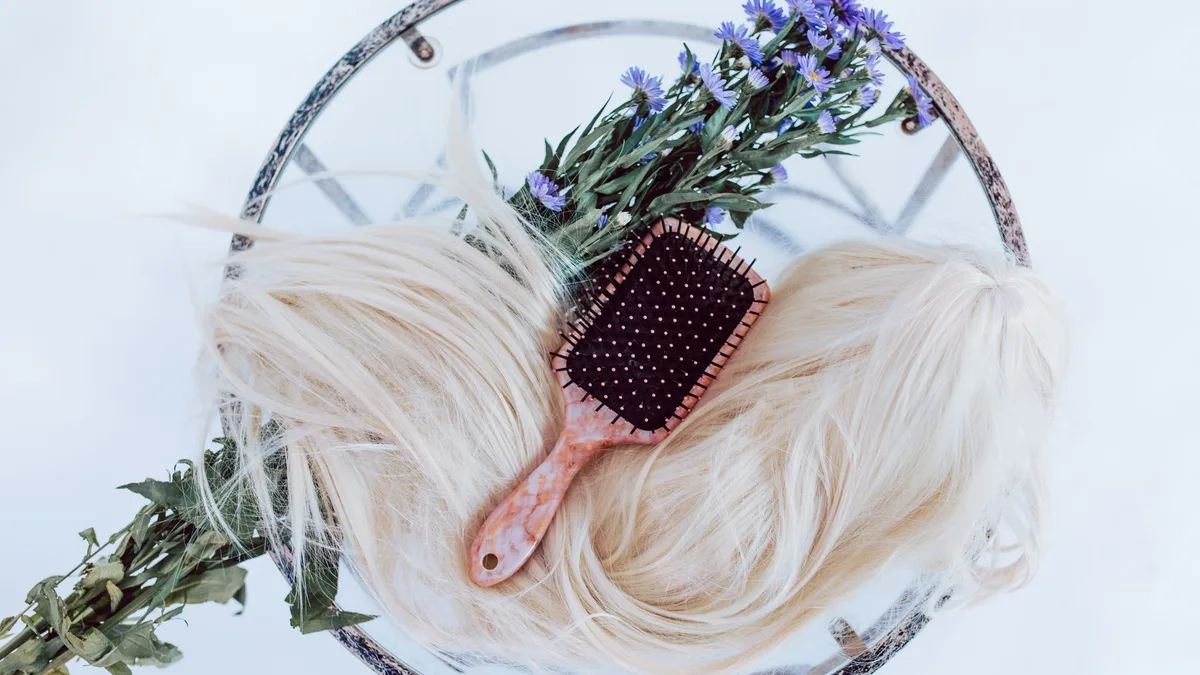
Tangling is a wig’s worst enemy, and rough detangling tears out fibres you cannot replace. Always work gently from the ends upward, using a wide-tooth comb or a special wig brush, holding the wig by the section you are combing so you are not pulling at the roots. A little wig-safe detangling spray helps enormously. Be especially gentle with the delicate lace and the wefts, and never drag a brush from root to tip. Patient, bottom-up detangling keeps a wig smooth and full for far longer.
Storing It Properly
- Use a wig stand or mannequin head to keep the shape and style, especially for styled or lace wigs.
- For longer storage, a silk or satin bag, or the original box, protects it from dust and tangling.
- Keep it out of direct sunlight and heat, which fade and damage the fibres over time.
- Detangle and reshape before storing, so it is ready to wear next time.
Caring for What’s Underneath
Looking after the wig is only half the job — your own hair and scalp underneath need care too. Keep them clean and healthy with a good scalp care routine, give your skin breaks from adhesives, and treat your natural hair gently under the cap. The same handling care extends to clip-in extensions, which last for years when washed and stored properly.
The Takeaway
Good wig care is what turns a wig from a short-lived buy into a long-lasting investment: wash it gently and rarely, dry it on a stand away from heat, detangle patiently from the ends up, and store it properly on a stand or in a bag. Respect whether it is human hair or synthetic, care for your own hair underneath, and your wig stays looking fresh, natural and beautiful for far longer.