
A puppet named Punch first performed for a London crowd in Covent Garden in 1662, and the diarist Samuel Pepys thought it worth writing down. Street performance has continued on almost exactly that same spot ever since, which means London’s entertainment scene has been running, in some form, for well over three and a half centuries without a real interruption. This guide traces the theatres, concert halls, comedy clubs and street performers that make London one of the world’s great entertainment cities, and shows how much of what feels contemporary is actually centuries deep.
London Entertainment at a Glance
| Shakespeare’s Globe (original) | Built 1599, burned down 1613 |
| Modern reconstructed Globe | Opened 1997, built by Sam Wanamaker |
| Royal Albert Hall | Opened 1871 by Queen Victoria |
| Ronnie Scott’s Jazz Club | Opened 1959 in Soho |
| The Comedy Store | Opened 1979, birthplace of alternative comedy |
| Covent Garden street performance | Recorded since 1662 |
| Shaftesbury Avenue | Built 1877-1886, heart of the West End |
A Puppet Show That Started a Tradition
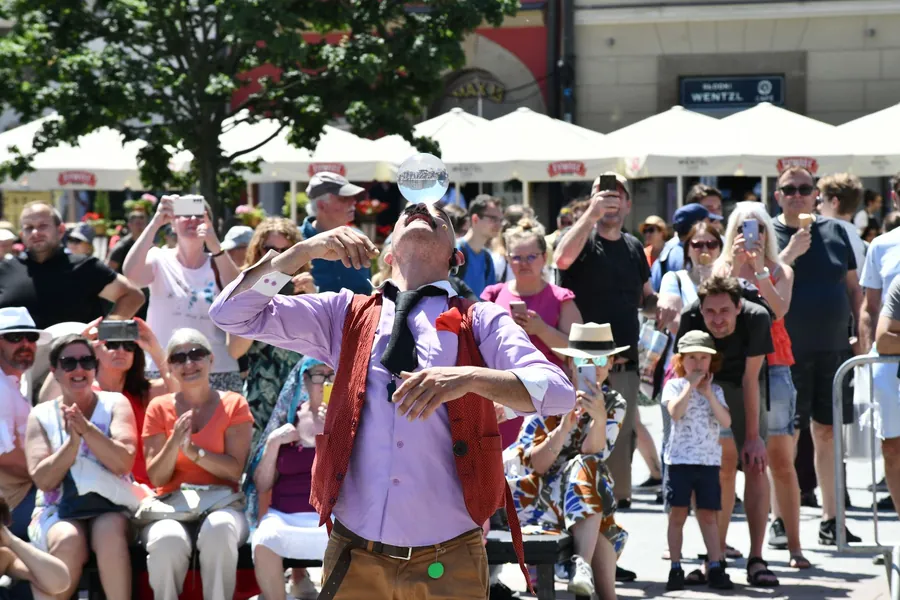
Samuel Pepys recorded a Punch puppet show in Covent Garden in 1662.
Image source: licensed stock photo
Covent Garden’s Piazza has hosted street performers for an astonishing length of time, and there is an actual written record to prove it: in 1662, the diarist Samuel Pepys noted watching a marionette show featuring a character called Punch performing there, making it one of the earliest documented references to Punch and Judy-style puppetry anywhere in England. Street entertainment continued in and around the Piazza in various forms for the following three centuries, though it was formalised into the organised, licensed performance pitches visitors see today from the mid-1970s onward. The modern arrangement, with performers auditioning for time slots on marked circles across the cobbles, is genuinely regulated and competitive, but it is also, in a real sense, simply the latest chapter of something that has been happening on that exact spot since before England had a permanent professional theatre industry at all.
The Globe: Burned Down, Built Again
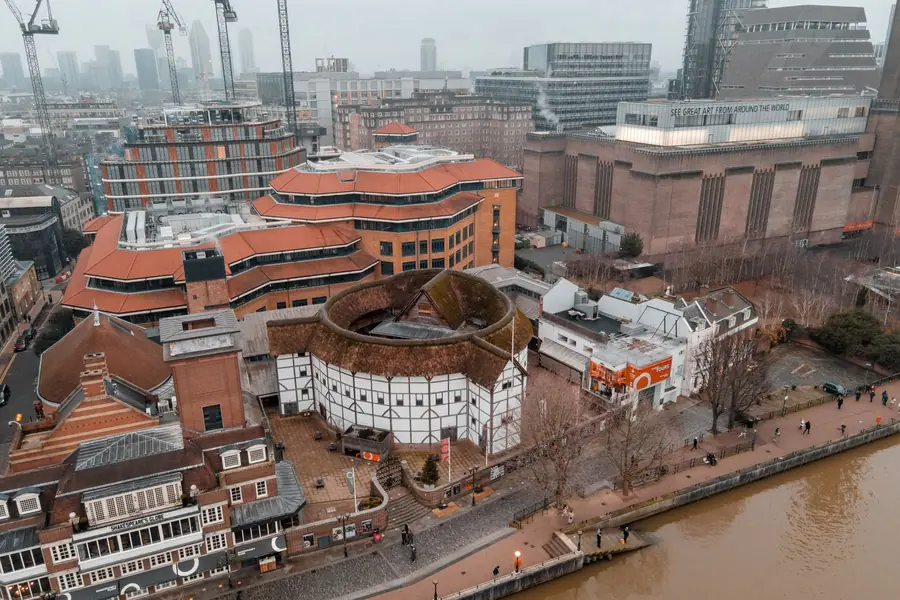
The original 1599 Globe burned down in 1613; the current one opened in 1997.
Image source: licensed stock photo
The original Globe Theatre, built in 1599 on the south bank of the Thames for the acting company that included William Shakespeare himself, was the stage for the first performances of many of his greatest plays. It burned to the ground in 1613 during a performance of Henry VIII, after a special-effects cannon shot ignited the thatched roof; it was rebuilt the following year, then demolished entirely in 1644 as Puritan authorities cracked down on theatre altogether. For more than three centuries afterward, London had no Globe at all. It took the dogged decades-long campaign of the American actor and director Sam Wanamaker to change that, resulting in a careful historical reconstruction, built close to the original site, which finally opened to the public in 1997 with a production of Henry V — bringing an Elizabethan playhouse back to a city that had gone without one since the seventeenth century.
A Prince’s Memorial That Became a Concert Hall
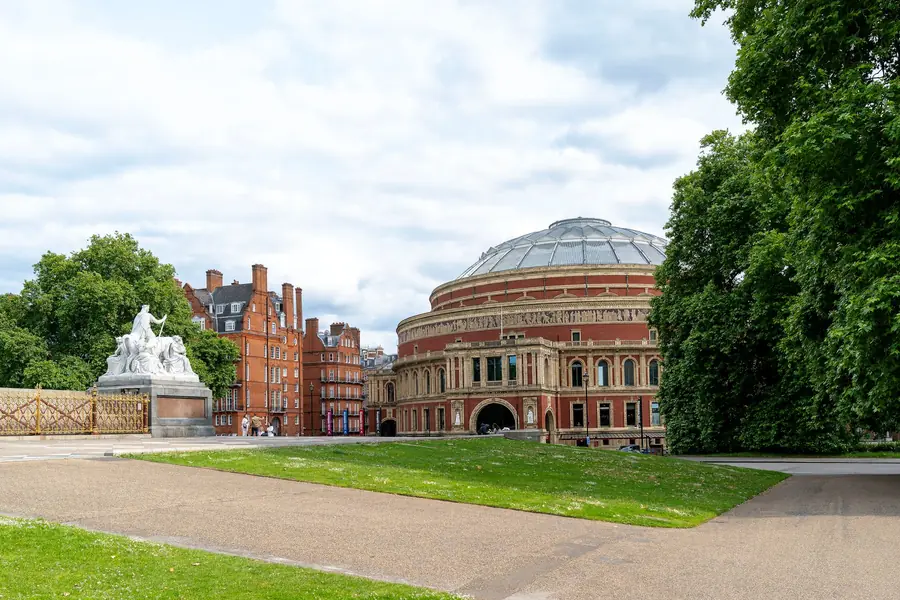
Queen Victoria opened it in 1871 as a memorial to Prince Albert.
Image source: licensed stock photo
The Royal Albert Hall exists because of grief and ambition combined. Queen Victoria opened it in 1871 as a memorial to her husband, Prince Albert, who had died a decade earlier, intended to fulfil his own vision of a great hall promoting the arts and sciences in South Kensington. Its distinctive oval auditorium and vast domed roof were, for decades, notorious among musicians for producing an unpredictable echo, eventually solved by hanging large acrylic discs, nicknamed “mushrooms,” from the ceiling to control the sound. Today it hosts everything from the BBC’s Proms concert season to rock legends, awards ceremonies and sporting events, a genuinely rare example of a nineteenth-century royal memorial that has stayed at the absolute centre of a city’s cultural life for a century and a half rather than becoming a static monument.
The Basement Where British Jazz Lived
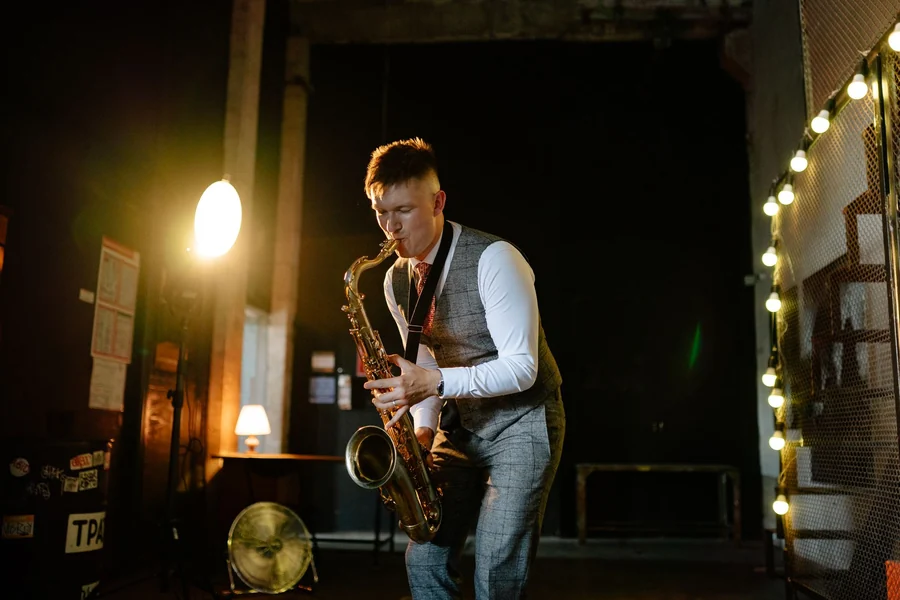
Ronnie Scott’s opened in a Soho basement on 30 October 1959.
Image source: licensed stock photo
Ronnie Scott’s opened on 30 October 1959, in a Soho basement on Gerrard Street, founded by two working musicians, Ronnie Scott and Pete King, who wanted a proper venue for the jazz they loved to play. In an era when British jazz musicians struggled for serious stages and international stars rarely toured Britain at all, the club became the essential meeting point between homegrown talent and visiting American legends, many of whom played there specifically because Scott’s reputation among musicians made it worth the detour. It moved to its current, larger Frith Street premises in the 1960s but kept the same unpretentious, smoke-stained-feeling atmosphere that made it beloved in the first place, and it remains, more than sixty years on, one of the most respected jazz clubs anywhere in the world.
The Room Above a Strip Club That Changed Comedy
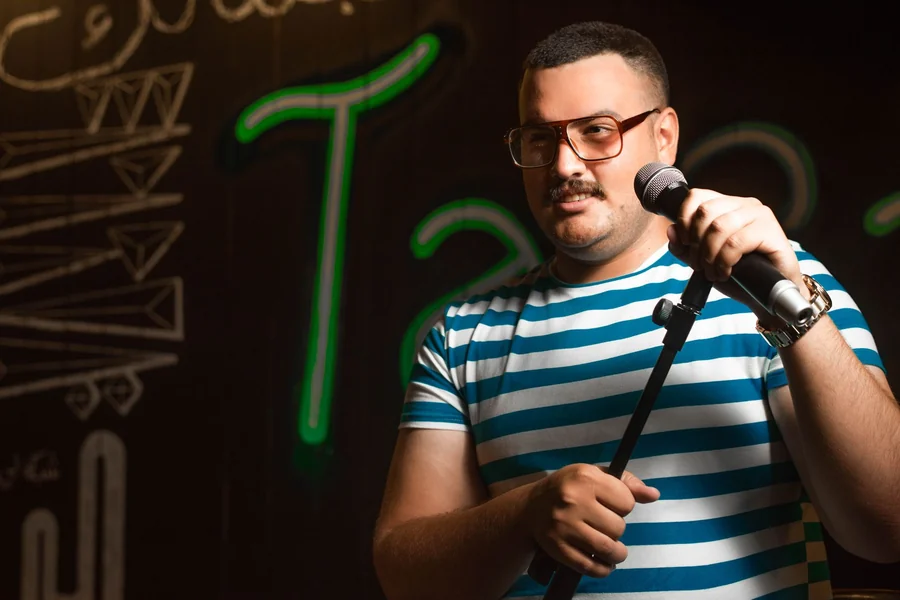
Alternative comedy began above a Soho strip club in 1979.
Image source: licensed stock photo
British comedy has a precise birthplace for its modern era: a small room above a Soho strip club, where the Comedy Store opened on 19 May 1979 as a weekly gong-show night where the audience could boo bad acts off stage. It became, almost by accident, the birthplace of what came to be called alternative comedy, a rawer, more political, more confrontational style that rejected the old-fashioned working men’s club circuit entirely and launched the careers of an entire generation of comedians who went on to dominate British television for decades. The venue itself moved premises more than once over the following years, but the cultural shift it triggered in 1979 fundamentally changed what British comedy sounded like, permanently, and the ripple effects are still visible in every stand-up club in the country today.
The Street That Became the West End
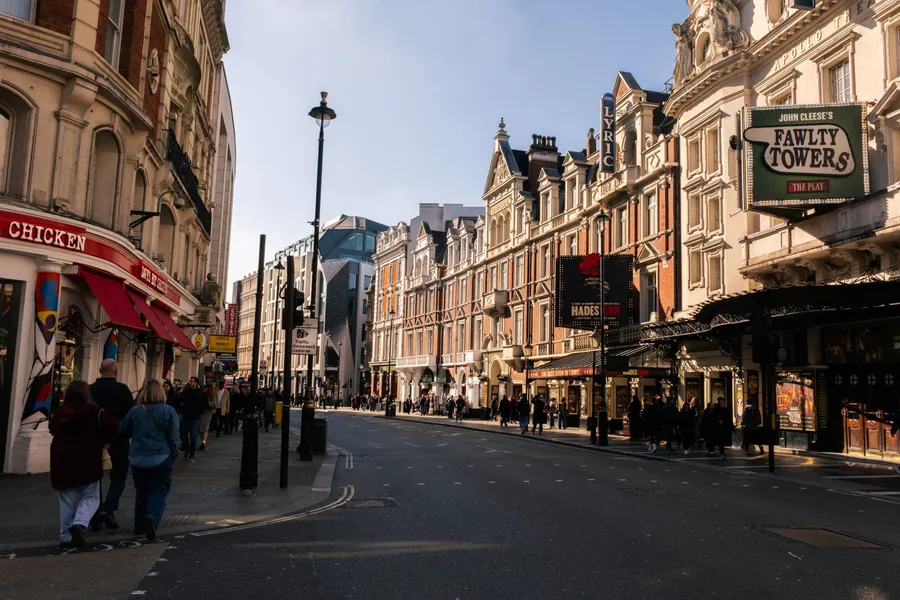
Shaftesbury Avenue, built in the 1880s, became the spine of the West End almost by accident.
Image source: licensed stock photo
Shaftesbury Avenue, cut through the existing streets of Soho between 1877 and 1886 as part of a Victorian slum-clearance and road-widening scheme, was not originally designed as a theatre street at all. Theatres simply followed the new, wide, well-lit road because it offered exactly the kind of prominent frontage and easy access a nineteenth-century impresario wanted, and within a couple of decades it had become the unmistakable spine of what we now call the West End. Several of the theatres that lined it in the 1880s and 1890s are still standing and still staging shows today, which means a road built for entirely practical Victorian civic reasons has ended up defining the geography of London theatre for well over a century, almost by coincidence.
Why Theatres Cluster Where They Do
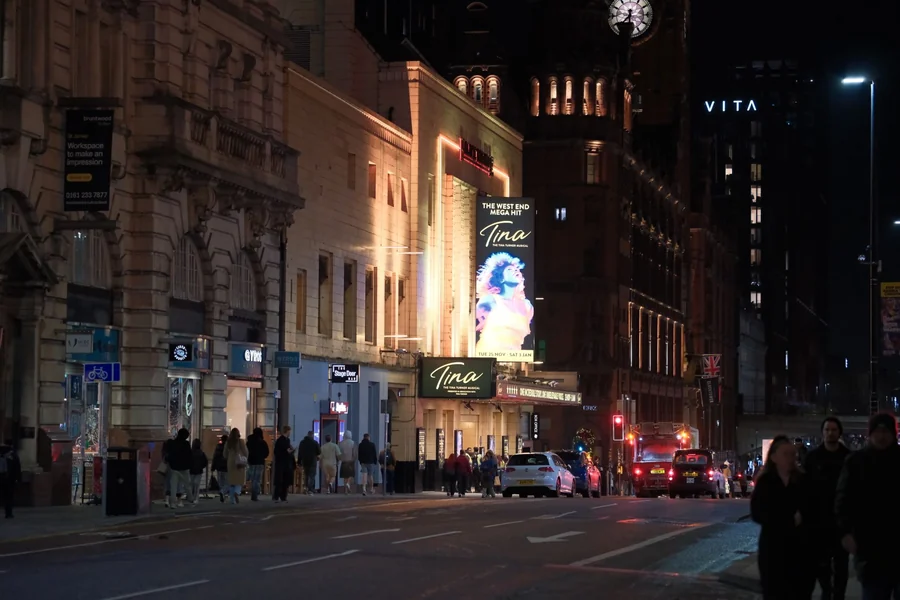
Theatres cluster together because audiences and producers both want to be where the others are.
Image source: licensed stock photo
The dense cluster of theatres around Shaftesbury Avenue, Covent Garden and Leicester Square is not an accident of geography so much as an accident of economics repeated for over a century: audiences want a choice of shows within walking distance of dinner, transport and each other, and producers want to be exactly where the audiences already are. That clustering effect has proven remarkably durable, surviving the arrival of cinema, television and now streaming, each of which was confidently predicted to kill theatre and each of which instead left the West End more or less exactly where it always was. Understanding this cluster as a self-reinforcing ecosystem, rather than a random collection of individual buildings, is the key to understanding why London theatre has stayed concentrated in a few hundred square metres for well over a hundred years.
Beyond the West End: Fringe and Community Venues
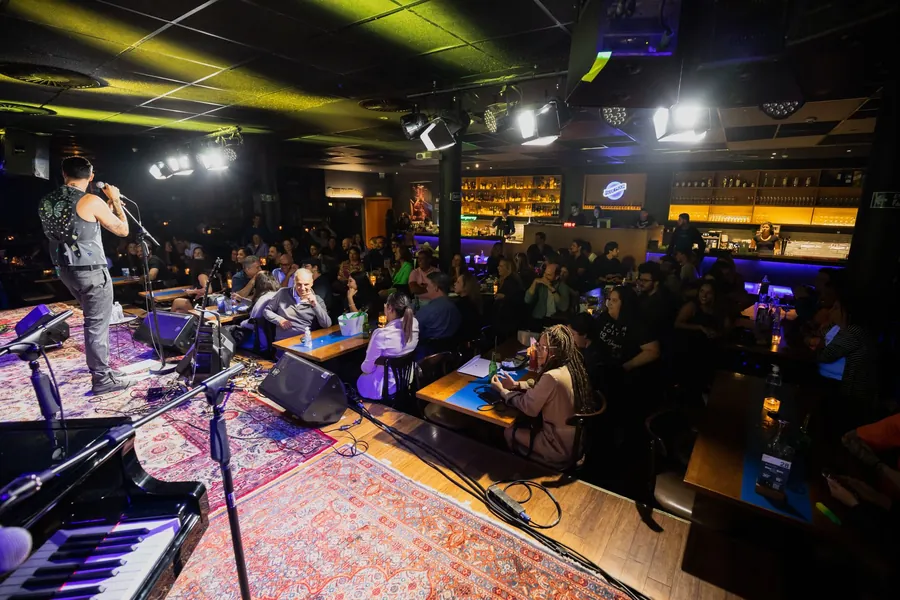
Fringe and pub venues are where new writing and performers get their first real audience.
Image source: licensed stock photo
For every grand West End theatre, London holds dozens of smaller fringe venues, pub theatres and community stages doing genuinely experimental, often far cheaper work away from the tourist crowds. These smaller venues have historically served as the testing ground where new writing, new performers and new directors get their first real audience before, occasionally, a show transfers to a bigger stage entirely. The relationship between fringe and West End has always run in both directions: struggling actors and playwrights use fringe venues to build a reputation, while established performers sometimes return to tiny rooms specifically to try something riskier than a commercial theatre would ever risk staging. It is a genuinely healthy ecosystem, and one easy for visitors focused only on famous names to miss entirely.
How to Use This Guide
This page anchors a growing series of guides to individual theatres, music venues and comedy clubs across London. As those detailed guides are published, they will be linked from this page.
Frequently Asked Questions
Is Shakespeare’s Globe the original building?
No. The original 1599 Globe burned down in 1613 and was later demolished. The current Globe is a careful reconstruction that opened in 1997.
Why was the Royal Albert Hall built?
Queen Victoria opened it in 1871 as a memorial to her husband, Prince Albert, fulfilling his vision for a great hall dedicated to arts and sciences.
When did Ronnie Scott’s jazz club open?
On 30 October 1959, in a Soho basement, founded by musicians Ronnie Scott and Pete King. It remains one of the world’s leading jazz venues.
Where did alternative comedy begin?
At the Comedy Store, which opened in Soho on 19 May 1979, launching a rawer, more political style of stand-up that reshaped British comedy.
How long have there been street performers in Covent Garden?
Since at least 1662, when Samuel Pepys recorded a Punch puppet show there. Organised, licensed performance pitches date from the mid-1970s.
Why are so many theatres on Shaftesbury Avenue?
The road, built in the 1880s for slum clearance, offered ideal prominent frontage for theatres, which clustered there and never really left.
A note on this guide: venue programmes, opening arrangements and street performance schedules change over time – always check the venue’s official website before visiting.