
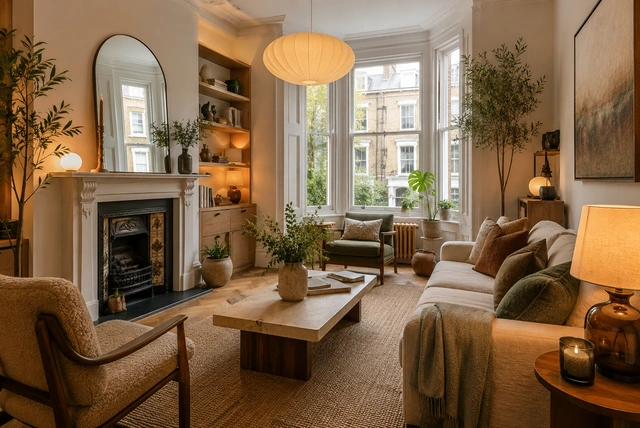
On a quiet Saturday morning in Notting Hill, Emma stood in the middle of her Victorian terrace, coffee in hand, wondering why her home no longer felt like hers. The walls were freshly painted, the furniture was expensive, and every room looked exactly as she had planned a few years ago. Yet something was missing. Later that afternoon, she wandered through a local artisan market and found a handmade ceramic vase that reminded her of family holidays in Cornwall. That single purchase changed more than her living room—it changed the way she thought about decorating. Like thousands of homeowners across the capital, Emma discovered that today’s trending home decor London is no longer about copying magazine-perfect interiors. Instead, it is about creating spaces filled with personality, comfort, and lasting quality. Across London, from Chelsea townhouses to Hackney warehouse apartments, people are embracing homes that tell their own stories while blending timeless British character with modern design.
London Interior Design Trends Are Becoming More Personal Than Ever
For years, many homeowners believed a beautiful house had to follow strict design rules. Grey sofas, matching furniture sets, and spotless minimalist rooms dominated social media. While these spaces looked elegant in photographs, they often lacked warmth and personality. In 2026, that idea is changing quickly.
Walk through neighbourhoods like Islington, Richmond, or Kensington today, and you’ll notice homes that feel collected rather than decorated overnight. Original fireplaces are paired with contemporary artwork. Antique wooden cabinets sit comfortably beside modern sofas. Family photographs share shelf space with handmade pottery and locally crafted candles. Instead of aiming for perfection, people are creating interiors that reflect their own lives.
This shift has also influenced many London townhouse interiors, where historic architecture naturally blends with modern living. Homeowners are restoring decorative ceiling mouldings, preserving original timber flooring, and highlighting period features rather than replacing them. These choices not only celebrate London’s architectural heritage but also create homes with genuine character.
Industry publications continue to highlight this move towards personalised spaces. According to House & Garden’s WOW!house 2026 design report, craftsmanship, bespoke details, and layered interiors remain some of the strongest British interior trends shaping contemporary homes.
We’ve noticed a similar pattern across many London renovations. Rather than stripping every room back to a blank canvas, homeowners are choosing to work with what already exists. This approach often creates homes that feel richer, more welcoming, and far less likely to date.
If you’re looking to personalise your own home, our guide to unique tailored décor choices shares practical ideas for creating spaces that truly reflect your lifestyle.
The Slow Decorating Trend Is Changing the Way London Homes Evolve
Imagine moving into a new flat in Canary Wharf or buying your first Victorian terrace in South London. A few years ago, many homeowners felt pressure to furnish every room immediately. Today, that pressure is disappearing. Instead, more people are embracing the slow decorating trend—a thoughtful approach that values patience over instant results.
Rather than purchasing entire furniture collections in one weekend, homeowners are taking time to discover pieces that carry meaning. A vintage oak dining table from a local antique market, a handcrafted lamp from an independent maker, or artwork collected during travels often becomes more valuable than buying everything new. These carefully chosen additions give every room a sense of history and individuality.
The slow decorating movement also supports sustainable home decor London. Buying fewer but higher-quality products helps reduce waste while encouraging investment in furniture that lasts for decades instead of seasons. This philosophy fits perfectly with London’s growing interest in restoring period homes and choosing timeless materials over fast-changing fashions.
According to Good Housekeeping, slow decorating encourages homeowners to build meaningful interiors gradually, making thoughtful purchases that improve both the appearance and longevity of their homes.
We’ve seen many London homeowners begin with one room instead of attempting a full renovation. That simple change often leads to better decisions, fewer costly mistakes, and homes that feel authentic rather than rushed.
Nature, Texture and Organic Modern Design Are Defining Contemporary London Homes
One of the easiest ways to understand today’s London home decor ideas is to look outside. Parks, gardens, riverside walks, and green spaces continue to influence the colours and materials people bring indoors. Whether you live in a compact apartment near King’s Cross or a Georgian townhouse in Greenwich, the desire to reconnect with nature is becoming one of the defining themes of 2026.
Biophilic design now goes far beyond simply adding houseplants. Designers are introducing oak furniture, natural stone, limewash paint, linen curtains, wool rugs, woven baskets, and handmade ceramics to create calm, relaxing environments. Organic modern design combines these natural materials with clean contemporary furniture, producing interiors that feel both elegant and comfortable.
Texture has become equally important. Bouclé seating, ribbed glass, reclaimed timber, textured plaster walls, and artisan home accessories add visual depth without making rooms feel crowded. These layered materials help even small London apartments feel warmer throughout the year.
Many interior designers also recommend maximising natural light wherever possible. Larger mirrors, lighter colour palettes, and carefully positioned statement lighting can make compact London homes appear brighter while maintaining a cosy atmosphere during the darker winter months.
According to Livingetc, natural materials, tactile finishes, and wellness-focused interiors continue to shape the direction of contemporary London homes as homeowners prioritise comfort alongside beautiful design.
If you’re updating your dining area, our guide to choosing the right rug under a dining table explains how texture and proportion can completely transform the space without requiring a major renovation.
Luxury Home Decor London Is Now About Comfort Rather Than Showing Off
Not long ago, luxury interiors were often defined by glossy marble, oversized chandeliers, and furniture that looked too expensive to use. Today, London’s idea of luxury feels refreshingly different. Step inside many renovated homes in Chelsea, Hampstead, or Fulham, and you’ll notice that comfort has become the true measure of good design.
Homeowners are choosing soft linen sofas, solid wood dining tables, natural stone surfaces, and handcrafted accessories instead of filling rooms with expensive decorations. Luxury home decor London is becoming quieter and more personal. Every purchase is expected to have a purpose, whether it improves everyday comfort, lasts for years, or supports skilled craftsmanship.
This approach also reflects changing lifestyles. More people continue to work from home, meaning living rooms, kitchens, and even spare bedrooms must balance practicality with style. Comfortable seating, calming colour palettes, and thoughtful layouts are now considered far more valuable than simply following fashionable trends.
According to House & Garden, designers are increasingly investing in timeless materials and bespoke craftsmanship that create homes with lasting appeal instead of short-lived luxury statements.
For homeowners updating their kitchens, choosing durable finishes can make just as much difference as expensive appliances. Our guide to modern kitchen laminate cabinets explains how contemporary materials can achieve a premium look while remaining practical for everyday family life.
Vintage Furniture and Statement Lighting Continue to Shape British Interior Trends
One Saturday morning at Portobello Road Market, it is easy to understand why vintage furniture London continues to attract homeowners, designers, and collectors alike. Every restored cabinet, antique mirror, or mid-century chair carries a story that simply cannot be recreated in a factory. That sense of history is becoming one of the biggest influences on British interior trends in 2026.
Rather than furnishing an entire room with matching pieces, homeowners are mixing carefully restored vintage furniture with clean contemporary designs. An antique oak dining table might sit beneath a sculptural pendant light, while a Victorian sideboard could be paired with modern artwork. These combinations create balance and give homes a unique identity.
Lighting has also become far more than a practical necessity. Statement lighting London is now one of the easiest ways to transform a room without major renovation. Oversized pendant lights above kitchen islands, handcrafted table lamps in reading corners, and decorative wall lights in hallways help create atmosphere while acting as artistic focal points.
Interior specialists often recommend layering several types of lighting instead of relying on one central fixture. Combining ceiling lights, floor lamps, table lamps, and wall sconces allows homeowners to adapt rooms for work, entertaining, or quiet evenings.
According to Livingetc, lighting and carefully selected furniture continue to play a central role in creating warm, inviting interiors that feel both contemporary and timeless.
If you love combining traditional features with modern styling, our guide to a vintage mid-century modern fireplace offers inspiration for blending classic architecture with contemporary décor.
Maximalist Decor Is Returning, but It Is More Thoughtful Than Before
Minimalism has not disappeared, but many London homeowners are discovering that their homes feel happier when they include colour, memories, and personality. That is why maximalist decor London is returning in a more refined way. Instead of filling every wall and shelf, people are carefully layering meaningful objects that tell their own stories.
A family living in an Edwardian home in Muswell Hill might display travel souvenirs beside inherited artwork, colourful books, handmade pottery, and bold cushions without making the room feel cluttered. The secret is balance rather than excess. Designers often use neutral walls as a backdrop before adding rich colours, patterned textiles, and carefully chosen decorative pieces.
This approach works particularly well in London’s older homes, where original fireplaces, ceiling roses, and decorative mouldings naturally provide character. Layering vintage finds with contemporary furniture allows these architectural features to shine instead of competing for attention.
Many experts also expect artisan home accessories to remain popular throughout 2026. Handmade ceramics, woven baskets, natural textiles, and locally produced artwork introduce texture while supporting independent makers across the UK.
According to Style by Emily Henderson, layered interiors filled with meaningful collections are replacing perfectly coordinated rooms, allowing homes to feel more authentic and lived in.
Where London Homeowners Are Shopping for Decor in 2026
One question comes up repeatedly among readers looking for London home decor ideas: where do people actually find these beautiful pieces? The answer is rarely a single shop. Instead, many homeowners combine trusted high-street retailers with independent designers and local markets.
Stores such as John Lewis continue to be popular for timeless furniture and quality home accessories, while Heal’s remains a favourite for contemporary British furniture and designer lighting. Liberty is known for distinctive fabrics and decorative pieces, and independent artisan markets across areas like Spitalfields, Columbia Road, and Greenwich offer handmade ceramics, artwork, and home accessories that add individuality to every room.
Vintage shops, antique fairs, and carefully curated online marketplaces are also helping homeowners discover one-of-a-kind furniture that fits perfectly into contemporary London homes. This mix of old and new creates interiors that feel personal instead of predictable.
We’ve noticed that many homeowners now prefer buying fewer, higher-quality items from trusted retailers and local makers rather than replacing entire rooms every few years. That approach not only supports sustainable decorating but also creates homes that continue to improve over time.
If you’re planning to refresh more than one room, our collection of small kitchenette ideas offers practical inspiration for making compact London homes both functional and stylish.
How to Bring the Biggest London Home Decor Trends Into Your Own Home
The best part about following trending home decor London in 2026 is that you do not need a huge budget or a complete renovation. Most beautiful homes are not created in a weekend—they evolve over time. Every carefully chosen chair, handcrafted vase, restored cabinet, or framed family photograph adds another chapter to the story of the home.
If you’re starting from scratch, begin with the room you use the most. A living room can feel completely different by introducing softer lighting, textured cushions, natural fabrics, and one or two statement pieces instead of replacing every item. If your kitchen feels outdated, upgrading cabinet finishes or introducing open shelving can refresh the space without a full remodel. Bedrooms benefit from warm neutral colours, layered bedding, and natural materials that create a calm atmosphere.
One of the biggest lessons from today’s London interior design trends is that every purchase should have a purpose. Ask yourself whether you’ll still enjoy a piece five or ten years from now. If the answer is yes, it is probably a worthwhile investment.
Small architectural features should never be overlooked either. Original fireplaces, decorative cornices, timber floors, and traditional windows often become the features that give London homes their unique identity. Instead of hiding them, designers now recommend celebrating these details with thoughtful styling.
If you have an unused fireplace, our guide to creative empty fireplace ideas shares practical ways to turn it into a beautiful focal point while keeping the room functional throughout the year.
Final Thoughts
Walk through London’s streets today and you’ll see homes that are becoming less about following trends and more about telling personal stories. Whether it’s a Victorian terrace in Richmond, a converted warehouse in Shoreditch, or a modern apartment overlooking Canary Wharf, the most memorable interiors all have one thing in common—they reflect the people who live there.
That is what makes trending home decor London so exciting in 2026. The focus has shifted from buying everything new to making thoughtful choices that last. Sustainable home decor, organic modern design, vintage furniture, artisan home accessories, textured interiors, biophilic design, and carefully chosen statement lighting are not simply fashionable ideas—they represent a more meaningful way of creating a home.
Rather than trying to copy someone else’s living room, use these British interior trends as inspiration and adapt them to your own lifestyle. Add pieces gradually, invest in quality where you can, and allow your home to evolve naturally. The rooms you’ll love most in five or ten years will not be the ones that perfectly followed every trend. They’ll be the ones filled with memories, craftsmanship, comfort, and personality. That’s exactly what makes contemporary London homes so inspiring today.
What are the biggest London interior design trends in 2026?
The biggest London interior design trends include slow decorating, organic modern design, textured interiors, sustainable home decor, biophilic design, vintage furniture, artisan home accessories, statement lighting, and personalised spaces that reflect the homeowner’s lifestyle rather than temporary fashion trends.
How can I update my London home without spending a fortune?
Start with one room instead of renovating the whole house. Improve lighting, add natural textures, introduce indoor plants, refresh soft furnishings, and invest in one quality statement piece. Small updates often create a bigger impact than replacing all your furniture at once.
Is vintage furniture still fashionable in London?
Yes. Vintage furniture remains one of the strongest British interior trends because it adds character, supports sustainable decorating, and blends beautifully with both period properties and contemporary London homes. Many homeowners combine antique pieces with modern furniture to create a balanced look.
What colours are popular in London homes this year?
Warm neutrals continue to dominate, supported by earthy greens, terracotta, deep blue, burgundy, clay tones, soft browns, and muted mustard. These colours pair well with natural wood, stone, linen, and woven textures to create comfortable living spaces.
Where can I buy stylish home decor in London?
Popular choices include John Lewis, Heal’s, Liberty, independent artisan markets, antique shops, and local furniture makers. Many homeowners also mix contemporary retailers with vintage markets to create homes that feel unique rather than perfectly matched.
Why is slow decorating becoming so popular?
Slow decorating encourages people to buy fewer, better-quality items over time. This reduces waste, supports sustainable living, prevents expensive impulse purchases, and helps create homes that develop naturally with personality and lasting value.