

It is your first Saturday in London. Within three streets you pass a Tesco Express, a Sainsbury’s Local, a corner shop and a market stall — and none of them is the cheapest way to buy your week’s food. Working out the best grocery stores in London is less about which chain is “good” and more about knowing what each format actually costs.
So this guide starts with the numbers. Below are the latest UK basket comparisons, what they mean specifically in London — where the cheapest supermarkets are hardest to reach — and how to shop the markets properly.

The Cheapest Supermarkets Right Now
Independent price tracking of a full trolley of everyday groceries produced these totals in June 2026 — and Aldi has now held the top spot for six consecutive months.
| Supermarket | Basket cost | Difference vs Aldi |
|---|---|---|
| Aldi | £163.34 | — |
| Lidl (with loyalty prices) | £164.79 | +£1.45 |
| Asda | £190.39 | +£27.05 |
| Sainsbury’s (with Nectar prices) | £193.30 | +£29.96 |
| Tesco (with Clubcard prices) | £194.67 | +£31.33 |
| Morrisons | £198.41 | +£35.07 |
Two things stand out. First, the gap is about £30 a shop — which across a year of weekly shopping runs past £1,000 for a family. Second, and less obvious: the Tesco and Sainsbury’s figures already include loyalty pricing. Clubcard and Nectar narrow the gap, but they do not close it.
On a smaller 20-item basket the pattern repeats — roughly £25.53 at Aldi, £26.43 at Lidl and £34.35 at Tesco.
Why London Changes the Answer

Those national figures assume you can get to a full-size Aldi or Lidl. In much of inner London, you cannot easily — and that single fact reshapes the whole calculation.
- The discounters are a zone 3–6 story. Aldi and Lidl need large floorplates and parking, so their London estate is concentrated in outer boroughs. Central London is dominated by convenience formats instead.
- Convenience formats cost more for the same product. Tesco Express, Sainsbury’s Local and Co-op typically price above their large-store equivalents, because you are paying for the location and the opening hours. On a weekly shop that premium is significant.
- The “big shop” is harder without a car. Carrying a full trolley home on the Tube is not realistic, which pushes Londoners towards smaller, more frequent — and more expensive — trips.
- So the London answer is usually a mix: a fortnightly delivery for heavy staples, a discounter run if one is reachable, top-ups at the local convenience store, and fresh produce from a market.
The Supermarkets, Honestly Assessed
| Store | Best for | Watch out for |
|---|---|---|
| Aldi | Cheapest overall; own-label quality that regularly wins blind taste tests | Limited branded range; fewer central London stores |
| Lidl | Within pennies of Aldi; excellent bakery; Lidl Plus offers | Same location problem; stock varies week to week |
| Tesco | Coverage — you are never far from one; strong Clubcard pricing | Express stores are noticeably dearer than superstores |
| Sainsbury’s | Good middle ground; Nectar prices; reliable fresh range | Nectar prices require the app or card, every time |
| Asda | Cheapest of the big four on a full basket | Thin London presence, mostly outer boroughs |
| Morrisons | Butchery, fishmonger and bakery counters | Came out most expensive in the latest comparison |
| Waitrose & M&S Food | Produce quality, ready meals, staff knowledge | Premium prices; best used selectively rather than for the full shop |
| Co-op | Everywhere in London; genuinely useful member pricing | Convenience pricing on non-offer lines |
| Iceland | Frozen staples and bulk value; free delivery over a threshold | Narrow fresh range |
| Whole Foods | Organic, speciality and free-from | The most expensive way to buy ordinary items |
The practical takeaway: use the premium shops for the things they are actually better at — a Waitrose or M&S ready meal, a Morrisons counter cut of meat, a Whole Foods speciality ingredient — and buy your rice, tins, cleaning products and cereal at a discounter or online.
London’s Food Markets, and How to Use Them
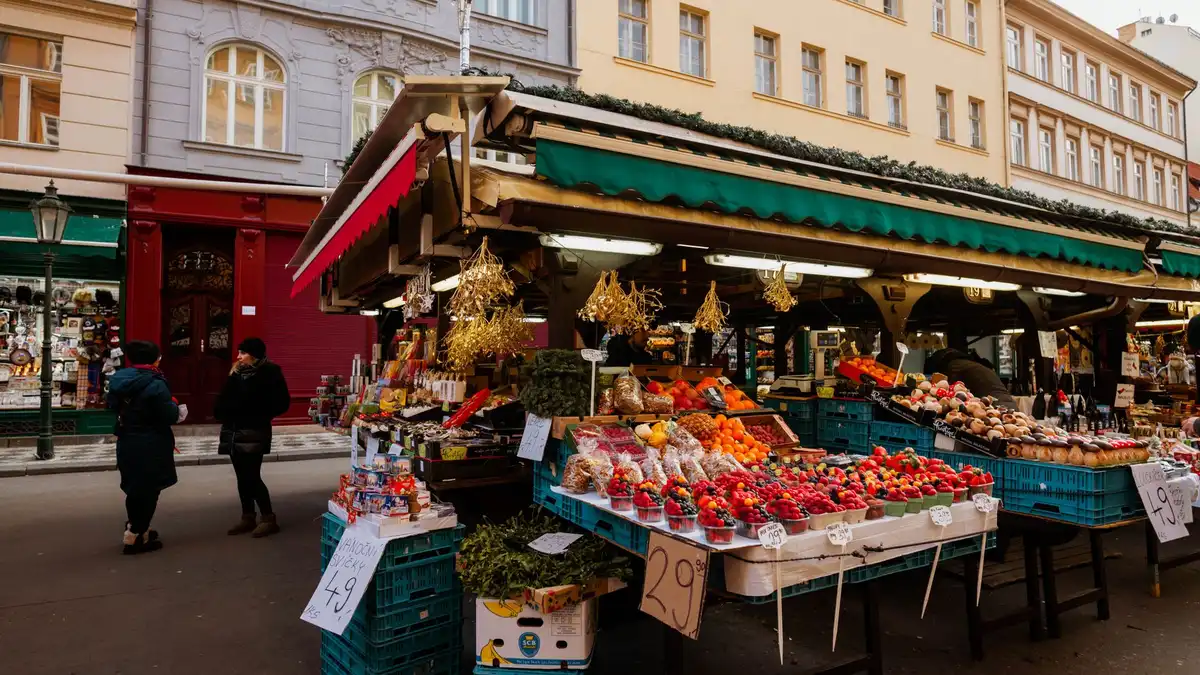
London’s markets are genuinely good for fresh produce — but only if you go at the right time. Between 11am and 2pm on a Saturday, most of the famous ones are tourist attractions rather than food shops.
- Borough Market (8 Southwark Street, SE1 1TL). Full market Wednesday to Sunday, 10am–5:30pm, with limited trading Monday and Tuesday, 10am–5pm. Entry is free. Best visited on a weekday morning — the produce is the same and the crowds are not.
- Broadway Market (London Fields, E8 4PH). Saturday 9am–5pm and Sunday 10am–4pm, with more than 100 traders filling the Victorian street on Saturdays. Go at nine for the produce, later for the atmosphere.
- Maltby Street, Brixton Village, Ridley Road, Chapel Market and Netil Market cover the rest of the city, and the local street markets in outer boroughs are consistently the cheapest fresh fruit and veg in London.
- The timing rule: arrive at opening for the best produce and short queues; arrive near closing for discounted stock as traders clear.
- Bring cash and a bag. Many stalls take cards now, but the small produce traders — the ones with the best prices — often prefer cash.
Worth being clear about the distinction: food halls are for eating, produce markets are for shopping. Borough does both; several of the trendier markets do only the first, at restaurant prices.
Delivery: When It Is Worth It

- Full-shop delivery (Tesco, Sainsbury’s, Asda, Ocado, Morrisons) makes most sense for heavy, bulky staples — drinks, tins, laundry, pet food. A delivery pass pays for itself if you order more than once a month.
- Rapid delivery (Deliveroo, Uber Eats and supermarket rapid services) is convenient and expensive; treat it as a top-up, not a shop.
- Click and collect is usually cheaper than delivery and avoids the slot fee entirely.
- Book slots early in the week. Evening and weekend slots in central London go first and cost most.
- Watch the substitutions. Set your preferences to “no substitutes” for anything where a swap would be useless to you.
Eight Ways to Cut a London Food Bill
- Always scan the loyalty card. Clubcard and Nectar prices are now the shelf price for members — without them you are paying a premium of your own making.
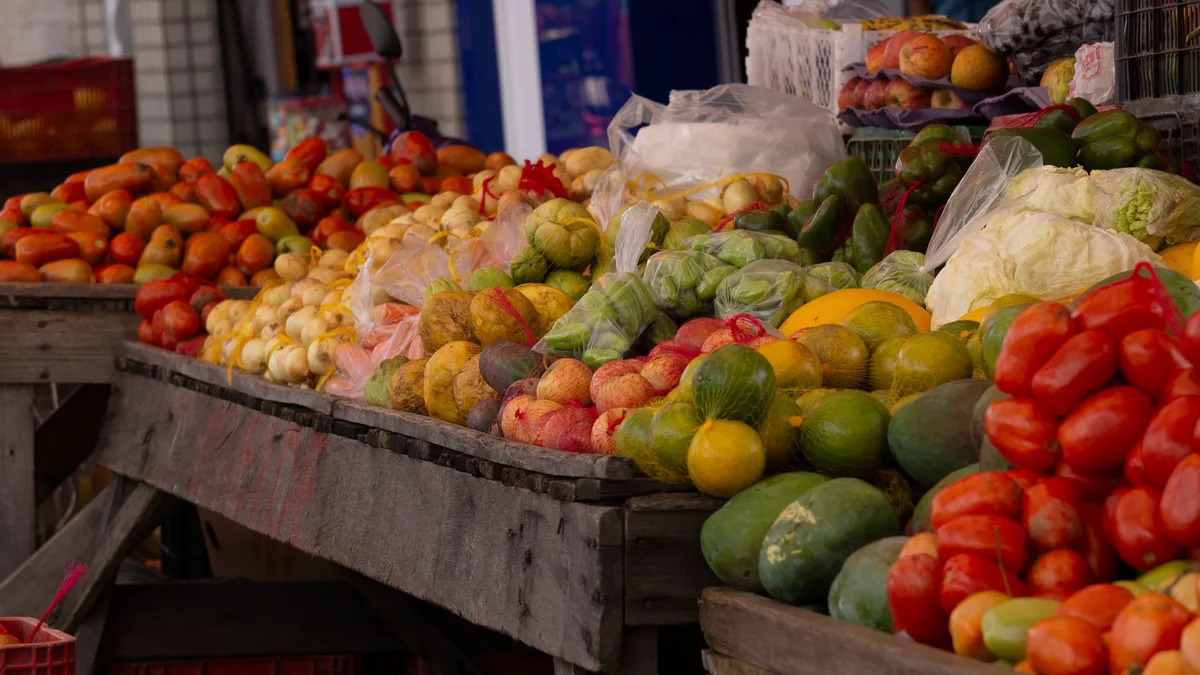
- Split your shop. Staples at a discounter or online, fresh produce at a market, top-ups locally. This is where the real saving is, not in brand loyalty.
- Buy own-label for basics. Blind taste tests routinely put discounter own-label above branded equivalents on staples like tinned tomatoes, pasta and frozen vegetables.
- Shop the yellow stickers. Most London stores reduce fresh items in the evening; the timing is store-specific but consistent once you learn it.
- Use the apps for waste food. Too Good To Go and similar services are unusually good value in London because of the density of bakeries and delis.
- Check unit prices, not shelf prices. The small print in pence-per-100g exposes which “offer” is actually an offer.
- Avoid the convenience format for the big shop. Same brand, same product, higher price.
- Go to the market at nine or at four. Best choice at opening, best prices at closing.
Which Store Suits Your Situation

| If you are… | Shop like this |
|---|---|
| A student or on a tight budget | Aldi or Lidl if reachable; otherwise Iceland plus a street market, and never the big shop at an Express |
| A family in outer London | Fortnightly Aldi or Asda run, delivery for bulk, market for fruit and veg |
| Living centrally with no car | Online delivery for staples, Co-op or Tesco Express for top-ups, market at the weekend |
| Cooking a lot from scratch | Market produce plus a discounter for cupboard staples; butcher and fishmonger counters at Morrisons |
| Short on time | Delivery pass plus M&S or Waitrose for ready meals — pay for convenience deliberately, not by accident |
| Buying organic or free-from | Whole Foods and Planet Organic for the speciality items, discounters for everything else |
Frequently Asked Questions
What is the cheapest supermarket in London?
Aldi, on the national basket data, followed within pennies by Lidl. The London caveat matters though: if there is no full-size discounter near you, Asda tends to be the cheapest of the big four, and online delivery from a superstore beats shopping at a convenience branch.
How much can I actually save by switching?
The latest comparison put a full basket about £30 cheaper at Aldi than at Tesco or Sainsbury’s, even after loyalty discounts — over a year of weekly shops, comfortably more than £1,000.
Is Waitrose worth the extra?
For some things, genuinely yes — produce quality, prepared food and its own-label ranges. For rice, cleaning products and store cupboard basics, no. Use it selectively rather than as your main shop.
Are London markets cheaper than supermarkets?
Local street markets in outer boroughs usually are, particularly for fruit and vegetables sold by the bowl. Destination markets like Borough are excellent quality but priced accordingly — that is a day out with shopping attached rather than a weekly shop.
When is Borough Market open?
The full market runs Wednesday to Sunday, 10am to 5:30pm, with limited trading on Monday and Tuesday from 10am to 5pm. Entry is free, and weekday mornings are far quieter than weekends.
The Bottom Line
There is no single best grocery store in London, because the cheapest chains are the hardest to reach and the most convenient ones charge for it. The shoppers who spend least run a split: staples from a discounter or a delivery slot, fresh produce from a market at opening time, and top-ups locally with the loyalty card scanned every time.
Do that and you keep the roughly £30-a-shop gap between the cheapest and dearest baskets on your side of the ledger — which, over a London year, is a holiday.
Prices quoted are from published UK basket comparisons for June 2026 and change monthly; store opening times were correct at the time of writing.