Picture a seventh birthday party. Fourteen children, a folding table, and three pizzas that have to somehow go round. You open the first box, look at eight enormous slices, and do the maths you already know does not work. Somebody’s dad leans over and says the thing that would have saved you: you should have asked them to double cut it. It costs nothing, it takes the kitchen ten extra seconds, and almost nobody in Britain knows to ask. Here is exactly what a double cut pizza is, and how to get one.
Double Cut Pizza: The Quick Answer
| What it is | A cutting instruction, not a type of pizza |
| What it means | Cut into twice the usual number of slices |
| Typical result | 8 slices becomes 16 |
| Shape | Still wedges, just narrower |
| Extra cost | None — same pizza, same price |
| Where the term is from | American pizzerias |
| Best for | Parties, children, buffets, sampling several pizzas |
| Not to be confused with | Party cut / square cut, which changes the shape |
What “Double Cut” Actually Means
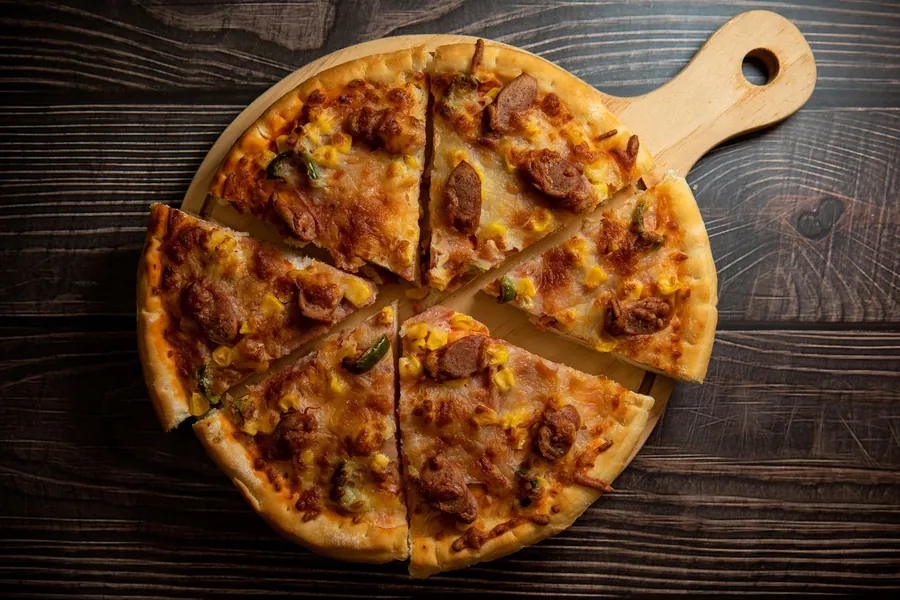
Nothing is added. Only the number of times the wheel crosses the top.
Image source: licensed stock photo
Let us clear up the confusion first, because half the pages online get this wrong. A double cut pizza is not a new style, not a menu item and not a trend arriving from America. It is a sentence you say when you order. Double cut simply means cutting the pizza into twice the number of slices the pizzeria would normally give you, so a standard eight-slice pie comes back as sixteen narrower ones. The dough is the same, the sauce is the same, the toppings are the same and the price is the same. The only thing that changes is the number of times the wheel goes across the top. That is genuinely the whole idea, and its usefulness is completely out of proportion to how simple it is.
Why It Transforms a Party
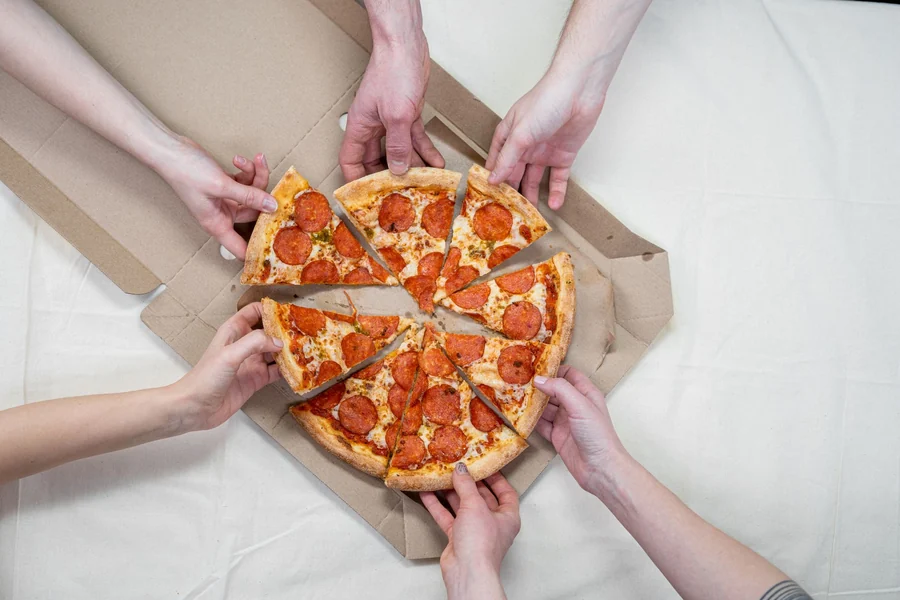
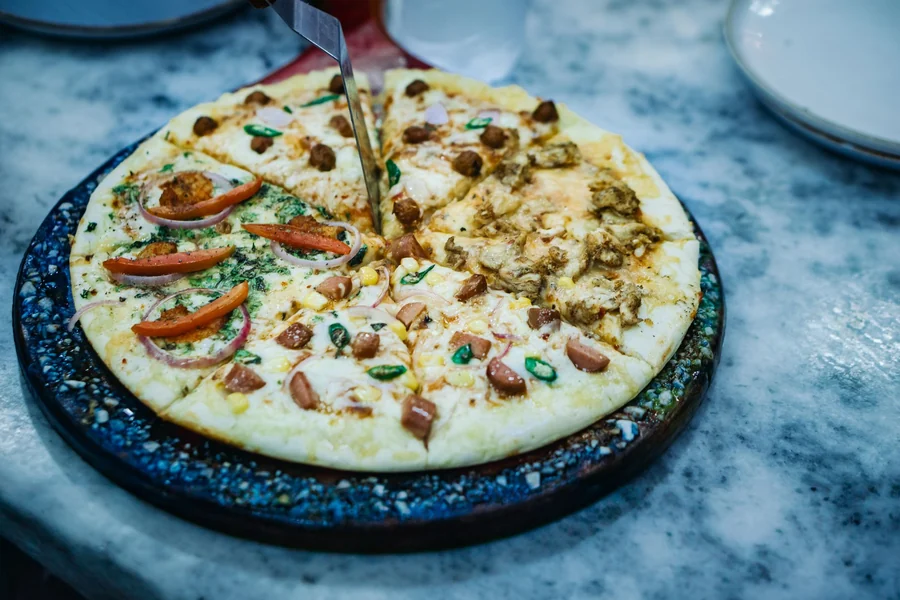
Narrow slices mean guests come back and try the other pizza.
Image source: licensed stock photo
Anyone who has catered a room full of people knows the real problem is not quantity, it is commitment. Hand someone a huge slice and they have chosen their entire meal in one move. Hand them a narrow one and they will come back, try the other pizza, and go away happy — so you get far more mileage out of the same food. That matters most when you are feeding a mixed group and one box has come from somewhere on our list of the best vegan restaurants in London, because everybody gets to try a bit of everything. The pieces take on a sort of hors d’oeuvres quality, small enough to hold in one hand while you are standing up talking, which is how most people eat at a gathering anyway. And at a children’s party the difference is dramatic: small slices fit small hands, and you are not left binning a dozen half-eaten crescents at the end of the afternoon.
Double Cut Is Not the Same as Party Cut
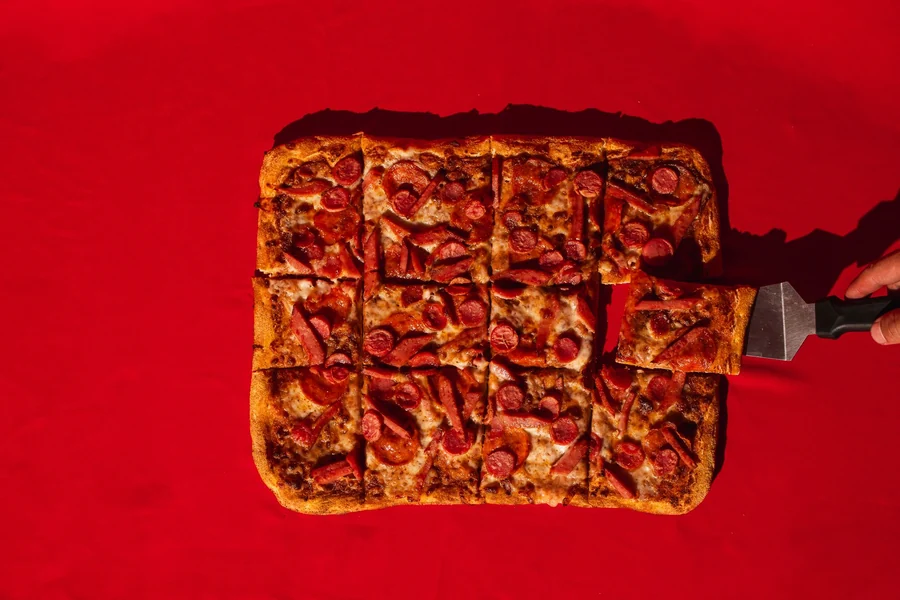
Party cut changes the shape. Double cut only changes the count.
Image source: licensed stock photo
This is where nearly every article online goes wrong, and it is worth getting straight because you may well want the other one. Double cut changes how many pieces you get. Party cut — also called square cut or tavern cut — changes what shape they are, slicing the pizza into a grid so you end up with squares and rectangles instead of wedges. They are two separate requests and you can ask for either.
| Request | What changes | What you get |
|---|---|---|
| Pie cut | Nothing — the default | Triangular wedges, usually 8 |
| Double cut | The number of slices | Twice as many, still wedges |
| Party cut | The shape | A grid of squares and rectangles |
The Bar-Room History of the Square Cut
The square cut was born in Midwest taverns so free pizza went further.
Image source: licensed stock photo
The square cut has a better origin story than it deserves. After the Second World War, neighbourhood taverns across the American Midwest — Chicago especially — started putting out thin, crisp pizza for drinkers. It was free, which meant it had to stretch, and the landlords worked out that cutting it into a grid of small squares did two things at once: it made the food go considerably further, and it meant nobody needed a plate. You picked up a square, ate it, and carried on drinking. That is why it is still called tavern cut, and why “party cut” stuck as the nickname once it became the standard at birthday parties. There is also a genuine eating argument for it: a grid gives you crunchy corner pieces and gloriously cheesy middle pieces, two different experiences from one pizza, where wedges give everyone the same thing.
What You Would Actually Get in the UK
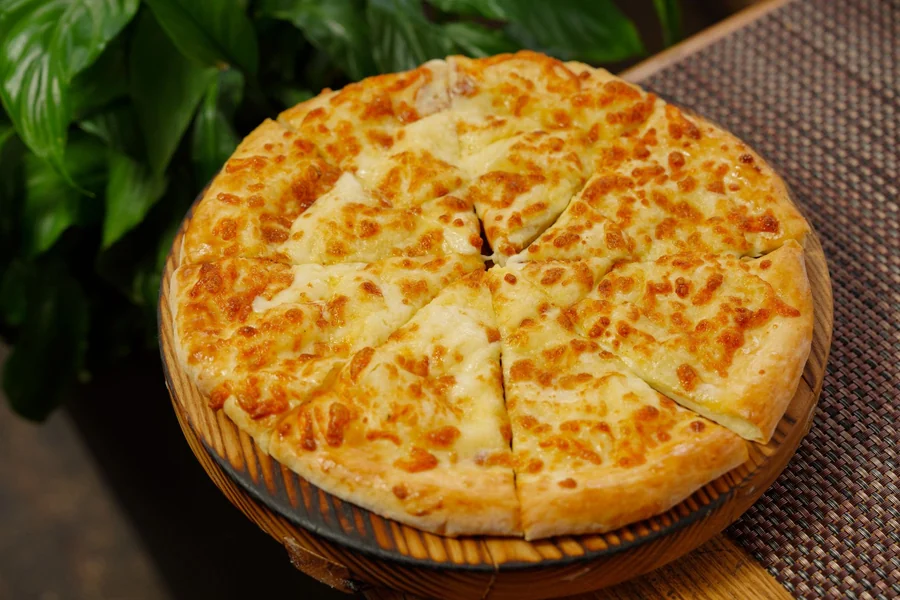
A UK large is 13.5 inches and ten slices – twenty once doubled.
Image source: licensed stock photo
Because the term is American, it helps to translate it into the sizes we actually order here. Domino’s UK publishes its standard slice counts, so you can work out in advance exactly what a double cut would hand you and whether it is enough to go round.
| Size | Diameter | Normal slices | Double cut | Serves |
|---|---|---|---|---|
| Personal | 7″ | 4 | 8 | 1 |
| Small | 9.5″ | 6 | 12 | 1–2 |
| Medium | 11.5″ | 8 | 16 | 2–3 |
| Large | 13.5″ | 10 | 20 | 3–4 |
Two large pizzas double cut gives you forty pieces — which is why it is the single easiest way to feed a room without ordering a fourth box you do not need.
How to Ask for It Here
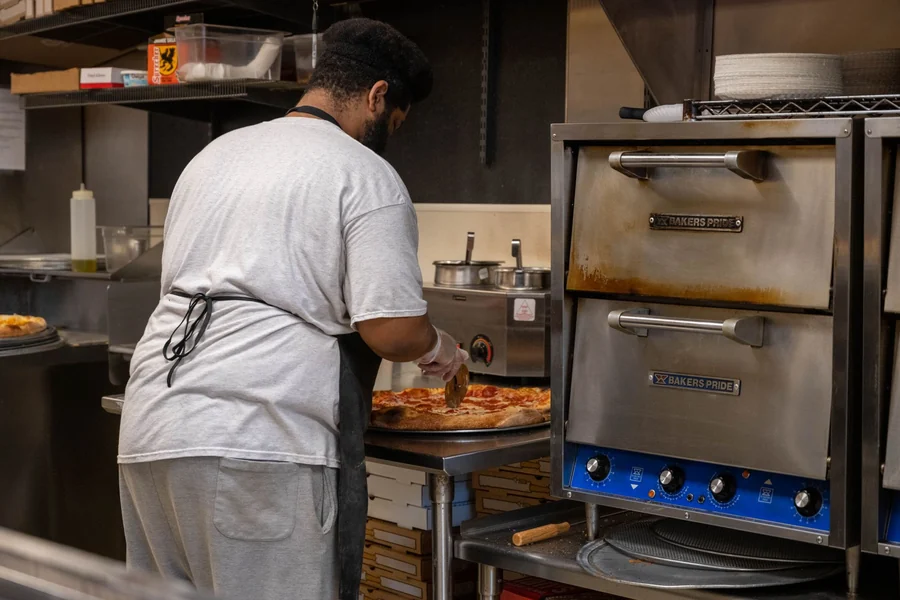
Ask when you order, not when the box arrives at the door.
Image source: licensed stock photo
The important thing is timing: ask when you order, not when it arrives. Domino’s UK will cut your pizza into more or fewer slices if you tell them at the point of ordering, so put it in the notes or instructions box, or simply say it on the phone. Independent pizzerias are even easier, because somebody is cutting your pizza by hand anyway and will happily run the wheel across it twice more. Do not expect to find it as a tick-box on a UK menu the way Pizza Hut offers square cut in America — over here it is a request rather than an option, which is precisely why so few people know to make it. And avoid asking for a re-cut once the pizza is boxed, because dragging a blade through set cheese takes the toppings with it.
When You Should Not Double Cut
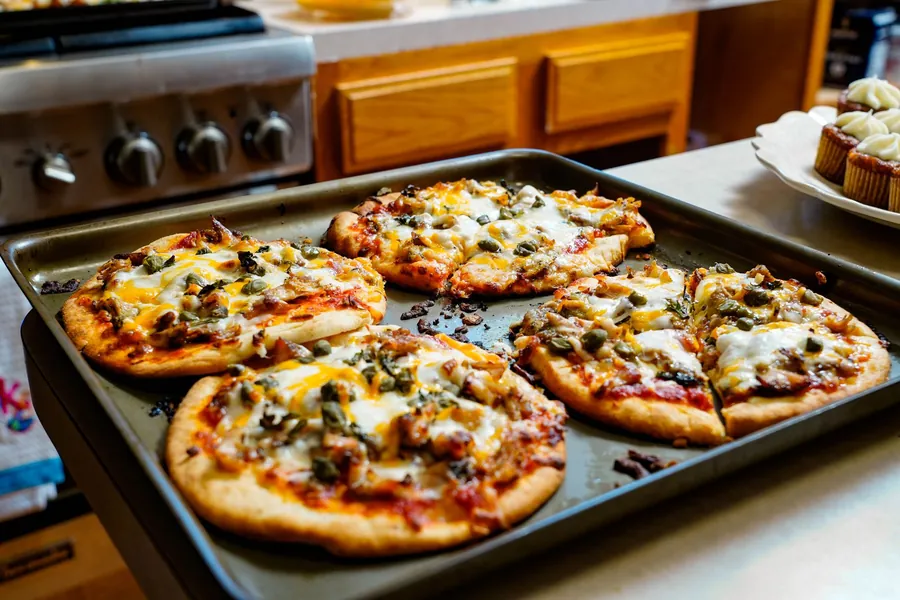
More cut edges means more escaping steam, so it cools faster.
Image source: licensed stock photo
Every article online is relentlessly positive about this, which is usually a sign nobody has thought it through. More cuts mean more open edges, and more open edges mean steam escapes faster — so a double cut pizza cools noticeably quicker. At a party that is irrelevant because it is gone in ten minutes; at a slow Friday night dinner it matters. Wet, heavily sauced and deep-dish pizzas are the worst candidates, because narrow wedges lose their structure and the toppings slide off the tip on the way to your mouth. Stuffed crust doubles awkwardly too, leaving you with slivers that are mostly crust. Thin and crisp handles it best, which is exactly why the square-cut tavern style grew up on a thin base rather than a thick one.
Doing It Properly at Home
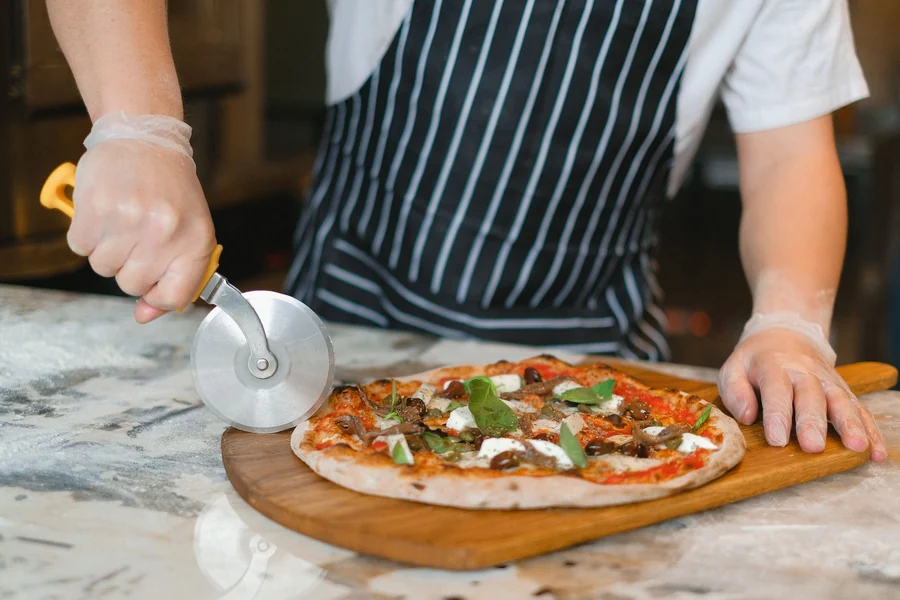
One confident pass with a wheel. Sawing is what ropes the cheese.
Image source: licensed stock photo
If you are making your own — and the toppings are easy enough to pick up at any of the best grocery stores in London — or you forgot to ask and the box is already open, a few things separate a clean job from a mangled one. Use a proper pizza wheel rather than a knife, and roll it in one continuous confident pass instead of sawing — sawing is what drags the cheese into ropes. Let the pizza sit for two or three minutes before cutting so the cheese sets slightly and stops chasing the blade. Cut all the way through to the board in one go, then transfer. If you are stretching one pizza across a crowd alongside other party food, the same logic applies as it does with games for kids and teens: small, frequent and easy to join beats one big commitment every time. And to reheat leftovers, use a hot pan with a teaspoon of water and a lid, which melts the cheese instead of drying it out.
Final Thoughts
A double cut pizza is not a trend, a product or anything you need to hunt down — it is four words at the point of ordering that quietly double how far your food goes. Say it at a party, say it when the children are eating, say it whenever you want people to try two pizzas instead of committing to one. Skip it for a deep-dish night in front of the television. Next time you order, whether from a chain or your local independent, ask for it double cut and see how much further three boxes suddenly stretch.
Frequently Asked Questions
What is a double cut pizza?
It is an ordering instruction, not a pizza type. The pizzeria cuts your pizza into twice the usual number of slices, so eight slices becomes sixteen.
Does a double cut pizza cost more?
No. It is the same pizza with the same toppings at the same price. Only the number of cuts changes, so there is nothing extra to charge for.
What is the difference between double cut and party cut?
Double cut changes how many slices you get but keeps them as wedges. Party cut, or square cut, slices the pizza into a grid of squares instead.
Can you get a double cut pizza in the UK?
Yes, but you have to ask. Domino’s UK will change your slice count if you request it when ordering, and independent pizzerias will nearly always oblige.
Why is square cut pizza called tavern cut?
Midwest American taverns served free thin-crust pizza to drinkers after the Second World War, cut into small squares so it stretched further and needed no plates.
How many slices are in a large Domino’s pizza?
A large Domino’s UK pizza is 13.5 inches and comes as ten slices, serving three to four people. Double cut, that becomes twenty pieces.
Please note: slice counts, sizes and menu options vary between pizzerias and change over time, and cutting requests are at the discretion of the restaurant. Details were accurate at the time of writing.