
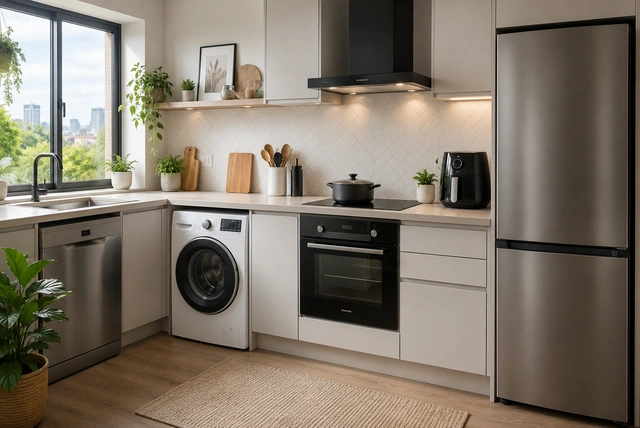
It started with a simple question over breakfast. “Why has our electricity bill gone up again?” Like thousands of families across London, Mark and his wife couldn’t understand why their monthly costs kept rising. They hadn’t bought new gadgets or changed their routine, yet the bills told a different story. After a little research, they discovered that their old fridge freezer and washing machine were using far more electricity than they realised. Replacing just two ageing appliances made a noticeable difference within months. Their experience is becoming increasingly common as more households look for practical ways to reduce expenses. Choosing energy-efficient home appliances London homeowners rely on is one of the smartest long-term investments you can make. Beyond lowering household bills, modern appliances also make daily life easier, reduce unnecessary energy waste, and help create a more sustainable home without sacrificing comfort.
Why Energy-Efficient Home Appliances Matter More Than Ever in London
Living in London comes with many advantages, but lower household expenses are rarely one of them. From housing costs to rising utility bills, every pound matters. That’s why many homeowners and renters are looking beyond quick money-saving tricks and focusing on upgrades that continue delivering value year after year.
One of the easiest places to start is with everyday appliances. Refrigerators, washing machines, dishwashers and ovens are used regularly, and some run all day long. If they’re more than ten years old, they often consume far more electricity than modern alternatives. Even though they still work, they may quietly increase your monthly energy costs.
Today’s energy saving appliances London households are choosing are designed to use less electricity while delivering the same—or even better—performance. Improved insulation, efficient motors, smarter sensors and eco programmes all contribute to lower running costs.
For London flats where space is limited, choosing appliances that match your household size is equally important. A large fridge for one person or an oversized washing machine for a small family often wastes electricity every day.
If you’re already planning to update your kitchen, combining efficient appliances with better storage and layout can maximise both convenience and savings. Our guide to modern kitchen laminate cabinets shares ideas for creating an attractive and practical cooking space.
According to Energy Saving Trust, replacing older appliances with more efficient models can significantly reduce household electricity consumption over their lifetime.
Understanding Appliance Energy Ratings UK Buyers Should Know
Buying a new appliance can feel confusing when dozens of models appear almost identical. The secret isn’t just looking at the price tag—it’s understanding what the energy label is really telling you.
The UK currently uses an A to G energy rating system. An A-rated appliance is the most efficient, while G represents the least efficient option. Because the standards were tightened in recent years, very few products achieve an A rating today. That doesn’t mean you should avoid other ratings. Even upgrading from an older appliance to a modern B, C or D-rated model can produce meaningful savings if your current appliance is outdated.
The energy label also shows estimated annual electricity consumption, making it easier to compare products. This figure is often more valuable than the letter rating because it gives a realistic picture of running costs over time.
Many London shoppers now look beyond the purchase price. Spending slightly more on A-rated appliances UK consumers trust—or the most efficient option available within a product category—can often save considerably more throughout the appliance’s lifespan.
As explained by E.ON Next, understanding today’s A–G energy labels helps buyers compare appliances more accurately and choose products that suit both their budget and energy goals.
The Best Energy Efficient Kitchen Appliances for Lower Bills
Think about how many times you enter your kitchen every day. The fridge never stops running, the kettle boils several times, dinner goes into the oven, and the dishwasher finishes the evening. It’s no surprise that the kitchen is one of the biggest contributors to household electricity use.
Fortunately, it’s also where some of the biggest savings can be made. Modern energy efficient kitchen appliances are designed to reduce electricity without reducing performance.
An energy efficient fridge freezer is often the first upgrade experts recommend because it operates 24 hours a day. Newer compressors, improved insulation and smarter temperature controls help reduce unnecessary electricity use while keeping food fresher for longer.
Induction hobs are another excellent investment. Instead of heating the entire cooking surface, they transfer energy directly into the pan, making cooking quicker and more efficient. Likewise, modern dishwashers often use less water than washing dishes by hand when they are fully loaded and operated on eco settings.
Small appliances also deserve attention. Choosing efficient kettles, microwaves and air fryers can gradually reduce energy consumption across the entire kitchen.
If you’re redesigning your cooking space, you’ll also enjoy our collection of kitchenette ideas, packed with inspiration for creating functional kitchens that complement modern energy-saving appliances.
According to Grange Electrical, efficient dishwashers, induction hobs and modern refrigeration are among the kitchen upgrades that can noticeably reduce household electricity use.
Choosing Low Energy Home Appliances Beyond the Kitchen
The journey doesn’t end in the kitchen. Some of the biggest opportunities to reduce electricity bills are found elsewhere in the home. Washing machines, tumble dryers, vacuum cleaners and even small electronic devices all contribute to monthly energy use.
Today’s energy efficient washing machines use advanced sensors that automatically adjust water levels and electricity consumption based on the size of each load. Washing clothes at 30°C rather than higher temperatures also helps reduce energy use without affecting everyday cleaning results.
Heat pump tumble dryers are another worthwhile upgrade. Although they usually cost more initially, they consume considerably less electricity than traditional vented dryers. For many households, they become one of the best long-term investments.
Don’t overlook standby power either. Coffee machines, televisions, gaming consoles and chargers can continue drawing electricity even when they appear switched off. Smart plugs and other smart home energy saving devices allow you to monitor and control these hidden costs with ease.
Regular maintenance is just as important as buying efficient appliances. Cleaning filters, checking door seals and keeping appliances well ventilated helps them continue operating efficiently for years.
If your kitchen ventilation system needs attention, our step-by-step guide on how to clean extractor fan filters explains how proper maintenance improves both performance and efficiency.
According to Real Simple, many everyday devices continue using electricity while on standby, making smart plugs and switching appliances off at the wall an easy way to reduce unnecessary energy consumption.
Simple Habits That Make Energy-Efficient Appliances Work Even Better
Buying new appliances is only half the journey. Many London homeowners are surprised to learn that everyday habits can have just as much impact on electricity bills as the appliances themselves. A neighbour of mine replaced an old washing machine but noticed only a small drop in costs. After switching to eco programmes, running full loads and cleaning the machine regularly, the savings became much more noticeable.
Small changes add up over time. Running a dishwasher only when it’s full, choosing lower washing temperatures for everyday laundry and allowing enough ventilation around a fridge freezer all help reduce electricity use. Defrosting freezers that are not frost-free and checking door seals also prevents appliances from working harder than necessary.
Another overlooked habit is switching off “vampire appliances.” Chargers, televisions, coffee machines and gaming consoles can continue drawing power even when they appear to be off. Smart plugs make this easy to manage by automatically cutting power when devices are not in use.
These simple routines cost nothing to adopt but can improve appliance performance, extend their lifespan and maximise the savings from your investment.
According to CDA Appliances, regular maintenance and using eco settings are among the simplest ways to improve appliance efficiency and reduce household energy use.
Are Energy-Efficient Appliances Worth the Extra Cost?
Many people hesitate when they see the higher price of an energy-efficient appliance. It’s understandable. When two washing machines look almost identical, choosing the cheaper one can seem like the sensible decision. But looking only at today’s price often hides tomorrow’s savings.
Modern low energy home appliances are designed with efficient motors, better insulation and intelligent sensors that reduce electricity consumption every time they are used. While the purchase price may be higher, lower running costs can gradually offset the difference over the appliance’s lifetime.
For London households, where electricity costs are an important part of the monthly budget, this long-term approach often makes financial sense. A fridge freezer runs every hour of every day, so replacing a model that’s more than ten years old is often one of the quickest ways to reduce ongoing energy costs.
There are other benefits too. Many premium appliances operate more quietly, offer improved reliability and include smart features that help monitor electricity use. These improvements add convenience alongside savings.
According to RDO Kitchens, the long-term savings from efficient appliances can outweigh the higher purchase price, particularly for appliances used every day.
Building a Sustainable London Home One Appliance at a Time
Creating a more sustainable home doesn’t mean replacing everything overnight. In fact, the smartest approach is usually to upgrade appliances as older ones reach the end of their life. This spreads the cost while steadily improving your home’s efficiency.
Many London homes, especially flats, have limited space. Choosing the right-sized appliance is just as important as choosing an efficient one. A washing machine that’s too large for your household or an oversized fridge freezer can waste electricity every day.
Combining sustainable home appliances with thoughtful home improvements creates even greater benefits. Well-designed kitchens, proper ventilation and regular maintenance all contribute to lower energy consumption. If you’re planning broader home improvements, you may also enjoy our guide to creating a home with unique tailored décor choices, where practical design and everyday comfort go hand in hand.
Technology also continues to make saving energy easier. Smart home energy saving devices now help homeowners monitor electricity use in real time, making it simple to spot waste and adjust habits before bills increase.
According to Greenly, improving household energy efficiency reduces both carbon emissions and long-term energy costs, making it one of the most effective ways to create a more sustainable home.
Choosing the Right Energy-Efficient Appliance for Your Home
With so many products available, it’s easy to focus only on discounts or brand names. A better approach is to think about how the appliance fits your daily life. Ask yourself how often you’ll use it, how many people live in your home and how much electricity it is likely to consume over the next ten years.
Look for clear energy labels, compare annual electricity consumption and choose features that genuinely add value. Eco programmes, load sensors and smart controls can all help reduce running costs when used correctly. If you’re replacing an older appliance, remember that even moving to a modern mid-range model can significantly improve efficiency.
It’s also worth reading independent reviews and considering after-sales support before making a purchase. An appliance that lasts longer often provides better value than a cheaper model that needs replacing after only a few years.
By thinking beyond the purchase price, you’ll make decisions that benefit both your household budget and the environment for many years to come.
According to John Lewis, comparing annual energy consumption alongside features and capacity helps shoppers choose appliances that deliver better long-term value.
Final Thoughts
Every home has opportunities to save energy, and those opportunities often begin with the appliances we use every day. Whether you’re replacing an old fridge freezer, investing in an energy efficient washing machine or simply changing a few daily habits, every small improvement contributes to lower bills and a more comfortable home. The best part is that you don’t have to renovate your entire property to see results. By choosing energy-efficient home appliances London homeowners trust, understanding appliance energy ratings UK buyers rely on and maintaining your appliances properly, you can enjoy lasting savings for years to come. Start with one upgrade, build better habits and let each smart decision bring you closer to a more efficient, sustainable home. For more practical home improvement advice, keep exploring The London Report.
Frequently Asked Questions
What are energy-efficient home appliances?
Energy-efficient home appliances are designed to perform everyday tasks while using less electricity and, in many cases, less water. They help reduce energy bills, lower carbon emissions and provide long-term savings for London households.
Which home appliances use the most electricity?
Fridge freezers, tumble dryers, electric ovens, washing machines and electric showers are usually among the highest electricity users in a home. Replacing older models with energy-efficient alternatives can significantly reduce annual electricity consumption.
Are A-rated appliances worth buying in the UK?
Yes. Under the current UK A–G energy label, A-rated appliances are the most efficient. Even if an A-rated model costs more initially, its lower running costs can provide worthwhile savings throughout its lifespan.
How can I reduce my electricity bill without replacing every appliance?
Use eco programmes, run full loads, wash clothes at lower temperatures, switch off standby devices, clean appliance filters regularly and keep fridge freezers well ventilated. These simple habits improve efficiency without requiring major spending.
Do smart home energy saving devices really help?
Yes. Smart plugs, energy monitors and programmable controls help identify electricity waste, automate appliance schedules and make it easier to reduce unnecessary energy use throughout the home.
When should I replace an old appliance?
If an appliance is more than ten years old, needs frequent repairs or has poor energy performance, replacing it with a modern energy-efficient model can reduce electricity bills while improving reliability and everyday convenience.