
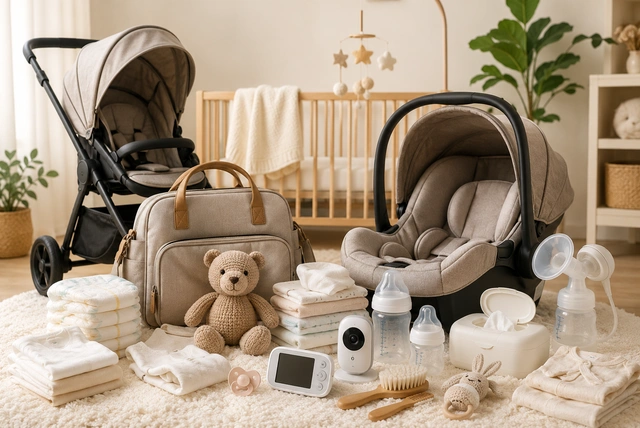
It often begins quietly. A late-night scroll, a baby store window glowing on a London street, or the first time someone says, “You’ll need a pram soon.” Suddenly, everything feels real in a way it didn’t before. That moment is where the search for the best baby products for new parents London truly starts—not with a checklist, but with emotion. Excitement, confusion, and a soft kind of panic all mix together as you realise a completely new life is about to begin.
In those early days, every decision feels bigger than it should. Which cot is safe? Do you really need a baby monitor? What does a newborn actually use every day? The truth is, most new parents in London discover that simplicity matters more than perfection. This guide brings together real-life experience, trusted UK advice, and practical essentials to help you build a setup that feels calm, safe, and realistic for 2026 parenting life in the city.
The First Days at Home: What You Actually Need for a Newborn
The first days at home rarely feel organised. They feel quiet, slightly overwhelming, and full of small uncertainties. This is why most UK health advice focuses only on true essentials rather than overwhelming new parents with long shopping lists. According to NHS newborn guidance, the basics include safe sleep arrangements, nappies, simple clothing, and feeding essentials.
In real life, this usually looks much simpler than expected. A Moses basket in the corner of the room. A small pile of soft sleepsuits. A changing mat that becomes the most used item in the house. Everything else fades into the background. Many London parents quickly realise that buying too much only creates clutter, especially in smaller city homes where space is already limited.
It also helps to think about emotional comfort, not just physical items. A calm nursery environment can make those early days feel more manageable. Some families even explore design inspiration like nursery art wall decor ideas to soften the space and create a sense of calm during sleepless nights. In the end, your home becomes your recovery space as much as your baby’s first environment.
Sleep Setup: Building Safe and Calm Baby Sleep Routines
Sleep changes everything. One good night can feel like hope returning, while a difficult night can make everything feel harder. That’s why choosing baby sleep products becomes one of the most important decisions for new parents. A firm mattress, a safe cot or Moses basket, and a simple sleep setup are the foundation of everything else.
According to John Lewis baby checklist guidance, safety and simplicity should always come first when setting up a newborn sleep space. Extras like swaddles or white noise machines can support routines, but they should never replace basic safe sleep standards.
In London homes, sleep often becomes a shared experience across small routines. One parent gently checks a monitor while the other prepares for the next feed. A baby sleeps in a corner of a compact flat while life continues quietly around them. Over time, parents learn that sleep is not about control—it’s about rhythm, patience, and adjustment.
Many families also notice that the environment around sleep matters just as much. Soft lighting, reduced noise, and simple furniture can make nights feel calmer. Even practical home choices like washable couch designs help parents manage spills, feeds, and late-night settling without stress.
Feeding Essentials: Finding Your Own Rhythm
Feeding is rarely predictable. Some moments feel peaceful, others feel rushed and messy. Whether breastfeeding or bottle feeding, the experience becomes a rhythm you slowly learn rather than something you instantly master. That’s why baby feeding essentials are about comfort as much as practicality.
As reported by Parents.com registry insights, useful feeding tools often include nursing pillows, sterilizers, anti-colic bottles, and bibs. But beyond products, what matters most is setup—comfortable seating, easy access to water, and a relaxed space where feeding doesn’t feel stressful.
In many London homes, feeding becomes a shared routine that slowly builds confidence. A quiet early morning bottle. A late-night feed on the sofa. A moment of bonding that repeats itself throughout the day. At first, it feels uncertain, but gradually it becomes second nature.
Parents often refine their feeding setup over time. What begins as trial and error slowly becomes a personalised system that fits their home, lifestyle, and baby’s needs. There is no perfect method—only what works for your family.
Getting Out: Prams, Travel Systems and Baby Carriers in London Life
Stepping outside with a newborn in London is a milestone moment. The first time you fold a pram or secure a baby carrier, the world suddenly feels different. Streets, parks, buses, and pavements all become part of your new routine.
According to The Guardian parenting guide, lightweight prams and practical baby carriers are often the best choice for urban living. The focus is on mobility, durability, and ease of use rather than luxury or appearance.
In real London life, a pram becomes more than transport. It becomes storage for nappies, a nap space on the go, and a shield against weather and noise. Baby carriers, on the other hand, offer closeness and flexibility, especially in crowded places or tight transport spaces.
Parents quickly learn that there is no single solution. Some days require a pram for long walks in the park. Other days demand a carrier for convenience. Over time, you adapt your choices to your lifestyle rather than following rigid rules.
Safety Essentials: Baby Monitors and Everyday Peace of Mind
Once a baby arrives, safety becomes a constant background thought. Even during calm moments, parents often find themselves listening, checking, or quietly observing. This is where baby safety products like monitors become incredibly useful.
Insights from Marie Claire newborn essentials highlight that modern baby monitors with video and smart features provide reassurance without replacing parental instinct. They help parents stay connected while giving them freedom to move around the home.
In everyday life, a monitor becomes part of the household rhythm. It sits quietly in the background while parents cook, rest, or finally sit down after a long day. That small screen or sound alert offers emotional relief, especially during early weeks.
Safety is also built through habits—keeping sleep spaces clear, maintaining comfortable room temperature, and gradually building confidence. Over time, what once felt stressful becomes part of normal daily life.
Changing, Cleaning and Daily Baby Care Routine
Daily baby care often revolves around simple but repeated tasks—changing nappies, cleaning bottles, and organising small essentials. These routines may seem repetitive, but they quickly become the structure of your day.
According to Good Housekeeping baby essentials review, practical and affordable tools like changing mats, storage baskets, and grooming kits are often the most valuable for new parents.
In London homes, where space is often limited, organisation becomes essential. Everything needs a place—nappies, wipes, clothes, and feeding supplies. Even small improvements in layout can make daily life feel easier and less stressful.
This is also where home comfort plays a role. Many families find that adaptable spaces inspired by ideas like practical washable furniture solutions help manage the realities of life with a newborn. It’s not about perfect homes—it’s about livable ones.
Conclusion: Building Confidence Through Everyday Moments
There is no single answer to the best baby products for new parents London families should buy. Every home, every baby, and every routine is different. What starts as confusion slowly turns into confidence as you learn what truly matters in your day-to-day life.
Over time, the pram becomes familiar, feeding becomes easier, and sleep becomes less unpredictable. The products you once worried about choosing start blending into the background of everyday life. What remains is experience, confidence, and connection with your baby.
If you are just starting this journey, give yourself time. You don’t need everything at once. You only need what helps you through today. The rest will come naturally as your story unfolds in your own way.
FAQs
What are the most important baby products for new parents in London?
The most important baby products include a safe sleeping space, nappies, basic clothing, feeding supplies, and a pram or carrier. UK health guidance recommends focusing on essentials first rather than buying too many items before birth.
Do I really need a baby monitor in a small London flat?
A baby monitor is not essential, but it can provide reassurance even in small homes. It helps parents stay aware of their baby while moving around, especially during naps or nighttime sleep.
What pram is best for London streets?
The best pram for London is usually lightweight, compact, and easy to manoeuvre. It should handle narrow pavements, public transport, and tight indoor spaces while still keeping the baby comfortable.
How many baby clothes do I need for a newborn?
Most newborns need only a small number of basic clothing items. Babies grow quickly, so buying too many outfits is unnecessary. Soft sleepsuits and easy-change clothes are usually enough in the early weeks.
Are baby carriers useful in city life?
Yes, baby carriers are very useful in cities like London. They allow hands-free movement, closeness with the baby, and easier travel in crowded areas where prams may be difficult to manage.
When should I start buying baby essentials?
Most parents start buying baby essentials in the second or third trimester. This allows enough time to prepare without feeling rushed, while also giving space to adjust plans based on need.
Best Baby Products for New Parents in London: Essential Must-Haves for 2026
It often begins quietly. A late-night scroll, a baby store window glowing on a London street, or the first time someone says, “You’ll need a pram soon.” Suddenly, everything feels real in a way it didn’t before. That moment is where the search for the best baby products for new parents London truly starts—not with a checklist, but with emotion. Excitement, confusion, and a soft kind of panic all mix together as you realise a completely new life is about to begin.
In those early days, every decision feels bigger than it should. Which cot is safe? Do you really need a baby monitor? What does a newborn actually use every day? The truth is, most new parents in London discover that simplicity matters more than perfection. This guide brings together real-life experience, trusted UK advice, and practical essentials to help you build a setup that feels calm, safe, and realistic for 2026 parenting life in the city.
The First Days at Home: What You Actually Need for a Newborn
The first days at home rarely feel organised. They feel quiet, slightly overwhelming, and full of small uncertainties. This is why most UK health advice focuses only on true essentials rather than overwhelming new parents with long shopping lists. According to NHS newborn guidance, the basics include safe sleep arrangements, nappies, simple clothing, and feeding essentials.
In real life, this usually looks much simpler than expected. A Moses basket in the corner of the room. A small pile of soft sleepsuits. A changing mat that becomes the most used item in the house. Everything else fades into the background. Many London parents quickly realise that buying too much only creates clutter, especially in smaller city homes where space is already limited.
It also helps to think about emotional comfort, not just physical items. A calm nursery environment can make those early days feel more manageable. Some families even explore design inspiration like nursery art wall decor ideas to soften the space and create a sense of calm during sleepless nights. In the end, your home becomes your recovery space as much as your baby’s first environment.
Sleep Setup: Building Safe and Calm Baby Sleep Routines
Sleep changes everything. One good night can feel like hope returning, while a difficult night can make everything feel harder. That’s why choosing baby sleep products becomes one of the most important decisions for new parents. A firm mattress, a safe cot or Moses basket, and a simple sleep setup are the foundation of everything else.
According to John Lewis baby checklist guidance, safety and simplicity should always come first when setting up a newborn sleep space. Extras like swaddles or white noise machines can support routines, but they should never replace basic safe sleep standards.
In London homes, sleep often becomes a shared experience across small routines. One parent gently checks a monitor while the other prepares for the next feed. A baby sleeps in a corner of a compact flat while life continues quietly around them. Over time, parents learn that sleep is not about control—it’s about rhythm, patience, and adjustment.
Many families also notice that the environment around sleep matters just as much. Soft lighting, reduced noise, and simple furniture can make nights feel calmer. Even practical home choices like washable couch designs help parents manage spills, feeds, and late-night settling without stress.
Feeding Essentials: Finding Your Own Rhythm
Feeding is rarely predictable. Some moments feel peaceful, others feel rushed and messy. Whether breastfeeding or bottle feeding, the experience becomes a rhythm you slowly learn rather than something you instantly master. That’s why baby feeding essentials are about comfort as much as practicality.
As reported by Parents.com registry insights, useful feeding tools often include nursing pillows, sterilizers, anti-colic bottles, and bibs. But beyond products, what matters most is setup—comfortable seating, easy access to water, and a relaxed space where feeding doesn’t feel stressful.
In many London homes, feeding becomes a shared routine that slowly builds confidence. A quiet early morning bottle. A late-night feed on the sofa. A moment of bonding that repeats itself throughout the day. At first, it feels uncertain, but gradually it becomes second nature.
Parents often refine their feeding setup over time. What begins as trial and error slowly becomes a personalised system that fits their home, lifestyle, and baby’s needs. There is no perfect method—only what works for your family.
Getting Out: Prams, Travel Systems and Baby Carriers in London Life
Stepping outside with a newborn in London is a milestone moment. The first time you fold a pram or secure a baby carrier, the world suddenly feels different. Streets, parks, buses, and pavements all become part of your new routine.
According to The Guardian parenting guide, lightweight prams and practical baby carriers are often the best choice for urban living. The focus is on mobility, durability, and ease of use rather than luxury or appearance.
In real London life, a pram becomes more than transport. It becomes storage for nappies, a nap space on the go, and a shield against weather and noise. Baby carriers, on the other hand, offer closeness and flexibility, especially in crowded places or tight transport spaces.
Parents quickly learn that there is no single solution. Some days require a pram for long walks in the park. Other days demand a carrier for convenience. Over time, you adapt your choices to your lifestyle rather than following rigid rules.
Safety Essentials: Baby Monitors and Everyday Peace of Mind
Once a baby arrives, safety becomes a constant background thought. Even during calm moments, parents often find themselves listening, checking, or quietly observing. This is where baby safety products like monitors become incredibly useful.
Insights from Marie Claire newborn essentials highlight that modern baby monitors with video and smart features provide reassurance without replacing parental instinct. They help parents stay connected while giving them freedom to move around the home.
In everyday life, a monitor becomes part of the household rhythm. It sits quietly in the background while parents cook, rest, or finally sit down after a long day. That small screen or sound alert offers emotional relief, especially during early weeks.
Safety is also built through habits—keeping sleep spaces clear, maintaining comfortable room temperature, and gradually building confidence. Over time, what once felt stressful becomes part of normal daily life.
Changing, Cleaning and Daily Baby Care Routine
Daily baby care often revolves around simple but repeated tasks—changing nappies, cleaning bottles, and organising small essentials. These routines may seem repetitive, but they quickly become the structure of your day.
According to Good Housekeeping baby essentials review, practical and affordable tools like changing mats, storage baskets, and grooming kits are often the most valuable for new parents.
In London homes, where space is often limited, organisation becomes essential. Everything needs a place—nappies, wipes, clothes, and feeding supplies. Even small improvements in layout can make daily life feel easier and less stressful.
This is also where home comfort plays a role. Many families find that adaptable spaces inspired by ideas like practical washable furniture solutions help manage the realities of life with a newborn. It’s not about perfect homes—it’s about livable ones.
Conclusion: Building Confidence Through Everyday Moments
There is no single answer to the best baby products for new parents London families should buy. Every home, every baby, and every routine is different. What starts as confusion slowly turns into confidence as you learn what truly matters in your day-to-day life.
Over time, the pram becomes familiar, feeding becomes easier, and sleep becomes less unpredictable. The products you once worried about choosing start blending into the background of everyday life. What remains is experience, confidence, and connection with your baby.
If you are just starting this journey, give yourself time. You don’t need everything at once. You only need what helps you through today. The rest will come naturally as your story unfolds in your own way.
FAQs
What are the most important baby products for new parents in London?
The most important baby products include a safe sleeping space, nappies, basic clothing, feeding supplies, and a pram or carrier. UK health guidance recommends focusing on essentials first rather than buying too many items before birth.
Do I really need a baby monitor in a small London flat?
A baby monitor is not essential, but it can provide reassurance even in small homes. It helps parents stay aware of their baby while moving around, especially during naps or nighttime sleep.
What pram is best for London streets?
The best pram for London is usually lightweight, compact, and easy to manoeuvre. It should handle narrow pavements, public transport, and tight indoor spaces while still keeping the baby comfortable.
How many baby clothes do I need for a newborn?
Most newborns need only a small number of basic clothing items. Babies grow quickly, so buying too many outfits is unnecessary. Soft sleepsuits and easy-change clothes are usually enough in the early weeks.
Are baby carriers useful in city life?
Yes, baby carriers are very useful in cities like London. They allow hands-free movement, closeness with the baby, and easier travel in crowded areas where prams may be difficult to manage.
When should I start buying baby essentials?
Most parents start buying baby essentials in the second or third trimester. This allows enough time to prepare without feeling rushed, while also giving space to adjust plans based on need.