
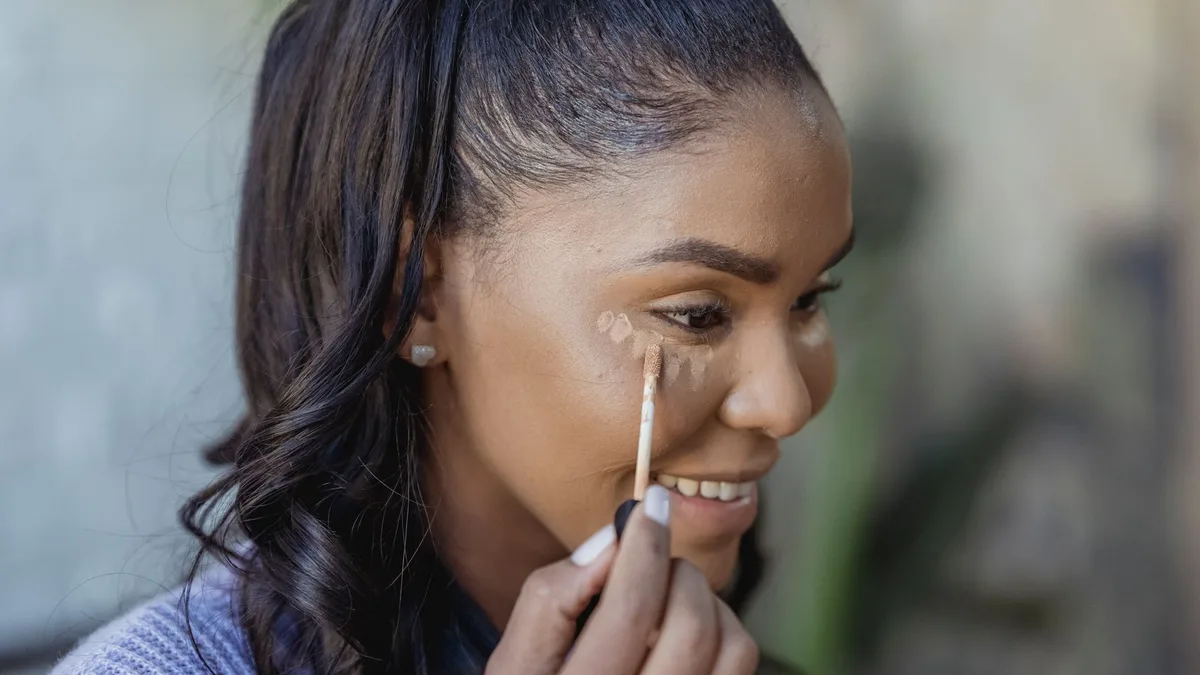
Concealer is the tiny tube that promises to erase a late night, a stubborn spot or years of dark circles — and the one that most often betrays you, settling into fine lines, going grey under the eyes, or announcing the very blemish it was meant to hide. The difference between concealer that brightens and perfects and concealer that cakes and ages comes down to a handful of techniques: the right shade, the right placement, and the right way to set it. Get those and it becomes the most powerful little product in your base makeup routine.
One Concealer Can’t Do Everything
The first mistake is expecting a single concealer to handle every job. Concealing dark under-eye circles and covering a red spot are genuinely different tasks needing different shades and formulas. For under the eyes, a hydrating concealer a touch lighter than your skin brightens; for blemishes, a concealer that matches your skin exactly, in a longer-wear formula, covers without highlighting. Many people benefit from owning two: a brightening one for the eyes and a matching one for spots.
Colour Correcting, Demystified
Colour correcting looks intimidating but follows simple colour-wheel logic: you cancel a colour with its opposite. A thin layer of the right corrector under your concealer neutralises stubborn discolouration that concealer alone would look cakey trying to cover.
- Peach or orange cancels blue and purple under-eye circles, especially on deeper skin tones.
- Green neutralises the redness of spots, rosacea and irritation.
- Yellow or lavender brightens dullness and evens sallow or shadowed areas.
The trick is to use the tiniest amount — correctors are meant to be sheer and barely there under your concealer, not a visible layer.
Placement Is Everything
Where you put concealer matters more than how much you use. Under the eyes, apply it in a small triangle with the point down toward the cheek, rather than just along the lash line — this brightens the whole area and lifts the face. On blemishes, dot it only on the spot itself and blend the edges, leaving the centre coverage intact. Applying concealer everywhere, or in a thick swipe, is what creates that heavy, obvious look. Precision beats quantity every time.
Stopping the Creasing
Creasing — concealer gathering into fine lines under the eyes — is the most common complaint, and it is very fixable. Use less product, since a thick layer creases fastest. Make sure the under-eye area is hydrated but not greasy before applying. And set it with a light dusting of finely milled powder, pressed rather than swept on. A tiny amount of well-set concealer stays smooth for hours; a heavy, unset layer creases within the hour.
Concealer in the Routine
Apply concealer after your foundation, since foundation often evens the skin enough that you need far less concealer than you think. Then set it, add your contour and bronzer for warmth, and finish the base. Used as a targeted final touch rather than an all-over layer, concealer does its best, most natural work.
The Takeaway
Concealer rewards precision, not quantity. Use a brightening shade for the eyes and a matching one for spots, colour correct with a sheer touch, place it strategically, and set it lightly to stop creasing. Treated as a targeted perfecting tool rather than a cover-everything layer, that little tube genuinely does erase the late night — and looks like skin doing it.