

Last checked: 26 November 2026. Prices and features from SumUp, Square, PayPal and Lopay UK websites. Some hardware prices were Black Friday offers. For full provider costs at different turnover levels, see our main guide to the cheapest card payment machines in the UK.
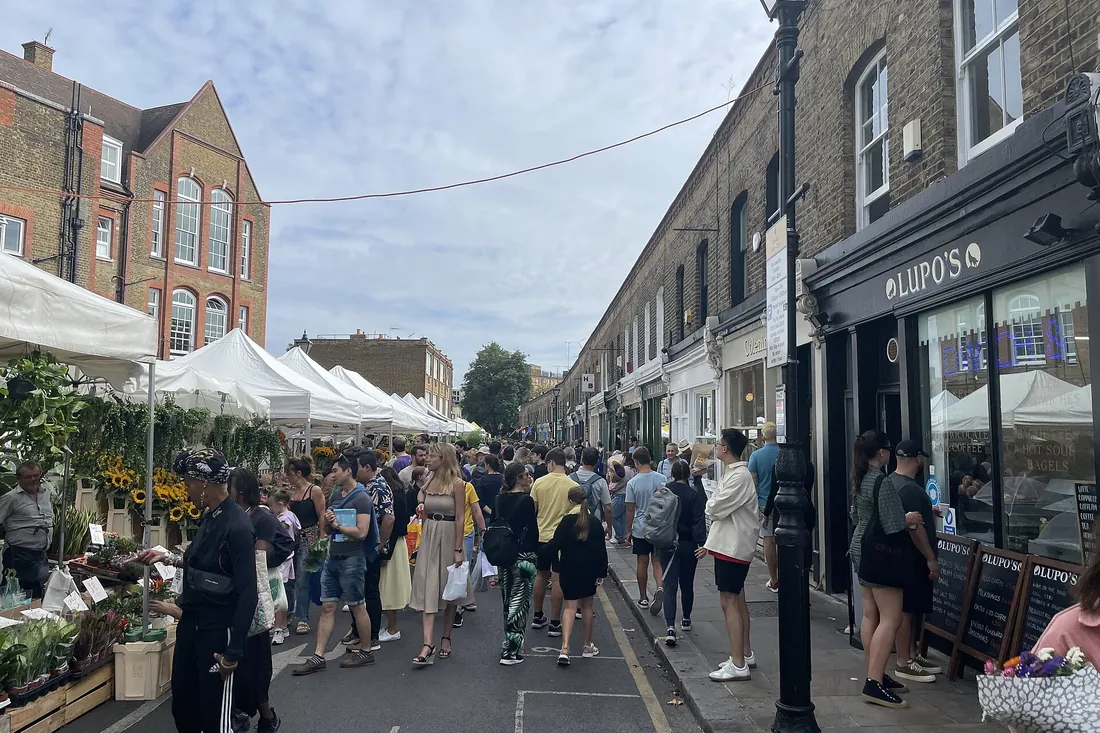
A market stall is a tough place for a card machine. You might be under railway arches with one bar of signal, in the rain at a Sunday flower market, or serving a queue of people buying £3 coffees as fast as you can. A machine that works fine in a café can fail at a pitch where the phone signal drops just as the Saturday rush starts. This guide picks the best card readers for UK market traders, based on what matters at a stall: signal and offline mode, battery, speed, fees on small sales and payout timing. It builds on our main guide to the cheapest card payment machines in the UK, which compares first-year costs at every turnover level.
Market stall card readers compared
| Reader | Price | Fee per sale | Needs phone? | Offline mode | Battery (maker’s figure) |
|---|---|---|---|---|---|
| SumUp Solo | £49 + VAT (£58.80)* | 1.69% (0.99% on £19/mo plan) | No: 4G SIM + Wi-Fi | Yes, as backup | ~300 transactions |
| SumUp Solo Lite | £15 + VAT (£18)* | 1.69% | Yes (Bluetooth) | Not stated | ~1,000 transactions |
| Square Reader (2nd gen) | £19 + VAT | 1.75% | Yes (Bluetooth) | Yes (not contactless cards) | All day |
| PayPal Reader | From £29 + VAT | 1.75% | Yes (Bluetooth) | No, needs internet | >9 hrs or >250 transactions |
| Lopay WisePad 3 | £35 + £6.95 P&P | 0.79% / 0.99% / 1.79% | Yes (Bluetooth) | No, must stay connected | Not stated |
| Tap to Pay (phone) | £0 | 1.69%–1.75% (Lopay +8p) | It is the phone | No | Your phone’s |
1. SumUp Solo: best when the signal is bad
The SumUp Solo is the only reader in this group with a built-in 4G SIM. Data is free and unlimited, it also connects to Wi-Fi, and it works fully on its own without a phone. SumUp also describes an offline mode “as a backup if your signal drops”, although it does not publish limits for that mode. For a pitch in a covered market, under a railway viaduct or at a busy event where phone networks are overloaded, that independence is what you are paying for.
It costs £49 + VAT (£58.80) on SumUp’s late-November 2026 offer, with no monthly fee on pay-as-you-go at 1.69%. Busier traders can drop the rate to 0.99% on Payments Plus (£19 a month, 12-month commitment). SumUp says it handles about 300 transactions per charge and lasts a full working day. Receipts go by SMS, email or QR code, or you can add a printer bundle. Payouts land by 7am the next day, including weekends and bank holidays.
2. Square Reader: cheapest hardware with an offline mode
At £19 + VAT, Square’s second-generation reader is the cheapest dedicated reader here, with no monthly fee and 1.75% per sale. It connects to your phone or tablet by Bluetooth, and Square’s free POS app is one of the most capable for stall traders, with item buttons, stock and simple reports.
Its offline mode is the reason it makes this list. Square’s help guide says you have 24 hours to accept offline payments and must upload them within 72 hours, and you can set a maximum amount per offline transaction. The catch: physical contactless card taps do not work offline. Chip and PIN and digital wallets such as Apple Pay and Google Pay do. Offline payments are processed when you reconnect, so a card can still be declined later, and that risk sits with you. Keep offline limits low.
3. Lopay: lowest fees for high-volume stalls with good signal
Lopay’s pricing is the lowest we found: 0.79% per transaction on its Essential plan (paid out free every Thursday), 0.99% on Standard (next-day, weekly or monthly payouts), or 1.79% for free instant payouts to your bank, 24/7. There is no monthly fee on Essential or Standard. Amex, international and corporate cards cost an extra 1%. The WisePad 3 reader costs £35 plus £6.95 postage for your first order.
The trade-offs: the reader works over Bluetooth, must stay connected to the Lopay app to take a payment, and Lopay describes no offline mode. Lopay also says the reader is not liquid-proof, so keep it under cover. If your pitch has reliable 4G and you take a lot of card payments, the savings add up quickly.
4. PayPal Reader: easiest if you already use PayPal
PayPal’s reader (from £29 + VAT) charges a flat 1.75% on all card types, including Amex, with no monthly fee, and your money reaches your PayPal Business balance within minutes. It is UV fade-resistant and easy to clean. However, it needs an internet connection through your phone, with no offline mode, so it is best on pitches with solid signal. In power-saving mode PayPal quotes more than 9 hours or more than 250 transactions.
5. Tap to Pay on your phone: no hardware at all
If you only take occasional card payments, for example a weekend craft stall, Tap to Pay turns your phone into the card reader. SumUp (1.69%, iPhone and Android 11+ with NFC), Square (1.75%, iPhone XS or newer), PayPal (1.75%) and Lopay (normal rate + 8p) all offer it. Customers tap a contactless card or phone wallet on your handset. The downsides: you need mobile data for every sale, with no offline option, and your phone battery takes a beating.
What fees cost a real market stall
Take a stall selling £1,500 a month in 150 card sales, an average of £10. Here is the approximate monthly fee, and the first-year total including the reader:
| Option | Monthly fees | First year incl. reader |
|---|---|---|
| Lopay Essential (0.79%, Thursday payouts) | £11.85 | ~£184 |
| Lopay Standard (0.99%) | £14.85 | ~£220 |
| Lopay Tap to Pay (0.79% + 8p) | £23.85 | ~£286 |
| SumUp Solo Lite (1.69%) | £25.35 | ~£322 |
| Square Reader (1.75%) | £26.25 | ~£338 |
| PayPal Reader (1.75%) | £26.25 | ~£350 |
| SumUp Solo (1.69%) | £25.35 | ~£363 |
The gap between cheapest and dearest is under £200 a year at this volume. Reliability on your particular pitch matters more than a few pence per sale. A missed Saturday rush costs more than a year of fee differences. At higher turnover the savings from low-rate providers grow, so see the full comparison in our main guide to card payment machines, which also covers Dojo, myPOS, Revolut and Teya.
Market stall checklist: before your first day
Tips from the pitch
- Keep it dry. None of these readers publishes a waterproof rating, and Lopay says its reader is not liquid-proof. Use a clear pouch or keep it under the awning.
- Watch small-sale fees. On £2–£5 sales, fixed per-transaction charges (like Lopay’s 8p on Tap to Pay) cost proportionally more than percentage fees.
- Separate Amex. Lopay adds 1% for Amex, international and corporate cards. PayPal and Square charge the same rate on all cards.
- Know the PIN threshold. Customers are usually asked for a PIN above £100, so bigger sales take a few seconds longer.
- Plan your cash flow. If you buy stock every Monday, a Thursday payout plan may not suit you.
Looking for a pitch? Our guides to London’s markets and shopping streets and farmers’ markets in London show where the footfall is. Thinking about a food stall or pop-up? See our successful small business ideas, and if you also sell online, our guide to starting an e-commerce business. Forming a company? Our guide to cheap virtual office addresses in London keeps your home address off the public register.
Frequently asked questions
What is the best card machine for a market stall in the UK?
If your pitch has patchy phone signal, the SumUp Solo is the safest choice: it has a built-in 4G SIM with free data and Wi-Fi, works without a phone, and has an offline mode as a backup. If you always have a good signal and want the lowest fees, Lopay’s WisePad 3 (0.79% on its Essential plan, with Thursday payouts) is the cheapest to run. Square Reader (£19 + VAT, 1.75%) is the best low-cost option with an offline mode.
Which card readers work without signal at a market?
Square Reader (2nd generation) has an offline mode for chip and PIN and digital wallet payments, although physical contactless card taps do not work offline, and payments must be uploaded within 72 hours. SumUp Solo has an offline mode as a backup to its built-in 4G. PayPal’s reader needs an internet connection through your phone, and Lopay’s reader must stay connected to its app. Tap to Pay on a phone needs internet with every provider we checked.
Can I take card payments at a market stall with just my phone?
Yes. SumUp, Square, PayPal and Lopay all offer Tap to Pay on iPhone, and most on Android, with no extra hardware. Customers tap their card or phone on yours. Fees are SumUp 1.69%, Square 1.75% and PayPal 1.75%, and Lopay adds 8p per transaction to its normal rate. You need mobile data, and your own phone battery takes the strain.
How much does a card machine cost for a market trader?
Hardware costs from about £18 to £59 including VAT for a typical stall reader. Square Reader is £19 + VAT, SumUp Solo Lite was £18 including VAT in a late-November 2026 offer, PayPal Reader is from £29 + VAT, Lopay WisePad 3 is £35 plus £6.95 postage, and SumUp Solo was £58.80 including VAT. Most stalls pay no monthly fee and between 0.79% and 1.75% per sale.
Is it cheaper to take cash at a market stall?
Cash has no transaction fee, but many shoppers now expect to pay by card or phone, and turning them away costs sales. At a typical 1.69%–1.75%, a £10 sale costs about 17p in fees. On Lopay’s Essential plan it costs about 8p. Many traders take both.
What battery life do I need for a market day?
SumUp says its Solo Lite handles about 1,000 transactions per charge, the Solo about 300, and that all its readers last a full working day. PayPal says its reader gives more than 9 hours or more than 250 transactions in power-saving mode. Square says its reader lasts all day. Bring a power bank for your phone if you use a Bluetooth reader.
When will I get my money from card sales?
SumUp pays out by 7am the next day, including weekends. Square transfers next day free, or instantly for a fee. PayPal funds arrive in your PayPal Business account within minutes. Lopay pays free on Thursdays on Essential, next day on Standard, or instantly on its 1.79% plan.
Do I need a business bank account to use a card reader?
Not always. Sole traders can often use a personal account with providers such as SumUp and Square, but check the provider’s terms. If you register a limited company, you will need a business account, and our guide to cheap London registered office addresses covers the address side.
Final thoughts
For most market traders, the choice comes down to signal. If your pitch is patchy, pay for the SumUp Solo’s built-in 4G and offline backup. If you want the cheapest reader with an offline mode, Square at £19 + VAT is hard to beat, as long as you remember contactless cards will not work offline. If your signal is solid and your volume is high, Lopay’s 0.79% saves the most. Whatever you choose, test it at your pitch before the first busy Saturday. For the full cost comparison across nine providers, read our guide to the cheapest card payment machines in the UK, and find more in our business section.
Sources: SumUp UK (card readers, Solo, Solo Lite and Tap to Pay pages, November 2026); Square UK (Reader 2nd generation page and specs, offline mode help article, Tap to Pay page); PayPal Point of Sale (Zettle) UK reader and pricing pages; Lopay UK pricing, WisePad 3 product page and card reader FAQs (May 2026); The London Report, “Cheapest card payment machines in the UK” (prices checked 28 October 2026). Fee calculations are our own.