

There is an old joke about what you call the person who hangs around with musicians, and the answer is always the drummer. Somebody should have told the Eagles. Don Henley sat behind the kit, sang lead on the biggest songs in the band’s catalogue, and co-wrote most of them — and he is now comfortably the wealthiest person in the group. The Don Henley net worth figure most often quoted is around $250 million, and unlike most rock star estimates, this one has a clear and traceable mechanism behind it.
Don Henley: Biography at a Glance
| Full name | Donald Hugh Henley |
| Born | 22 July 1947, Gilmer, Texas, USA |
| Age | 79 |
| Role | Drummer, lead vocalist and co-songwriter, the Eagles |
| Band formed | 1971 — disbanded 1980, reunited 1994 |
| Awards | Two solo Grammys, six with the Eagles, five MTV Video Music Awards |
| Spouse | Sharon Summerall, married 1995 |
| Children | Three |
| Also known for | Founding the Walden Woods Project and the Recording Artists’ Coalition |
| Estimated net worth | Around $250 million (estimate, not audited) |
A Drummer From Gilmer, Texas
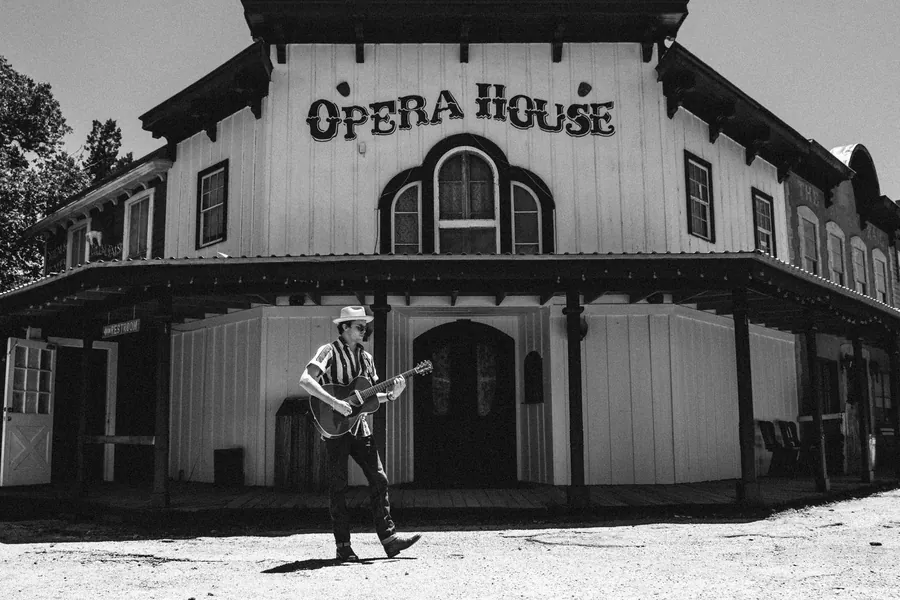
Born in Gilmer, east Texas, in the summer of 1947.
Image source: licensed stock photo
He was born in Gilmer, in east Texas, in the summer of 1947, and there is nothing in that beginning that predicts any of what followed. The Eagles formed in 1971 and Henley was there from the first day, which already makes him unusual — most bands that end up selling records by the hundred million have swapped half their line-up by the third album. He did something rarer still: he drummed and he sang lead. Ask most people to name an Eagles song and they will name one with Henley’s voice on it. The band broke up in 1980 amid the usual exhaustion and friction, reunited in 1994, and after Glenn Frey died in 2016 Henley became the last consistent founding member left standing.
The Scale of the Eagles

More than 150 million Eagles albums sold worldwide.
Image source: licensed stock photo
It is genuinely difficult to overstate how large this catalogue is. The Eagles have sold more than 150 million albums worldwide and are routinely described as the best-selling band in American history, with six Grammys along the way. But raw sales are only half of it, because what they actually own is a set of songs that never leave the radio. “Hotel California” has been in continuous rotation for fifty years. “Desperado” gets covered at every open mic night on earth. “Take It Easy” soundtracks car adverts and films and supermarket aisles. A catalogue like that does not depend on anybody buying an album ever again; it earns simply by existing in the culture, and that is the foundation everything else sits on.
He Wrote Them and Sang Them

Writer and lead vocalist on the same track is the rarest position in music.
Image source: licensed stock photo
This is the whole answer, and almost nobody explains it. Henley co-wrote, usually with Glenn Frey, and sang lead on “Witchy Woman”, “Desperado”, “Best of My Love”, “One of These Nights”, “Hotel California”, “Life in the Fast Lane” and “The Long Run”. Writing a song earns you the writer’s share, which is the money that arrives forever from radio, streaming, adverts, films and cover versions. Singing it earns you the performer’s share on the recording. Being both, on the same track, is the rarest and most lucrative position in the music business, and it is why the drummer ended up richer than anyone else in the band. Talent is distributed fairly evenly across a good group. Publishing income is not.
The contrast is stark when you put it next to a contemporary. Bill Wyman’s net worth is estimated at a fraction of Henley’s despite thirty years in an equally famous band — because Wyman had two songwriting credits in three decades while Jagger and Richards wrote everything. Same era, same stadiums, wildly different outcome. George McCrae’s net worth tells the same story at the other end of the scale.
The Solo Career Most Bands Never Get

Over 10 million solo albums, entirely separate from the band.
Image source: licensed stock photo
When the Eagles collapsed in 1980, most of the members discovered what usually happens to band members without a band. Henley did not. He released his debut solo album in 1982 and went on to sell over 10 million solo albums worldwide across five studio records, winning two Grammys of his own and five MTV Video Music Awards. “Dirty Laundry” was a genuine hit, “The Boys of Summer” became one of the defining singles of the decade, and “The End of the Innocence” is still played constantly. That is not a vanity project running alongside the day job — it is a second complete career, generating its own writing and performing income for forty years, entirely independent of the Eagles.
The Sphere, and $5 Million a Night

Sixty-four nights at the Sphere, a venue record, from September 2024.
Image source: licensed stock photo
The most recent chapter is the most spectacular. The Eagles opened a residency at the Las Vegas Sphere on 20 September 2024 and simply kept extending it, eventually reaching 64 dates — more than any other artist has played at the venue, passing Dead & Company’s 48. The numbers Billboard reported are extraordinary.
| First eight shows | $42.2 million gross, 131,000 tickets |
| Implied per show | About $5.3 million |
| Attendance milestone | 700,000+ fans across 44 sold-out shows |
| Total dates | 64 — a Sphere record |
| The venue in 2024 | $420.5m gross, the highest of any venue of any size |
Only the eight-show figure has been published, so a full residency total is arithmetic rather than reporting — but at that rate, 64 nights points to something in the region of $330 million gross.
Fighting Over a Piece of Paper

A songwriter treating the physical draft of a song as a recoverable asset.
Image source: licensed stock photo
There is a strange footnote that says a great deal about how songwriters see their work. In early 2024 three men — a rare-book dealer, a former Rock and Roll Hall of Fame curator and a memorabilia seller — stood trial in New York over handwritten pages of “Hotel California” lyrics that Henley maintained had been stolen from him. Prosecutors abruptly dropped the charges midtrial in March 2024 after Henley waived attorney-client privilege late in proceedings, producing roughly 6,000 pages of material; the judge criticised the way privilege had been used. Henley then filed a civil claim seeking the manuscripts back. Whatever you make of it, it is a rare public look at an artist treating the physical draft of a song as a recoverable asset rather than a souvenir.
The Man Who Argues About Contracts

The Walden Woods Project, founded in 1990 to protect Thoreau’s woodland.
Image source: licensed stock photo
Here is the part that makes his wealth feel less accidental. Henley has spent decades publicly arguing about who owns what in the music industry. In 2000 he co-founded the Recording Artists’ Coalition, campaigning against contract terms that musicians had historically signed without understanding them — the very arrangements that left so many of his contemporaries with fame and no money. Ten years earlier he had founded the Walden Woods Project, in 1990, to protect the Massachusetts woodland associated with Henry David Thoreau, and he has raised money for it ever since. Neither of those is a hobby bolted on to a fortune. Both suggest a man who worked out early what the paperwork was worth.
Why Talent Is Not the Variable

The gap is not talent. It is whose name is on the song.
Image source: licensed stock photo
Put the pieces side by side and the pattern is impossible to miss. Four separate income layers stack on top of one another: the writer’s share, the performer’s share on the same recordings, a full solo career, and continuous touring in a band he never left. Compare that with Elton John’s net worth, built the same way through writing credits and catalogue, and then with any famous sideman from the same decade who played on the records but did not write them. The gap between $250 million and $10 million in rock music almost never comes down to ability, fame or how many stadiums you filled. It comes down to whether your name is on the song.
Final Thoughts
The Don Henley net worth estimate of roughly $250 million is one of the few celebrity figures that actually explains itself. He co-wrote and sang the songs, kept a solo career running for forty years, stayed in the band, and ended up playing a record 64 nights at the Sphere at over five million dollars a show. None of that is luck. If you want to understand why some musicians end up wealthy and others end up merely famous, start with the songwriting credits — it is the single most reliable predictor there is.
Frequently Asked Questions
What is Don Henley’s net worth in 2026?
He is widely estimated at around $250 million, making him the wealthiest member of the Eagles. The figure is an estimate, not an audited total.
Which Eagles songs did Don Henley write?
He co-wrote and sang lead on “Hotel California”, “Desperado”, “Witchy Woman”, “Best of My Love”, “One of These Nights” and “Life in the Fast Lane”.
How much did the Eagles make at the Sphere?
Billboard reported $42.2 million from the first eight shows and 131,000 tickets. The residency ran to a record 64 dates from September 2024.
How old is Don Henley?
He was born on 22 July 1947 in Gilmer, Texas, which makes him 79. He has been performing professionally for more than fifty years.
How many albums have the Eagles sold?
More than 150 million worldwide, which makes them one of the best-selling acts in history. Henley has sold over 10 million solo albums separately.
What happened in the Hotel California lyrics trial?
Prosecutors dropped the charges midtrial in March 2024 after a late disclosure of documents. Henley subsequently filed a civil claim to recover the manuscripts.
Disclaimer: Celebrity net worth figures are estimates compiled from public reporting, not audited financial statements. Residency totals beyond the published eight-show figure are arithmetic projections, not reported results. Images are licensed illustrative stock photography and do not depict Don Henley or the Eagles.