
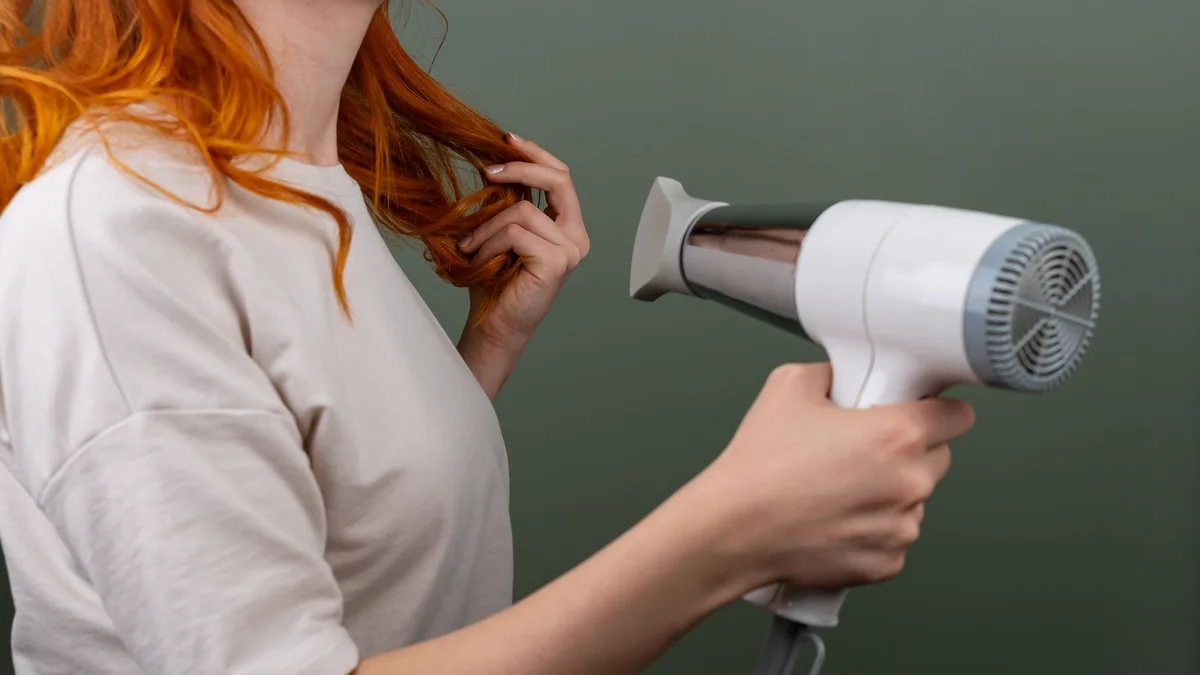
The best blow dryer for you is almost certainly not the most expensive one, and it is definitely not the one with the highest wattage on the box. Britain’s hair dryer market runs from £15 to £450, and the difference between the two ends is not really drying power — it is weight, noise, heat control and how long the thing lasts.
This guide covers what genuinely matters when buying, what the technology words mean, the current UK line-up at every price, and — the part that will improve your hair more than any purchase — how to actually blow-dry.

What Actually Matters When Buying
- Airflow, not wattage. Wattage measures electricity consumed; what dries your hair is the speed and volume of air. A well-engineered 1,600W dryer routinely beats a cheap 2,200W one. Treat wattage as a floor — 1,200–1,600W for fine hair, 1,800W+ for thick or long — not as a score.
- Weight. You hold this at shoulder height for up to half an hour. The difference between 360g and 700g is the difference between finishing the back of your head properly and giving up on it.
- Heat control. At least three heat settings and two speeds, so you can dry fast and finish cool. Premium dryers monitor temperature hundreds of times a second and throttle the heat automatically.
- Attachments. A concentrator nozzle is essential for smooth styles; a diffuser is essential for curls. Check both are included — some £150 dryers sell the diffuser separately.
- Noise. Rarely reviewed, always noticed. Brushless motors are markedly quieter.
- Cord length. 3m is standard on professional models, 1.8m on travel ones — worth checking against your bathroom sockets.
Ionic, Ceramic, Tourmaline, Infrared — Decoded
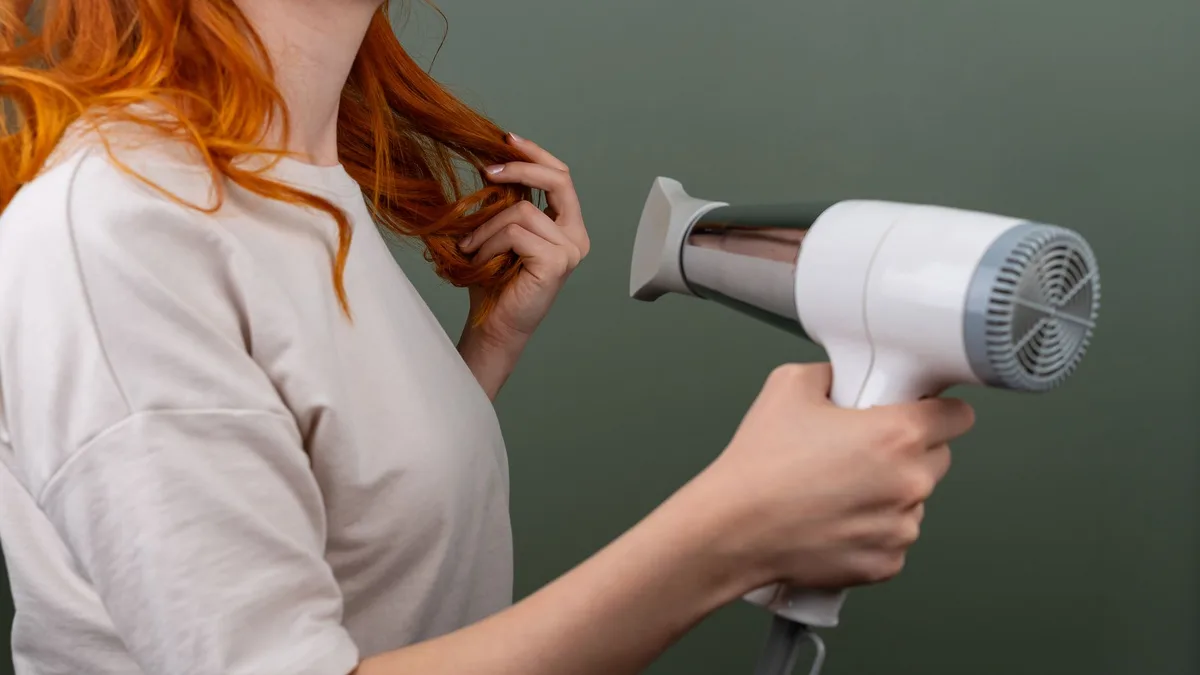
- Ionic. The dryer emits negative ions, which help break up water droplets and flatten the cuticle. The practical result is faster drying with less heat — the best single feature to look for. On very fine hair it can leave things a little too flat.
- Ceramic. The heating element radiates gentler, more even infrared warmth rather than harsh direct heat. Good for damage-prone hair.
- Tourmaline. A mineral coating that boosts negative ion output; usually paired with ceramic. Best for frizz-prone and coarse hair.
- Infrared. Heats the hair from within rather than blasting the surface; some models claim up to 50 per cent faster drying at modest wattage.
- Heat sensing. The premium feature: thermistors check the air temperature many times a second and cut power before the heat reaches damaging levels. This is what you are actually buying above £250.
The UK Line-Up, by Price
| Price | Options | What you get |
|---|---|---|
| £15–£70 | Aldi Ambiano (~£15, ionic, with diffuser and nozzle), BaByliss 2300 (£67.50), Nicky Clarke Infrared Pro (~£69) | Perfectly adequate drying. Heavier, louder, fewer settings, shorter life |
| £79–£120 | ghd Flight+ (£79, folding, dual voltage), GHD Air (£99, 2,100W ionic), Revamp Enigma (£117) | The value tier — ionic, decent attachments, noticeably faster |
| £150–£199 | Bellissima Diffon Supreme (£150, built-in diffuser, made for curls), Cloud Nine Airshot Pro (£159, tourmaline, anti-static), ghd Helios (£189, 2,200W, brushless), mdlondon Blow (£199, 360g, very quiet) | The sweet spot: light, quiet, powerful, well-attached |
| £220–£450 | Shark SpeedStyle 5-in-1 (£219.99, auto-detects attachments), ghd Speed (£299), Dyson Supersonic (£299.99), Dyson Supersonic Nural (£449.99, scalp-protect) | Heat control, weight distribution, attachment ecosystems, near-silent running |
In lab testing across 41 models, the fastest premium dryers dried a hair sample in under a minute — but the meaningful gap in real bathrooms is between the £15 tier and the £150 tier, not between £150 and £450.
Which one for your hair
- Fine hair: lightweight, ionic, 1,200–1,600W, with a nozzle. Too much power blows fine hair into a tangle.
- Thick or long hair: 2,000W+ with strong airflow and a 3m cord. Under-powered dryers keep hot air on your hair for longer, which is worse, not better.
- Curly hair: the diffuser is the product. Either buy a dryer with a proper deep bowl diffuser included, or budget for one separately.
- Damaged or coloured hair: ceramic or infrared with several heat settings and a genuine cool shot.
- Travel: dual voltage is the only spec that matters. Folding is a bonus; check the voltage switch before you fly.
How to Blow-Dry Properly: the 70/30 Rule
This is where salons are both faster and smoother than the rest of us. They split the job in two.
- Blot first. Squeeze, never rub, with a microfibre towel or an old T-shirt. Wet hair stretches by up to a third of its length; rubbing it lifts every cuticle scale you own.
- Heat protectant through the mid-lengths and ends — see our guide to heat protectant spray for how much.
- Rough-dry to about 70 per cent using fingers and medium heat, no brush and no nozzle. This takes a couple of minutes and removes the bulk of the water without any tension on the hair.
- Now section. Clip the top layers up and start at the nape, working upward so you never re-dry a finished section.
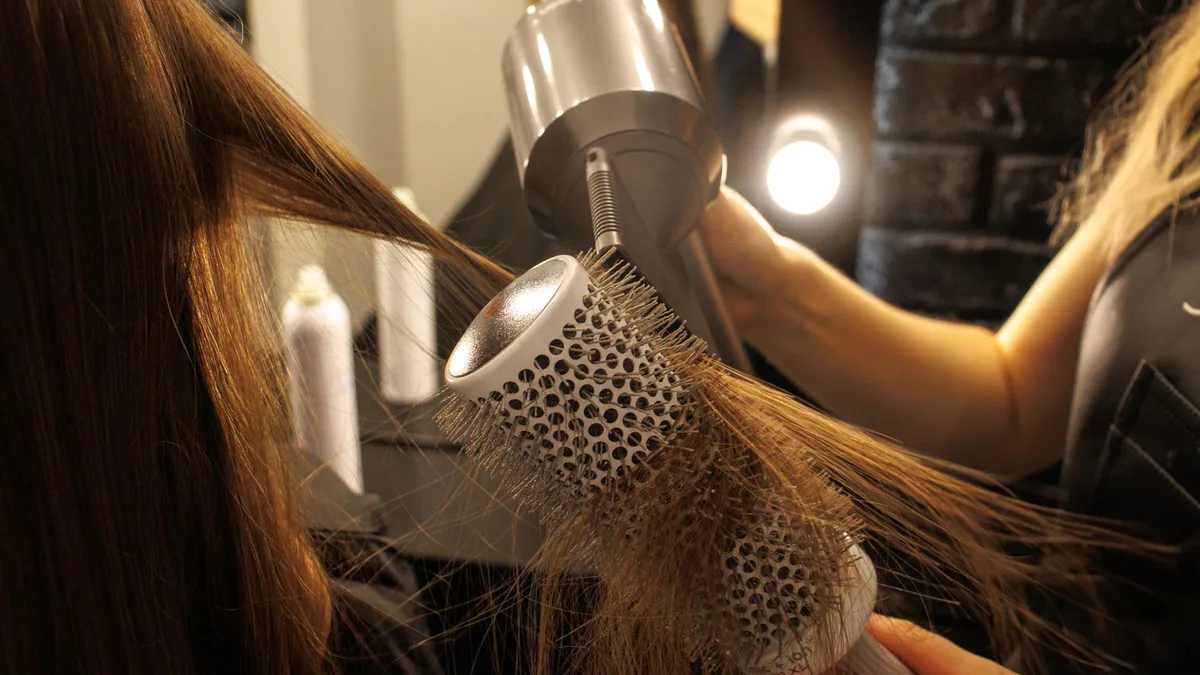
- Fit the nozzle and point it downward, following the brush from root to tip. Airflow travelling down the shaft flattens the cuticle; airflow travelling up roughens it. This single detail is most of the difference between smooth and frizzy.
- Keep the dryer an inch or so from the hair and keep it moving.
- Use light, constant tension with a round brush — bigger barrel for more volume — rotating the brush outward and away from your face.
- Stop at 90 per cent. Over-drying does nothing except damage.
- Cool shot to finish, section by section. The style sets as the hair cools; this is where hold and shine come from, and it costs nothing.
Realistic times if you are doing it properly: five to ten minutes for short hair, up to twenty for medium, thirty or more for long and thick. If yours takes much longer than that, your dryer is under-powered for your hair — or you skipped the rough-dry.
Brushes Matter More Than People Think
- Vented brush for the rough-dry stage and for speed — the holes let air through, so hair dries as you brush.
- Round brush with natural boar bristles for the finish. Avoid all-metal barrels: they heat up and effectively iron the hair from the inside of the section.
- Barrel size: small for short hair and tight bends, medium for everyday volume, large for a smooth blow-dry finish on long hair.
- Paddle brush if you only want straight and smooth rather than volume.
Diffusing Curls
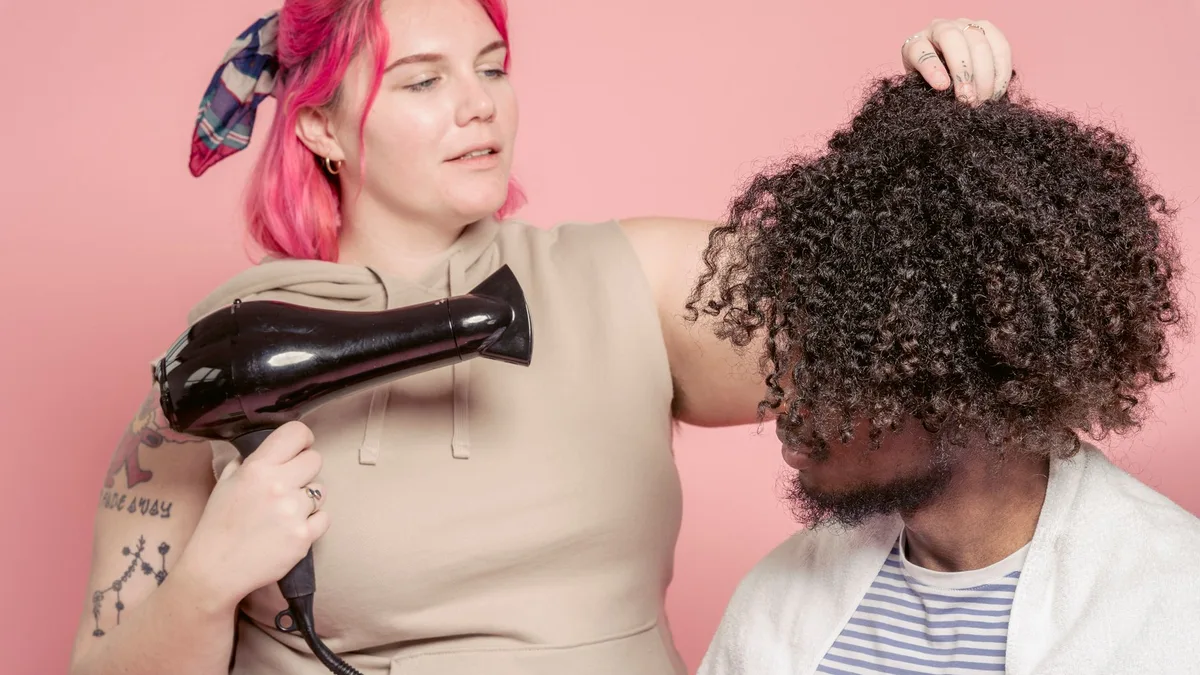
- Low heat, low speed. High airflow is what blows curl clumps apart, and it does more damage to definition than temperature ever does.
- Cup, don’t press. Lay sections into the bowl, hold for a few seconds, move on.
- Hover at the roots for lift, and tip your head to the side for volume.
- Do not touch between passes. Every contact is frizz.
- The rest of the routine — products, cast, scrunching — is in our curly hair products guide.
The Maintenance Nobody Mentions
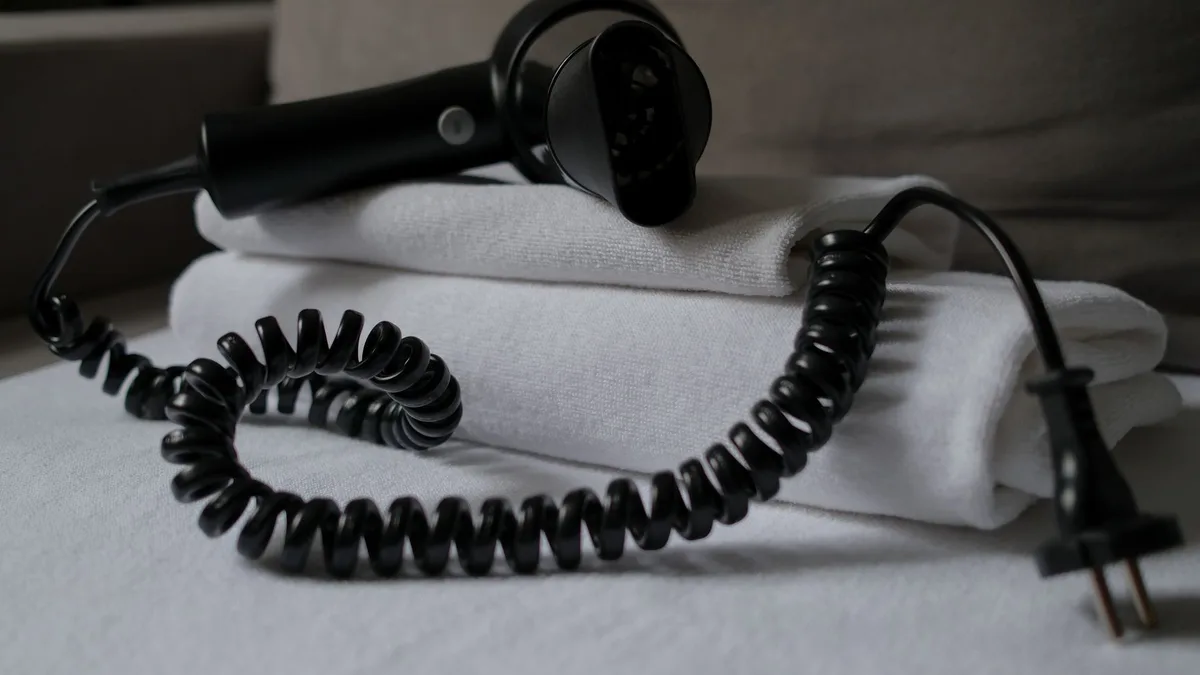
Clean the filter. Every dryer has a rear filter or grille, and it clogs with lint, dust and product residue. A blocked filter restricts airflow, which makes the dryer run hotter and slower — so you hold it on your hair for longer, at a higher temperature — and eventually burns out the motor.
Unplug it, twist or pop the filter off, and brush it clean once a month. It takes thirty seconds and it is the cheapest performance upgrade available to anybody reading this. While you are there, check the cord for kinks near the handle — that is where they fail.
Frequently Asked Questions
Is blow-drying worse than air-drying?
Not necessarily. Hair is at its most fragile when wet and swollen, so leaving it soaking for hours has its own costs — and air-drying in cold weather leaves the cuticle raised. A rough-dry at moderate heat with protectant is arguably kinder than a three-hour damp commute. What is definitely damaging is high heat held close for a long time.
Is a Dyson worth it?
If you dry your hair most days, have thick hair, or care about weight and noise — yes, you will feel the difference daily. If you dry it once a week, a £150–£190 ionic dryer gives you 90 per cent of the experience for less than half the price.
What temperature should I use?
Medium for the rough-dry, medium or low for the finishing sections, cool to set. Fine and coloured hair should stay on low throughout. If your dryer is uncomfortable to hold near your scalp, it is too hot for your hair.
Why does my hair frizz even with a good dryer?
Nine times out of ten it is airflow direction — drying with the nozzle pointing up or in circles. Point it down the hair shaft, following the brush, and add a barrier product on damp hair; our anti frizz hair products guide covers which.
How long should a hair dryer last?
Three to five years for a domestic model with regular filter cleaning; longer for professional dryers with brushless motors, which are rated for thousands of hours. A burning smell, intermittent power or a cord that only works at one angle means it is finished — do not tape it.
The Bottom Line
Buy for airflow, weight and attachments rather than wattage, and spend in the £99–£199 band unless you dry your hair daily. Then rough-dry to 70 per cent with your fingers, section, point the nozzle down the shaft, stop at 90 per cent and finish cool.
Clean the filter once a month. And for the days you would rather not use heat at all, our guides to heatless curls and hair styling tools cover the alternatives.