The flat iron vs curling iron argument is usually framed as a question about which tool is better. It isn’t. Both are excellent at the thing they were built for. The real question is which one you should own if you are only buying one — and the answer depends less on your hair than on what you will realistically do with it at eight o’clock on a Tuesday morning.
The Short Answer
- Buy a flat iron if you want one tool that does the most things: straight hair, smooth blow-dry finishes, fringe control, beach waves and soft bends. It is the more versatile purchase, and it is the only one of the two that can make hair straight.
- Buy a curling iron or wand if curls are the actual goal. You will get a good result on day one rather than after a fortnight of practice, and you can produce curl types a flat iron simply cannot.
The honest limitation that most guides skate over: a flat iron gives you waves, bends and loose spirals. It does not give you true ringlets or proper Old Hollywood curls. If those are what you picture when you imagine your hair curled, a flat iron will disappoint you no matter how much you practise.
What Each Tool Is Actually For
| Flat iron | Curling iron / wand | |
|---|---|---|
| Built for | Straightening and smoothing | Creating curl |
| Also does | Waves, bends, loose spirals, fringe and baby-hair control | Root volume, ringlets, spirals, blow-dry-style bounce |
| Cannot do | Tight ringlets, glamorous set curls | Straighten anything |
| Learning curve | Straightening instant; curling takes 1–2 weeks | Decent results the first evening |
| Contact time per section | A slow pass, plates touching both sides | 2–5 seconds, or up to 8–10 for a firm set |
| Sizes | Plate width: narrow (about 1in) for curling, wide for thick hair | Barrel diameter decides the curl entirely |
| UK price | £30–£400 | £20–£150 |
Barrel Size Decides Everything
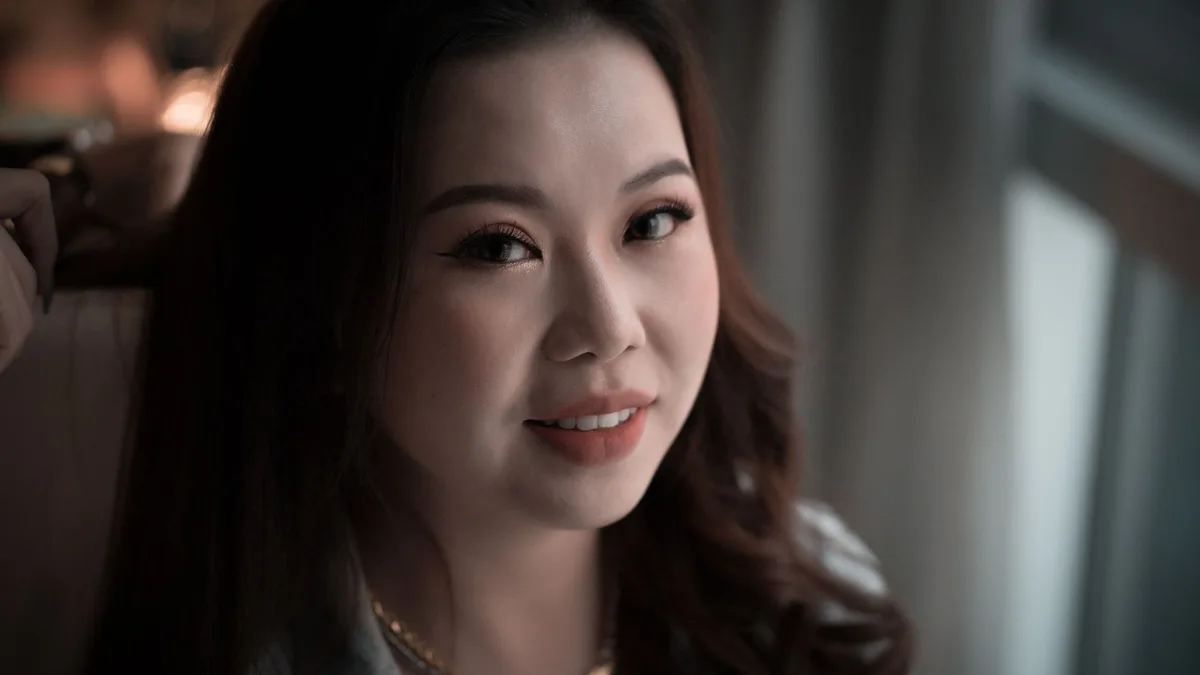
If you are buying a curling tool, the diameter matters more than the brand. British tools are sold in millimetres, while most tutorials quote inches — here is the translation.
| Barrel | Result | Suits |
|---|---|---|
| 19mm (¾in) | Tight, bouncy spirals | Short hair, ringlet looks, adding curl to fine hair |
| 25mm (1in) | Classic curls | The versatile default for most lengths |
| 32mm (1¼in) | Everyday loose waves | Mid to long hair; the most-used size in salons |
| 38mm (1½in) | Soft, voluminous bends | Long or thick hair; blow-dry effect |
| 50mm (2in) | Barely-there curves | Very long hair and smooth, polished finishes |
Remember that curls drop. Whatever size you choose, the finished result will be roughly one size looser than it looks the moment you release it — so if you want 32mm waves at lunchtime, curl with a 25mm barrel.
Clamp or Wand?
- Tong (with clamp): more uniform, less hand-work, much easier for beginners and for reaching the back of your own head. The trade-off is a possible crimp mark where the clamp sits.
- Wand (no clamp): softer, more modern, no dents anywhere — but you are holding hair against a hot barrel, so a heat-proof glove is not optional, and the back sections take practice.
A reasonable compromise for anyone nervous of a wand: a tong used like a wand, with the clamp closed only for the last inch of the hair.
Temperature: Same Rules, Both Tools
| Hair | Temperature |
|---|---|
| Fine, damaged, bleached or coloured | 140–160°C |
| Medium and healthy | 165–180°C |
| Thick, coarse or resistant | 188–205°C |
Note that these are lower than most tools’ maximum settings. A curling iron rarely needs to run as hot as a straightener, because the hair is only in contact for a few seconds and the shape is set by cooling rather than by force. And whichever tool you use, a heat protectant spray goes on first, every time — more critically with a flat iron, which runs hotter and touches the hair on both sides at once.
How to Curl With a Flat Iron
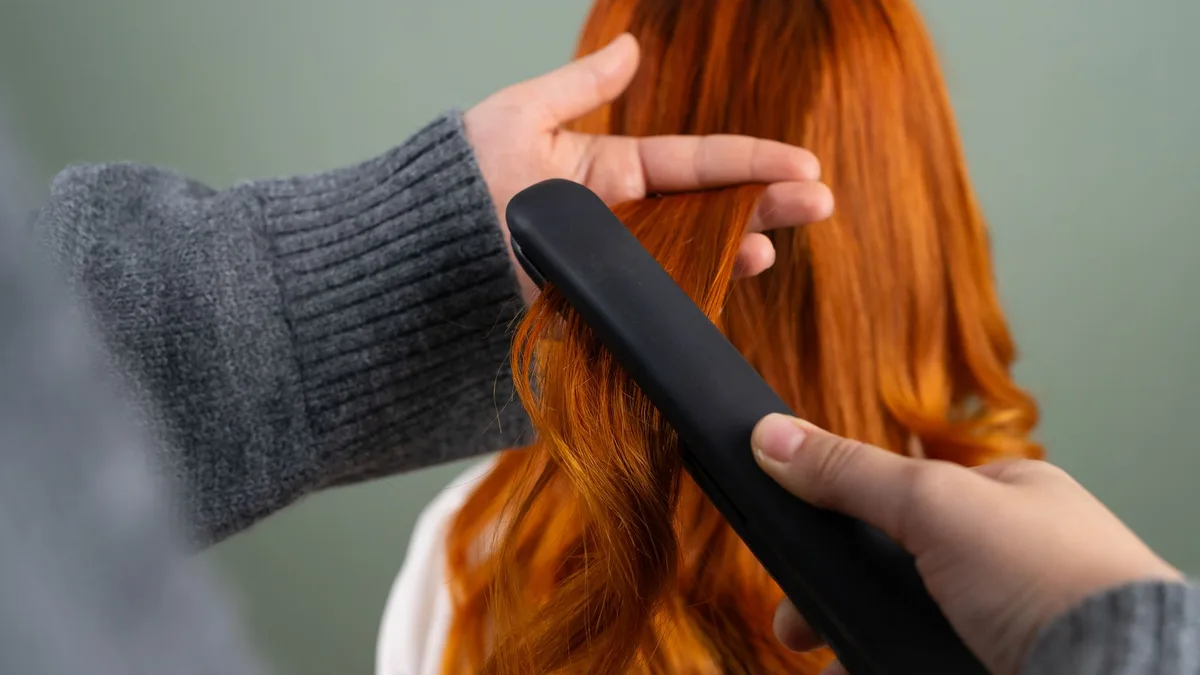
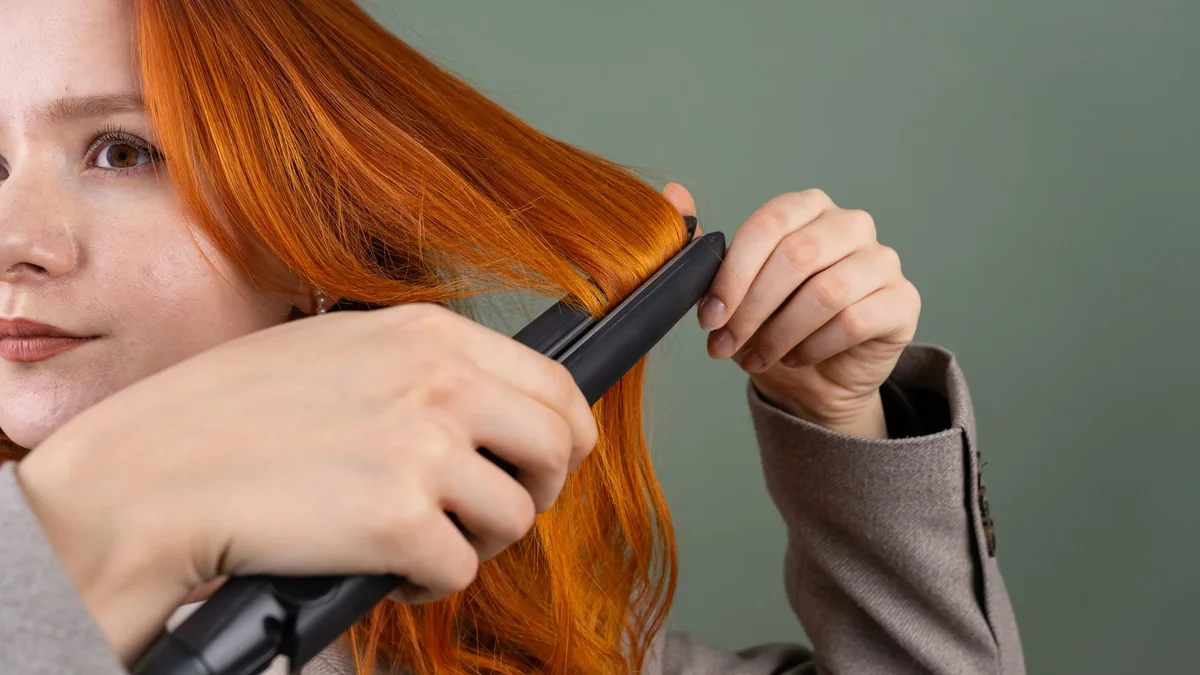
- Practise cold. Rehearse the wrist movement with the iron switched off until it feels natural. This saves your hair and about a week of frustration.
- Work in 2–3cm sections, starting at the back. Bigger sections are the number one cause of blocky, uneven results.
- Clamp near the root with light pressure — light pressure is what prevents dents.
- Rotate the iron a half turn away from your face so the hair wraps around the top plate.
- Glide slowly downward with gentle tension. Never stop moving: a stationary hot plate creates a crease or a scorch mark within seconds.
- On long hair, add a second half-turn as you approach the ends.
- Leave the last inch straight for a modern finish, or carry the curl to the tip for a classic one.
- Let it cool completely before you touch anything, then break the curls apart with your fingers.
A narrow plate — around 2.5cm — is far easier to curl with than a wide one. If you have thick hair and want a wide plate for straightening, accept that curling with it will be clumsy.
How to Curl With a Curling Iron or Wand
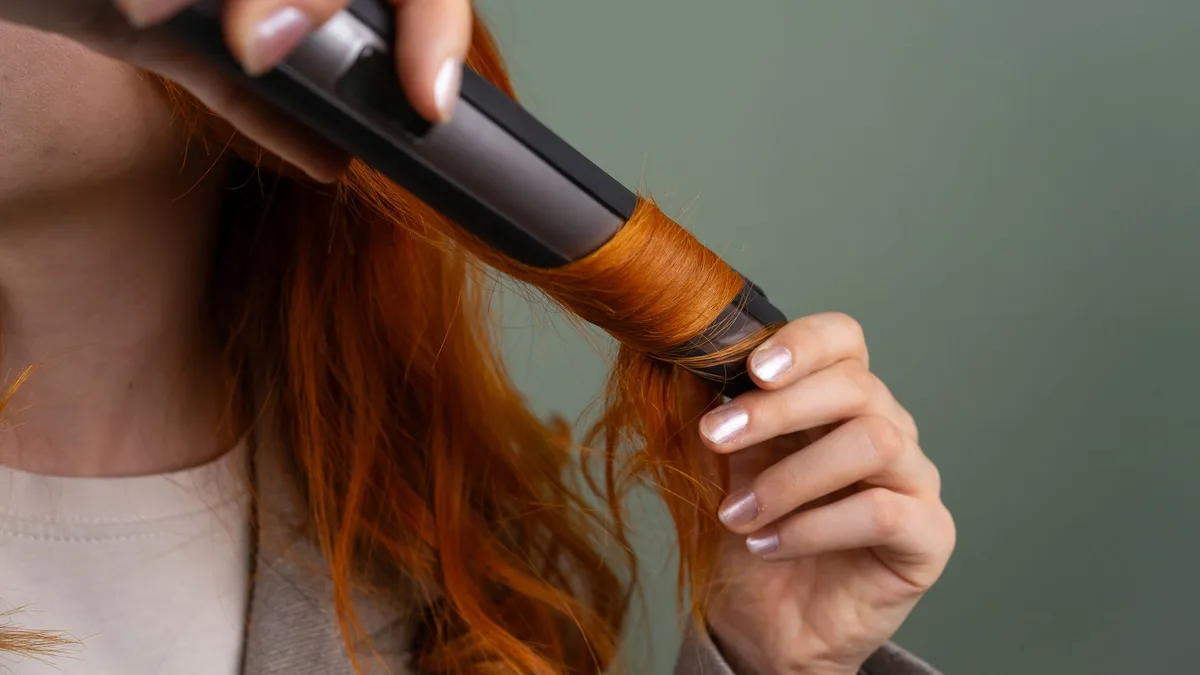
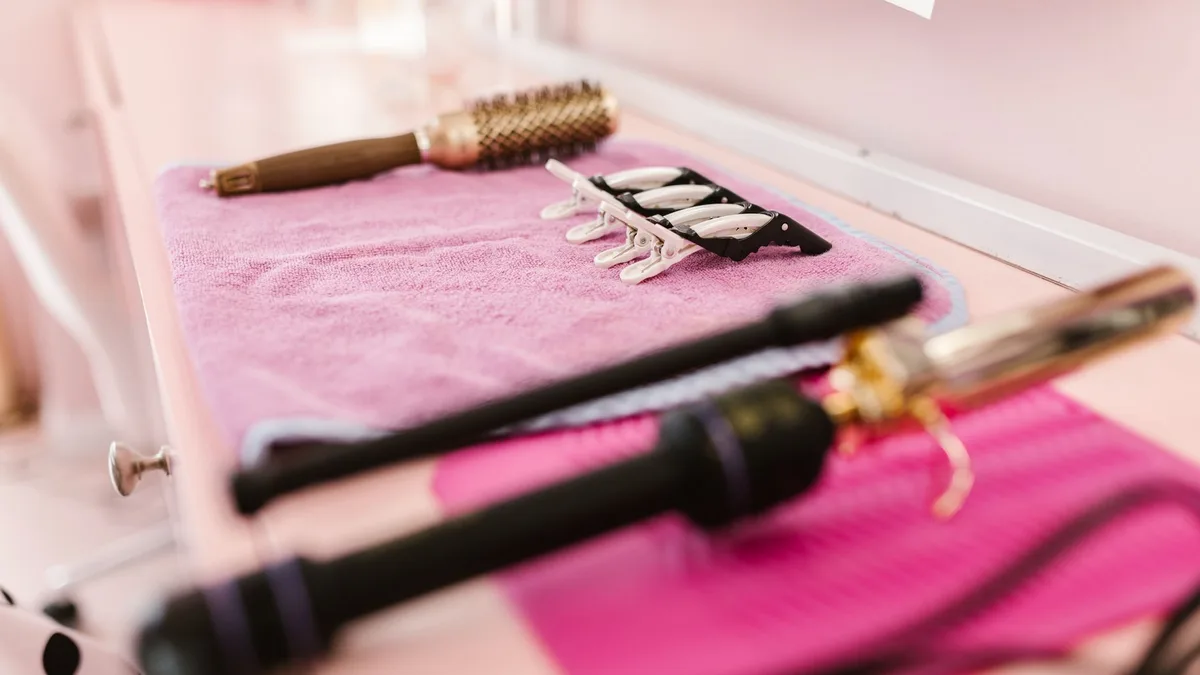
- Completely dry hair, protectant applied, sectioned with clips — top, sides and back.
- Curl away from your face on both sides. This is the single most flattering default there is.
- Hold for 5 to 10 seconds — nearer five for fine hair, nearer ten for thick or resistant hair. Longer does not equal better; it equals damage.
- Vary the technique for the effect you want: hold the barrel vertically for face-framing movement, horizontally for root volume and fullness; twist the section before wrapping for spiral definition; wrap flat and ribbon-like for shine.
- Alternate directions — one section away from the face, the next towards it — for texture that looks natural rather than set.
- Pin each curl to your head while it cools, or at minimum do not touch it. Curls set as they cool; this is where longevity comes from.
- Finish by shaking out with fingers and, if the weather demands it, a light mist of flexible hairspray.
For a softer, tousled result, curl as normal and then pull each curl gently downward while it is still warm.
Which Does More Damage?
Neither, inherently — but the exposure profiles are different, and that is what matters.
- A flat iron applies heat to both sides of the strand simultaneously, usually at a higher setting, and travels the whole length. Curling with one compounds this because the pass is slower.
- A curling iron touches each section for a few seconds at a lower temperature, and the roots are often left alone entirely.
In practice, the person doing weekly beach waves with a wand at 165°C is being far kinder to their hair than the person straightening daily at 210°C — regardless of which tool is theoretically gentler. If damage is your main concern, the tool to buy is neither: see heatless curls, or the gentler heat of hot rollers, where heat is brief and the set happens as the hair cools.
Which One for Your Hair
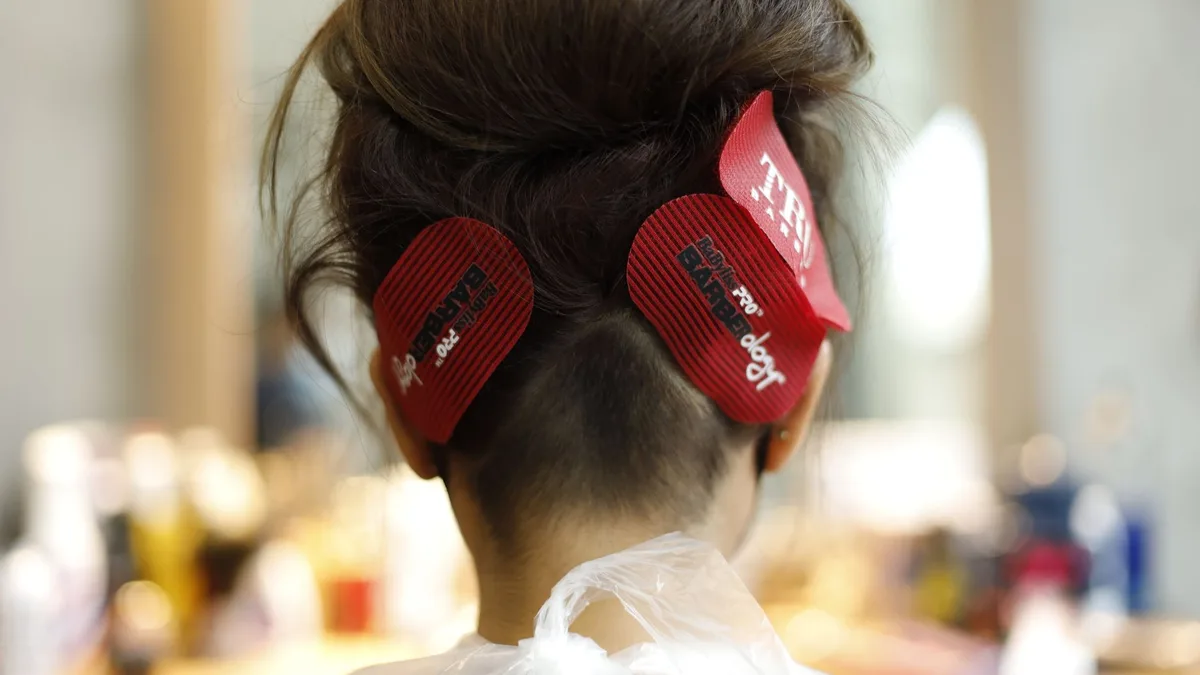
| Your hair | Better first buy | Why |
|---|---|---|
| Fine and straight | Flat iron (narrow plates) | Smoothing plus soft waves; fine hair curls easily but drops fast, so a light hand matters more than barrel choice |
| Medium, wants both looks | Flat iron | The genuine all-rounder — straight one day, waves the next |
| Thick and coarse | Wide-plate flat iron, plus a 32mm tong later | Thick hair needs plate width for straightening; curls need a real barrel to hold |
| Naturally wavy, wants defined curls | Curling wand | You do not need straightening; you need shape and uniformity |
| Curly, wants stretched or polished looks | Wide-plate flat iron | Used for stretching rather than straightening, at the lowest workable heat |
| Short hair or a bob | Flat iron | Curling irons are awkward on short lengths; a narrow iron shapes ends easily |
For the wider picture on plate materials, wattage and what the extra money buys, see our full guide to hair styling tools.
Mistakes That Ruin Both
- Styling hair that is not bone dry. Trapped water turns to steam inside the strand. This is the fastest damage there is.
- Sections that are too big, which means multiple passes and uneven results.
- Touching curls while they cool. They are still setting; every touch loosens them.
- Brushing straight afterwards. Fingers only, unless you specifically want a brushed-out vintage wave.
- Skipping protectant because “it’s only one section”.
- Using maximum heat by default. Most tools go far hotter than any hair type needs.
Frequently Asked Questions

Can I really curl my hair with a straightener?
Yes — waves, bends and loose spirals, very effectively once the wrist movement clicks. Expect one to two weeks of practice, and do not expect tight ringlets.
Why do my curls drop out within an hour?
Almost always because they were touched or brushed while warm, or because the sections were too large. Let each curl cool completely — pinning them while they set is the professional fix — and use smaller sections. Fine, silky hair may also need a light mousse or texture spray for grip.
Is a wand better than a tong?
Better-looking, arguably: no clamp marks and a more natural finish. Easier, definitely not. Beginners get quicker, more even results from a clamp, and can move to a wand later.
What if I want both, cheaply?
Buy a good adjustable flat iron with narrow plates first, learn to curl with it, and add a 32mm tong later when you know which curl size you actually reach for. That order costs less than a multi-styler and teaches you more.
Do I need different tools for different hair lengths?
Somewhat. Short hair and bobs are far easier with a narrow flat iron; long hair benefits from a bigger barrel and a wider plate. A 25mm tong is the most length-agnostic tool you can own.
The Bottom Line
One tool, chosen honestly: flat iron if you want versatility and sleekness, curling iron or wand if you want curls that look deliberate. Set it 20 to 40 degrees lower than you think, work in small sections, curl away from your face, and let everything cool before you touch it.
And whichever you choose, half the finished result comes from the dry-down that precedes it — our guide to the best blow dryer covers that, and the curly hair products guide covers what to do if your hair already curls on its own.