
In the early nineties a young man from the Marcy Houses in Brooklyn could not get a record deal. Nobody wanted him. So he started his own label with two friends and put the record out himself. Thirty years later Forbes lists the Jay-Z net worth figure at $2.8 billion and ranks him roughly 1,496th richest person on the planet. What makes that story worth reading is not the number. It is that almost none of it now comes from music — and the transactions that changed that are all a matter of public record.
Jay-Z: Biography at a Glance
| Full name | Shawn Corey Carter |
| Born | 4 December 1969, Brooklyn, New York |
| Age | 56 |
| Raised | Marcy Houses, Bedford-Stuyvesant |
| Debut album | Reasonable Doubt, 1996 |
| Companies | Roc-A-Fella Records (1995), Roc Nation (2008), Roc Nation Sports (2013) |
| Awards | 25 Grammys — the most of any rapper — from 89 nominations |
| Hall of Fame | First rapper inducted into the Rock & Roll Hall of Fame, 2021 |
| Spouse | Beyoncé, married 2008; three children |
| Net worth (Forbes) | $2.8 billion |
What Forbes Actually Says

Forbes lists $2.8 billion and a self-made score of 10 out of 10.
Image source: licensed stock photo
Unlike most celebrity wealth stories, this one does not require guesswork, because Forbes maintains a live profile and updates it. As of September 2026 it puts him at $2.8 billion, ranking him #1496 in the world, listing him as 56 and resident in Los Angeles. It also gives him a self-made score of 10 out of 10, which is Forbes’s top rating and means precisely what it sounds like: no inherited money, no family business, no head start. The same profile notes he has more than doubled his fortune since becoming hip-hop’s first billionaire in 2019. That is the rare case of a celebrity number you can actually stand behind.
Nobody Would Sign Him
No label would sign him, so in 1995 he co-founded one himself.
Image source: licensed stock photo
The origin story matters because it explains everything that followed. Unable to get a deal, he co-founded Roc-A-Fella Records in 1995 with two partners and released Reasonable Doubt the following year. Think about what that meant at the time: an artist who owned the company that released his own record, in an industry built almost entirely on artists who did not. That single decision — ownership rather than employment — became the pattern for the next three decades. He later ran Def Jam as president from 2004 to 2007, founded Roc Nation in 2008 and added Roc Nation Sports in 2013. He has spent his entire career on the other side of the table.
The Champagne Nobody Saw Coming

LVMH bought half of Armand de Brignac in 2021.
Image source: licensed stock photo
In 2014 he bought Armand de Brignac, the champagne brand universally known as Ace of Spades because of the gold bottle. It looked, at the time, like a rapper buying the drink he had been rapping about. It was not. He spent seven years building the brand’s distribution and reputation, and in 2021 he sold half of it to LVMH — the luxury conglomerate behind Moët, Dom Pérignon and Louis Vuitton, which is roughly the most credible buyer in the entire drinks industry. You do not get LVMH to take 50% of a champagne house by putting it in a music video. That deal legitimised the whole enterprise, and it was only the beginning of a very busy year.
Selling a Streaming Service to a Bank
Tidal went to Jack Dorsey’s Square for $297 million.
Image source: licensed stock photo
Tidal, the high-fidelity streaming service he took over in 2015, was widely mocked. It never came close to Spotify and it was regularly written off as a vanity project. Then in 2021 he sold a controlling stake to Jack Dorsey’s Square — now Block — for $297 million, which is an unusual thing for a failure to be worth. The logic was not really about music at all: a payments company wanted a direct relationship with artists and their audiences, and Tidal was the route in. He kept a stake, took the cash, and walked away with a position in Block itself, which Forbes still lists among his holdings. That is the whole method in one transaction.
The $750 Million Cognac Fight
Bacardi paid a reported $750 million for control of D’Usse in 2023.
Image source: licensed stock photo
The biggest single cheque came out of a legal battle. He owned 50% of D’Ussé cognac in partnership with Bacardi and demanded a buyout, arguing that Bacardi’s subsidiary was mismanaging the brand and failing to prepare for rising consumer demand. The dispute ran into the billions on paper before it settled in 2023, with Bacardi buying his controlling stake for a reported $750 million and ending up with at least 75.01% of the business. Crucially, he did not sell out entirely — he retained a residual interest through his company SCLiquor LLC. Selling control while keeping a position is a pattern here, and it is a deliberate one rather than a compromise.
The Four Deals, Side by Side

Four transactions, two of them public to the dollar.
Image source: licensed stock photo
Laid out together, the shape of the fortune becomes obvious. This is not a musician’s income statement; it is a holding company’s.
| Year | Deal | Reported value |
|---|---|---|
| 2014 | Acquired Armand de Brignac champagne | — |
| 2021 | Sold 50% of Armand de Brignac to LVMH | Undisclosed |
| 2021 | Sold controlling stake in Tidal to Square (Block) | $297 million |
| 2023 | Sold controlling stake in D’Ussé to Bacardi | $750 million |
Forbes also lists stakes in Block and Uber, the 40/40 Club, a Jean-Michel Basquiat art collection, and — notably — his own music catalogue, which he has never sold.
Why You See $2.5bn and $2.8bn

Roughly $300 million of the gap between estimates is assumption.
Image source: licensed stock photo
Search for long enough and you will find both figures quoted with equal confidence, sometimes on the same website. The difference is method rather than fact. Forbes counts conservatively: verifiable ownership stakes, completed transactions, documented property. Aggregator sites count generously, adding estimated values for private investments, art and brand equity that nobody outside his accountants has ever audited. Neither approach is dishonest, but they answer slightly different questions, and the gap between them is roughly $300 million of assumption. This is the same argument that produced the long public dispute over Kylie Jenner’s net worth — and it is worth knowing about before you trust any headline figure.
The One Thing He Has Not Sold
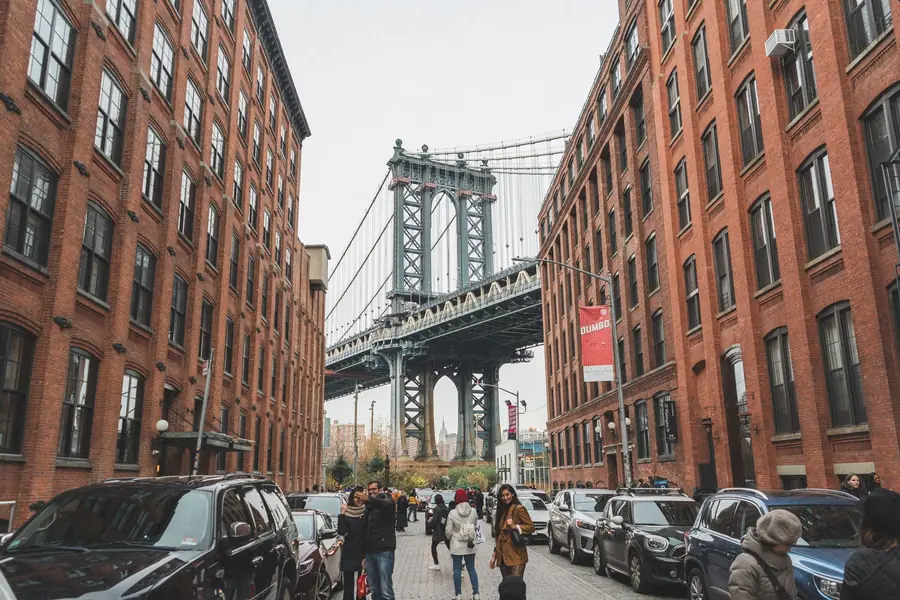
He sold the champagne and the cognac. He kept the songs.
Image source: licensed stock photo
For a man who sells things for a living, there is a striking exception. Through the 2020s an enormous number of musicians cashed out their publishing while valuations were high, taking a single large payment for songs that would otherwise have paid them for life. Jay-Z did not. Forbes still lists his music catalogue among his assets, alongside the 25 Grammys that make him the most awarded rapper in the history of the ceremony and an induction into the Rock and Roll Hall of Fame in 2021, the first for any rapper. He sold champagne, cognac and a streaming service. He kept the songs — which, as Barry Gibb’s net worth shows, is very often the asset that outlasts everything else.
Final Thoughts
The honest summary of Jay-Z net worth in 2026 is $2.8 billion according to Forbes, built less by music than by what the music made possible. A man who could not get signed founded the label, then a management company, then bought a champagne brand and sold half of it to LVMH, flipped a mocked streaming service to a payments giant for $297 million, and settled a cognac fight for $750 million. The lesson is ownership, not fame. For a different route through the same industry, see Missy Elliott’s net worth.
Frequently Asked Questions
What is Jay-Z’s net worth in 2026?
Forbes puts him at $2.8 billion as of September 2026, ranking him #1496 in the world. Some aggregator sites quote around $2.5 billion instead.
How did Jay-Z become a billionaire?
Mainly through business ownership rather than music: record labels, Roc Nation, spirits brands, Tidal, and stakes in companies including Block and Uber.
How much did Jay-Z sell D’Ussé for?
A reported $750 million in 2023, selling his controlling stake to Bacardi and ending a long dispute. He kept a residual interest in the brand.
Did Jay-Z sell Tidal?
Yes. He sold a controlling stake to Jack Dorsey’s Square, now Block, for $297 million in 2021, while retaining a stake and a position in Block.
How many Grammys has Jay-Z won?
Twenty-five, the most of any rapper in Grammy history, from 89 nominations — the second most of any artist, behind Beyoncé’s 99.
Is Jay-Z the richest musician in the world?
He is widely reported as the wealthiest, though rankings shift depending on methodology and whether business assets outside music are counted.
Disclaimer: Net worth figures are estimates. Forbes uses verifiable holdings; other sources apply broader assumptions, which is why published figures differ. Deal values are as reported by trade and news publications. Images are licensed illustrative stock photography and do not depict Jay-Z.