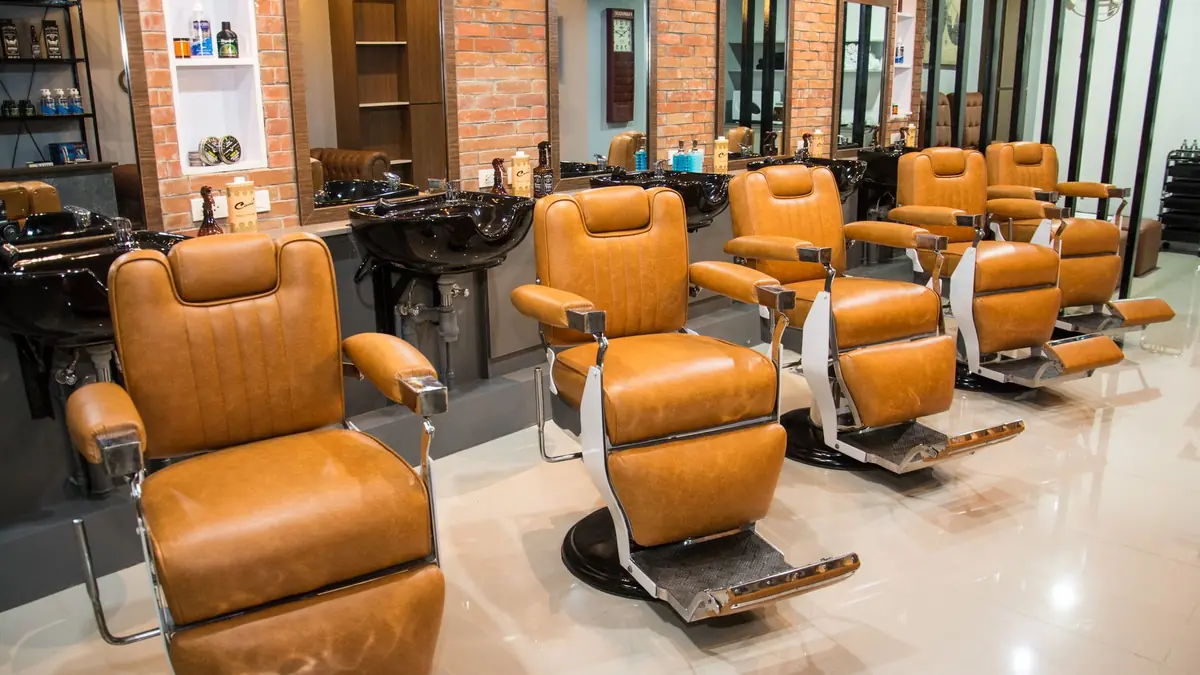
The short version: wipe and de-hair every styling chair after each client, deep clean it weekly with a mild soap solution, check bolts and the hydraulic pump monthly, and never use bleach or strong alcohol products on vinyl unless the maker says they are safe. If you employ staff, keeping chairs in good working order is also a legal duty under the Provision and Use of Work Equipment Regulations 1998 (PUWER), which require work equipment to be maintained in an efficient state, in efficient working order and in good repair (HSE: maintenance of work equipment). This guide from The London Report turns that into a practical UK routine, shows where the retailer advice conflicts, and tells you when to stop cleaning and call the supplier.
Key takeaways
- Daily: remove hair, wipe the seat, arms and footrest, and deal with colour or product spills at once.
- Monthly: check bolts, the swivel and lift lever, and the pump for leaks or slow sinking (DIR Store maintenance checklist).
- Products: bleach and strong alcohol cleaners can harden and crack vinyl. Use what your chair maker approves (DIR Store cleaning guide; Belmont UK, sponsored article).
- Legal duty: if you employ staff, PUWER requires equipment to be maintained, and a maintenance log must be kept up to date where one exists (HSE: maintenance of work equipment).
- Staff health: HSE advises disposable non-latex gloves for shampooing, colouring and bleaching, changed between clients (HSE: COSHH and hairdressers).
Who this guide is for
Most salons are small. ONS counts 52,665 UK enterprises in SIC 96020, hairdressing and other beauty treatment, at March 2026, up from 42,365 in 2018. Of those, about 82% have 0 to 4 employees, so in most salons the owner is also the person who cleans, tightens and fixes the chairs (ONS UK Business Counts via Nomis). The category also includes beauty and nail businesses, not only hairdressers, so treat it as a guide to the sector rather than a count of hairdressing salons.
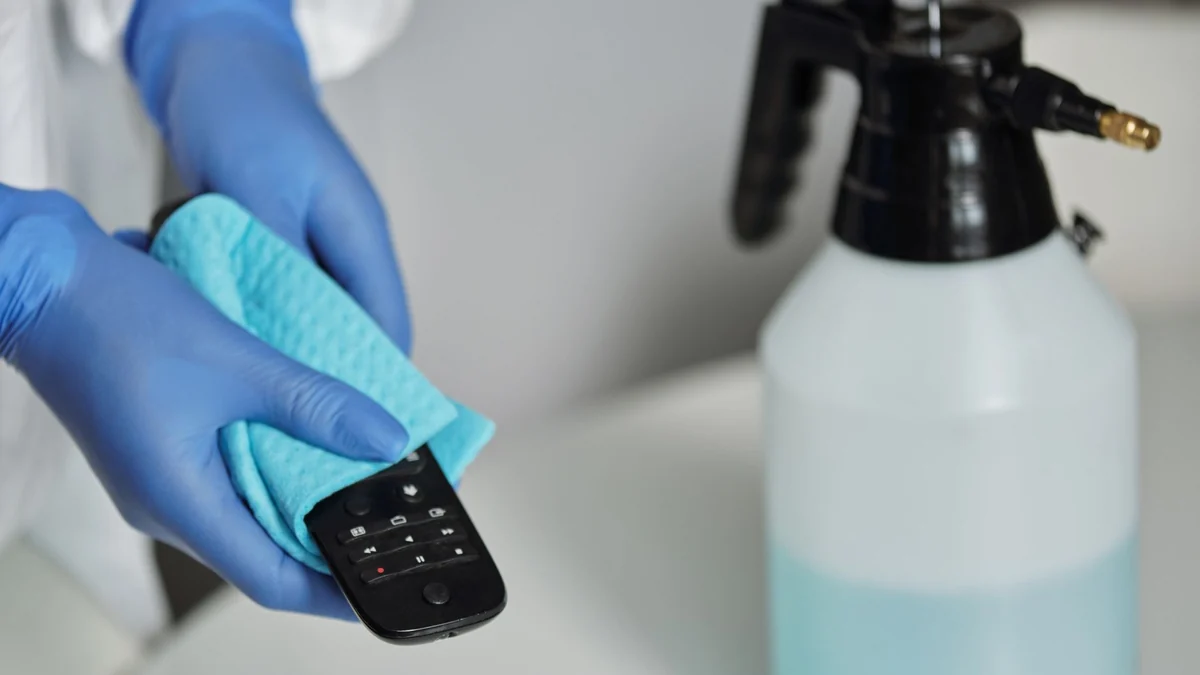
What the law and the HSE expect
| Duty | What it means for a styling chair | Source |
|---|---|---|
| PUWER 1998: maintenance | If you provide work equipment, you must keep it maintained in an efficient state, in efficient working order and in good repair. A hydraulic chair is equipment your staff use all day | HSE: maintenance of work equipment |
| Maintenance log | Where any machinery has a maintenance log, it must be kept up to date. A simple dated checklist for each chair is an easy way to show you are doing it | HSE: maintenance of work equipment |
| COSHH and skin health | Frequent contact with water, shampoo and some cleaning products can cause dermatitis. Use disposable non-latex gloves for shampooing, colouring and bleaching, and change them between clients | HSE: COSHH and hairdressers |
| Ventilation | Keep the workplace well ventilated, particularly when using sprays and bleaching products | HSE: COSHH and hairdressers |
Chairs also affect risk elsewhere. A pump that gives way under a client is an injury waiting to happen, so check how your public liability insurance in the UK policy treats equipment faults and whether it asks for evidence of maintenance.
A practical maintenance schedule
The routine below combines the retailer guidance we reviewed (DIR Store maintenance checklist; DIR Store UK owners guide; DIR Store cleaning guide) with the HSE maintenance duty. It is our summary, not a manufacturer’s instruction. If your manual says something different, follow the manual, because it protects your warranty.
| When | Task | Why |
|---|---|---|
| After every client | Remove hair from the seat, arms, footrest and crevices with a small vacuum or compressed air. Wipe with a damp microfibre cloth. Mop up colour or product at once | Hair that builds up in moving parts causes sticking and wear. Stains set quickly |
| Weekly | Clean upholstery with mild soap and warm water, then wipe with plain water. Wipe the base and arms | Removes product film that dries and hardens |
| Monthly | Check bolts and screws, the swivel and lift lever, and the pump for oil or sinking. Record the date | Loose fixings and slow leaks are cheapest to fix early; keeps your log up to date |
| Every 3 months | Tip or lift the chair to clear hair from castors or the base. Check the wheels or glides and look at the pump | Hair collects in castors and around moving parts |
| Once or twice a year | Professional deep clean of upholstery if suited to the material, and a full service of mechanisms | Reaches grime the daily routine misses |
Cleaning and disinfecting without ruining the upholstery
This is where most advice online disagrees with itself. Two points are consistent: vinyl and faux leather do not like harsh products, and you still need to clean between clients. DIR Store’s guide advises warm soapy water followed by a rinse with plain water for vinyl and upholstery, and says to avoid harsh soaps, alcohol-based disinfectants and abrasive cleaners (DIR Store cleaning guide). A second DIR Store guide says the same about faux leather (DIR Store UK owners guide). Belmont UK, a treatment-chair maker, said in a sponsored article in a dentistry magazine that repeated exposure to high-alcohol formulations can harden upholstery and cause cracking, and that products should be chosen for both antimicrobial effect and compatibility with the chair’s materials (Dentistry.co.uk, September 2026). That article is about dental chairs, so treat it as a manufacturer’s warning rather than a salon rule.
| Material | Everyday cleaning | Avoid | Source |
|---|---|---|---|
| Vinyl and faux leather | Warm soapy water, then plain water. A cleaner the maker approves for vinyl | Bleach, strong alcohol disinfectants, abrasives | DIR Store cleaning guide; DIR Store UK owners guide |
| Fabric | Fabric cleaner made for the chair’s material; test on a hidden area first | Soaking the fabric, harsh solvents | DIR Store cleaning guide |
| Real leather | A specific leather cleaner and the manufacturer’s guidance. Do not use soap and water | Household products and homemade mixes | DIR Store cleaning guide |
| Metal base and arms | Damp cloth, then dry | Scouring pads on chrome | DIR Store UK owners guide |
How to disinfect
- Clean first: disinfectants work best on a surface already free of hair, product and grease.
- Choose a product the chair maker says is compatible with your upholstery. Some salon disinfectants carry test claims such as BS EN 1276 for bacteria and BS EN 14476 for viruses; these are manufacturer claims, so check the label for dilution and contact time.
- If your usual disinfectant is alcohol based, ask the chair supplier for a vinyl-safe option, and wipe off residue with a damp cloth.
- Wear disposable non-latex gloves and change them between clients, as the HSE advises for shampooing, colouring and bleaching.
For small tools, our guide to how often to wash brushes and tools and our note on makeup sponges versus silicone applicators and hygiene cover the same principle of clean, disinfect, dry.
Colour stains, spills and chemicals
- Act while it is wet. Blot spilled colour or product with a clean, dry cloth. Rubbing pushes it into the surface. A retailer guide suggests makeup remover wipes for fresh colour splatters, but test them first because ingredients vary (DIR Store maintenance checklist).
- Use covers or protectors. Washable chair covers and approved upholstery protectors create a barrier. DIR Store advises following the maker’s instructions before applying any protector (DIR Store cleaning guide).
- Keep bleach and dye off the pump area. Wipe the pump cover after colour services. For the colour products themselves, see our guide to hair colour care.
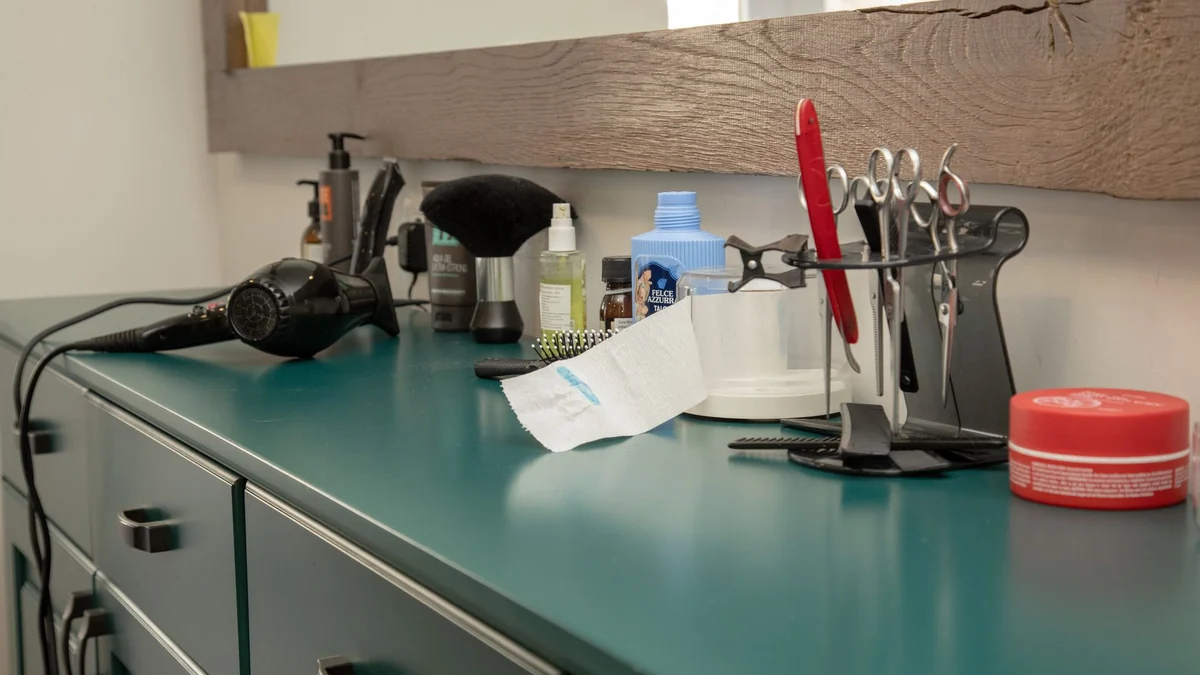
Hydraulic pump and mechanism care
The pump lifts the chair, so it is the part most likely to cause an incident when it fails. DIR Store suggests checking the lift every three months and watching for a chair that sinks slowly when someone sits, which it says can mean the lift cylinder is failing (DIR Store maintenance checklist). Its other guide recommends a monthly silicone-based spray on pivot points and the pump, and says to avoid oil-based products that attract dirt (DIR Store UK owners guide). A third DIR Store guide advises regularly oiling hydraulic mechanisms (DIR Store cleaning guide), and the monthly checklist mentions WD-40 or silicone spray (DIR Store maintenance checklist). Those four instructions do not agree, so we would not copy any of them blindly.
- Read the manual. Use only the lubricant the maker names, and ask the supplier whether your pump is serviceable or replaced as a unit.
- Keep hair out of the base and around the pump shaft with the quarterly clean.
- Stop using a chair that sinks, leaks oil or wobbles. Take it out of service and tag it until it has been repaired or replaced.
- Tighten bolts monthly, and ask staff not to force the lift lever or tilt, which a retailer notes can break the mechanics.
Cost of getting it wrong
We could not find a reliable UK figure for what poor maintenance costs a salon, and several retailer pages quote percentages without a source, so we do not repeat them. The sensible comparison is practical: a daily wipe and a monthly check take minutes, while a failed pump takes a chair out of service, and a fall can lead to a claim. For choosing chairs that are easier to maintain, see choosing the right styling chair for a beauty salon and Top 10 Beauty Salon Styling Chairs for a Luxurious Experience.
Quick checklist you can print
| Check | Daily | Weekly | Monthly | Quarterly | Yearly |
|---|---|---|---|---|---|
| Remove hair, wipe surfaces | Yes | ||||
| Spill and stain clean-up | Yes | ||||
| Soap-and-water upholstery clean | Yes | ||||
| Bolts, swivel, lift lever, pump | Yes | ||||
| Castors, base, pump shaft clean | Yes | ||||
| Professional clean or service | Yes | ||||
| Update maintenance log | Yes | Yes | Yes |
Conclusion
A clean, stable styling chair protects clients, staff and your investment. The routine is simple: remove hair and wipe after every client, deep clean weekly, check mechanisms monthly and keep a log. Where advice conflicts, such as on lubricants and disinfectants, the chair maker’s manual wins. If you are starting out, see our small business ideas in the UK for wider ideas, and browse the style and beauty section at The London Report.
FAQs
How often should I clean salon styling chairs?
Remove hair and wipe the chair after every client, and give it a deeper clean with mild soap and water weekly (DIR Store cleaning guide; DIR Store maintenance checklist).
What should I use to disinfect vinyl salon chairs?
Use a product your chair maker says is safe for vinyl. Retailer guidance warns against alcohol-based disinfectants and bleach on vinyl, and a treatment-chair maker warns that repeated high-alcohol use can cause hardening and cracking (DIR Store cleaning guide; Dentistry.co.uk).
Is salon chair maintenance a legal requirement?
If you employ staff, PUWER 1998 requires work equipment to be maintained in an efficient state, in efficient working order and in good repair (HSE: maintenance of work equipment). It does not set a cleaning timetable, so keep a simple log.
Can I use bleach on a styling chair?
Retailer guides say to avoid it on vinyl and upholstery, and unapproved products may affect your warranty, so check your care sheet (DIR Store UK owners guide; DIR Store cleaning guide).
How do I remove hair dye from a salon chair?
Blot fresh colour straight away with a clean, dry cloth and do not rub. Then clean with a cleaner approved for the material. Covers and protectors reduce the risk (DIR Store maintenance checklist; DIR Store cleaning guide).
What lubricant should I use on a hydraulic chair pump?
Use only what the maker names. Retailer guides disagree, recommending silicone spray, oil or WD-40, so check the manual or ask the supplier (DIR Store maintenance checklist; DIR Store UK owners guide; DIR Store cleaning guide).
How do I know if the pump is failing?
A chair that slowly sinks under weight, leaks oil or will not hold height needs attention. One retailer says slow sinking can mean the lift cylinder is failing (DIR Store maintenance checklist). Take it out of service until checked.
What gloves should staff wear?
HSE advises disposable non-latex gloves for shampooing, colouring and bleaching, changed between clients (HSE: COSHH and hairdressers).
How many salons are there in the UK?
ONS counts 52,665 enterprises in SIC 96020, hairdressing and other beauty treatment, in March 2026. That includes beauty and nail businesses (ONS UK Business Counts via Nomis).
Editor’s note: what changed in this update
On 11 November 2026 we rewrote this page. The earlier version was a generic list of tips. We added the legal duty under PUWER and the HSE gloves advice, an ONS picture of the sector, a dated maintenance schedule, a materials table, and a clear note where retailer advice conflicts. We removed the link to the page itself, added links to related guides, and replaced the images with licensed illustrative photos.
Sources
- HSE: Maintenance of work equipment; HSE: PUWER 1998
- HSE: COSHH and hairdressers, key messages
- ONS UK Business Counts (IDBR) via Nomis, dataset NM_142_1, SIC 96020, March 2018 to March 2026
- DIR Store: DIY Styling Chair Maintenance Checklist (12 March 2025); DIR Store: Hairdresser Chair Maintenance Tips for UK Owners (22 August 2025); DIR Store: How to Clean Salon Chairs (14 December 2023). Retailer guidance, not official advice
- Dentistry.co.uk: Dental chair disinfection, why material compatibility matters (sponsored article, 18 September 2026)
Disclaimer
This article is general information, not legal, health and safety or insurance advice. Always follow your chair manufacturer’s care instructions and check the current HSE and local authority guidance. Retailer pages are marketing material and may be updated or contradict each other.
Last updated: 11 November 2026