It is a rainy Sunday afternoon, the television has lost its charm, and somebody finds an old pack of cards at the back of a drawer. Within minutes the whole table is leaning over a grid of face-down cards, groaning when a match slips away and cheering when a lucky guess lands. A memory matching game is one of the simplest games ever invented, and one of the most quietly addictive. You can play our free version right below — then find out how to win, where the game got its British name, and what it really does for your brain.
Memory Matching Game: Quick Facts
| Also called | Concentration, Memory, Pairs, Match Up — and in Britain, Pelmanism |
| Players | One or more |
| You need | Any set of matching pairs — a pack of cards works |
| Our version | 16 cards, 8 fruit pairs |
| Goal | Find every pair in the fewest moves |
| Suitable for | Roughly age 3 and up, with fewer cards for young children |
| British name from | The Pelman Institute, founded in London in 1899 |
| Brain-training claims | You improve at the game; wider benefits are not proven |
How to Play
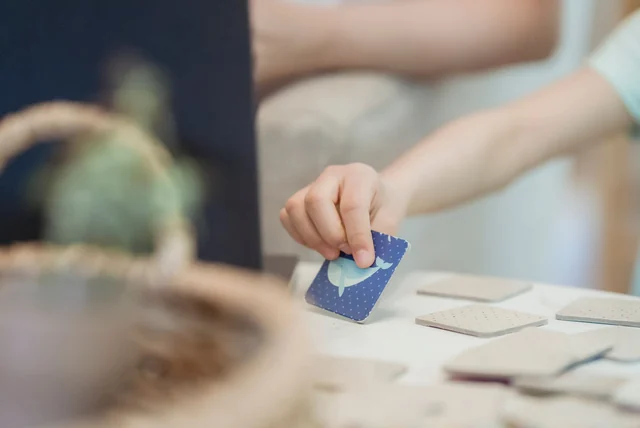
Turn two cards each go. A match stays up; a miss goes back down.
Image source: licensed stock photo
The rules take about ten seconds to learn, which is exactly why the game has survived for well over a century. All the cards are laid face down in a neat grid. On each turn you flip over two of them. If they match, you keep them face up — or, in a game with other people, you take the pair and have another go. If they do not match, you turn both back over, and this is the whole game, because now you have to remember what they were and where they sat. Play continues until every pair has been found. Playing alone, you compete against yourself on moves or time. Playing together, whoever collects the most pairs wins, which makes it a surprisingly tense game for something so simple.
Why the British Call It Pelmanism

The Pelman Institute opened in London in 1899 and gave the game its British name.
Image source: licensed stock photo
Ask an American and it is Concentration. Ask an older Briton and there is a fair chance they will call it Pelmanism, and the story behind that name is a lovely piece of London history. In 1899 the Pelman Institute for the Scientific Development of Mind, Memory and Personality opened in London, selling a memory-improvement system by correspondence course that had been devised in the 1890s. It became enormously popular in the early twentieth century, the Edwardian equivalent of today's brain-training apps. The simple matching card game became so closely tied to the idea of memory training that it took the institute's name, much as "hoovering" took over from vacuuming. The institute faded long ago. Its name lives on at kitchen tables across the country.
How to Win More Often
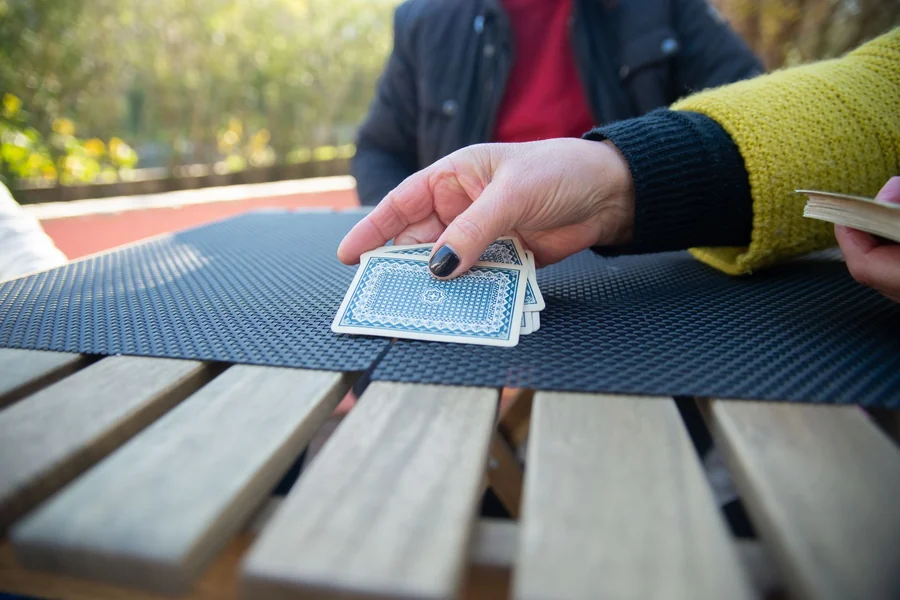
Flip in order, try unseen cards first, and name what you see.
Image source: licensed stock photo
Most people play by flipping cards at random and hoping, and it is the reason they lose. A few simple habits change everything. First, flip in a system — work across the rows in order, so your memory has a structure to hang things on. Second, on the first flip of each turn, choose a card you have not seen yet, because new information is more valuable than a blind guess. Third, name the card and its position quietly as you go, something like "apple, top left", because saying it uses your verbal memory as well as your visual memory. Fourth, split the board into quarters and remember each one separately. And finally, if your first card matches something you have already seen, take the match immediately rather than gambling.
What Is Happening Inside Your Head

Working memory holds only a handful of items at once.
Image source: licensed stock photo
The reason the game feels hard is that it leans on working memory, the mental notepad you use to hold information for a few seconds while you do something with it. That notepad is small. Psychologists commonly estimate it holds only a handful of items at once — often put at around four meaningful chunks — which is why sixteen cards feels manageable and thirty-six feels chaotic. Every strategy above works for the same underlying reason: it reduces the load. Flipping in order gives the information a pattern. Naming cards turns images into words, which are easier to rehearse. Splitting the board creates smaller groups. You are not really expanding your memory while you play. You are learning to use the limited memory you have far more cleverly.
Does It Really Train Your Brain?

11,430 people completed the BBC-backed brain-training trial in Nature.
Image source: licensed stock photo
This is where honesty matters, because a great many websites promise far more than the evidence supports. The biggest test of brain training ever run was a British one. In 2010, scientists led by Adrian Owen worked with the BBC science programme Bang Goes the Theory on a six-week online trial; more than 52,000 people signed up and 11,430 completed it. Their results, published in the journal Nature, were clear. Participants got better at the specific tasks they had practised, but those improvements did not transfer to other, untrained mental tasks. In plain English: if you play a memory matching game every day, you will become very good at memory matching games. There is no good evidence it will make you sharper at everything else.
The $2 Million Warning

Lumosity's maker paid $2 million over unfounded brain-training claims.
Image source: licensed stock photo
If that sounds like an academic quibble, the United States regulator did not think so. In January 2016 the Federal Trade Commission announced that Lumos Labs, the company behind the popular Lumosity brain-training app, would pay $2 million to settle charges of deceptive advertising. The FTC said the company had made unfounded claims that its games could help people perform better at work and at school, and could delay the mental decline associated with ageing and serious illness. It is a useful reminder to treat any game, app or product that promises to protect your brain with healthy scepticism. Enjoy memory games for what they are. Be wary of anyone charging you a subscription on the promise that they are medicine.
The Real Benefits for Children
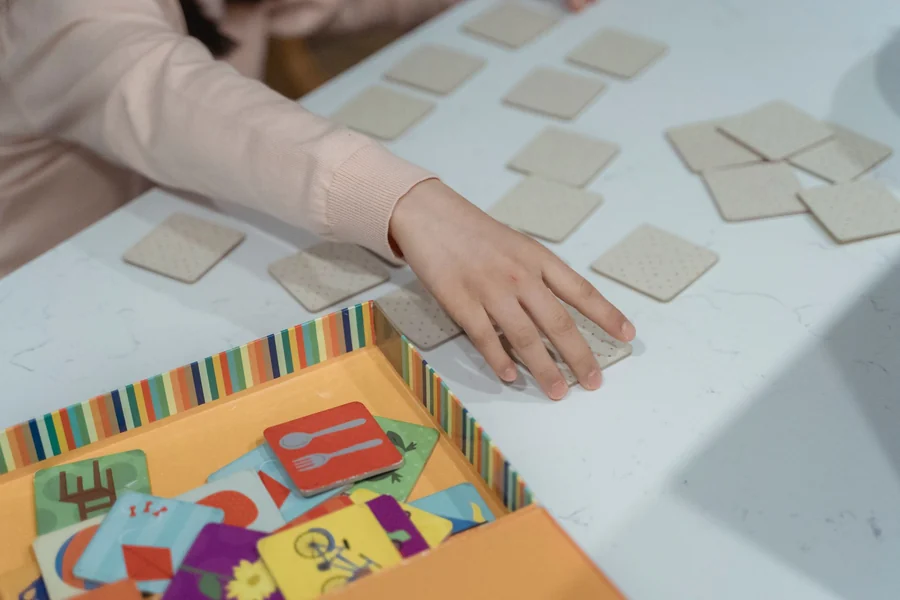
Focus, turn-taking and losing gracefully are the real lessons.
Image source: licensed stock photo
None of that means the game is pointless — far from it. For young children, a memory matching game is a genuinely good activity for reasons that have nothing to do with brain-training hype. It asks them to sit, focus and pay attention for a sustained stretch. It teaches them to take turns, to lose gracefully and to cope when a sibling finds the pair they were about to get. It builds vocabulary when the cards show animals, colours or letters. And it can be played with no screen at all, using a pack of picture cards on the floor. It sits naturally alongside other simple group games, like the ones in our guide to summer camp games for kids and teens, and costs nothing to play.
Making It Harder, Easier or Your Own
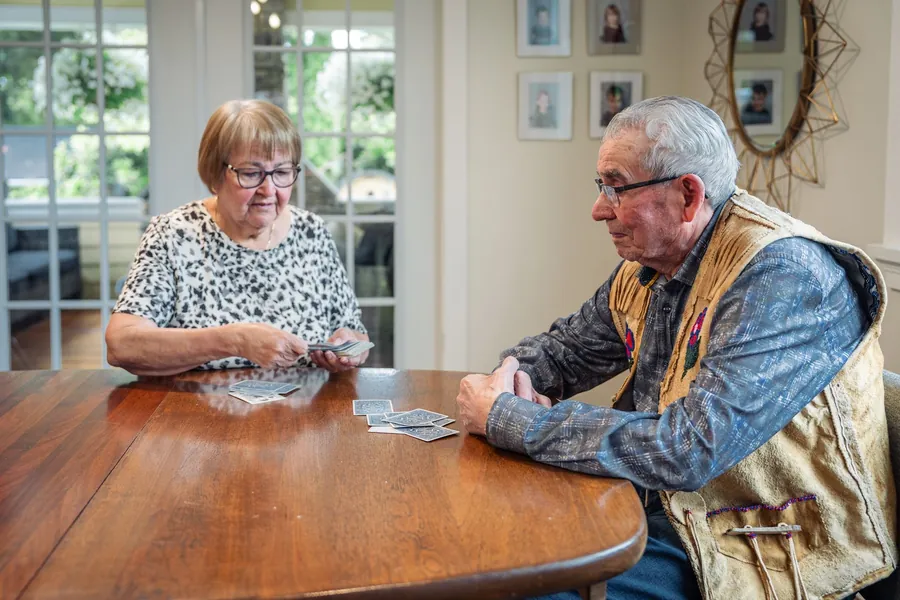
Six cards for toddlers, a full deck for grown-ups.
Image source: licensed stock photo
The beauty of the game is how easily it bends to suit whoever is playing. For a three-year-old, start with just six or eight cards and pictures they already know. For older children and adults, move up to a full pack of playing cards, where you match by number and colour, and the difficulty climbs dramatically. You can add a timer, ban naming cards aloud, or play with photographs of family members for grandparents. If you enjoy tinkering, the version at the top of this page is built from a few lines of standard web code — our guide on how to make a game without coding shows how to create something similar yourself. And if you love a traditional British pastime, try Kerby ball next.
Final Thoughts
A memory matching game will not make you a genius, whatever the adverts say, and the largest study ever carried out found its benefits stay inside the game. What it will do is give you a few minutes of focus, a little friendly competition and a surprisingly satisfying click when the last pair turns over. It has kept people entertained since Edwardian London, and it still works on a rainy afternoon today. Scroll back up, beat your best score, then challenge someone else to beat it.
Frequently Asked Questions
What is a memory matching game?
A game where cards are laid face down and you turn two over at a time, trying to remember positions and find every matching pair.
Why is it called Pelmanism?
It is named after the Pelman Institute, a London memory-training organisation founded in 1899. The card game became so linked with memory training that it took the name.
How do you win a memory matching game?
Flip cards in a systematic order, turn unseen cards first, name cards and positions quietly, and split the board into sections so there is less to remember.
Do memory games improve your memory?
You get better at the game itself, but a major 2010 study in Nature found brain-training improvements did not transfer to other mental tasks.
What age is a memory matching game suitable for?
Children as young as three can play with six to eight picture cards. Older children and adults can use a full deck of playing cards.
Is this memory game free to play?
Yes. It is completely free, works on phones and computers, needs no download or sign-up, and remembers your best score in your browser.
Please note: this game is for entertainment. It is not a medical or cognitive test, and it is not intended to diagnose, treat or prevent any condition. If you are worried about memory problems, speak to your GP.