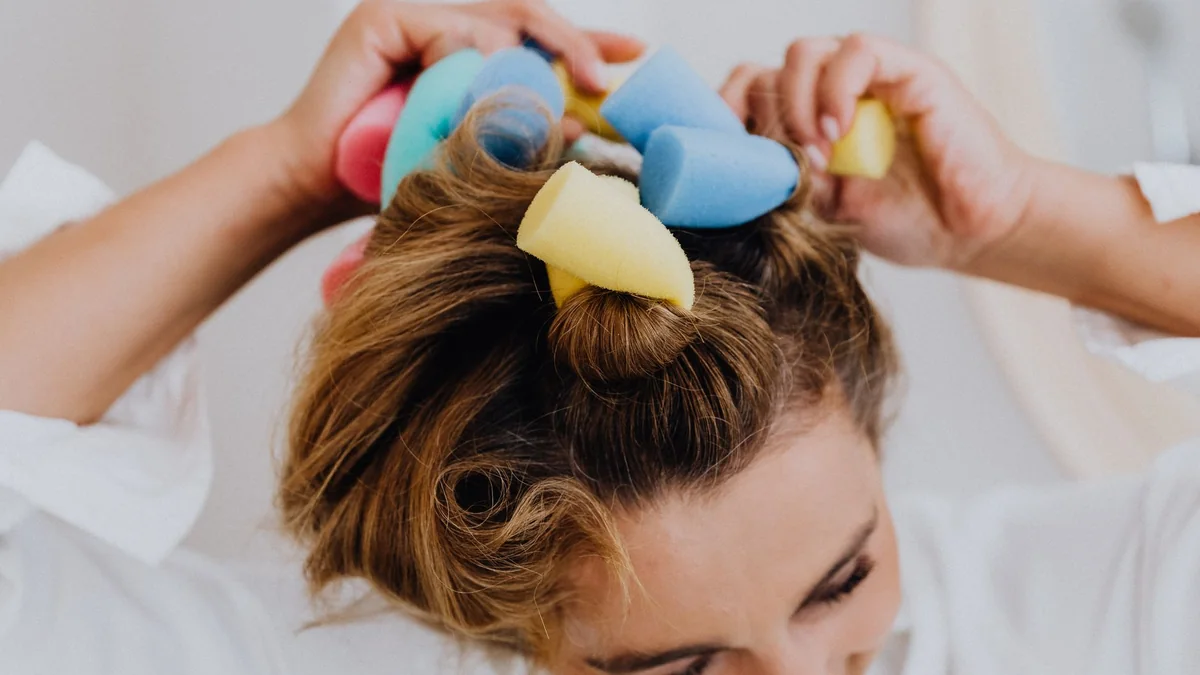
Heatless curls arrived on social media as a gimmick — a dressing-gown belt tied round someone’s head at midnight — and then quietly turned out to be the most sensible development in hairstyling for years. No thermal damage, no £300 tool, no burnt ends. Just hair, water and time.
They also fail for a lot of people, usually for one of two reasons: the hair was too wet, or the method was wrong for the hair. This guide covers how heatless setting actually works, which method gives which curl, exactly how damp your hair should be, what dermatologists say about sleeping on it, and how to make the result survive a British morning.
Why Heatless Curling Works At All
The shape of a hair strand is held partly by hydrogen bonds — weak links between the protein chains inside the hair. Water breaks them. As the hair dries, they re-form, and crucially they re-form in whatever shape the hair is drying in. That is the entire mechanism behind rollers, blow-dries, pin curls and heatless rods alike. A hot tool simply speeds up the drying; the bonds do the same job either way.
Two consequences follow, and between them they explain almost every heatless failure:
- Bone-dry hair will not hold a set. No water, no broken bonds, nothing to re-form. This is why wrapping dry hair for an hour does nothing.
- Soaking hair will not hold one either — it cannot dry inside a tight wrap overnight, and you wake up damp, dented and frizzy.
The answer is the narrow band in between: about 80 to 95 per cent dry. Damp to the touch, not cold or dripping. Rough-dry with a microfibre towel and, if you are impatient, five minutes on a cool blow-dryer setting.
It is also why humidity ruins a set. Water in the air breaks those same bonds, which is why a perfect 8am curl can be a limp wave by the time you reach the office in July.
The Bit the Videos Skip: Sleeping on Wet Hair
Heatless curling is a genuinely low-damage way to style. Sleeping with properly wet hair, however, is not, and dermatologists are fairly united about why.
- Wet hair is weaker. Water makes the strand more elastic and easier to stretch and snap — and a pillow provides hours of friction to do it with.
- Hygral fatigue. Repeatedly saturating and drying the cuticle makes it swell and contract, and over months that cycle weakens the hair. Nightly soaking sets are not a free ride.
- Your scalp is the real risk. A scalp kept damp for eight hours is a warm, moist environment that encourages yeast overgrowth, folliculitis and flaking. Recurrent dandruff in someone who sleeps on wet hair is rarely a coincidence.
- Your skin, too. A wet pillow transfers conditioner and styling product onto your face all night.
None of that is an argument against heatless curls — it is an argument for doing them at 80 to 95 per cent dry, on satin or silk, with the wrap firm but not tight. Done that way, a heatless set is dramatically kinder to hair than a weekly date with straighteners.
Which Heatless Method Gives Which Curl
| Method | Result | Best for | Effort |
|---|---|---|---|
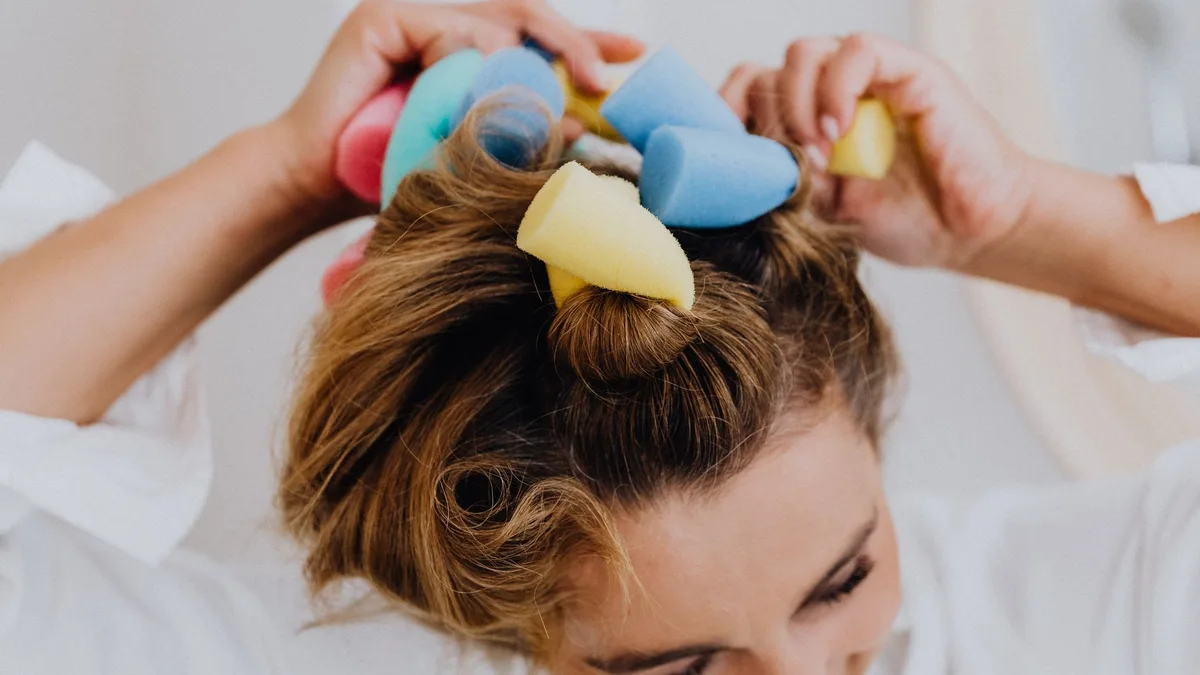
| Satin rod / dressing-gown belt wrap | Big, bouncy, blow-dry-style curls all round the head | Medium to long straight or wavy hair | 10 minutes, some practice |
| Flexi rods | Tight, defined corkscrews with real bounce | All lengths; the go-to for stretching and defining natural curls | 20+ minutes |
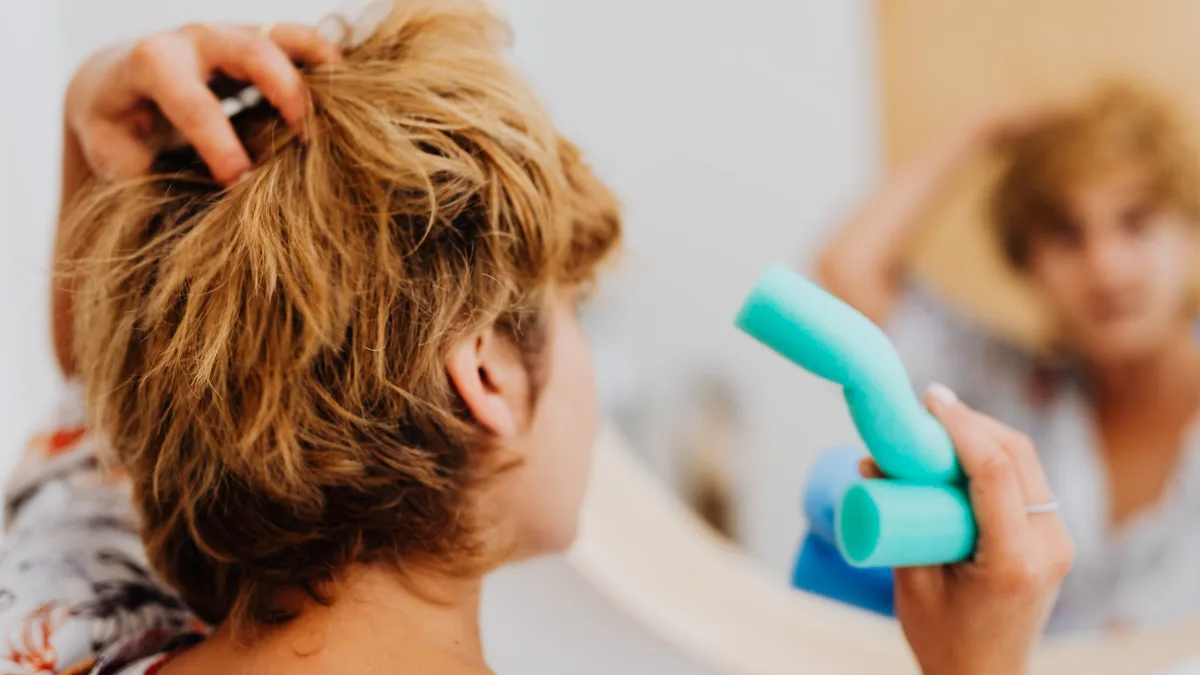
| Foam or satin rollers | Uniform, retro-set curls with volume at the root | Shorter hair and fringes | 15 minutes |
| Sock curls | Waves to curls, depending how tightly you wrap | Anyone testing the idea for free | 10 minutes |
| Two braids | Loose beachy waves, slight crimp | Long hair, minimum effort | 2 minutes |
| Four or more braids | Tighter, more uniform waves | Thick hair | 10 minutes |
| Rope twists | Soft spiral curls | Medium hair; comfortable to sleep on | 5 minutes |
| Bantu knots | Tight spirals with lots of volume | Coily and curly hair, and stretched sets | 20 minutes |
| Pin curls | Vintage, polished, close-to-the-head waves | Short to mid-length hair | 25 minutes |
The rule that governs all of them: the smaller the thing you wrap around, the tighter the curl. A fat satin rod gives you a blow-dry wave; a pencil-thin flexi rod gives you ringlets.
The Robe Wrap, Step by Step
This is the method that made heatless curls famous, and it works identically with a proper satin rod, a dressing-gown belt or two long socks knotted together.
- Dry to about 90 per cent and detangle thoroughly. Tangles become dents.
- Part down the middle so both sides get equal hair.
- Position the rod or belt on top of the head, roughly two inches back from the hairline, and hold it with a claw clip.
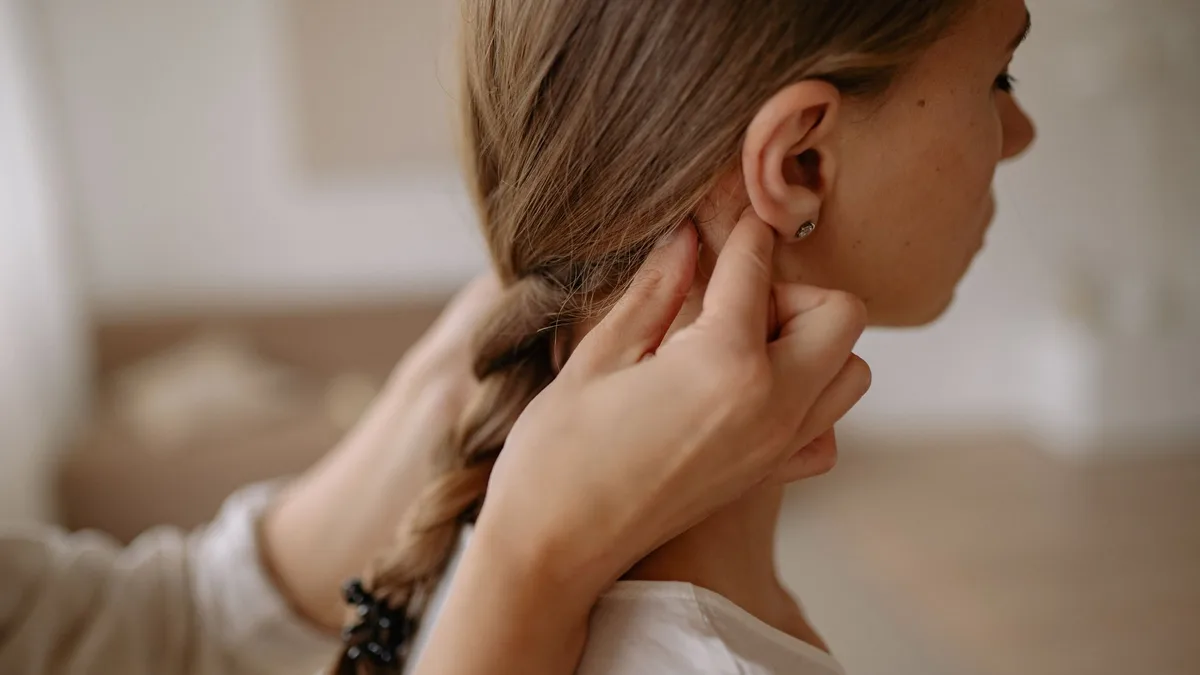
- Take a small face-framing section and wrap it away from your face — over the rod, then back under — at least twice.
- Add hair as you go, exactly as you would with a French braid, keeping the wrap close to your head so it does not droop.
- Continue to about ear level, then carry on wrapping the remaining length down the rod.
- Secure the ends with a satin or silk scrunchie — never an elastic band, which leaves a crease you cannot brush out.
- Repeat on the other side, and if you sleep on your side, tuck the two finished lengths around the back of your head.
In the morning, unwrap slowly, let the curls fall, then separate them with your fingers only. A brush will turn a set into a triangle in about four seconds.
What to Put on Your Hair First
A heatless set holds far better with a light styler underneath. Hydrogen bonds set the shape; a polymer keeps it there once humidity turns up.
- Straight or fine hair: a light curl enhancing mousse is the single best prep — enough hold to set, not enough weight to drop the curl.
- Thick or coarse hair: a curl cream or setting lotion, applied through the mid-lengths and ends.
- Naturally curly hair: leave-in plus a little cream, then the rods — you are stretching and evening out your pattern rather than creating one.
- Dry or damaged hair: do a treatment first. Our guide to a weekly hair mask covers what actually helps, and curl revival products are worth a look if heat damage is why you are here.
Skip heavy oils and butters before a set. They stop the hair drying, and hair that has not dried has not set.
How Long to Leave It In
| Time in | What you get |
|---|---|
| Under 2 hours | Barely a bend unless the hair is fine and the rods are small |
| 4 hours (minimum) | A real, soft wave — enough for an evening out |
| 6–8 hours / overnight | The full set, lasting a day or two |
| Beyond overnight | No extra benefit, and tight ties start denting |
The single most common cause of a failed set is unwrapping hair that is still damp underneath. Check a middle section before you commit — if it feels cool, it is still wet, and the curl will drop within the hour.
Morning Finishing — and Making It Last
- Unwrap, then wait a minute. Let the curls hang and cool before you touch anything.
- Separate with fingers, from the ends upward, only as much as you want volume.
- A drop of light oil or serum rubbed between the palms and skimmed over the surface kills the frizz halo without collapsing the shape.
- Flip and shake at the roots for lift, then set with a light mist of flexible hairspray — this is what defends a heatless set against damp British air.
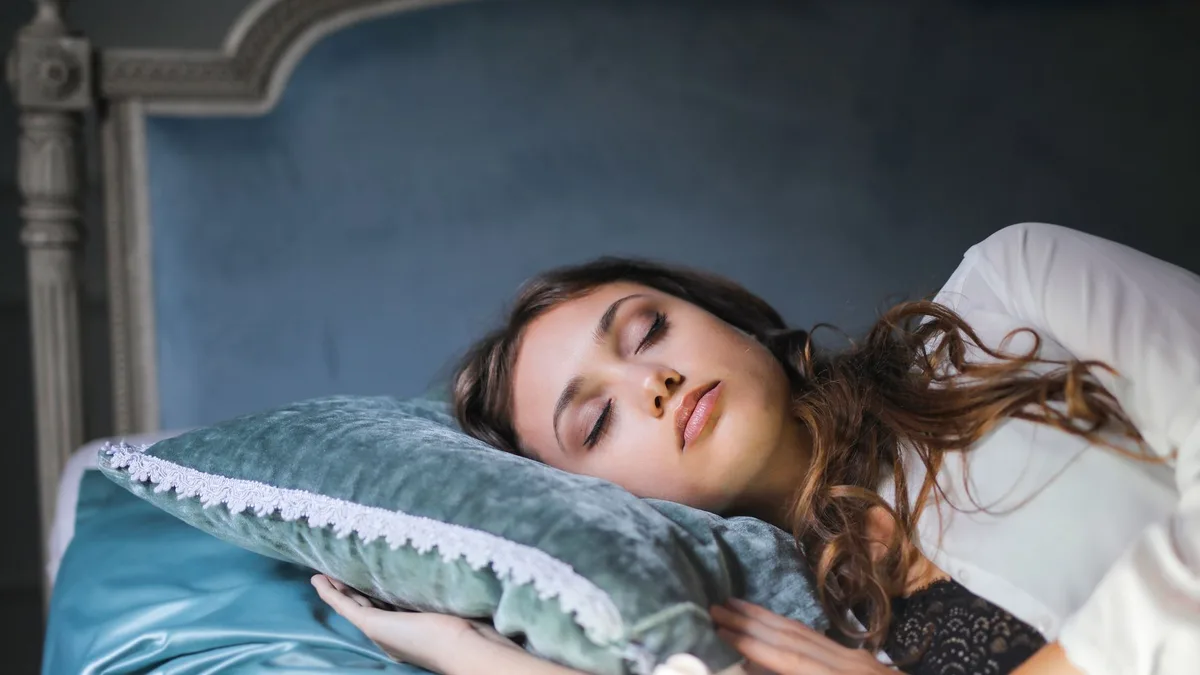
- Sleep on satin or silk, and on night two put the curls into a loose pineapple. Most sets will give you a second day and a decent third.
If your set consistently drops by lunchtime, the causes are almost always in this order: hair was too wet, the wrap was too loose, or there was no product underneath.
What to Buy — Free to £30
- Free: a dressing-gown belt, two long socks knotted together, or a scarf. Genuinely as good as the rods for the wrap method — it is the technique that matters.
- Around £8–£12: a satin heatless curling set — usually a foam rod covered in satin plus two scrunchies and a clip. Satin matters: it slides against the hair rather than dragging on it.
- Around £13–£18: the TikTok-standard rod sets, including XL versions for long hair. The leading one takes about ten minutes to fit, needs a minimum of four hours, and produces curls that last roughly two days.
- £20–£30: silk-covered rods from British brands — smoother than satin, kinder to fine hair, and worth it if you are setting your hair several nights a week.
- Also worth having: flexi rods (a set of ten costs very little and gives you a completely different curl size), plus satin scrunchies and a silk pillowcase.
Short hair should skip the long single rod — it is designed for mid to long lengths — and use rollers, flexi rods or pin curls instead.
Heatless Curls on Naturally Curly Hair
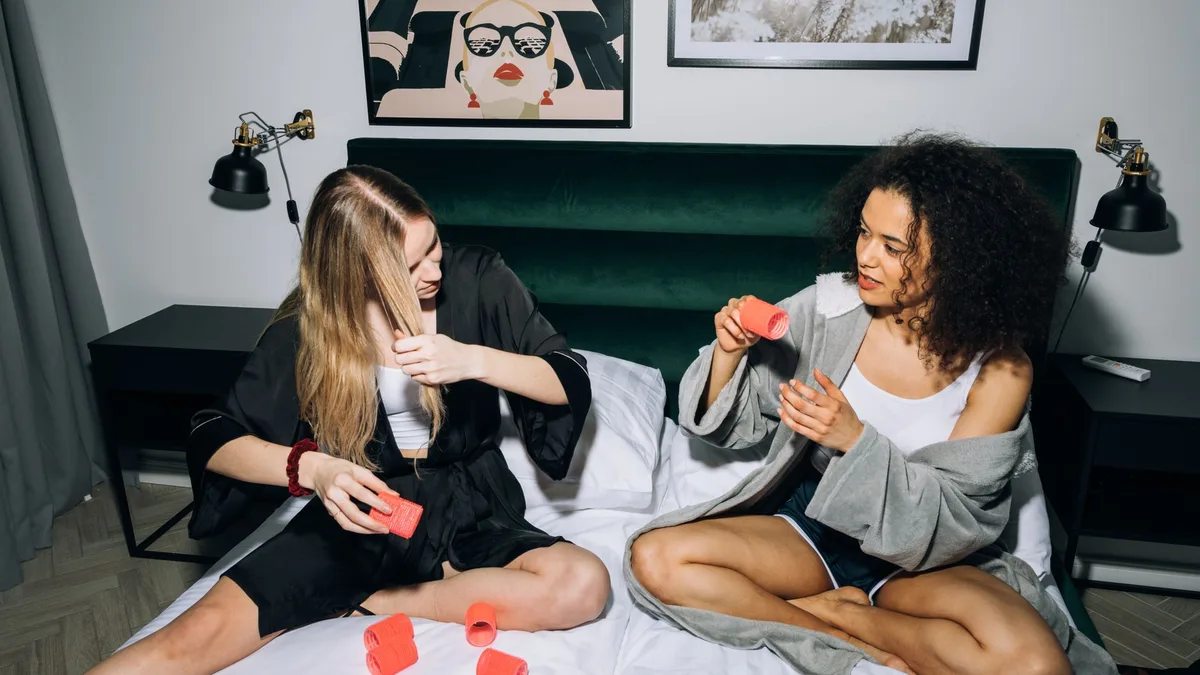
If you already have curls, you are using these tools for a different reason: not to create a pattern but to even one out, stretch shrinkage, or add polish for an occasion.
- Flexi rods on damp, product-loaded hair give uniform, elongated curls and remove the “one side is looser than the other” problem entirely.
- Bantu knots stretch and add spring at the same time, and are the friendliest overnight option for coils.
- Braid-outs and twist-outs — two to eight braids or twists on damp hair — give a stretched wave with far less shrinkage.
- Do not wrap coily hair bone dry: it needs slip and moisture first, or the unravelling causes breakage.
Common Mistakes
| Problem | Cause | Fix |
|---|---|---|
| Curl drops within an hour | Hair still damp when unwrapped | Dry to 90% first; leave in longer |
| Kinks and dents instead of curls | Elastic bands, or hair tangled before wrapping | Satin scrunchies only; detangle first |
| Frizzy set | Cotton pillowcase, or brushing it out | Silk or satin; fingers only |
| Curls at the ends, straight at the roots | Wrap started too far down the head | Begin about two inches from the hairline |
| Flat, greasy result | Heavy oils or too much cream before setting | Light mousse instead |
| Sore scalp in the morning | Wrap too tight | Firm but comfortable; you should be able to sleep on it |
Frequently Asked Questions
Do heatless curls work on short hair?
Yes, but not with the long headband rod. Use small flexi rods, foam rollers or pin curls, which grip shorter sections properly. Bobs take a set beautifully — often better than long hair, because there is less weight pulling the curl out.
Are heatless curls actually damage-free?
Free of heat damage, yes. They can still cause mechanical damage if you wrap tightly, use elastic bands, sleep on cotton or set soaking hair every night. Damp-not-wet, satin, and a firm-but-not-tight wrap keeps it genuinely gentle.
How do I stop my curls falling out by lunchtime?
Set on slightly damp hair with a light mousse, make sure it is fully dry before unwrapping, and mist with a flexible hairspray before you leave the house. Fine, silky hair holds a set worst — for that hair, smaller rods and a stronger prep product make the difference.
Can I use heatless rods on dry hair?
You can, and it gives a smoother, less frizzy but much softer result — closer to a bend than a curl. Mist lightly with water or a setting spray first and you get the best of both: the smoothness of dry setting with enough moisture for the bonds to re-form.
Are heatless curls better than a curling iron?
Kinder, cheaper and softer-looking; slower and less precise. An iron gives you a curl in twenty minutes and a specific shape on demand. A heatless set gives you volume and movement while you sleep, with no heat protectant spray required and nothing to unplug.
The Bottom Line
Heatless curls are not a trick — they are the oldest hairdressing principle there is, applied at bedtime. Dry your hair to damp, add a light styler, wrap around something smooth and reasonably fat, sleep on silk, and unwrap only when it is completely dry.
Do it with a £13 satin rod or your dressing-gown belt; the hair cannot tell the difference. And for everything that happens on wash day before the wrapping starts, our guide to curly hair products is the place to begin.