
You can spend forty minutes on your hair, walk out of the front door in Clapham, and arrive at work looking like you have been electrocuted. That is not a technique failure. It is physics — and it is why anti-frizz hair products are less a vanity purchase in this country than a piece of weather equipment.
The good news is that frizz is extremely well understood, and once you know which of the four kinds you actually have, the shopping list gets short and cheap. The bad news is that the product most people reach for first — oil — is the one least likely to help.

What Frizz Actually Is
A hair strand is wrapped in a cuticle: overlapping scales that lie flat when the hair is healthy. Flat scales reflect light evenly, which reads as shine, and let strands sit alongside each other neatly. When those scales lift — through damage, dryness, or simply because your hair type has them slightly raised anyway — three things happen. Light scatters, so hair looks dull. Strands catch on each other instead of lying together. And water gets in.
That last one is the whole story of humid-weather frizz. The shape of your hair is held partly by hydrogen bonds inside the strand. Water breaks them. When damp air reaches the cortex, the strand swells, the bonds re-form in new positions, and the hair puffs outwards and reverts towards its natural pattern. A blow-dry is temporary precisely because water can undo it.
Frizz generally becomes visible above about 60 per cent relative humidity. Which brings us to the British problem.
Why British Hair Frizzes Nearly All Year

| Region | Average relative humidity | Frizz risk |
|---|---|---|
| Scotland | ≈85% | Very high, year-round |
| North-west England | ≈82% | Very high |
| Coastal areas | ≈80% | High |
| London & the South East | ≈75% | High |
| Midlands & East England | ≈73% | Moderate to high |
Every one of those numbers sits above the frizz threshold. This is not a summer problem here; it is a Tuesday problem. Add drizzle, a packed Tube carriage and a coat collar, and you have friction and moisture at the same time.
Two practical consequences follow. First, humectant-heavy products — anything led by glycerin, honey or aloe — behave differently here than in a dry climate: above roughly 70 per cent humidity they pull water into the hair and make swelling worse. Second, a product that “blocks” humidity is doing real work in Britain in a way it simply would not in Madrid.
The Four Kinds of Frizz — Diagnose Before You Buy
Almost every wasted purchase comes from treating the wrong type. Find yours here.
| Type | What it looks like | Cause | What fixes it |
|---|---|---|---|
| 1. Halo frizz | A fuzzy layer on the surface and around the parting; the lengths look fine | Cuticle damage and breakage — usually heat, colour or rough handling | Repair treatments, a smoothing serum on the surface only, trims |
| 2. Swelling frizz | The whole head puffs up and the style drops within an hour of going outside | Humidity plus high porosity | A film-forming polymer spray or gel; cut the humectants |
| 3. Buildup frizz | Dull, fluffy, product sits on top and nothing absorbs | Low porosity plus residue — often hard water | Clarify or chelate; switch to lighter, water-based products |
| 4. Static flyaways | Individual hairs standing up, worst in winter and after a hat | Dry air and friction; damaged fibres hold more charge | Anti-static serum, a drop of oil, silk lining, humidifier |
Most people have two of these at once — halo frizz plus swelling frizz is the classic British combination — which is why the answer is usually a repair product and a barrier product, not one miracle bottle.
What Anti-Frizz Ingredients Actually Do
- Film-forming polymers (PVP, VP/VA copolymer, polyquaterniums, and the branded “humidity blocking” complexes). These form a flexible film around the strand — effectively a raincoat — and are the only category that genuinely keeps atmospheric water out. Some are heat-activated and set when you blow-dry with tension.
- Emollients and silicones (dimethicone, amodimethicone, argan and babassu oil). These smooth the surface, add slip and shine, and reduce the friction that makes strands catch. They are the finish, not the barrier.
- Humectants (glycerin, honey, aloe, propanediol). They pull water into the hair, which is exactly what you want in mild or dry conditions and exactly what you do not want on a muggy day.
- Proteins (hydrolysed wheat, rice, keratin). They temporarily patch a damaged cuticle, which reduces halo frizz at source. Overused on fine hair, they cause stiffness.
And the myth worth killing: hair oil is not an anti-humidity product. It creates a temporary water-repellent layer and adds shine, but it does not repair a lifted cuticle, and once the humidity overwhelms the barrier the frizz arrives anyway — now with grease. Oil is a finishing touch, not a defence.
The Product Line-Up That Actually Works
You need at most four things, and probably three.
- A gentle, residue-free cleanser. Harsh surfactants swell the shaft and leave the cuticle misaligned, which is frizz you created in the shower. Add a clarifying or chelating shampoo monthly — non-negotiable in hard-water Britain.
- A conditioner or weekly mask that does the repairing. Mid-lengths and ends, ten to twenty minutes for the mask, ideally with warmth. Our guide to a proper hair mask covers what to look for. If your frizz is chronic and the ends snap, this is where the real fix lives — see also hair smoothing treatment options for longer-term smoothing.
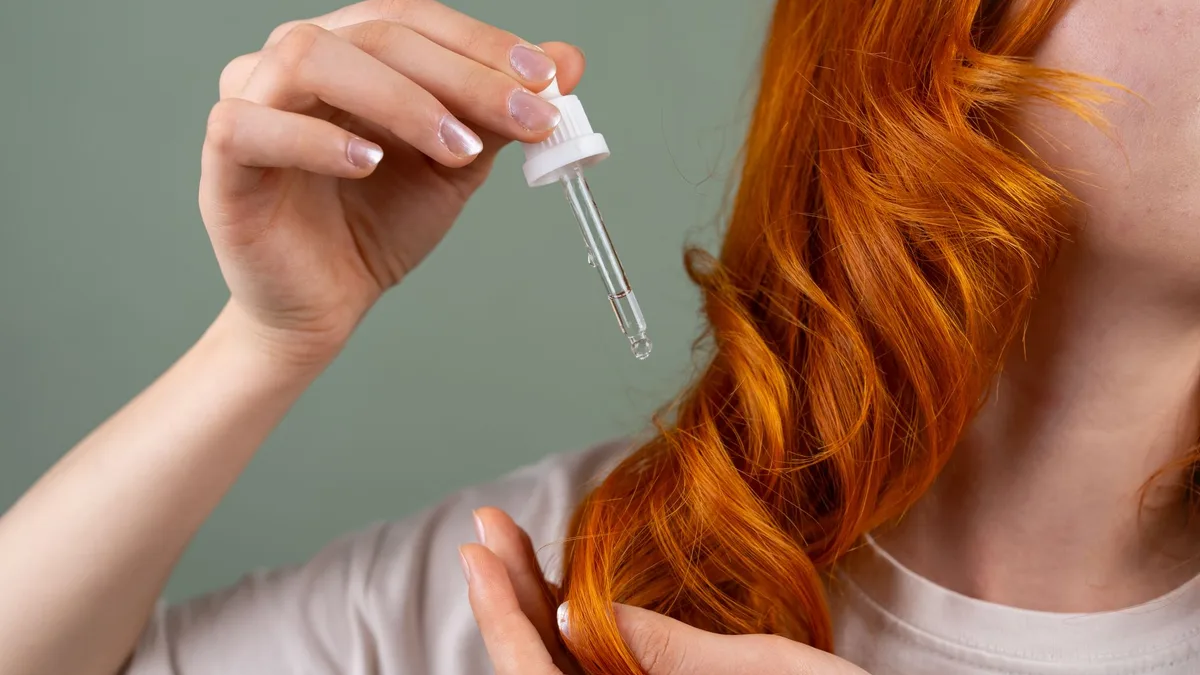
- A leave-in or smoothing cream on damp hair, mid-lengths to ends, concentrating on the outer layer where the weather actually hits.
- A humidity barrier as the final step — a polymer humidity-resistant hair spray for smooth styles, a frizz control gel for curls, or an anti-frizz serum if you want smoothing and barrier in one.
Order matters more than people think. The barrier goes on last. A polymer spray applied before a cream is simply cream-covered, and does nothing.
What to buy in the UK
- Salon ranges on the high street: Redken Frizz Dismiss (babassu oil, notably good on static), Wella EIMI Flowing Form balm before heat styling, Schwarzkopf Osis+ Tame Wild cream (claims up to seven days of smoothing and heat protection to 220°C) and its Magic shine serum for daily use.
- Curl-safe options: Matrix A Curl Can Dream, made without silicones or parabens, and polymer curl sprays that preserve the pattern instead of flattening it.
- Best value: lightweight polymer mists work out around 10p per application; premium 30-day treatment sprays around 60p per use. Judged that way, the expensive bottle is often the cheaper habit.
- Tested performance: in a 30-day UK trial on a daily London commute at 70–90 per cent humidity, polymer-based sprays held frizz at 1–3 out of 10 while the no-product control finished at 8 out of 10. Whatever you buy, buy a polymer.
The Habits That Cause Half of It
- Washing too often, too hot. Every wash swells and contracts the shaft; hot water strips the oils that keep the cuticle flat. Two or three times a week, in warm water, with a cool final rinse.
- Terry towelling. Wet hair stretches up to a third of its length, and rubbing it with a rough towel lifts every scale on the strand. Microfibre or an old T-shirt, squeezing only.
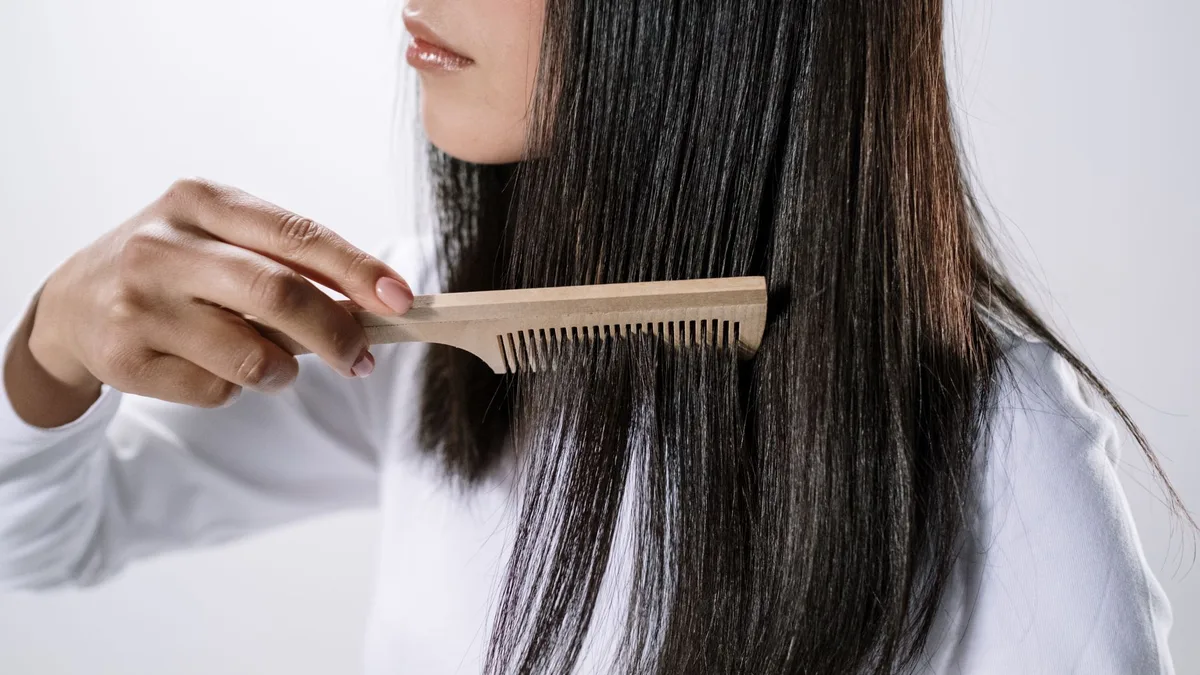
- Brushing dry. Detangle wet, in conditioner, with fingers and then a wide-tooth comb. Brushing dry curly or wavy hair separates every clump you own.
- Touching it all day. Every pass of a hand roughens the surface. Style it, then leave it.
- Going outside before it is dry. Damp hair meeting damp air is a guaranteed frizz; dry fully indoors, even if that means ten minutes with a diffuser on low.
- Cotton pillowcases. Eight hours of friction, undone by a satin or silk cover for about £10.
Frizz by Season
- Muggy summer and rainy autumn: humidity swelling. Cut the humectants right back, use a polymer barrier, and choose styles that work with your natural texture rather than fighting it — a blow-dry has less to lose if it was never dead straight.
- Winter: the opposite problem. Central heating dries the air, hair loses water, static builds through friction with hats and scarves. Here you want more moisture and oil, an anti-static serum, and silk-lined hats if you can find them.
- Spring: the worst of both in the same week. Keep both products in the cupboard and choose by the forecast, not the calendar.
Curly, Wavy and Straight Hair Need Different Answers

- Curly hair: do not chase smoothness — chase definition. A defined curl clump has far less exposed surface than a fluffed one, so a gel cast is genuinely the most effective anti-frizz tool you own. Our full curly hair products guide covers the routine.
- Wavy hair: the trickiest, because it frizzes if you leave it and goes flat if you smooth it. Light mousse plus a fine mist of polymer spray, scrunched, is the reliable combination.
- Straight hair: chronic frizz here almost always means cuticle damage rather than weather. Repair first, then a smoothing serum through the mid-lengths and a barrier spray over the top.
Troubleshooting
| Problem | Likely cause | Fix |
|---|---|---|
| Fine indoors, ruined the moment you step out | No humidity barrier | Add a polymer spray as the last step |
| Frizz plus greasy roots | Too much oil and product buildup | Clarify; move oil to the ends only |
| Worse since switching to a “hydrating” range | Humectant overload in high humidity | Swap to a lower-glycerin formula for the muggy months |
| Only the top layer frizzes | Halo frizz from damage or breakage | Repair treatments and a trim; serum on the surface |
| Flyaways in winter only | Static | Anti-static serum, silk lining, a drop of oil on the palms |
| Nothing absorbs, everything sits on top | Low porosity with hard-water buildup | Chelating shampoo, then lighter water-based products |
Frequently Asked Questions
Do anti-frizz products really work, or is it marketing?
The polymer-based ones work, measurably. In controlled UK testing across a month of humid commutes, they kept frizz scores at the low end of the scale while unprotected hair scored 8 out of 10. Smoothing serums and oils improve appearance but do not block humidity — different job, different product.
Are silicones bad for frizzy hair?
Not inherently. Water-soluble and lightweight silicones smooth the cuticle brilliantly. The problem is heavy, non-water-soluble ones building up until you need a harsh shampoo to remove them — and that shampoo is what damages the cuticle. Use them, but clarify monthly.
Will a keratin or smoothing treatment fix frizz permanently?
It will reduce it substantially for a few months, then fade with washing and heat. Treat it as a holiday from frizz rather than a cure, and keep the home routine going underneath it.
Why is my hair frizzy but also greasy?
Classic buildup frizz. The scalp is producing oil, the lengths are coated in product that will not rinse out, and nothing is absorbing. Clarify once, then rebuild with lighter products and less of them.
Does drinking more water help?
It helps your scalp and your new growth. It does nothing for the hair already on your head, which is not living tissue and cannot be hydrated from the inside. Topical moisture and a barrier are what change today’s frizz.
The Bottom Line
Frizz is water getting into a strand whose cuticle is not lying flat — so the fix is always two-part: smooth and repair the cuticle, then put something between it and the British weather. Work out which of the four frizz types you have, buy one polymer barrier and one repairing product, apply the barrier last, and stop touching your hair.
For the specific products in each category, we have separate guides to anti-frizz products for smooth, shiny hair, along with the serum, gel and spray options linked above.