An anti-frizz serum is the most reliably misused product in British bathrooms. It is either used far too generously — three pumps, rubbed in at the roots, resulting in hair that looks unwashed by eleven o’clock — or bought in the wrong weight entirely, blamed for “doing nothing”, and abandoned in the cupboard next to two other bottles of the same thing.
Used properly, it is the cheapest, fastest smoothing tool there is. This guide covers exactly what a serum does (and does not do), how much to use in pumps and peas, whether it goes on damp or dry hair, where it sits in your layering order, and how to pick the right weight for your hair rather than the prettiest bottle.

What a Serum Actually Does
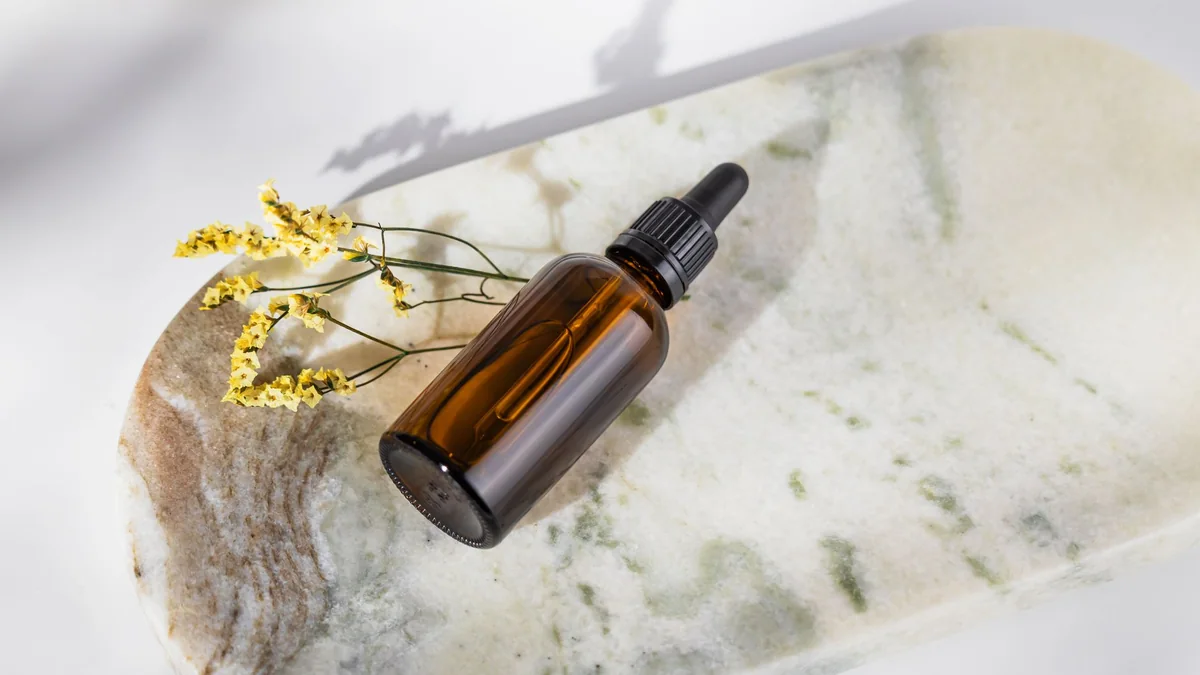
A serum is a surface product. It sits on the outside of the strand, flattens the cuticle scales, reduces the friction that makes hairs catch on each other, and reflects light evenly — which your eye reads as shine. It does not penetrate, feed or repair. That is not a criticism; it is the job description.
Three families do that job in different ways:
- Silicone-based (dimethicone, cyclomethicone, amodimethicone). The most effective smoothers on the market — instant slip, instant gloss, real friction reduction. The trade-off is buildup, and the heavier non-water-soluble types need a clarifying wash to remove.
- Oil-based (argan, jojoba, marula, coconut, moringa). Slower, softer, more nourishing-feeling; better suited to thick, coarse or very dry hair. Lighter on shine than silicone, heavier on the hand.
- Water-based and hybrid — lightweight emulsions, often carrying humidity-blocking polymers. The best option for fine hair that goes flat if you look at it wrongly.
And the limit worth stating early: if your frizz returns within two hours, no serum will solve it. That is either cuticle damage, which needs repair, or humidity, which needs a barrier — both covered in our guide to anti frizz hair products.
How Much: The Only Chart You Need
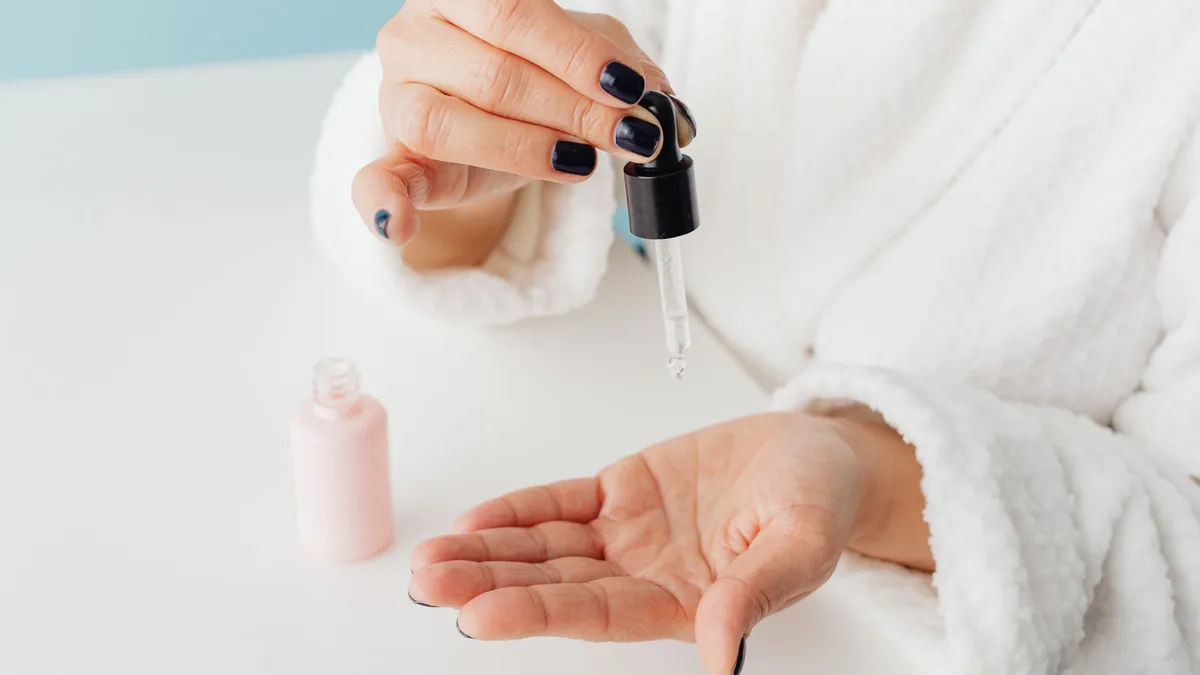
Over-application is the number one serum mistake, and the dose changes depending on whether the hair is damp or dry. On dry hair you need roughly half what you would use on damp.
| Hair | On damp hair (before styling) | On dry hair (finishing) |
|---|---|---|
| Short or fine | Half a pump | A grain of rice |
| Shoulder-length | One pump | Half a pea |
| Long | Two pumps | Half to one pea |
| Long and thick, or curly | Two to three pumps | One pea |
Then emulsify: rub it between your palms for five or six seconds until it almost disappears. Unemulsified serum lands in stripes, which is what creates those greasy separated pieces people mistake for “too rich a formula”.
Damp or Dry? They Are Two Different Jobs
| On damp hair | On dry hair | |
|---|---|---|
| Purpose | Prevention | Cosmetic finishing |
| What it does | Cuts friction while hair dries, slows water loss, keeps the cuticle flat as the style sets, buffers heat, adds slip for detangling | Flattens flyaways that have already lifted, adds instant gloss, revives day two and three, softens rough ends |
| When | After blotting, before the dryer | After styling, or any time |
If you only do one, do the damp application. It prevents frizz forming; the dry application only hides frizz that has already happened.
“Damp” has a specific meaning here: hair that does not drip when squeezed, feels cool and slightly springy — about 70 to 80 per cent dry, which is roughly thirty to sixty seconds of blotting with a microfibre towel. Soaking hair dilutes the serum straight off the strand; bone-dry hair takes it unevenly.
How to Apply It
- Blot with a microfibre towel or T-shirt until the dripping stops.
- Measure from the chart above — start at the lower end, you can always add.
- Emulsify across both palms and your fingers.
- Start at the ends, which are the oldest and most damaged hair, and work upward.
- Stop two to three inches below the scalp. Serum on roots is the entire cause of the “greasy by lunchtime” complaint.
- Comb through with a wide-tooth comb for even distribution.
- Then style. On dry hair later, press the serum onto the surface rather than stroking downward — stroking lifts the cuticle you are trying to flatten.
Where it sits in the layering order
The rule is water-based first, silicone-based last. In practice:
- Leave-in conditioner → serum → heat styling → (optional) humidity-resistant hair spray over the top.
- For curls: leave-in → cream → frizz control gel, with a trace of serum only on the ends once dry.
- If you use a dedicated heat protectant spray, that goes on first, then serum, then heat. Some serums protect against heat themselves — check the bottle rather than assuming.
Buy by Weight, Not by Brand
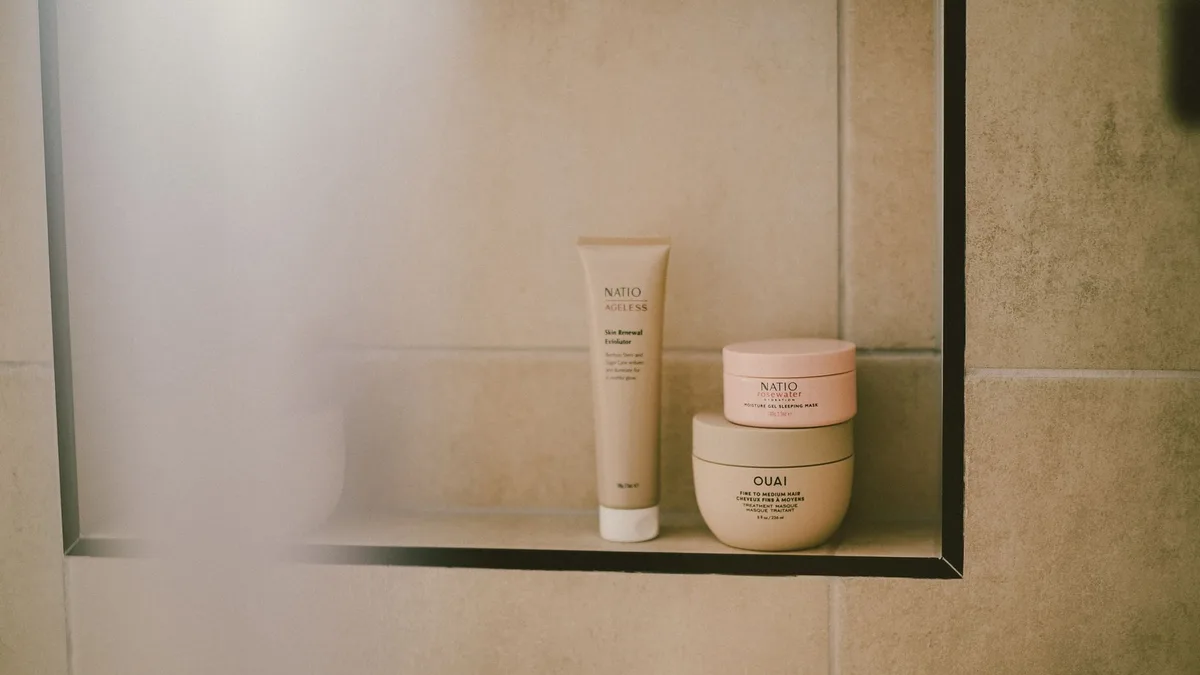
This is where most serum disappointment comes from. The best-selling serum on the British high street is sold in three different weights — lightweight for fine to medium hair, original for medium to thick, and extra strength for thick and coarse hair — all in the same 50ml bottle, all looking nearly identical on the shelf. Buy the extra strength for fine hair and it will be greasy. Buy the lightweight for coarse hair and it will do nothing. Both people conclude “serum doesn’t work for me”.
- Fine or oily hair: lightweight or water-based formulas, half a pump, ends only, once or twice a week.
- Medium hair: a standard silicone serum or a light argan-based one; one pump on damp hair per wash.
- Thick, coarse or high-porosity hair: extra-strength or oil-rich serums with argan, coconut and moringa; two to three pumps, and you can use it every wash.
- Damaged or chemically treated hair: a bond-smoothing leave-in cream does more than a pure serum — it smooths and treats at once.
- Before straightening: a protein-rich silk-type serum is the classic pre-iron product, and genuinely improves the finish.
On price: a £10 high-street serum and a £30 salon one do broadly the same smoothing job. What the expensive ones tend to buy is a heat-activated humidity-blocking polymer — a different technology rather than better oils. If your problem is gloss, buy cheap. If your problem is British weather, pay for the polymer.
The Silicone Question, Settled
Silicones are neither miracle nor poison.
- In their favour: nothing smooths a cuticle faster, they reduce breakage during combing by cutting friction, and they genuinely protect against heat.
- Against them: the heavier non-water-soluble ones accumulate, dull the hair, block moisture and eventually need a strong clarifying shampoo — which is itself hard on the cuticle. On the scalp they can cause dryness and flaking.
- The practical answer: use them, keep them off the scalp, and clarify every two to four weeks. Or choose a silicone-free serum built on rosehip, argan and coconut — modern ones deliver most of the gloss without the residue.
Curly hair following the curly girl method has an extra reason to go silicone-free: heavy silicones block the water uptake your curls rely on. Our curly hair products guide covers the alternatives.
Why Your Serum Stopped Working

| Symptom | Cause | Fix |
|---|---|---|
| Stringy, separated pieces | Too much product, or not emulsified | Halve the dose, rub palms properly, comb through |
| Greasy roots by lunchtime | Applied too close to the scalp | Ends first, stop 2–3 inches below the roots |
| Flat, lifeless hair | Fine hair using a thick-hair dose or weight | Half a pump of a lightweight formula, ends only |
| Frizz returns by afternoon | Serum only applied after styling | Move the main dose to damp hair before drying |
| Dull, coated, nothing absorbs | Silicone buildup | Clarifying wash, then restart with less |
| Worked for a year, then stopped | Cumulative buildup, or hair condition changed | Clarify; reassess the weight you need |
Getting More Out of It

- Warm it properly. Five or six seconds between the palms makes a small amount travel twice as far.
- Do the underneath, not the top. The layer that frizzes visibly is the outer one, but the tangling and roughness live underneath. A quick pass through the under-layer prevents more frizz than polishing the surface.
- Keep a second bottle small. A 30ml for the desk or handbag turns midday flyaways into a ten-second fix.
- Do not apply to unwashed hair in the hope of reviving it. Serum over yesterday’s oil and dust reads as dull and heavy, not glossy.
- Clarify on a schedule, not when things get bad — every two to four weeks, and more often in hard-water areas.
Frequently Asked Questions
Can I use anti-frizz serum every day?
On dry, coarse or damaged hair, yes — a small amount on the ends daily is fine. On fine or oily hair, once or twice a week is plenty. Either way, keep it off the scalp and clarify regularly.
Is serum the same as hair oil?
No. Oils are single-purpose emollients that mostly sit on the surface and add softness. Serums are formulated blends — often with silicones or polymers — designed specifically to flatten the cuticle and hold a smooth finish. Oils feel more natural; serums perform better against frizz.
Should I use serum before or after heat protectant?
Heat protectant first (it is usually water-based), serum second, heat last. If your serum states a heat-protection rating, it can do both jobs — but a spray plus a serum layer is the safer route above 180°C.
Will serum weigh down my curls?
A heavy silicone serum will, and it can also block the water your curls need to re-form on refresh days. Curls do better with a light oil or a silicone-free serum, applied only to the ends once the hair is completely dry and the cast has been scrunched out.
Does anti-frizz serum repair split ends?
It glues them shut temporarily and makes them far less visible. It does not mend them — nothing does. The only real fix is a trim, but a serum will buy you several weeks of looking as though you have already had one.
The Bottom Line

Buy the weight that matches your hair, not the label that matches your mood. Use half a pump to three pumps depending on length — half that on dry hair — emulsify it properly, start at the ends, and stay well clear of your roots.
Apply it to damp hair before you dry, and keep a little for flyaways afterwards. Do that and a £10 bottle will out-perform a £30 one used carelessly — and if frizz still wins by mid-afternoon, the problem is not your serum, it is the humidity, and you need a barrier over the top of it.