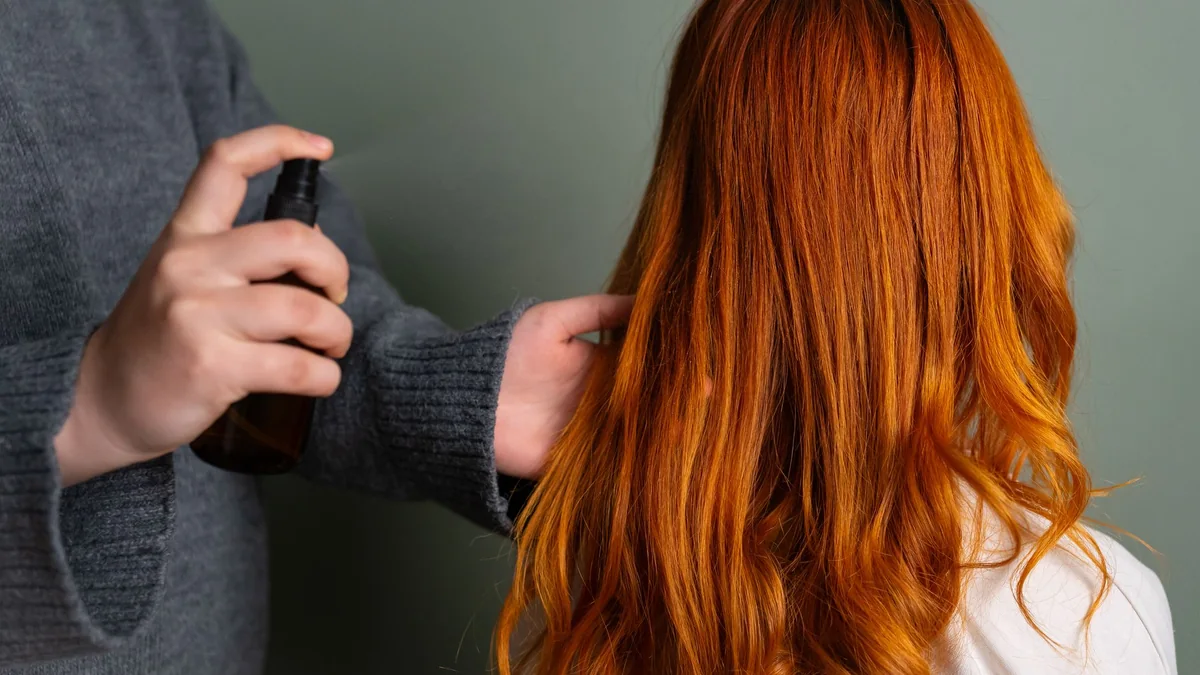
Britain buys a remarkable amount of humidity-resistant hair spray — around £870,000 worth a year on Amazon UK alone, from about half a million searches — and a striking share of it is bought by people who then use it at completely the wrong moment. The single biggest reason anti-humidity products “don’t work” is not the formula. It is that there are two entirely different products with almost identical marketing, and most people own the wrong one.
The Two Products People Confuse
| Pre-styling humidity blocker | Finishing hairspray | |
|---|---|---|
| Applied to | Damp, towel-dried hair | Completely dry, finished hair |
| Activated by | Blow-drying, usually with tension | Evaporation — it sets where it lands |
| What it does | Bonds a water-repellent film to the strand for several washes | Holds the shape you have just created and seals the surface for the day |
| Feels like | Nothing — no hold, no stiffness | Hold, from flexible to firm |
| Fails when | Used on dry hair, or without heat | Used on damp hair — the film cannot form and it traps moisture |
The UK’s best-selling “anti-humidity spray” is actually a pre-styling treatment. If you have been spritzing it over a finished style expecting hold, it has been doing very little. Conversely, a finishing spray applied to damp hair will lock dampness in and give you frizz by lunchtime.
In genuinely humid conditions — which in this country means most of the year — the professional answer is to use both: a barrier on damp hair, then a seal over the dry finished style.
How Hairspray Actually Works
A hairspray is film-forming polymer dissolved in a solvent and pushed out by a propellant. The solvent and propellant evaporate within seconds, leaving a fine polymer net across and between the strands. That net holds hair in position and — if the polymer is the right kind — repels water.
Not every polymer resists water. This is the single most useful thing you can learn about the category: turn the can round and look for these on the ingredients list.
- VA/Crotonates/Vinyl Neodecanoate Copolymer
- Octylacrylamide/Acrylates/Butylaminoethyl Methacrylate Copolymer
- Other acrylates copolymers and polyurethanes described as “moisture-resistant film formers”
Those are the industry-standard humidity-resistant films. A spray whose front label says “anti-humidity” but whose polymer is a basic PVP will hold your style perfectly well on a dry day and surrender on a wet one.
Hold Levels, Honestly
UK cans are usually numbered 1 to 5. It is a marketing scale, not a standard — one brand’s 3 is another’s 4 — but the direction of travel is consistent. Hold level is really film thickness, and thicker films resist both movement and humidity.
| Level | What it does | Use it for |
|---|---|---|
| 1–2 — flexible | Movement, reworkable with fingers, brushes out easily | Everyday, loose waves, fine hair, second-day refreshing |
| 3 — medium | Holds a blow-dry all day, still touchable | The default for most people, most days |
| 4 — firm | Locks a shape for hours, some stiffness | Long days, weddings, wind, sleek styles |
| 5 — extra firm / freeze | Immovable; brushing it out takes effort | Updos, formal sets, stage and photography |
Match it to your hair, not your ambition. Fine hair wants levels 1 to 3, sprayed at the roots for lift rather than down the lengths, which flattens it and can leave a dull grey cast. Thick or coarse hair can take 4 and 5 without looking crisp. Dry, coloured or damaged hair should look for low-alcohol or alcohol-free formulas at any level.
How to Apply It
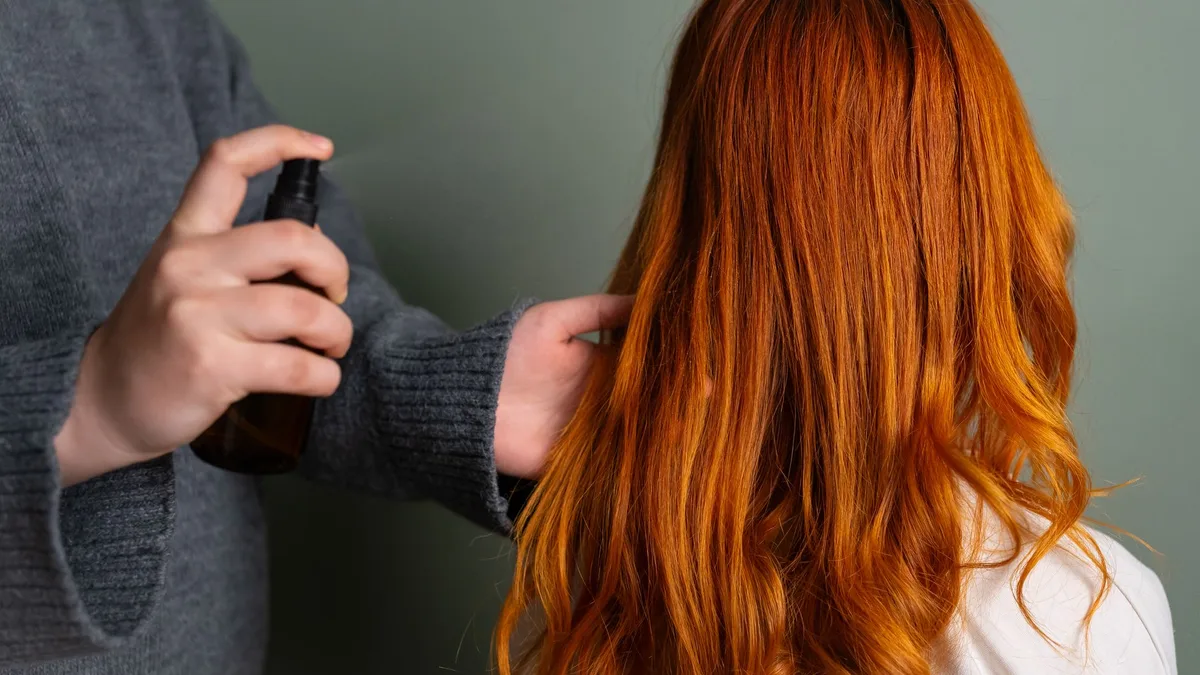
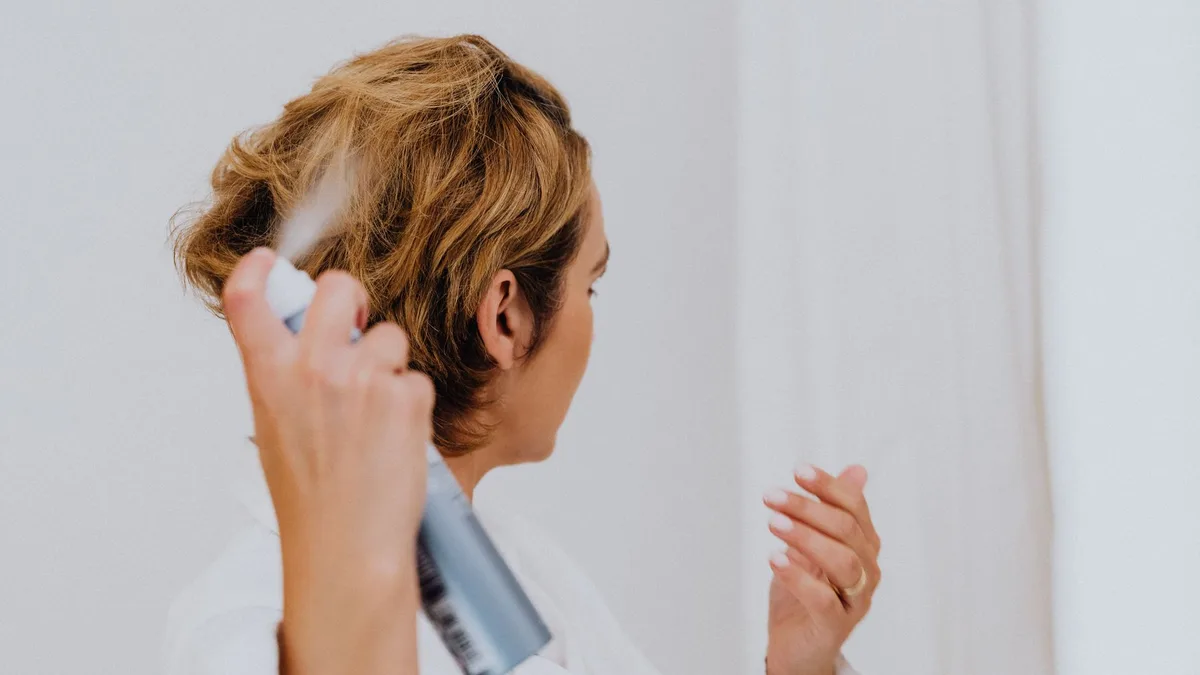
- Dry hair only. Completely dry. Spray on damp hair and the film cannot form; you have sealed water in rather than out.
- Hold the can 25 to 30cm away. Closer produces wet patches, stickiness and a visible film. This is the most common technique error.
- Short bursts, not a continuous soak. Two or three light passes beat one heavy one.
- Let each layer dry — ten or fifteen seconds — before the next. Layering is how you build hold without stiffness.
- Aim where the frizz starts: the hairline, the crown and the parting, not the ends.
- For an updo, spray under and around it, not just over the top. The pins and the underside are what actually collapse.
- Do not brush immediately. Brushing a fresh film snaps it into visible flakes and flyaways. If you must adjust, use fingers.
In extreme conditions, plan to reapply lightly every four to six hours rather than drowning the style once in the morning. A travel size in the bag is the difference between a style that survives a long day and one that does not.
The Two-Layer Strategy for British Weather

Above roughly 75 per cent humidity — which is the average for London, and lower than the average for Scotland, the North West and anywhere coastal — a single product rarely holds a smooth style all day. The reliable routine is:
- Internal barrier, damp hair. A pre-styling humidity blocker or a smoothing cream, distributed through towel-dried hair, then blow-dried with tension so the polymer sets.
- Optional smoothing layer. A little anti frizz serum through the mid-lengths and ends before you dry.
- External seal, dry hair. A medium or firm humidity-resistant spray over the finished style, layered lightly.
For curly hair, swap step three: a frizz control gel cast does the sealing job better than any spray, and a light finishing mist is only needed on the surface once the cast is broken.
What to Buy in the UK
The average UK buyer spends about £15 on one of these, with the market running from around £5 to £29. Sensible options at each level:
- £5–£8, supermarket and Boots: Garnier Fructis Style anti-humidity sprays (heat-activated polymer, flexible hold, claims 24-hour performance at high humidity), John Frieda Frizz Ease Moisture Barrier firm hold, OGX humidity-blocking sprays. Genuinely competent and by far the best value per gram.
- £12–£18, mid-range: Moroccanoil Luminous for flexible hold with shine, Amika’s shield spray, and salon lines such as Wella EIMI and Schwarzkopf Osis+ for firmer holds.
- £24–£29, premium: Color Wow Dream Coat — the category leader in the UK by a very long way — and Oribe’s Impermeable. Note that the Color Wow product is a pre-styling treatment activated by blow-drying, not a finishing spray.
- For curls: polymer curl sprays that preserve the pattern rather than flatten it, or a curl-specific finishing mist. In 30-day UK testing on a daily London commute, polymer sprays held frizz scores at 1–3 out of 10, against 8 out of 10 with no product at all.
- Cost per use is the fairer measure: light mists work out around 10p an application, premium 30-day treatments around 60p.
One quiet data point worth knowing: UK demand for these sprays peaks in July, November and December. The summer spike is obvious; the winter one is party season colliding with drizzle, which is exactly when a firm hold and a water-repellent film earn their money.
Troubleshooting

| Problem | Cause | Fix |
|---|---|---|
| Sticky or crispy patches | Sprayed too close, or one heavy coat | 25–30cm, short bursts, layer and dry |
| White flakes | Brushing straight after spraying, or layering over an incompatible product | Wait; use fingers; simplify the layers |
| Style drops anyway | Ordinary hold polymer with no humidity resistance | Check for a moisture-resistant copolymer on the label |
| Hair looks dull and flat | Too much spray on fine hair, applied down the lengths | Roots only, flexible hold, half the amount |
| Frizz reappears within an hour | Applied to hair that was not fully dry | Dry completely first — this is non-negotiable |
| Buildup and dryness over weeks | High-alcohol formula, daily use | Clarify monthly; switch to a low-alcohol spray |
Frequently Asked Questions

Can I use hairspray on wet hair?
Not a finishing spray, no. The polymer needs to dry into a film, and applying it to damp hair traps water underneath. Pre-styling humidity blockers are the exception — they are specifically designed for damp hair and activated by the dryer.
Does anti-humidity spray damage hair?
The polymers themselves do not. The alcohol carrier can be drying with daily use on already-dry or coloured hair, and the film builds up over time. Choose lower-alcohol formulas, and clarify roughly once a month.
How long does the protection last?
A finishing spray lasts one day, or four to six hours in real humidity before it wants a top-up. Pre-styling treatments last through several shampoos — typically three to four washes — because the film bonds during blow-drying rather than sitting on the surface.
Is hairspray or serum better for frizz?
Different jobs. Serum smooths the surface and adds shine; spray builds a water-resistant film and holds the shape. If you can only have one and you live in Britain, have the spray — and if you can have two, put the serum on damp hair and the spray over the dry finish.
Will it work on curly hair?
Yes, but choose a curl-specific one. Firm, sleek-finish sprays flatten curl patterns; curl-preserving polymer mists lock definition without crunch. On curls, a gel cast still outperforms any spray as a humidity barrier.
The Bottom Line
Work out whether you need a pre-styling barrier or a finishing seal — and in British weather, accept that the honest answer is usually both. Check the back of the can for a genuine moisture-resistant copolymer rather than trusting the front. Spray dry hair from 25 to 30cm in light layers, aim at the hairline and crown, and resist brushing afterwards.
Do that and a £6 supermarket can will out-perform a £29 bottle used at the wrong moment. For the wider strategy, see our guides to anti frizz hair products and, if you want a longer-lasting fix, hair smoothing treatment.