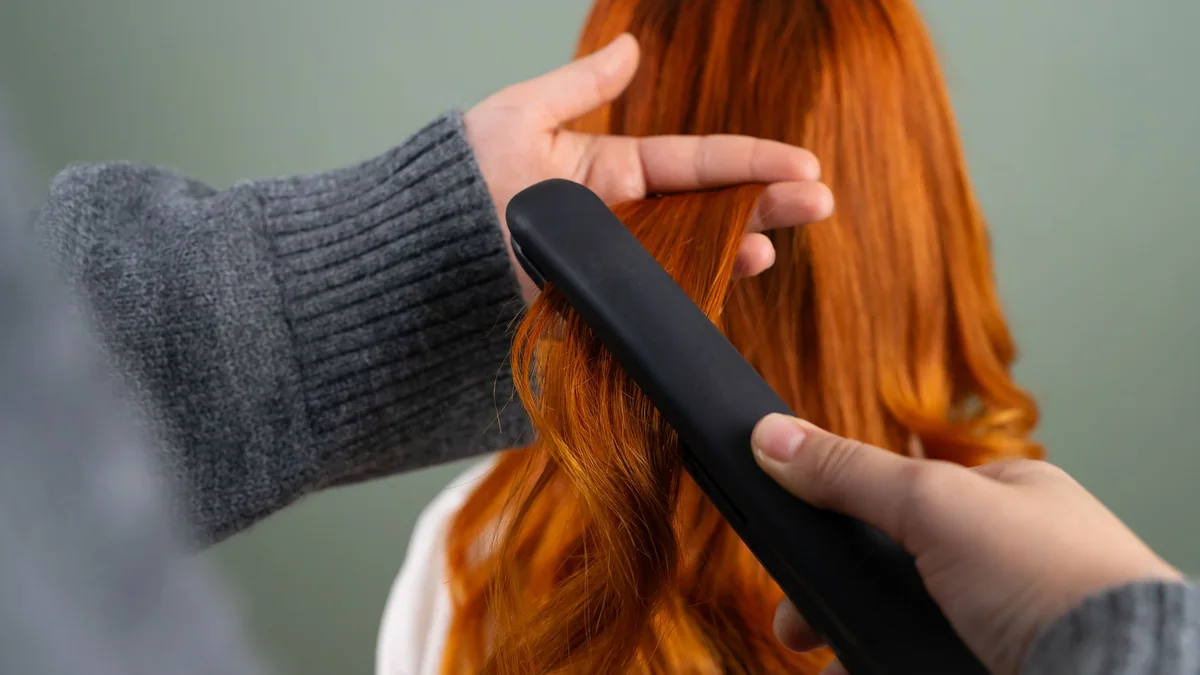
A hair smoothing treatment is the closest thing the industry has to a genuine shortcut: three hours in a salon chair and, for the next few months, your hair dries smooth on its own. It is also the one category where the marketing names are almost meaningless, the prices vary by hundreds of pounds for the same service, and the chemistry question actually matters.
This guide sorts the four main treatments out, gives you the real UK prices, and — most importantly — tells you exactly what to ask before you sit down.
The Four Treatments, Side by Side
| Keratin smoothing | Brazilian blowout | Nanoplasty / “hair botox” | Japanese straightening | |
|---|---|---|---|---|
| What it does | Penetrates the cortex and partially relaxes the bonds that create curl | Coats the shaft with keratin, amino acids and a bonding agent | Amino-acid and botanical repair that smooths without straightening | Permanently restructures the hair to straight |
| Curl change | Loosens roughly one stage on the curl chart | Keeps most of the pattern, kills the frizz | None — curls stay curly, just shinier | Total; the curl is gone until it grows out |
| Lasts | 3–5 months | 10–12 weeks | 2–4 months | 6–12 months (permanent on treated hair) |
| Sealing heat | About 230°C | About 230°C | About 190°C | Very high, plus a neutraliser |
| Downtime | 72 hours, no washing, ties or clips | Often none — can wash the same day | 24–72 hours depending on formula | 48 hours, absolutely no moisture |
| Typical UK price | £180–£450 | £280–£550+ | £150–£350 | £300–£600+ |
Two things fall out of that table. First, “keratin treatment” is a category, not a product — a salon offering one could be doing any of several very different things. Second, if your goal is frizz control without losing your curl, keratin is the wrong choice and nanoplasty or a blowout-style service is the right one.
Which One for Your Hair
- Straight or barely wavy hair with frizz: a smoothing mask or nanoplasty. A full keratin service is overkill and will flatten hair that has nothing to lose.
- Wavy, 2B–3A, thick or coarse: the sweet spot for keratin smoothing. Expect 40 to 60 per cent less frizz and roughly half the blow-dry time.
- Curly, 3B and tighter: proceed carefully. Keratin will loosen your pattern whether you wanted that or not, and it is not reversible. Nanoplasty gives smoothness with the curl intact.
- Fine hair: nanoplasty. Keratin systems add weight that fine hair carries badly.
- Bleached, highlighted or colour-corrected: nanoplasty or a botox-style treatment, and pre-treat with a bond builder first. Japanese straightening is genuinely unsuitable for bleached hair.
- Damaged and breaking: repair before you smooth. Our guide to curl revival products covers where to start, and a weekly hair mask does more for compromised hair than any salon smoothing service.
The Formaldehyde Question — Read This Part
Smoothing chemistry works by using heat to lock a solution into the hair. Traditionally, that solution used formaldehyde or a compound that releases it when heated. The UK legal limit for free formaldehyde in a leave-on product is 0.2 per cent — but the label is not always the whole story.
- Names to look for on the data sheet: methylene glycol, formalin, and DMDM hydantoin. All three can release formaldehyde when heated towards 230°C — which is exactly what a flat iron does during the sealing step.
- “Formaldehyde-free” can be technically true and practically misleading if the formula contains one of the above under a different name.
- Genuinely gentler actives to ask about: glyoxylic acid, carbocysteine and amino acid complexes. They produce softer results that last around three months rather than five — a trade most people are happy to make.
- Ventilation matters as much as the formula. If the salon’s smoothing area has no extraction and the stylist is not masked, that tells you something about the product.
Three questions to ask before you book
- “Can I see the Safety Data Sheet for the product you’ll use?” Every professional salon holds one. Hesitation is your answer.
- “Which category is this — a conditioning mask, a semi-permanent smoothing service, or a full blowout?” If they cannot say, do not book.
- “Can I have an in-person consultation and a strand test first?” Not optional on bleached, coloured or previously chemically treated hair.
Who should not have one
- Anyone pregnant or breastfeeding.
- Anyone with an active scalp condition — seborrhoeic dermatitis, eczema, psoriasis — or a recent scalp injury.
- Anyone whose asthma is triggered by chemical fumes.
- Hair that is bleached and already snapping. Smooth it and you will simply have smooth broken hair.
- Anyone who has had thioglycolate straightening in the last twelve months.
What It Costs in the UK
| Service | Price | Lasts |
|---|---|---|
| In-salon conditioning or smoothing mask | £45–£120 | 2–4 weeks |
| Semi-permanent smoothing, short hair | £180–£280 | 3–5 months |
| Semi-permanent smoothing, mid-length | £280–£400 | 3–5 months |
| Semi-permanent smoothing, long or thick | £400–£550 | 3–5 months |
| Brazilian blowout | £280–£550+ | 10–12 weeks |
Independent salons outside London commonly charge £185 to £265 including aftercare products, which is the best value in the category. In central London, anything advertised under £150 should give you pause — at that price the maths usually points to older chemistry, a rushed application, or both.
Aftercare: Where Most Treatments Are Wasted
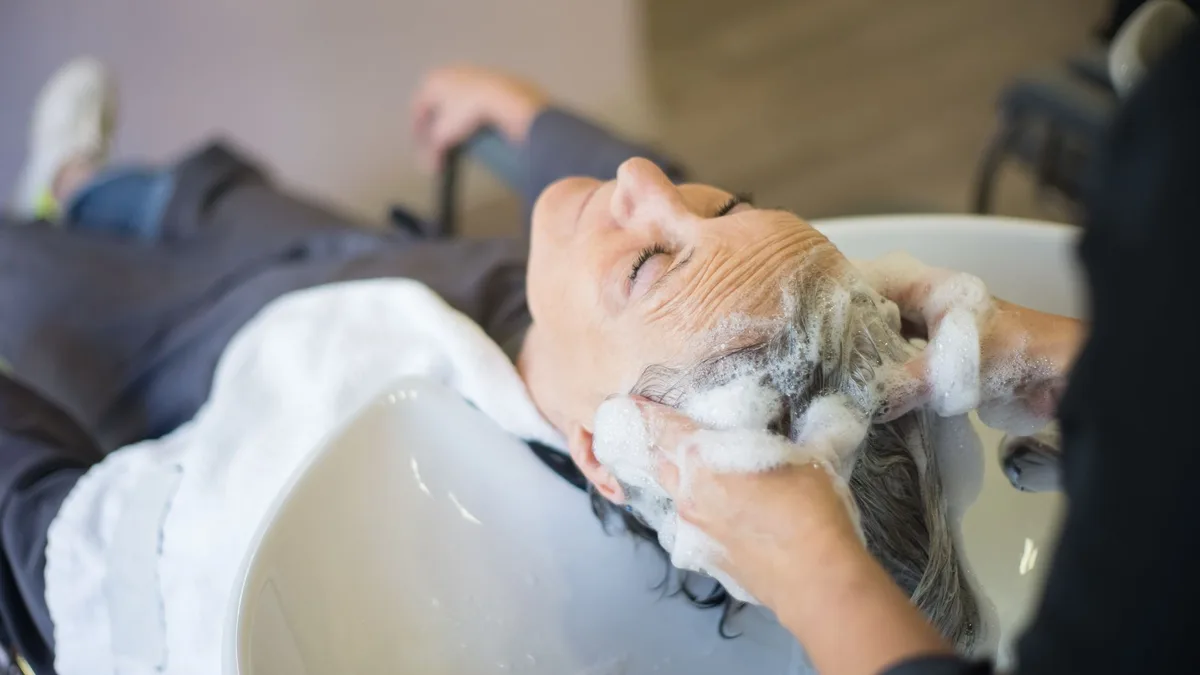
- The first 72 hours are the whole ballgame for keratin-type services: no washing, no ponytails, no clips, no tucking behind your ears, no sunglasses pushed up on your head. A single kink set in that window can stay for weeks. Blowout-style and botox-style services are more forgiving — many allow same-day washing.
- Sulphate-free and sodium-chloride-free shampoo. This is the detail almost everyone misses: salt strips the treatment as effectively as sulphates do, and it appears in plenty of “gentle” shampoos.
- Wash two or three times a week at most. Every wash is a small withdrawal from the account.
- Chlorine and salt water are the enemies. Avoid pools and the sea for two to four weeks, and wet your hair with fresh water and add conditioner before swimming afterwards.
- UV protection genuinely extends results — a leave-in with UV filters, or a hat on holiday.
- Keep using heat protection. The treatment does not make your hair heatproof; our guide to heat protectant spray still applies.
Done properly, aftercare roughly doubles the life of the treatment — the difference between rebooking every three months and every five.
The At-Home Alternative
If you are pregnant, nervous about the chemistry, unwilling to lose curl, or simply not spending £400, you can get a surprising proportion of the effect at home for under £60:
- A bond builder weekly if the hair is damaged, plus a protein-and-moisture mask on alternate weeks.
- A pre-styling humidity blocker on damp hair, activated by blow-drying with tension — this is the single closest thing to a salon smoothing result in a bottle, and it lasts three to four washes. See our guide to humidity resistant hair spray.
- A smoothing anti frizz serum on the mid-lengths and ends before drying.
- Better technique: rough-dry to 80 per cent, then section and dry downward with tension and a nozzle on the dryer. Most of a salon blow-dry’s smoothness comes from tension and airflow direction, not the products.
It will not give you five months of hands-off hair. It will give you most of the frizz control, on your own terms, with nothing to declare.
Frequently Asked Questions

Will a keratin treatment straighten my curls?
It will loosen them, typically by about one stage on the curl chart, and you cannot control which sections. If you want your curls intact, ask specifically for a nanoplasty or botox-style treatment instead — those smooth without relaxing the pattern.
Is hair botox actually botox?
No — no botulinum toxin, no injections, and nothing to do with the cosmetic procedure. It is a deep protein and amino-acid mask that fills gaps in the cuticle. The name is pure marketing, but the treatment itself is the gentlest of the group.
Can I colour my hair before or after?
Colour first, then smooth — ideally with a week or two in between, and always with your colourist’s input. After a smoothing service, wait at least two weeks before any colour, and expect the treatment to slightly alter how your hair takes it.
How obvious is the regrowth?
Keratin, blowout and nanoplasty all fade gradually, so there is no visible line — the hair simply behaves less well over time. Japanese straightening is the exception: it produces a hard demarcation between treated and new growth, which is one reason it demands more commitment.
Is a smoothing treatment damaging?
It is a chemical service using high heat, so it is not neutral — but done on healthy hair, with modern chemistry and correct application, most people find their hair in better daily condition afterwards simply because they stop attacking it with straighteners. On already-damaged hair, it accelerates the problem.
The Bottom Line
Decide first whether you want frizz gone or curl gone, because that single answer picks your treatment. Then ask for the Safety Data Sheet, insist on a consultation, budget realistically for your hair length, and take the 72-hour aftercare seriously — it is worth more than the extra £100 you might spend on a fancier brand.
And if none of it appeals, the home stack in our anti frizz hair products guide will get you most of the way there for a fraction of the price.