The best verified figure for the UK influencer market is £966 million of creator partnership revenue in 2025, up 20.1% from £804m in 2024, with a forecast of £1.217 billion for 2026, according to the first study of its kind by IAB UK and the Institute for Advertising and Media Statistics (IRM) (Marketing Week, 15 September 2026). There is no published figure for London alone. What can be counted is London’s share of the agency businesses that influencer work sits inside: in March 2026, ONS counted 6,060 advertising agency enterprises in London, about 32% of the UK’s 18,985 (ONS UK Business Counts via Nomis). Our earlier version of this page gave year-by-year London market sizes from $0.2 billion to $5.0 billion with no source, quoted a named expert who could not be identified, and has been rebuilt. This guide from The London Report sets out what is verified.
Key takeaways
- UK market: creator partnerships earned £966m in 2025 and are forecast to reach £1.217bn in 2026, growing about twice as fast as the rest of digital advertising (Marketing Week, 15 September 2026).
- London: there is no published London influencer market size. London has 6,060 of the UK’s 18,985 advertising agency enterprises, 32% (ONS UK Business Counts via Nomis).
- Outsourcing: a Kolsquare survey found 30% of UK brands fully outsource influencer marketing, against 23% across Europe, and 93% of UK brands and agencies expect to raise spending (Marketing Week, 15 September 2026). It is a vendor survey, so treat it as indicative.
- Rules are tightening: a new ASA, CAP and CMA guide is based on the Digital Markets, Competition and Consumers Act 2024, and the CMA can now fine directly (Lewis Silkin, 23 October 2026).
- Removed: our earlier London market-size table, an unnamed expert quote and unsourced TikTok and global figures.
How big is the UK influencer market?
IAB UK and IRM published the first study measuring the UK creator partnerships market on 15 September 2026. It found creator partnership revenue of £804m in 2024 and £966m in 2025, a rise of 20.1%, more than twice the 9.6% growth in digital advertising excluding creator partnerships. The £966m is around 2.4% of the £40.5bn UK digital advertising market in 2025. The study does not include paid amplification of creator campaigns, which interviewees said could be two to three times creator partnership revenue (Marketing Week, 15 September 2026; IAB UK).
| Measure | Figure | Period | Source |
|---|---|---|---|
| UK creator partnership revenue | £804m | 2024 | Marketing Week, 15 September 2026 |
| UK creator partnership revenue | £966m (+20.1%) | 2025 | Marketing Week, 15 September 2026 |
| UK creator partnership revenue, forecast | £1.217bn (+26%) | 2026 | Marketing Week, 15 September 2026 |
| Growth of digital advertising excluding creator partnerships | +9.6% | 2025 | Marketing Week, 15 September 2026 |
| UK digital advertising market | £40.5bn | 2025 | IAB UK |
| UK digital advertising market, forecast | £44.7bn, then £49.1bn | 2026, 2027 | IAB UK |
Other estimates exist and differ widely because they measure different things. Market research firms sometimes quote higher figures in US dollars based on broader definitions. We prefer the IAB UK and IRM numbers because the method is stated and the study is the first to measure the UK creator partnership market directly.

Is there a London figure?
No published source splits the UK creator market by city, and influencer agencies do not have their own industry code. They are likely to sit within advertising agencies (SIC 73110), media representation (73120), public relations and communication (70210) and other codes, so the counts below are a proxy for the wider agency sector, not a count of influencer agencies (ONS UK Business Counts via Nomis).
| Sector (SIC) | London 2018 | London 2026 | UK 2026 | London share 2026 |
|---|---|---|---|---|
| Advertising agencies (73110) | 5,730 | 6,060 | 18,985 | 31.9% |
| Media representation (73120) | 1,155 | 1,305 | 3,985 | 32.7% |
| PR and communication (70210) | 1,955 | 2,515 | 6,450 | 39.0% |
Two readings are fair. London holds roughly a third of the UK’s advertising and media-representation agencies and about 39% of its PR and communications businesses, so it is the centre of the sector. And the number of London advertising agency enterprises dipped after 2021 before rising to 6,060 in 2026. Most are tiny: in 2026, 4,915 of them, or 81%, had 0 to 4 employees.
What UK brands and agencies say
Kolsquare, an influencer marketing platform, surveyed UK brands and agencies for its 2026/2027 outlook, reported by Marketing Week. It found 93% expect to increase influencer spending over the next 12 months, up from 81% a year earlier and 50% in 2024. It found 30% of UK brands fully outsource influencer marketing, against 23% across Europe, and that 90% of UK brands and agencies use AI or automation. One in five UK marketers works with 250 to 999 influencers a year, most with 10,000 to 100,000 followers, and 31% expect to increase the number of influencers they work with by at least 50% (Marketing Week, 15 September 2026). Because Kolsquare sells influencer software, treat these as indicative figures from a vendor, not a census.
A global survey by Influencer Marketing Hub, with more than 600 respondents, points the other way on ownership: 66.3% of those answering said they run programmes entirely in-house. Among the tasks that are outsourced to agencies, the most common was creator discovery and vetting (Influencer Marketing Hub 2026 Benchmark Report). The sample is global, so it is not a UK measure.
The pattern is that agencies are used for access and capacity, such as finding and checking creators and producing content, while measurement is more often kept in-house. For a UK business deciding what to buy, that suggests asking an agency for specific services rather than assuming you must outsource everything.

The rules agencies and brands must follow
The ASA, CAP and CMA published a new edition of their joint influencers’ guide in October 2026. Its core message is unchanged, that it must be clear that ads are ads, but it is now based on the Digital Markets, Competition and Consumers Act 2024 and the CAP Code, and it says the CMA and Trading Standards can impose fines directly (Lewis Silkin, 23 October 2026; ASA guide, earlier edition).
| Point | What the guide says | Source |
|---|---|---|
| Legal basis | Part 4 of the DMCC Act bans unfair commercial practices, including fake reviews, hidden incentivised reviews and undisclosed paid-for editorial content | Lewis Silkin, 23 October 2026 |
| Enforcement | The CMA can act directly and impose financial penalties; the ASA’s own sanctions, such as naming non-compliant influencers, continue | Lewis Silkin, 23 October 2026 |
| Who is responsible | Everyone in the chain, including brands, marketers and influencers, with the CMA expecting robust compliance processes | Lewis Silkin, 23 October 2026 |
| Labels | #Ad, #Advert and similar are recommended. “Sponsored”, “Spon” and “Sp” have been ruled insufficient | Lewis Silkin, 23 October 2026 |
| After a deal ends | Disclosure continues for 12 months after a relationship ends | Lewis Silkin, 23 October 2026 |
| Consumer research | ASA research in February 2026: 80% prefer influencers to be clear when advertising; only about half of participants correctly identified ads in a test feed; 79% think labels should be visible straight away | Lewis Silkin, 23 October 2026 |
ASA and CAP data show disclosure matters commercially as well as legally: about 50 ASA rulings in the last five years banned influencer or affiliate ads that were not obviously marketing, and the ASA has said it will continue to take proportionate action (Shoosmiths, March 2026). In practice, UK agencies are expected to build disclosure checks into contracts and approvals.
Industry professionalisation in 2026
Marketing Week reports that in July 2026 ISBA and the Influencer Marketing Trade Body announced a formal partnership on the creator economy, and that in May 2026 IAB UK launched the UK’s first industry-backed creator qualification on navigating advertising rules, backed by ISBA and the Advertising Association (Marketing Week, 15 September 2026). Both point to a market maturing from a loose network of freelancers and small agencies towards standards, qualifications and trade bodies.
What this means if you are hiring or starting an agency
| If you are a brand hiring an agency | If you are starting an influencer agency |
|---|---|
| Ask what the agency will do that you could not do in-house. The survey data suggests discovery, vetting and production are the most outsourced tasks | Expect to compete with a large pool of small London agencies and with brands that keep programmes in-house |
| Ask how disclosure is built into briefs, contracts and approvals, and who is responsible | Build compliance into your process from the start; the CMA can fine directly |
| Ask for evidence of audience checks and fraud screening | Specialise: the data suggests agencies are valued for access, vetting and execution |
| Agree what you will measure and who owns the data | Know your costs and cash flow. Our guide to the financial planning of a business can help |
For a deeper look at choosing a partner, see our guide on how to choose an influencer agency in London, and for what a good partner can offer, see Benefits of Working with an Influencer Agency in London: Maximize Your Campaign Success. If you are thinking about launching a business in the sector, see small business ideas in the UK, new startups in London and financial planning of a business. If you sell products online, see also starting an e-commerce business.
What we removed from the earlier version
| Claim in our earlier version | What we found on 14 November 2026 |
|---|---|
| A year-by-year table of the London influencer agency market, from $0.2bn in 2014 to a projected $5.0bn in 2024 | No source. No published London figure exists. Removed and replaced with the IAB UK and IRM UK figures and ONS agency counts |
| Global influencer market of $24bn, attributed to Statista | Not verified against Statista. Removed |
| TikTok “expected to see $1.3 billion” of influencer spend in 2024 | No source. Removed |
| Quote from “Jane Doe”, a top London strategist | Could not identify a real person. Removed |
| Dior’s collaboration with London micro-influencers as a transparency case | Could not verify. Removed |
| Pinterest image credits | Replaced with licensed Pexels photos |
Conclusion
The verified picture is a UK creator partnership market of £966m in 2025 growing towards £1.2bn, a London that holds about a third of the country’s advertising and media-representation agencies, a mixed picture on outsourcing, and tougher disclosure rules enforced by the CMA as well as the ASA. We cannot give a London-only market size, and we will not invent one. For more guides, visit our business section at The London Report.
FAQs
How big is the UK influencer marketing market?
IAB UK and IRM estimate creator partnership revenue at £966m in 2025, up 20.1% from £804m in 2024, with a forecast of £1.217bn for 2026. This excludes paid amplification (Marketing Week, 15 September 2026).
How big is the influencer agency market in London?
There is no published London figure. London has about 32% of the UK’s advertising agency enterprises (6,060 of 18,985 in March 2026), but influencer agencies are not separately classified (ONS UK Business Counts via Nomis).
How fast is influencer marketing growing in the UK?
Creator partnership revenue grew 20.1% in 2025, more than twice the 9.6% growth of digital advertising excluding creators, and is forecast to grow 26% in 2026 (Marketing Week, 15 September 2026).
Do UK brands use influencer agencies?
Many do. A Kolsquare survey found 30% of UK brands fully outsource influencer marketing, while a global IMH survey found 66.3% run programmes entirely in-house (Marketing Week, 15 September 2026; Influencer Marketing Hub 2026 Benchmark Report).
What are the rules on influencer ads in the UK?
Ads must be clearly identified. A new ASA, CAP and CMA guide is based on the DMCC Act 2024 and the CAP Code, recommends labels such as #Ad, and says “Sponsored” is not enough (Lewis Silkin, 23 October 2026).
Can the CMA fine influencers and brands?
Yes. The guide says the CMA and Trading Standards can impose fines and require corrective measures, and that everyone in the chain is responsible (Lewis Silkin, 23 October 2026).
How many creators do UK brands work with?
In Kolsquare’s survey, one in five UK marketers works with 250 to 999 influencers a year, and most with 10,000 to 100,000 followers (Marketing Week, 15 September 2026).
What do agencies typically do for brands?
In IMH’s survey, the most common outsourced tasks were creator discovery and vetting (19.4%) and content production (15.3%) (Influencer Marketing Hub 2026 Benchmark Report).
Where can I read about choosing an agency?
See our guide on how to choose an influencer agency in London.
Editor’s note: what changed in this update
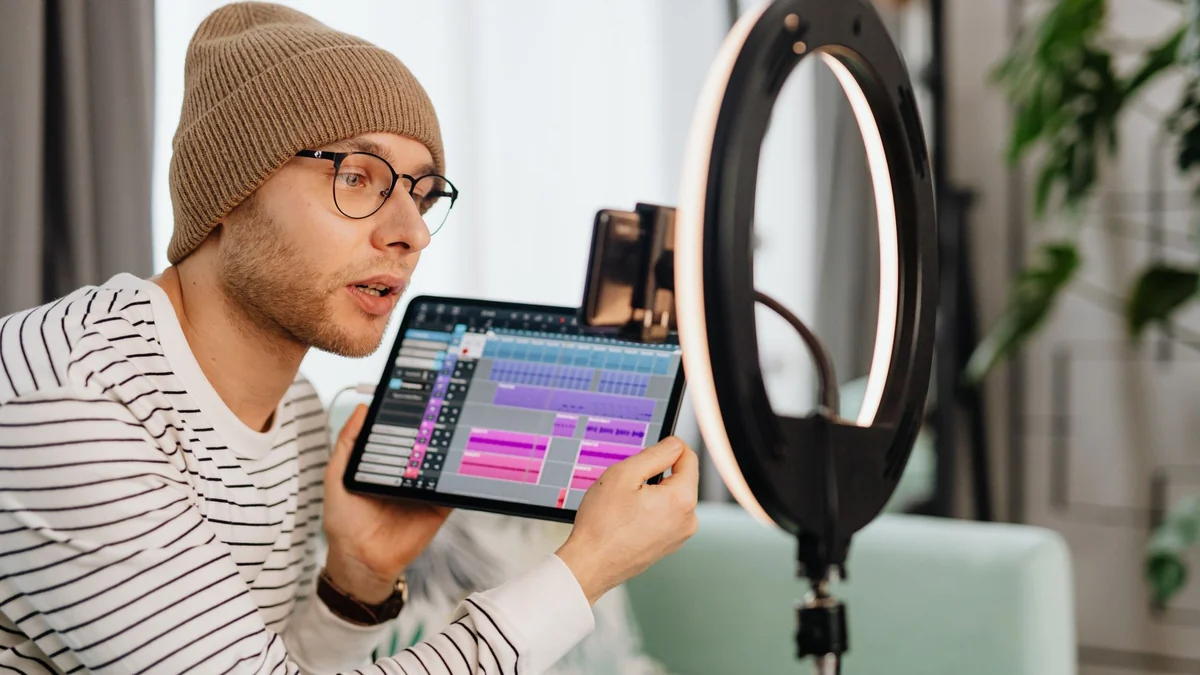
On 14 November 2026 we rebuilt this page. The earlier version contained a London market-size table with no source, an unnamed expert quote and several unsourced global figures. We replaced them with the first UK creator market study from IAB UK and IRM, ONS agency counts for London and the UK, survey data labelled as vendor or global, and the October 2026 ASA, CAP and CMA guide, and replaced the images with licensed illustrative photos. We kept our link to the benefits-of-working-with-an-agency guide.
Sources
- Marketing Week: UK creator revenue to surpass £1bn for the first time, data shows (15 September 2026, reporting the IAB UK and IRM study and Kolsquare’s 2026/2027 outlook)
- IAB UK: The creator economy is reshaping where and how brands invest in media (9 March 2026)
- ONS UK Business Counts (IDBR) via Nomis, dataset NM_142_1, SIC 73110, 73120 and 70210, March 2018 to March 2026
- Lewis Silkin: New influencer guidance from the ASA, CAP and CMA (23 October 2026); Shoosmiths: New ASA research on influencer marketing (16 March 2026); ASA: Influencers guide to making clear that ads are ads (earlier edition)
- Influencer Marketing Hub: Influencer Marketing Benchmark Report 2026 (4 May 2026)
Disclaimer
This article is general information, not legal or marketing advice. Market figures come from the sources cited and may be revised. Survey figures from vendors or publishers are indicative only. Check the current ASA, CAP and CMA guidance before running influencer campaigns.
Last updated: 14 November 2026